
Steven Heighton (1961–2022)
Author of Afterlands
About the Author
Steven Heighton is the author of six previous books, including the award-winning story collections Flight Paths of the Emperor and On earth as it is, which appeared to great acclaim in his native Canada and, with Granta Books, in Britain, Holland, and Australia. His work has appeared in Heinemann's show more Best English Short Stories, Best of the Best Short Stories 1986-1995, Best Canadian Stories, Agni, the Literary Review, Northwest Review, and Europe. The Shadow Boxer is Heighton's first novel. He lives in Kingston, Ontario show less
Works by Steven Heighton
Associated Works
Lost Classics: Writers on Books Loved and Lost, Overlooked, Under-read, Unavailable, Stolen, Extinct, or Otherwise Out of Commission (2000) — Contributor — 319 copies, 6 reviews
Another English: Anglophone Poems from Around the World (Poets in the World) (2014) — Contributor — 11 copies
Tagged
Common Knowledge
- Birthdate
- 1961-08-14
- Date of death
- 2022-04-19
- Gender
- male
- Education
- Queen's University, Kingston, Ontario, Canada (MA)
- Awards and honors
- Governor General's Literary Award (Poetry) 2016
- Nationality
- Canada
- Birthplace
- Toronto, Ontario
- Places of residence
- Red Lake, Ontario, Canada
- Place of death
- Kingston, Ontario, Canada
- Associated Place (for map)
- Ontario, Canada
Members
Reviews
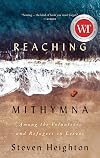
In the late fall of 2015 Steven Heighton impulsively left home and offered his services as an aid worker on the Greek island of Lesvos. This was during the worst moments of a humanitarian crisis of staggering proportions, when hundreds of thousands of desperate people were fleeing the Syrian Civil War. Lesvos, located a mere ten kilometers from Turkey’s western coast, is a natural landing point for refugees being smuggled into Europe. Then, as now, traffickers were taking full advantage of show more that proximity. In Reaching Mithymna, Heighton’s memoir of a month spent among the volunteers and refugees, he arrives with little notion of what he will be doing and who he’ll be doing it with. It is not an easy transition, from naïve Canadian writer insulated from much of the world’s turmoil to front-line aid worker rolling up his sleeves and trying to convince himself he’s ready for anything that comes his way. But Heighton jumps headlong into the fray, making plenty of mistakes but learning as he goes, about himself as much as the situation unfolding before his eyes. The book is a clear-eyed chronicle that places its focus squarely on the people the author encounters: exhausted volunteers approaching burnout, anxious and despairing refugees—families, men and women of all ages—who have left behind the ruins of their lives and risked everything for an uncertain future. Heighton’s narrative takes an even-handed approach. He makes no arguments or moral judgments in these pages. He does not try to convince us of anything. He lets the facts speak for themselves, and some of those facts are more than simply harrowing. In many respects the book is concerned with belonging—Heighton’s own mother was Greek and he is haunted by the remnants of a heritage that he has neglected. The flow of refugees on their way to other places is ceaseless, and he can’t help but wonder what will become of them and how they will be received when they reach their various destinations. In the end, as he approaches his return to Canada, the author is frazzled by his experience and more than a little disillusioned by yet another example of human willingness to inflict horrific suffering on other humans. He finishes by telling us, “Nobody ever changes until they have to.” Hopefully the change, when it comes, will empower those who care to make sure nothing like this ever happens again. show less
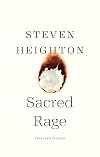
The assertion that Steven Heighton is one of the very best writers this country has ever produced will not meet with much resistance. His intrepid nature and astonishing versatility, not to mention his dedication to craft, made him proficient at any form of written expression to which he set his mind. He was an effective and entertaining public speaker, a generous and self-effacing teacher. He was sensitive to the power of words and vigilant in his defense of the creative act. While many show more writers simply write to the best of their ability and never examine, question, or even discuss their gift, Heighton was curious, opinionated and forcefully articulate about what makes good writing good and bad writing bad. He was also a capable editor. And though to be edited by Steven Heighton was a dream come true, you were surely dreaming if you thought it was going to be easy. His death on April 19, 2022, at the age of 60, was everyone’s loss.
Now, three years later, Biblioasis has published Sacred Rage, a timely collection of Heighton’s short fiction, selected and introduced by his longtime editor John Metcalf, and taken from the four volumes published during his lifetime.
The collection opens with three Japan stories from Flight Paths of the Emperor (1992), a volume that fictionalizes Heighton’s experiences teaching English in that country. The reader immediately notices the exuberance of the prose, which drives each story’s relentless forward motion. These are fictions—observant, compassionate, probing, yet lightly humorous—about cultures, not so much clashing as failing to mesh. The young Canadian narrator, striving to learn anything and everything about this enigmatic country where he’s chosen to build a temporary life, time and again emerges into the light, blinking and scratching his head, none the wiser.
A world traveler himself, Steven Heighten could and often did set his fiction in far-flung locales (a wonderful example is his novel Every Lost Country, set the remote, mountainous terrain where Nepal borders Tibet), but much of his later short fiction is set in his native Ontario, in and around the Kingston area. In these stories we often encounter people of limited means and modest prospects struggling to find a path forward. “Townsmen of a Stiller Town” comes to mind as a prime example of Heighton chronicling the exploits of a hapless protagonist to great comic effect but also reaching inward, to share with us the essence of what good fiction does best: entertain us while making us ponder what it means to be human and vulnerable. In this story, Tris Leduc has graduated from high school but, lacking both ambition and resources, finds himself delivering orders for his aunt’s “Pickin’ Chickin’” franchise while dressed in a chicken costume. The absurd outfit makes him a target of scornful amusement for some of the local louts, and Tris’s main objective throughout the story is to find reasons to not wear the costume—to, as it were, break free and become his own man—especially after a perplexing and troubling encounter while making a delivery to the local morgue.
Though Heighton’s narratives are principally mainstream in structure, he occasionally stretched himself stylistically. One such experiment is “Noughts & Crosses: An Unsent Reply,” an amusing dive into the mind of Nella, who’s received an email from her lover breaking off their relationship. Through the course of her lengthy “unsent reply,” Nella analyses her former lover’s message phrase by phrase, line by line, parsing out hidden meanings and facile justifications in her search for a truth that will assuage her broken heart and wounded pride.
In this collection of standout works, two stories deserve special mention. “Shared Room on Union” takes place on a city street. It’s past midnight and Justin and Janna, together in Justin’s Volvo, are ending their date with a moment of intimacy when a man taps on the driver’s side window. He has a gun and is intent on jacking the car. The incident proceeds, intense and fraught as one would expect, but not without several twists that display Heighton’s flare for uncovering human comedy in unexpected places. And in “The Dead Are More Visible,” middle-aged Ellen, who during the winter works nights flooding and maintaining the city park’s skating rinks, finds herself the focus of threatening behaviour from three drunken youths. Lashing out to protect herself, she causes one of the men a gruesome injury and instantly becomes the young man’s saviour as his two friends abandon him. Both stories find concise, sometimes funny, sometimes bitter, dramatic ironies in the human condition and universalize the conundrums facing their characters, to whom we are drawn in sympathy like a thirsty horse to water.
In his introduction, John Metcalf says, "Steve fought through to the ability to make writing that overwhelms us, enraptures us, that makes us see again our world as we saw it once in childhood, the world that, in [John] Cheever’s words, lies spread out around us like a bewildering and stupendous dream."
Steven Heighton sought to recreate that dream with every word he committed to paper. He was a writer of surpassing integrity, unabashedly self-critical, who never stopped setting lofty goals for himself. He was an enemy of mediocrity who could be offended by a misplaced modifier. For him, writing was nothing short of a matter of life and death. He was always striving to make his own work better and wanted the same from others. And yet he knew and freely acknowledged that perfection is impossible (In Work Book, his collection of aphorisms and advice for writers, he wrote: “Cast a spell and the small flaws don’t matter.”). In his lifetime he achieved more success than most of his colleagues but was familiar with the ritual humiliations that accompany the writing profession. He was an exceptional mentor and friend.
Sacred Rage is a fitting tribute to Steven Heighton’s legacy. The stories collected here demonstrate his remarkable range and achieve a standard that writers everywhere should aim for. show less
Now, three years later, Biblioasis has published Sacred Rage, a timely collection of Heighton’s short fiction, selected and introduced by his longtime editor John Metcalf, and taken from the four volumes published during his lifetime.
The collection opens with three Japan stories from Flight Paths of the Emperor (1992), a volume that fictionalizes Heighton’s experiences teaching English in that country. The reader immediately notices the exuberance of the prose, which drives each story’s relentless forward motion. These are fictions—observant, compassionate, probing, yet lightly humorous—about cultures, not so much clashing as failing to mesh. The young Canadian narrator, striving to learn anything and everything about this enigmatic country where he’s chosen to build a temporary life, time and again emerges into the light, blinking and scratching his head, none the wiser.
A world traveler himself, Steven Heighten could and often did set his fiction in far-flung locales (a wonderful example is his novel Every Lost Country, set the remote, mountainous terrain where Nepal borders Tibet), but much of his later short fiction is set in his native Ontario, in and around the Kingston area. In these stories we often encounter people of limited means and modest prospects struggling to find a path forward. “Townsmen of a Stiller Town” comes to mind as a prime example of Heighton chronicling the exploits of a hapless protagonist to great comic effect but also reaching inward, to share with us the essence of what good fiction does best: entertain us while making us ponder what it means to be human and vulnerable. In this story, Tris Leduc has graduated from high school but, lacking both ambition and resources, finds himself delivering orders for his aunt’s “Pickin’ Chickin’” franchise while dressed in a chicken costume. The absurd outfit makes him a target of scornful amusement for some of the local louts, and Tris’s main objective throughout the story is to find reasons to not wear the costume—to, as it were, break free and become his own man—especially after a perplexing and troubling encounter while making a delivery to the local morgue.
Though Heighton’s narratives are principally mainstream in structure, he occasionally stretched himself stylistically. One such experiment is “Noughts & Crosses: An Unsent Reply,” an amusing dive into the mind of Nella, who’s received an email from her lover breaking off their relationship. Through the course of her lengthy “unsent reply,” Nella analyses her former lover’s message phrase by phrase, line by line, parsing out hidden meanings and facile justifications in her search for a truth that will assuage her broken heart and wounded pride.
In this collection of standout works, two stories deserve special mention. “Shared Room on Union” takes place on a city street. It’s past midnight and Justin and Janna, together in Justin’s Volvo, are ending their date with a moment of intimacy when a man taps on the driver’s side window. He has a gun and is intent on jacking the car. The incident proceeds, intense and fraught as one would expect, but not without several twists that display Heighton’s flare for uncovering human comedy in unexpected places. And in “The Dead Are More Visible,” middle-aged Ellen, who during the winter works nights flooding and maintaining the city park’s skating rinks, finds herself the focus of threatening behaviour from three drunken youths. Lashing out to protect herself, she causes one of the men a gruesome injury and instantly becomes the young man’s saviour as his two friends abandon him. Both stories find concise, sometimes funny, sometimes bitter, dramatic ironies in the human condition and universalize the conundrums facing their characters, to whom we are drawn in sympathy like a thirsty horse to water.
In his introduction, John Metcalf says, "Steve fought through to the ability to make writing that overwhelms us, enraptures us, that makes us see again our world as we saw it once in childhood, the world that, in [John] Cheever’s words, lies spread out around us like a bewildering and stupendous dream."
Steven Heighton sought to recreate that dream with every word he committed to paper. He was a writer of surpassing integrity, unabashedly self-critical, who never stopped setting lofty goals for himself. He was an enemy of mediocrity who could be offended by a misplaced modifier. For him, writing was nothing short of a matter of life and death. He was always striving to make his own work better and wanted the same from others. And yet he knew and freely acknowledged that perfection is impossible (In Work Book, his collection of aphorisms and advice for writers, he wrote: “Cast a spell and the small flaws don’t matter.”). In his lifetime he achieved more success than most of his colleagues but was familiar with the ritual humiliations that accompany the writing profession. He was an exceptional mentor and friend.
Sacred Rage is a fitting tribute to Steven Heighton’s legacy. The stories collected here demonstrate his remarkable range and achieve a standard that writers everywhere should aim for. show less
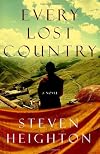
Heighton has fashioned a rapid-fire, suspense-filled narrative based on an actual event. This is the remote, mountainous country where Nepal borders Tibet. Wade Lawson wants to be the first climber to scale the dangerous peak of Kyatruk and has assembled an expedition that includes Dr. Lewis Book and filmmaker Amaris McRae. His plans are disrupted when Chinese soldiers fire on a group of Tibetan refugees fleeing for the Nepali border and Book and McRae, crossing into Chinese territory to show more help the wounded, are taken prisoner. Despite these losses, Lawson pushes forward with his climb. Meanwhile, Book and McRae engage in a life and death struggle to care for the wounded Tibetans while in Chinese custody. Unavoidably, the novel makes a political statement, but this is a human drama that unfolds with the emotional urgency and riveting immediacy of cinema. show less
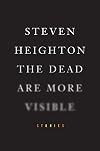
Few would argue with the assertion that Steven Heighton is one of Canada's best writers. Anything he publishes is worth reading. His poetry is graceful and vivid and fiercely intelligent. As an essayist he is insightful and adventurous. But it is with his fiction that Heighton fully hits his stride. In three superb novels and now three collections of short fiction, Steven Heighton provides a master class in the kind of audacious, spellbinding storytelling that captures the reader's attention show more from the outset. The best of the stories collected in The Dead are More Visible give us further reason to admire this very talented writer, who wields his pen like a precision instrument. These are stories about people groping toward a decision, re-connecting with themselves, or struggling in the aftermath of trauma. Almost all of the characters we meet in these pages are coping with some sort of disappointment. A few are grieving a loss. The narrator of "Those Who Would Be More," leaving behind a teaching job in Japan, learns to accept the stoicism of his Japanese lover, whom he is also leaving behind. The couple in "Shared Room on Union" successfully defuse the trauma of surviving the nightmare scenario of a carjacking gone wrong by retelling the story of that terrifying night every chance they get. And in "Swallow" a young woman named Ariadne (who goes by Roddy), deals with the emotional fallout of a betrayal perpetrated by her boyfriend and her best friend by hiring herself out to a drug trial where she will stay sedated until she can figure out what to do next with her life. These stories involve the reader at a visceral level while impressing with the sheer artistry of the writing. Throughout, Heighton's prose is understated and full of surprising, felicitous and memorable observations. Collections of short fiction rarely win novelists new readers. But anyone not already familiar with Steven Heighton's earlier work should seek out this book. It's more than worth the effort. show less
Lists
Awards


You May Also Like


Associated Authors
Statistics
- Works
- 25
- Also by
- 6
- Members
- 507
- Popularity
- #48,897
- Rating
- 3.6
- Reviews
- 18
- ISBNs
- 78
- Languages
- 3
- Favorited
- 2