
Michael Guillen
Author of Five Equations That Changed the World: The Power and Poetry of Mathematics
About the Author
Dr. Michael Guillen, former ABC News Science Editor and Harvard physics instructor, is host of the History Channel's Where Did It Come From? and producer of the award-winning family movie Little Red Wagon. He's also a bestselling author, columnist, and popular speaker. He is the president of show more Spectacular Science Productions Inc. and Filmanthropy Media Incorporated. For more on Dr. Guillen go to www.michaelguillen.com. show less
Works by Michael Guillen
Five Equations That Changed the World: The Power and Poetry of Mathematics (1995) 763 copies, 12 reviews
Believing Is Seeing: A Physicist Explains How Science Shattered His Atheism and Revealed the Necessity of Faith (2021) 115 copies, 1 review
The End of Life as We Know It: Ominous News from the Frontiers of Science (2018) 13 copies, 1 review
Tagged
Common Knowledge
- Birthdate
- 1959
- Gender
- male
- Education
- University of California, Los Angeles (BS)
Cornell University (PhD|physics, mathematics, astronomy) - Nationality
- USA
- Associated Place (for map)
- USA
Members
Reviews
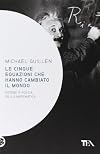
La curiosità umana
Le 5 equazioni che hanno cambiato il mondo sono pure espressioni matematiche, che possono sembrare aride e fredde, ma una cosa fondamentale non bisogna mai dimenticare: sono state elaborate da uomini. L'autore ci porta in un viaggio nel tempo attraverso le vite di uomini geniali come Isaac Newton, Daniel Bernoulli, Michael Faraday, Rudolf Clausius e Albert Einstein. Professore ad Harvard, Guillen si dedica da tempo alla divulgazione scientifica rendendo questo testo show more scorrevole e per certi versi anche "romantico". Questi uomini di una umanità sconvolgente che vivevano una condizione umana non sempre avvolta dalla gloria (essere uomini di scienza godeva di poca o nulla considerazione) ma erano pervasi da una curiosità divorante per i misteri del mondo che li circondava. Quella curiosità che Einstein definiva "una piccola, delicata pianticella che ha soprattutto bisogno di libertà" e che ha portato rivoluzioni nelle nostre vite che, nel bene e nel male, distinguono l'uomo come una creatura dalle mille sfaccettature e capacità. show less
Le 5 equazioni che hanno cambiato il mondo sono pure espressioni matematiche, che possono sembrare aride e fredde, ma una cosa fondamentale non bisogna mai dimenticare: sono state elaborate da uomini. L'autore ci porta in un viaggio nel tempo attraverso le vite di uomini geniali come Isaac Newton, Daniel Bernoulli, Michael Faraday, Rudolf Clausius e Albert Einstein. Professore ad Harvard, Guillen si dedica da tempo alla divulgazione scientifica rendendo questo testo show more scorrevole e per certi versi anche "romantico". Questi uomini di una umanità sconvolgente che vivevano una condizione umana non sempre avvolta dalla gloria (essere uomini di scienza godeva di poca o nulla considerazione) ma erano pervasi da una curiosità divorante per i misteri del mondo che li circondava. Quella curiosità che Einstein definiva "una piccola, delicata pianticella che ha soprattutto bisogno di libertà" e che ha portato rivoluzioni nelle nostre vite che, nel bene e nel male, distinguono l'uomo come una creatura dalle mille sfaccettature e capacità. show less
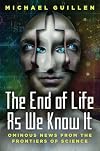
I admit, I found the book a bit disappointing. in part because little of what he talked about was new to me, but I am probably not the average “science news follower” out there, so this is less of a problem.
My bigger concern with the book is that it is meant as a kind of warning / book of concern about the direction science is taking us and the potential downsides. Where the book fails for me though is in the way the argument is being presented. In large parts the book reminds me of show more “YouTube news videos”. You know, the one where someone holds their mug into the camera, reads an article and then nods or disagrees, often superficially, with what is written.
It is not quite THAT way, but it seems to me that Michael Guillen mostly relies on others to make his arguments instead of constructing his own fully. This does not mean that I couldn’t get a sense of his objections, but it felt disjointed, as if he picked opinions he agreed with and strung them together to make the argument for him.
It does distract a bit from the argument he is trying to me, to me at least.
Having said this, I think some good debates can be had about the technologies he describes. show less
My bigger concern with the book is that it is meant as a kind of warning / book of concern about the direction science is taking us and the potential downsides. Where the book fails for me though is in the way the argument is being presented. In large parts the book reminds me of show more “YouTube news videos”. You know, the one where someone holds their mug into the camera, reads an article and then nods or disagrees, often superficially, with what is written.
It is not quite THAT way, but it seems to me that Michael Guillen mostly relies on others to make his arguments instead of constructing his own fully. This does not mean that I couldn’t get a sense of his objections, but it felt disjointed, as if he picked opinions he agreed with and strung them together to make the argument for him.
It does distract a bit from the argument he is trying to me, to me at least.
Having said this, I think some good debates can be had about the technologies he describes. show less
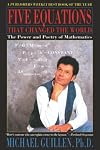
Gullen identifies five equations that have profoundly affected the world to show nonmath people how beautiful these are - to try to show how scientists see these equations. It's not clear that he actually accomplished this goal. Most of the text is about the people who discovered these equations and the context for them. As such, the book works pretty well - although I wish he had been a bit more biographical and a bit less storyteller imagining what people thought and said for which there's show more no record.
The physicist in me want to quibble a bit with his choice of equations. Each of these equations is really a result - not the profoundly beautiful theories that underlie them. So while Gullen, for example, talks about Einstein's famous equation relating mass and energy, he doesn't get into at all the real beauty of Einstein's work seen in his geometric description of the universe in the theory of general relativity. On the other hand, it's nearly impossible to do that without the natural language these theories are created in - mathematics.
For a nice introduction for the non-mathematical person to the discovery - and especially the discoverers - FIve Equations that Changed the World is quite good. And if it spurs some on to deeper reading, so much the better! show less
The physicist in me want to quibble a bit with his choice of equations. Each of these equations is really a result - not the profoundly beautiful theories that underlie them. So while Gullen, for example, talks about Einstein's famous equation relating mass and energy, he doesn't get into at all the real beauty of Einstein's work seen in his geometric description of the universe in the theory of general relativity. On the other hand, it's nearly impossible to do that without the natural language these theories are created in - mathematics.
For a nice introduction for the non-mathematical person to the discovery - and especially the discoverers - FIve Equations that Changed the World is quite good. And if it spurs some on to deeper reading, so much the better! show less
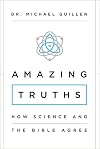
I thought this would an interesting but then he starts out by taking an Einstein quote out of context as his support of science validating religion. He talks about the observational truths that science and religion have in common but then 2 hours in he literally says "observational truths are true because I believe them" WTF. Belief is not a basis for truth. Millions of people believe in visiting aliens but that does not make it true. Any way he also makes these weird show more "predictions/assocations" like the ancient Greeks talked about waves and particles so they foretold quantum mechanics. That makes no sense. I stopped 60% through as I had enough of those illogical connections. show less
Awards

You May Also Like


Associated Authors
Statistics
- Works
- 14
- Members
- 1,357
- Popularity
- #18,943
- Rating
- 3.5
- Reviews
- 22
- ISBNs
- 63
- Languages
- 7
