
Christopher Beha
Author of The Whole Five Feet: What the Great Books Taught Me About Life, Death, and Pretty Much Everything Else
About the Author
Works by Christopher Beha
The Whole Five Feet: What the Great Books Taught Me About Life, Death, and Pretty Much Everything Else (2009) 300 copies, 13 reviews
Associated Works
Tagged
Common Knowledge
- Birthdate
- 1979
- Gender
- male
- Education
- Princeton University
New School for Social Research - Occupations
- editor
- Organizations
- Harper's Magazine
- Nationality
- USA
- Associated Place (for map)
- USA
Members
Reviews
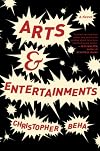
A perfect summer book to read about reality television. Unfortunately while the book is fiction it may as well be a documentary of TV, social media, and celebrity in 2014, and was completely believable. The book is well written and quite funny.

In her review Roxane Gay called this a "messy sprawl of a novel" and that feels accurate. It is also pretty great. Our characters are in a constant state of building, burning down, and rebuilding their lives. Everyone is thwarted by passion, and (differently but no less profoundly) thwarted by denial of passion. Everyone is making huge mistakes that are causing serious damage to their well-being. Everyone has their own index of self-destructive acts.
The book is totally absorbing, beautifully show more written, an old fashioned epic - and I use the term "old-fashioned" in the very best way. Modern books are so "me" oriented, they tend to turn an ordinary character, or perhaps two characters, inside out. I like a lot of those books, but I miss stories of interrelationship on a slightly grander scale. There are so many moving parts here, and so many different ways of self-destructing. Still most of these characters' stories, and their connections to one another, come together brilliantly. There are a few very farfetched "convenient" meetings or incidences of missed events/information (particularly in the last 75 pages), but not so many that they diminished my overall enjoyment.
For the most part, even the jerks in the story are endearing. Sam is such a bumbling imperious man-child. I would despise him in real life, and god knows I did not root for him in the book, but i also loved him and I hope his future (were he to have one off the page) is filled with self-actualization and other good things. Frank is also an imperious man-child, but an older one, more certain he knows everything in the world than even Sam. Frank is also far less grateful for the gifts that have been bestowed upon him by the universe. He plays at being an iconoclast, but is in fact obsessed with what people think about him, so obsessed that once people censure him in any way they cease to exist for him. Still, I was fond of him in the way that I am fond of Philip Roth's Nathan Zuckerman. It is hard to hate smart funny people whom the world has told they are the center of the universe, and who have taken that quite literally.
There is one central character who was problematic for me, and that is Kit. She comes off like some chic UES giving tree. No one who has ever run an investment bank makes decisions the way she does. I found her completely unconvincing, I am pretty sure Beha knows less about the world of finance than about journalism, higher ed, publishing, and baseball. Kit's story was more jarring than it might otherwise have been because the book's other characters' lives existed in those other realms and they felt real, felt like people I have known. Kit is such an important part of the book that I took a star for that. This was a high 4. A pure escape into a complicated messy group of people in a world that eschews the life-giving beauty of surprises and things inexplicable in favor of the false certainty of statistical analysis. This is a world that does not allow its celebrities or demi-celebrities a single error. preferring to see the world in black and white. exalting at the fleeting pleasure of burning people at the stake rather than the subtle long-term pleasure of a redemption arc. I guess it is a world that has taken the "sweet science" and turned it into plain old science. It makes for a story that is very modern, and also nostalgic in a way that doesn't make me want to vomit (I am not a nostalgic person at all, but I miss the hell out of uncertainty and second chances.) A great read. show less
The book is totally absorbing, beautifully show more written, an old fashioned epic - and I use the term "old-fashioned" in the very best way. Modern books are so "me" oriented, they tend to turn an ordinary character, or perhaps two characters, inside out. I like a lot of those books, but I miss stories of interrelationship on a slightly grander scale. There are so many moving parts here, and so many different ways of self-destructing. Still most of these characters' stories, and their connections to one another, come together brilliantly. There are a few very farfetched "convenient" meetings or incidences of missed events/information (particularly in the last 75 pages), but not so many that they diminished my overall enjoyment.
For the most part, even the jerks in the story are endearing. Sam is such a bumbling imperious man-child. I would despise him in real life, and god knows I did not root for him in the book, but i also loved him and I hope his future (were he to have one off the page) is filled with self-actualization and other good things. Frank is also an imperious man-child, but an older one, more certain he knows everything in the world than even Sam. Frank is also far less grateful for the gifts that have been bestowed upon him by the universe. He plays at being an iconoclast, but is in fact obsessed with what people think about him, so obsessed that once people censure him in any way they cease to exist for him. Still, I was fond of him in the way that I am fond of Philip Roth's Nathan Zuckerman. It is hard to hate smart funny people whom the world has told they are the center of the universe, and who have taken that quite literally.
There is one central character who was problematic for me, and that is Kit. She comes off like some chic UES giving tree. No one who has ever run an investment bank makes decisions the way she does. I found her completely unconvincing, I am pretty sure Beha knows less about the world of finance than about journalism, higher ed, publishing, and baseball. Kit's story was more jarring than it might otherwise have been because the book's other characters' lives existed in those other realms and they felt real, felt like people I have known. Kit is such an important part of the book that I took a star for that. This was a high 4. A pure escape into a complicated messy group of people in a world that eschews the life-giving beauty of surprises and things inexplicable in favor of the false certainty of statistical analysis. This is a world that does not allow its celebrities or demi-celebrities a single error. preferring to see the world in black and white. exalting at the fleeting pleasure of burning people at the stake rather than the subtle long-term pleasure of a redemption arc. I guess it is a world that has taken the "sweet science" and turned it into plain old science. It makes for a story that is very modern, and also nostalgic in a way that doesn't make me want to vomit (I am not a nostalgic person at all, but I miss the hell out of uncertainty and second chances.) A great read. show less
The title of Beha’s character-driven novel comes from one of Bill James’ baseball metrics. This index measures the various ways a pitcher can sabotage himself by committing unforced errors. Not only is it a wonderfully clever title, but it also captures the essence of the story. Beha succeeds in creating a superb ensemble of interesting and nuanced characters, each of whom seems to be a master of self-sabotage. In considering them, the Rolling Stones lyric on wants and needs comes to show more mind (i.e., “You can’t always get what you want, but if you try, sometimes you just might find you get what you need.”) You find yourself liking them all and hoping they get what they want, but in your heart, you know they might just get what they need.
Frank once was a successful writer who has a need to be loved and admired. After achieving success from his witty baseball writings, he has convinced himself that he as a “big book” in him but spends most of his time just drinking. His daughter, Margo, has aspirations of being a poet but spends most of her energy chasing a married writer dispatched to interview Frank. Kit, Frank’s wife, is retired from a Wall Street firm she inherited from her father. He probably would have preferred a son as his heir, but he somewhat misogynistically groomed Kit for the job. She mismanages the family’s finances and tries to recover with an insider trading deal. Their son, Ed, wants more out of life than he sees his parents achieved. He needs a noble cause instead of his dull marketing job and the life of leisure and wealth his family has. His naïve first attempt at nobility comes by joining the Army after 911. Yet after a couple of tours in war zones, he returns disillusioned by that. Instead, he drifts into helping a demented old man preach about the end of the world while seeking a career as an EMT. Sam Waxworth, “a young man from the provinces” (i.e., Madison, WI) arrives in NYC after achieving some notoriety by accurately predicting an election outcome. He wants to achieve success as a writer but is immediately sidetracked by the relentless demands of his job and by Margo. Sam has a simple-minded belief that data and statistics hold all of the secrets of the universe. His wife, Lucy, is a small-town girl with unpretentious needs revolving around family ties. She wants nothing more than to return to Madison. However, Sam’s infidelity and a mysterious disease shake her core world view.
Beha masterfully manages his third person narrative by continuously switching perspectives between his characters. This can be a little unsettling primarily because he does not adhere to a linear timeline. Instead, he has a penchant for revealing important events and facts out of the blue and later returning to explain them in subsequent scenes. His strength is clearly dialogue, especially the banter between Margo and Sam on facts vs. art and that between Sam and Frank about what is really important about baseball.
This is definitely an entertaining read by an accomplished writer who has a nuanced view of life in America. He sees things with a clear eye but also with considerable empathy. show less
Frank once was a successful writer who has a need to be loved and admired. After achieving success from his witty baseball writings, he has convinced himself that he as a “big book” in him but spends most of his time just drinking. His daughter, Margo, has aspirations of being a poet but spends most of her energy chasing a married writer dispatched to interview Frank. Kit, Frank’s wife, is retired from a Wall Street firm she inherited from her father. He probably would have preferred a son as his heir, but he somewhat misogynistically groomed Kit for the job. She mismanages the family’s finances and tries to recover with an insider trading deal. Their son, Ed, wants more out of life than he sees his parents achieved. He needs a noble cause instead of his dull marketing job and the life of leisure and wealth his family has. His naïve first attempt at nobility comes by joining the Army after 911. Yet after a couple of tours in war zones, he returns disillusioned by that. Instead, he drifts into helping a demented old man preach about the end of the world while seeking a career as an EMT. Sam Waxworth, “a young man from the provinces” (i.e., Madison, WI) arrives in NYC after achieving some notoriety by accurately predicting an election outcome. He wants to achieve success as a writer but is immediately sidetracked by the relentless demands of his job and by Margo. Sam has a simple-minded belief that data and statistics hold all of the secrets of the universe. His wife, Lucy, is a small-town girl with unpretentious needs revolving around family ties. She wants nothing more than to return to Madison. However, Sam’s infidelity and a mysterious disease shake her core world view.
Beha masterfully manages his third person narrative by continuously switching perspectives between his characters. This can be a little unsettling primarily because he does not adhere to a linear timeline. Instead, he has a penchant for revealing important events and facts out of the blue and later returning to explain them in subsequent scenes. His strength is clearly dialogue, especially the banter between Margo and Sam on facts vs. art and that between Sam and Frank about what is really important about baseball.
This is definitely an entertaining read by an accomplished writer who has a nuanced view of life in America. He sees things with a clear eye but also with considerable empathy. show less
If it is true that reality TV is in its death throes, I can only hope that this ridiculously plotted, amusing book is found guilty. Handsome Eddie is a failed actor whose wife is pushing for in vitro fertilization which they cannot afford. He teaches theatre at the same Catholic school that he attended. His actress ex-girlfriend has a very successful TV show and Eddie agrees to furnish a scuzzy reality TV producer with a sex tape featuring her, taken from old videos he had always intended to show more throw away. Eddie is fired from his job, and when his wife Susan becomes pregnant with triplets, they are both sucked into reality TV as active participants. Mostly satire, but the novel so convincingly demonstrates the seductive capabilities of fame, wealth, and overall bad judgment, that the reader wonders if resistance isn't futile after all. As the absurdity ratchets up, one hopes for relief but stand by, it gets worse. An enjoyable and clever farce. show less
Awards


You May Also Like


Associated Authors
Statistics
- Works
- 7
- Also by
- 1
- Members
- 915
- Popularity
- #28,030
- Rating
- 3.6
- Reviews
- 38
- ISBNs
- 25
- Languages
- 1
