
Kenneth Cain
Author of Emergency Sex: And Other Desperate Measures
About the Author
Works by Kenneth Cain
Tagged
Common Knowledge
- Gender
- male
- Relationships
- Cain, Susan (wife)
Members
Reviews
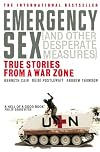
I was a little sceptical of this volume, but it hit the spot. Apart from the slightly bizarre title, there is much to like.
The story is told in separate segments by the three different authors, which worked better than I had expected.
They meet in 1990 in Cambodia where the international community was imposing an election on a willing population. The authors are all young, inexperienced and bright-eyed. They later move on to Haiti, Bosnia, Somalia, Rwanda where they each have their illusions show more shattered - still optimistic, but more aware of the failures of the ijternational community.
I read that the UN was critical of some of the content. I have a small amount of experience in the international field, and nothing the authors report surprised me in the slightest. The UN should be more self-critical and less defensive. show less
The story is told in separate segments by the three different authors, which worked better than I had expected.
They meet in 1990 in Cambodia where the international community was imposing an election on a willing population. The authors are all young, inexperienced and bright-eyed. They later move on to Haiti, Bosnia, Somalia, Rwanda where they each have their illusions show more shattered - still optimistic, but more aware of the failures of the ijternational community.
I read that the UN was critical of some of the content. I have a small amount of experience in the international field, and nothing the authors report surprised me in the slightest. The UN should be more self-critical and less defensive. show less
I read this book because I've always wondered what pushes people to sign up for these missions, especially when they have no clue about the place they're going to. The two answers I got from reading this are: money and arrogance. I love how the one guy really feels like he's bringing the concept of democracy to Cambodia. Cute. I learned a lot from this. It was a powerful read. Also sad. Not because of the atrocities described -- those are all already widely known and well documented by now, show more but because the mix of arrogance and ignorance that pervades these so called peacekeeping missions. Because of how people are deemed experts and given power over entire populations when they have no idea what they're doing.
A lot of reviewers have criticized the woman of the trio for mostly describing her romantic and sexual encounters. But I thought those parts of the text gave a lot of insight into the types of relationships UN workers and others like them are willing to forge with the people they're supposedly helping. The doctor had a strong relationship with a family in Cambodia, but apart from that, I got the sense that neither he nor Ken had any real relationships with the people they were supposedly there to help. Of Heidi, Andrew says: "she'd figured out from her time on the Bowery that if you want to change anything in this world, you should start by attending to those around you. Which is what she did, one person at a time, through her cooks and drivers and the people she worked with. And the men she loved. While for me, with each successive mission, individuals somehow got lost; they became Haitians, Rwandans, Bosnians -- populations, not people." (297) And it's definitely clear that for both Ken and Andrew, there is no complexity, no variation among the societies they parachute into. Everyone can be and is reduced to a Serb or Tutsi or Nigerian or Cambodian.
Still, of the three narrators, I have the most respect for Andrew and the work he did. Ken seemed to resemble the "mission type" the most. He gained some nuance over the course of the narrative, but not much. Heidi seemed messed up in a lot of ways, but true to herself and others in a way the men were not. I appreciated that.
As always, there were inaccuracies about Haiti that bothered me. It may seem nit-picky, but if I know there are things wrong about what's said about Haiti, it makes me doubt what they say about Cambodia and Liberia and Bosnia, etc.
One example that stands out is the whole laundromat thing: "Middle-class women are entering the workforce, just as their American counterparts did twenty years before, and no longer have time for housework. But their husbands still expect them to do it. A laudromat seems the most natural thing in the world; I can't believe no one here has thought of it already. For Marc it's as if a whole new world has opened. What other businesses are there in the US to make women's lives easier? he asks me. He's caught on fast" (240). This is supposed to have taken place in 1996. 1996. Women entering the workforce! I don't think I can unpack it any more than that because it would take pages, but that's just some craziness.
And then of course, there's the obsession with being the first. Heidi's the first to think of a laundromat in Haiti, Andrew's the first to ever surf in Cambodia... What a mindset to be able to think something like that, say it, publish it for anyone to read! The height of arrogance. Maybe people who surfed in Cambodia before didn't take pictures, didn't think it was important enough to put in a book. That doesn't mean it never happened. Middle-class families in Haiti have been outsourcing their laundry since before Heidi was born. Maybe not in a Brooklyn-style laundromat, but still. Anyway. Minor points, I guess.
My conclusion from reading this book is that most lowly mission workers are clueless and the higher-ups in the UN and other similar organizations, including countries, suck. But I already knew all that. As Andrew puts it: "If blue-helmeted UN peacekeepers show up in your town or village and offer to protect you, run. Or else get weapons. Your lives are worth so much less than theirs." (253)
Hopefully people going on missions will read this and understand why people who actually live in the places they drop in to are not too welcoming. show less
A lot of reviewers have criticized the woman of the trio for mostly describing her romantic and sexual encounters. But I thought those parts of the text gave a lot of insight into the types of relationships UN workers and others like them are willing to forge with the people they're supposedly helping. The doctor had a strong relationship with a family in Cambodia, but apart from that, I got the sense that neither he nor Ken had any real relationships with the people they were supposedly there to help. Of Heidi, Andrew says: "she'd figured out from her time on the Bowery that if you want to change anything in this world, you should start by attending to those around you. Which is what she did, one person at a time, through her cooks and drivers and the people she worked with. And the men she loved. While for me, with each successive mission, individuals somehow got lost; they became Haitians, Rwandans, Bosnians -- populations, not people." (297) And it's definitely clear that for both Ken and Andrew, there is no complexity, no variation among the societies they parachute into. Everyone can be and is reduced to a Serb or Tutsi or Nigerian or Cambodian.
Still, of the three narrators, I have the most respect for Andrew and the work he did. Ken seemed to resemble the "mission type" the most. He gained some nuance over the course of the narrative, but not much. Heidi seemed messed up in a lot of ways, but true to herself and others in a way the men were not. I appreciated that.
As always, there were inaccuracies about Haiti that bothered me. It may seem nit-picky, but if I know there are things wrong about what's said about Haiti, it makes me doubt what they say about Cambodia and Liberia and Bosnia, etc.
One example that stands out is the whole laundromat thing: "Middle-class women are entering the workforce, just as their American counterparts did twenty years before, and no longer have time for housework. But their husbands still expect them to do it. A laudromat seems the most natural thing in the world; I can't believe no one here has thought of it already. For Marc it's as if a whole new world has opened. What other businesses are there in the US to make women's lives easier? he asks me. He's caught on fast" (240). This is supposed to have taken place in 1996. 1996. Women entering the workforce! I don't think I can unpack it any more than that because it would take pages, but that's just some craziness.
And then of course, there's the obsession with being the first. Heidi's the first to think of a laundromat in Haiti, Andrew's the first to ever surf in Cambodia... What a mindset to be able to think something like that, say it, publish it for anyone to read! The height of arrogance. Maybe people who surfed in Cambodia before didn't take pictures, didn't think it was important enough to put in a book. That doesn't mean it never happened. Middle-class families in Haiti have been outsourcing their laundry since before Heidi was born. Maybe not in a Brooklyn-style laundromat, but still. Anyway. Minor points, I guess.
My conclusion from reading this book is that most lowly mission workers are clueless and the higher-ups in the UN and other similar organizations, including countries, suck. But I already knew all that. As Andrew puts it: "If blue-helmeted UN peacekeepers show up in your town or village and offer to protect you, run. Or else get weapons. Your lives are worth so much less than theirs." (253)
Hopefully people going on missions will read this and understand why people who actually live in the places they drop in to are not too welcoming. show less
Summary: This book is a memoir of the three authors' time spent on various UN peacekeeping missions in the 1990s, formatted as short, overlapping sections from each point of view. The three met in Cambodia, organizing the country's first democratic elections, and were later posted to missions in Haiti, Somalia, Rwanda, Bosnia, and Liberia. This book works on several levels: first, as an eyewitness account of what it was really like "on the ground" during events that most people only heard show more snippets of on the news. However, it's also a frank discussion of the repercussions of UN and US policy; an elegy for lost idealism, both personal and national; and a confession of the lengths that people will go to to maintain their sanity and their souls when faced with some of the worst possible examples of human evil.
Review: This book blew me away. Even though the opening admits that the book includes "all the subjective distortions and revisions we told ourselves, our friends, and our bosses", I have never read a more brutally honest and vivid memoir. This book is fairly dark - not only due to the subject matter of the atrocities it describes - but also because it doesn't shy away from laying bare the less-pleasant sides of its narrators. Thoughts about sex, violence, hatred, depression, the loss of hope and faith, power, and all of the things everyone experiences to some degree, all are magnified for the authors by the crisis situations of some of the worst places on Earth, and all are exposed for the sake of the reader. The result is a book that presents international politics in the '90s in an incredibly vivid, personal, and moving way - an important piece that was missing for most of us who only caught the 30-second snippets on CNN. The title is a little sensational - if you're looking for sex and scandal you'll probably be disappointed, although after finishing, I think the title fits the book perfectly. I'm not a big non-fiction reader, and politics and recent history/current events are not particular interests, but this book is a clear exception - it managed to give face and voice to the headlines, and really made me stop to think about peace, war, human brutality, and what our role is and should be.
Recommendation: Highly recommended for just about everyone, whether or not you like non-fiction, memoirs, or recent political history (maybe particularly if not). show less
Review: This book blew me away. Even though the opening admits that the book includes "all the subjective distortions and revisions we told ourselves, our friends, and our bosses", I have never read a more brutally honest and vivid memoir. This book is fairly dark - not only due to the subject matter of the atrocities it describes - but also because it doesn't shy away from laying bare the less-pleasant sides of its narrators. Thoughts about sex, violence, hatred, depression, the loss of hope and faith, power, and all of the things everyone experiences to some degree, all are magnified for the authors by the crisis situations of some of the worst places on Earth, and all are exposed for the sake of the reader. The result is a book that presents international politics in the '90s in an incredibly vivid, personal, and moving way - an important piece that was missing for most of us who only caught the 30-second snippets on CNN. The title is a little sensational - if you're looking for sex and scandal you'll probably be disappointed, although after finishing, I think the title fits the book perfectly. I'm not a big non-fiction reader, and politics and recent history/current events are not particular interests, but this book is a clear exception - it managed to give face and voice to the headlines, and really made me stop to think about peace, war, human brutality, and what our role is and should be.
Recommendation: Highly recommended for just about everyone, whether or not you like non-fiction, memoirs, or recent political history (maybe particularly if not). show less

I picked this book up on the recommendation of a friend of mine who's worked in Afghanistan and Darfur. She quoted me the book's description of aid workers as "missionaries, mercenaries and madmen", and was amazed that I'd never heard of it - it had made the rounds of everyone she knew in the aid sector. Because of that, the book's title, and my friend's own tales of sex, lies and incoming mortar fire in the field, I was expecting a smut'n'soldiers romp - bright young things, living crazy show more lives, heightened by the presence of borrowed violence. That's not what I got. Well, not entirely.
This book is a joint memoir of 12 years in the lives of three young UN workers - from their first, vicariously exciting experiences in "just dangerous enough" Cambodia, through incompetent bosses, mission failures, and the loss of friends, to eventual burnout. A note to the reader warns, "The work is derived from our official memos, personal diaries, letters home, and memories ... These pages therefore include all the subjective distortions and revisions we told ourselves, our friends, and our bosses." That should give you a flavour of the style - witty, knowing, and self-aware.
The format - it's told chronologically, with the three stories interleaved - works well. It feels as if you are getting to know the three over drinks, hearing various anecdotes over the course of the years. You build up your image of each person's personality from remarks made by the other two. And the authors manage to convey the innocence, or naivety, of their early years in the business, without contamination from the later cynicism. (I did suspect, though, that the benefit of hindsight made the younger selves a lot more self-aware, and less annoying, than they would have been if you'd met them at the time!)
What there isn't space for is a lot of analysis - about the rightness of military-backed humanitarian interventions, or about the pressures that create the heightened "work hard, play harder" lifestyle among young Western aid workers. It reads the way the life is lived - one day, you are trying to protect a human rights activist, the next night you are "foreign and free and obnoxious and have dollars, so stay out of our way. We're immortal and nothing can touch us."
Let me be clear - that's not a criticism. Look elsewhere for the moral philosophy - this book, with its dramatisation of the way that policy decisions affect real people's lives, provides essential context for the theory.
As for the lifestyles, the book fits a trend I have noticed in the portrayal of people like aid workers, UN staff and journalists who work in the most difficult circumstances. Instead of being seen as pure-hearted seekers after truth, there is increasing acknowledgement that these are normal people, with human flaws, who have selfish as well as idealistic reasons for doing what they do - making lives better, escaping the ordinary, being proud of their own toughness and ability to cope with horror ... but there is also increasing acknowledgement of the psychological costs of these extreme environments. (Examples of this trend would be any article about Marla Ruzicka, or Aidan Hartley's The Zanzibar Chest - a memoir of a journalist who has worked in Somalia and Rwanda, among others, and how his initial tough and arrogant personality is affected by the terrible things he sees.)
Ultimately, despite the difficulties they face, their criticisms of the UN system, and the sense of frustration the authors have about their own failure to make an impact, the book is still positive about the importance of engagement, about trying to make a difference. Early on in the book, Andrew, the most idealistic of the three, complains, "Many of my French friends feign weary resignation whenever violence erupts, but that attitude was picked up on the cheap in some smoke-filled cafe. They haven't ever struggled and failed, haven't earned their cynicism." And yet, despite the fact that much of the book is about struggling and failing, it still ends with a plea for the importance of idealism: "If maturity means becoming a cynic ... is it not better to die young but with your humanity intact? If everyone resigns themselves to cynicism, isn't that exactly how vulnerable millions end up dead?" show less
This book is a joint memoir of 12 years in the lives of three young UN workers - from their first, vicariously exciting experiences in "just dangerous enough" Cambodia, through incompetent bosses, mission failures, and the loss of friends, to eventual burnout. A note to the reader warns, "The work is derived from our official memos, personal diaries, letters home, and memories ... These pages therefore include all the subjective distortions and revisions we told ourselves, our friends, and our bosses." That should give you a flavour of the style - witty, knowing, and self-aware.
The format - it's told chronologically, with the three stories interleaved - works well. It feels as if you are getting to know the three over drinks, hearing various anecdotes over the course of the years. You build up your image of each person's personality from remarks made by the other two. And the authors manage to convey the innocence, or naivety, of their early years in the business, without contamination from the later cynicism. (I did suspect, though, that the benefit of hindsight made the younger selves a lot more self-aware, and less annoying, than they would have been if you'd met them at the time!)
What there isn't space for is a lot of analysis - about the rightness of military-backed humanitarian interventions, or about the pressures that create the heightened "work hard, play harder" lifestyle among young Western aid workers. It reads the way the life is lived - one day, you are trying to protect a human rights activist, the next night you are "foreign and free and obnoxious and have dollars, so stay out of our way. We're immortal and nothing can touch us."
Let me be clear - that's not a criticism. Look elsewhere for the moral philosophy - this book, with its dramatisation of the way that policy decisions affect real people's lives, provides essential context for the theory.
As for the lifestyles, the book fits a trend I have noticed in the portrayal of people like aid workers, UN staff and journalists who work in the most difficult circumstances. Instead of being seen as pure-hearted seekers after truth, there is increasing acknowledgement that these are normal people, with human flaws, who have selfish as well as idealistic reasons for doing what they do - making lives better, escaping the ordinary, being proud of their own toughness and ability to cope with horror ... but there is also increasing acknowledgement of the psychological costs of these extreme environments. (Examples of this trend would be any article about Marla Ruzicka, or Aidan Hartley's The Zanzibar Chest - a memoir of a journalist who has worked in Somalia and Rwanda, among others, and how his initial tough and arrogant personality is affected by the terrible things he sees.)
Ultimately, despite the difficulties they face, their criticisms of the UN system, and the sense of frustration the authors have about their own failure to make an impact, the book is still positive about the importance of engagement, about trying to make a difference. Early on in the book, Andrew, the most idealistic of the three, complains, "Many of my French friends feign weary resignation whenever violence erupts, but that attitude was picked up on the cheap in some smoke-filled cafe. They haven't ever struggled and failed, haven't earned their cynicism." And yet, despite the fact that much of the book is about struggling and failing, it still ends with a plea for the importance of idealism: "If maturity means becoming a cynic ... is it not better to die young but with your humanity intact? If everyone resigns themselves to cynicism, isn't that exactly how vulnerable millions end up dead?" show less
You May Also Like


Associated Authors
Statistics
- Works
- 2
- Members
- 498
- Popularity
- #49,659
- Rating
- 3.9
- Reviews
- 18
- ISBNs
- 7
- Languages
- 1