
James Garbarino
Author of Lost Boys: Why Our Sons Turn Violent and How We Can Save Them
About the Author
James Garbarino holds the Maude C. Clarke Chair in Humanistic Psychology and is Senior Faculty Fellow with the Center for the Human Rights of Children at Loyola University Chicago. He has served as an adviser to the National Committee to Prevent Child Abuse, National Institute for Mental Health, show more and the FBI. He is the author of Listening to Killers and Lost Boys. show less
Image credit: Charles Harrington
Works by James Garbarino
And Words Can Hurt Forever: How to Protect Adolescents from Bullying, Harassment, and Emotional Violence (2002) 60 copies
Listening to Killers: Lessons Learned from My Twenty Years as a Psychological Expert Witness in Murder Cases (2015) 43 copies, 1 review
What Children Can Tell Us: Eliciting, Interpreting, and Evaluating Critical Information from Children (Jossey-Bass Social & Behavioral Science) (1989) 20 copies
Children and the Dark Side of Human Experience: Confronting Global Realities and Rethinking Child Development (2008) 15 copies
The Psychologically Battered Child (Jossey Bass Social and Behavioral Science Series) (1986) 13 copies
Children and Families in the Social Environment (Modern Applications of Social Work) (1982) 13 copies
Miller's Children: Why Giving Teenage Killers a Second Chance Matters for All of Us (2018) 11 copies
The Positive Psychology of Personal Transformation: Leveraging Resilience for Life Change (2011) 9 copies
A Child's Right to a Healthy Environment (The Loyola University Symposium on the Human Rights of Children) (2010) 8 copies
Toward a Sustainable Society: An Economic, Social and Environmental Agenda for Our Children's Future (1992) 7 copies
Let's Talk About Living in a World With Violence: An Activity Book for School-Age Children (1993) 5 copies, 1 review
Special Children, Special Risks: The Maltreatment of Children with Disabilities (Modern Applications of Social Work) (1987) 3 copies
Tagged
Common Knowledge
- Gender
- male
Members
Reviews
Listening to Killers: Lessons Learned from My Twenty Years as a Psychological Expert Witness in Murder Cases by James Garbarino
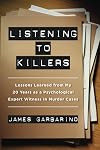
First, I want to commend the author on his pursuit to understand and learn from those who kill. Our society is too busy making stricter laws and longer prison sentences, treating the effect and not the cause. Compassion is easy when you share similar values and backgrounds, but not so easy when you don't. Yet, this is precisely when compassion is most needed.
This book isn't quite what I expected. While the author spends a lot of time listening to killers, we don't. He shares many stories, show more but they are in the form of short case studies. Most of what we learn about them comes to us filtered and dispersed through the author's narrative. The content is also structured in a way that sometimes scatters the information for each case among multiple chapters. This makes it a little harder, at least for me, to really follow and understand the roots of each killer.
All of the cases featured here are young males and females, having killed in their teens or young adulthood. These aren't the hardened criminals most people imagine murderers to be. I was pleasantly surprised by this, because it's a subject that desperately needs attention. The author's explanation of what he calls the "war zone mentality" is compelling. This is a topic I would love to see gain further attention.
I want to emphasize that, while the author wants us to understand these killers, he is not asking us to give them a free pass. Compassion and empathy does not mean a get-out-of-jail-free card. But locking a 14-year-old child away for life in an adult prison is also not the answer. What we are doing is obviously not working. These children aren't born killers. Identifying and treating the problems early, before the killing starts, is a first step we absolutely must take.
This book has some thought-provoking content. Our society must have this discussion. But readers need to approach with an open mind. The close-minded, prison nation mentality is largely responsible for creating this problem in the first place.
*I received this book from the publisher, via NetGalley, in exchange for my honest review.* show less
This book isn't quite what I expected. While the author spends a lot of time listening to killers, we don't. He shares many stories, show more but they are in the form of short case studies. Most of what we learn about them comes to us filtered and dispersed through the author's narrative. The content is also structured in a way that sometimes scatters the information for each case among multiple chapters. This makes it a little harder, at least for me, to really follow and understand the roots of each killer.
All of the cases featured here are young males and females, having killed in their teens or young adulthood. These aren't the hardened criminals most people imagine murderers to be. I was pleasantly surprised by this, because it's a subject that desperately needs attention. The author's explanation of what he calls the "war zone mentality" is compelling. This is a topic I would love to see gain further attention.
I want to emphasize that, while the author wants us to understand these killers, he is not asking us to give them a free pass. Compassion and empathy does not mean a get-out-of-jail-free card. But locking a 14-year-old child away for life in an adult prison is also not the answer. What we are doing is obviously not working. These children aren't born killers. Identifying and treating the problems early, before the killing starts, is a first step we absolutely must take.
This book has some thought-provoking content. Our society must have this discussion. But readers need to approach with an open mind. The close-minded, prison nation mentality is largely responsible for creating this problem in the first place.
*I received this book from the publisher, via NetGalley, in exchange for my honest review.* show less
Let's Talk About Living in a World With Violence: An Activity Book for School-Age Children by James Garbarino

James Garbarino, who goes by Dr. G, is ". . .a psychologist who helps grown-ups help children." Source: Page 1 of the book. This book begins by defining violence. It goes on to talk about places where violence happens, such as on TV, in the movies, in war, on the street, at school, and at home. Dr. G. names and describes ten things kids can do about violence. The ideas range from talking about it with grown-ups and other friends to writing a letter about it to a grown-up and mailing or show more delivering that letter personally. Drawing pictures is also encouraged. There is also a section labeled, "Books About Kids Who are Brave and Strong." It lists titles and gives brief synopsis, including ages of intended audiences, beginning with age 3 and going through teens. It includes fiction and non-fiction titles. show less

"James Garbarino is a former president of the Erikson Institute, in Chicago, a graduate school and research center for advanced study in child development. . .He is an internationally recognized expert on child abuse prevention and social policy issues." This book begins by defining violence. It goes on to talk about places where violence happens, such as on TV, in the movies, in war, on the street, at school, and at home. Dr. G. names and describes ten things kids can do about violence. The show more ideas range from talking about it with grown-ups and other friends to writing a letter about it to a grown-up and mailing or delivering that letter personally. Drawing pictures is also encouraged. There is a section labeled, "Books About Kids Who are Brave and Strong." It lists titles and gives brief synopsis, including ages of intended audiences, from age 3 and going through teens. It includes fiction and non-fiction titles. Spanish language copies are available from Erikson Institute, Chicago, Illinois. show less
Lists
Career (1)
You May Also Like


Statistics
- Works
- 27
- Members
- 558
- Popularity
- #44,765
- Rating
- 3.9
- Reviews
- 3
- ISBNs
- 63