
Charles Busch
Author of Whores of Lost Atlantis
About the Author
Works by Charles Busch
The Tale of the Allergist's Wife and Other Plays: Vampire Lesbians of Sodom, Psycho Beach Party, The Lady in Question, Red Scare on Sunset (2001) 119 copies
Three Plays By Charles Busch (Theodora She-Bitch of Byzantium, Times Square Angel, Pardon My Inquisition) (1992) 22 copies
Associated Works
Tagged
Common Knowledge
- Legal name
- Busch, Charles Louis
- Other names
- Dale, Mary
- Birthdate
- 1954-08-23
- Gender
- male
- Education
- Northwestern University
- Nationality
- USA
- Birthplace
- New York, New York, USA
- Places of residence
- New York, New York, USA (birthplace)
- Associated Place (for map)
- New York, New York, USA
Members
Reviews
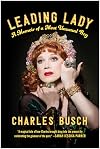
I'm not a big reader of memoirs. Too many people who write them haven't done anything worth memorializing. Given my love of movies, TV, music, and theatre, you'd think that showbiz memoirs might work for me, but even there, I quickly tire of the "and then I wrote/sang/starred in/directed..." that they often devolve into.
But "read a memoir" is one of the squares on this year's BingoDog card, and I am enough of a completist that, having started the card, I must finish it.
You will probably get show more a sense of the corner of the showbiz universe where Charles Busch lives if you know that the blurbs for the book are written by (among others) Alan Cumming, Bette Midler, Jinkx Monsoon, and Armistead Maupin. Busch's childhood love of classic mid-century American cinema led him to a career as a playwright and actor, writing affectionate spoofs and parodies of the sorts of movies that once starred Bette Davis or Joan Crawford, plays that featured great leading lady roles for himself to play.
Busch doesn't much like the phrase "drag queen" to describe what he does, and will only reluctantly tolerate "female impersonator." He simply thinks of himself as an actor who plays female roles. And that's what he's been doing since college, when he wrote a play for himself and a (male) classmate to star in, as female conjoined twins who argue melodramatically about whether or not to be surgically separated.
In his memoir, Busch alternates between telling his life story and sharing name-dropping anecdotes about his encounters with showbiz legends (Debbie Reynolds! Joan Rivers! Rita Moreno!). The chapters are short, and have a very strong "as told to" flavor; you get the sense that Busch spent a few weeks with a ghostwriter (*) who chose and arranged all of the best bits from Busch's retelling of his life story. The good news is that Busch has a big personality and a sharp, campy wit, and is reasonably willing to tell stories that don't always show him in the best light, so his anecdotes are entertaining reading.
(*The book is dedicated to Katharine Carr, who also receives a paragraph of effusive thanks in the acknowledgments; that's often how you can identify the ghostwriter of a celebrity memoir.)
Busch he has had an unusual and successful career, beginning with off-off-Broadway successes like Vampire Lesbians of Sodom and Theodora, She-Bitch of Byzantium. Initially seen as a campy, somewhat disreputable writer/actor who would never grow beyond a cult audience, Busch became a respected enough playwright to have a Tony-nominated play on Broadway (The Tale of the Allergist's Wife, in which he did not perform), and a skilled enough actor to star in movie adaptations of two of his plays (Psycho Beach Party and Die Mommie Die!).
In the personal side of the memoir, the dominant character is Busch's Aunt Lil, who raised him from the age of five after his mother died. She's a loving, practical, generous woman with more than a touch of Auntie Mame, and Busch's love for her shines through. I was always happy when Aunt Lil popped up for a page or two.
So as memoirs go, this one is pretty good, I guess. It's not going to make me rush out to read a lot more memoirs, but it was a moderately entertaining bit of breezy reading. show less
But "read a memoir" is one of the squares on this year's BingoDog card, and I am enough of a completist that, having started the card, I must finish it.
You will probably get show more a sense of the corner of the showbiz universe where Charles Busch lives if you know that the blurbs for the book are written by (among others) Alan Cumming, Bette Midler, Jinkx Monsoon, and Armistead Maupin. Busch's childhood love of classic mid-century American cinema led him to a career as a playwright and actor, writing affectionate spoofs and parodies of the sorts of movies that once starred Bette Davis or Joan Crawford, plays that featured great leading lady roles for himself to play.
Busch doesn't much like the phrase "drag queen" to describe what he does, and will only reluctantly tolerate "female impersonator." He simply thinks of himself as an actor who plays female roles. And that's what he's been doing since college, when he wrote a play for himself and a (male) classmate to star in, as female conjoined twins who argue melodramatically about whether or not to be surgically separated.
In his memoir, Busch alternates between telling his life story and sharing name-dropping anecdotes about his encounters with showbiz legends (Debbie Reynolds! Joan Rivers! Rita Moreno!). The chapters are short, and have a very strong "as told to" flavor; you get the sense that Busch spent a few weeks with a ghostwriter (*) who chose and arranged all of the best bits from Busch's retelling of his life story. The good news is that Busch has a big personality and a sharp, campy wit, and is reasonably willing to tell stories that don't always show him in the best light, so his anecdotes are entertaining reading.
(*The book is dedicated to Katharine Carr, who also receives a paragraph of effusive thanks in the acknowledgments; that's often how you can identify the ghostwriter of a celebrity memoir.)
Busch he has had an unusual and successful career, beginning with off-off-Broadway successes like Vampire Lesbians of Sodom and Theodora, She-Bitch of Byzantium. Initially seen as a campy, somewhat disreputable writer/actor who would never grow beyond a cult audience, Busch became a respected enough playwright to have a Tony-nominated play on Broadway (The Tale of the Allergist's Wife, in which he did not perform), and a skilled enough actor to star in movie adaptations of two of his plays (Psycho Beach Party and Die Mommie Die!).
In the personal side of the memoir, the dominant character is Busch's Aunt Lil, who raised him from the age of five after his mother died. She's a loving, practical, generous woman with more than a touch of Auntie Mame, and Busch's love for her shines through. I was always happy when Aunt Lil popped up for a page or two.
So as memoirs go, this one is pretty good, I guess. It's not going to make me rush out to read a lot more memoirs, but it was a moderately entertaining bit of breezy reading. show less

I read a play script that I checked out from the public library. I'm an actor who reads scripts for fun.
TRIGGER WARNINGS: Busch thinks cross-dressing is a funny gag, transphobia, male homosexuality is funny to him especially when it's two masculine men, female homosexuality is for his eyes only, rape references ("virgin sacrifice"), child abuse (mother of daughter), implied childhood sexual abuse, mockery of mental illnesses, racist caricatures depending on how the play is cast and show more accompanying directorial choices.
So. It has taken me two days to review this after reading it. The dates aren't incorrect; I just slept in until one pm today and count days strangely to make myself feel better when that happens. Two days of a wait time, after taking a two-hour cool-down period after initially reading it. This play obviously made me really, really mad. The play was turned into a movie in the 2000s, and--NICHOLAS BRENDAN WAS IN IT?! I AM SO DISAPPOINTED IN YOU, XANDER. Then again, Xander the -character- would -adore- this movie/play. He becomes less of a Nice Guy as Buffy progresses, but by, like, half or so. Still horrified that he sexually propositioned Buffy on his own wedding day. I saw five seconds of the movie when I was channel surfing one day as a late-teen and was really fucking uncomfortable. BASED OFF FIVE SECONDS. I remember exactly which clip it was, too.
Fast forward to now. A few years ago, a Seattle theater company held auditions for the original play. I was so excited to be auditioning for what I thought was a genderqueer role. It turned out to uh, be the lead. They were playing the original play dead fucking straight, no desperately needed updates to a play that was probably offensive by even 1988 standards. I don't care that the show takes place in the sixties--I have a feeling it pissed people off even back then. So, I got to the audition location. I think it was actually Freehold. The stage manager sat outside the studio room cheerfully greeting people. "I saw the movie," I blurted out, not mentioning I disliked the five seconds I saw. Said because I wanted to make conversation and also I was letting her know I thought the director plagiarized it. "We've gotten that a lot," she laughed. So, since finding out it was really a play first, I've felt bad about how I acted. I walked into the studio after handing over the usual papers and the director introduced me to my scene partner. I skimmed my sides and readied myself: it was gonna involve lots of touching for seductive purposes. There was no way I'd be able to do this, but I was gonna get through the audition. My scene partner was lying down on his stomach, and waved. He'd had people touching him all day and was totally relaxed. "He has a back injury, so touch him anywhere but be careful."
"Are you okay?" I asked, concerned.
"Oh, sure. Just got a little hurt doing a short film." Stunt double. We don't call it that here in Seattle--we say 'extra who can do physical movement.'
Every freaking line out of my mouth was accompanied with me immediately dropping character to ask if he was okay, and I grew increasingly alarmed as I realized I was reading for a sexualized split personality. My scene partner was totally fine, but was starting to worry about -me-. Yeah, didn't get a callback. Didn't want to see the show, either.
Two days ago, I read the play in twenty minutes or something. It's a quick read. I can't remember why I checked out this specific one. It was relevant to a topic I was interested in, I know. Can't remember details. The script opens with an introduction. Totally fine. I always read them, as they tell a lot about the play and serve as a warning in some instances. This one certainly did. Most introductions are a paragraph, maybe two. This one went on for three pages. Dude was clearly in love with himself and really proud of his work, and thought everyone would get a kick out of it. He certainly had. It was all melodrama and not to be taken seriously, he explained. For the lulz, we'd say today. Especially considering how many minority populations he was attacking (laughter at another's expense is the lulz definition I'm using for this context). I grimaced and realized I was really gonna hate this. I knew of only two groups that he was going to make fun of, at that part. There's five.
It pains me to admit this play followed a clear structure and hit the points of a typical play. (shrug) I'd feel comfortable with this, structure-wise and what was expected of me -from a strict acting standpoint-. The sets would have to be creative, and stagehands would be aplenty and were part of the show, if I recall correctly. The breaking of the fourth wall felt incredibly natural. Points for all that. Content-wise? Ugh. Misogyny runs deep in this show, as does utter hatred of virgins, both male and female. These attitudes are incredibly present today, too. Were it not for the now-outdated slang, this could be done today. Weed smoking carried a stigma for some of the characters, but not the Only Black Guy. Cringe. Grr. Female friendships are seen as secret lesbianism that should be abandoned for The Cock, or slim possibility thereof. Lesbianism is seen as baaad when they're not hot, in this show. And the best friend who's distraught at her friend ignoring her for a guy is portrayed as a shrill harpy and whiny ten-year-old. The characters are all in their early twenties, except the mom and incredibly unrealistic movie star. The lead role is that of a shy teenager who's discovering the possibility of boys and sex, and she's overwhelmed and scared. So of course the role is originated by the manly-man playwright who pointed out a few times that he performed with a month's worth of beard on his face. He was reluctant to acknowledge the possibility that a young woman might want the role, but pointed out she could have it if she wanted, in his casting notes.
The movie star is a Big Lipped Alligator Moment. I think I know what the playwright intended--for her to be a plot device and later pity fuck when Manly Surfer Male's Sidekick can't "convert" the upset best friend into having sex with him. The sad best friend being ~obviously a big lesbo~ was driven here HARD. I saw it as a normal, if melodramatic, struggle of growing apart but ohhh I totally picked up on what the playwright wanted. I did not approve. The shy teen worships the Manly Surfer Man and stands up a bit to her abusive mommeigh, who is an expy for Margaret White. I got chills every time Margaret White was onstage, and I was only -reading- the script. What a well-written character we were all supposed to hate.
Shy Teen has what is now called Dissociative Identity Disorder. The setup and foreshadowing is extremely poor in that it's blink and you miss it, and would actually have to be familiar with DID symptoms to get it. Actually, there was only one symptom: talking in funny voices and being unaware. There is much more to it than that. I was offended. And of course we have the Split Personality Token Triad: the hypersexualized one, the little girl, and the um, Sassy Black Woman who's poor and angry. That last one is a bit specific, but I see this triad allll the time with variants on the Sassy Black Woman. And the shy teen is always, always lily white. It's played for laughs. It shouldn't, at all.
This play is disgusting.
EDITED TO ADD BECAUSE I FORGOT: I read this whole script, from three-page introduction to property list (it's in the back) to all three alternate opening scenes. He is so, so clearly in love with his work. He reminds me strongly of EL James and SMeyer in that regard--same way of stroking the ego and Komedy use, and and and. Ewwww.
A movie I strongly recommend that treats DID accurately and with respect is Frankie And Alice, starring Halle Berry. It's based on a true story. She has five personalities in the movie, all distinct. The triad is there. What stunned me was it's not Sassy Black Woman: it's Racist White Woman in a Woman of Color's body. MY G-D, the -way- it was handled took my breath away. My aunt brought the DVD over. We were enthralled and even watched commentary. Halle Barry was stunned, too, and thought, "A racist white woman as a split personality for a Black woman? That can't be true." It was. Halle Berry got to meet the real Frankie, and glowed when talking about her. "She says Alice (racist white lady) does visit her from time to time, but she has learned how to manage her." What class! What a smooth and encouraging way of talking about possible positive work to be done!
Edited to remove an outdated paragraph. Please go watch "Frankie and Alice" starring Halle Barry. It is much better at handling things that Busch so callously misrepresents. show less
TRIGGER WARNINGS: Busch thinks cross-dressing is a funny gag, transphobia, male homosexuality is funny to him especially when it's two masculine men, female homosexuality is for his eyes only, rape references ("virgin sacrifice"), child abuse (mother of daughter), implied childhood sexual abuse, mockery of mental illnesses, racist caricatures depending on how the play is cast and show more accompanying directorial choices.
So. It has taken me two days to review this after reading it. The dates aren't incorrect; I just slept in until one pm today and count days strangely to make myself feel better when that happens. Two days of a wait time, after taking a two-hour cool-down period after initially reading it. This play obviously made me really, really mad. The play was turned into a movie in the 2000s, and--NICHOLAS BRENDAN WAS IN IT?! I AM SO DISAPPOINTED IN YOU, XANDER. Then again, Xander the -character- would -adore- this movie/play. He becomes less of a Nice Guy as Buffy progresses, but by, like, half or so. Still horrified that he sexually propositioned Buffy on his own wedding day. I saw five seconds of the movie when I was channel surfing one day as a late-teen and was really fucking uncomfortable. BASED OFF FIVE SECONDS. I remember exactly which clip it was, too.
Fast forward to now. A few years ago, a Seattle theater company held auditions for the original play. I was so excited to be auditioning for what I thought was a genderqueer role. It turned out to uh, be the lead. They were playing the original play dead fucking straight, no desperately needed updates to a play that was probably offensive by even 1988 standards. I don't care that the show takes place in the sixties--I have a feeling it pissed people off even back then. So, I got to the audition location. I think it was actually Freehold. The stage manager sat outside the studio room cheerfully greeting people. "I saw the movie," I blurted out, not mentioning I disliked the five seconds I saw. Said because I wanted to make conversation and also I was letting her know I thought the director plagiarized it. "We've gotten that a lot," she laughed. So, since finding out it was really a play first, I've felt bad about how I acted. I walked into the studio after handing over the usual papers and the director introduced me to my scene partner. I skimmed my sides and readied myself: it was gonna involve lots of touching for seductive purposes. There was no way I'd be able to do this, but I was gonna get through the audition. My scene partner was lying down on his stomach, and waved. He'd had people touching him all day and was totally relaxed. "He has a back injury, so touch him anywhere but be careful."
"Are you okay?" I asked, concerned.
"Oh, sure. Just got a little hurt doing a short film." Stunt double. We don't call it that here in Seattle--we say 'extra who can do physical movement.'
Every freaking line out of my mouth was accompanied with me immediately dropping character to ask if he was okay, and I grew increasingly alarmed as I realized I was reading for a sexualized split personality. My scene partner was totally fine, but was starting to worry about -me-. Yeah, didn't get a callback. Didn't want to see the show, either.
Two days ago, I read the play in twenty minutes or something. It's a quick read. I can't remember why I checked out this specific one. It was relevant to a topic I was interested in, I know. Can't remember details. The script opens with an introduction. Totally fine. I always read them, as they tell a lot about the play and serve as a warning in some instances. This one certainly did. Most introductions are a paragraph, maybe two. This one went on for three pages. Dude was clearly in love with himself and really proud of his work, and thought everyone would get a kick out of it. He certainly had. It was all melodrama and not to be taken seriously, he explained. For the lulz, we'd say today. Especially considering how many minority populations he was attacking (laughter at another's expense is the lulz definition I'm using for this context). I grimaced and realized I was really gonna hate this. I knew of only two groups that he was going to make fun of, at that part. There's five.
It pains me to admit this play followed a clear structure and hit the points of a typical play. (shrug) I'd feel comfortable with this, structure-wise and what was expected of me -from a strict acting standpoint-. The sets would have to be creative, and stagehands would be aplenty and were part of the show, if I recall correctly. The breaking of the fourth wall felt incredibly natural. Points for all that. Content-wise? Ugh. Misogyny runs deep in this show, as does utter hatred of virgins, both male and female. These attitudes are incredibly present today, too. Were it not for the now-outdated slang, this could be done today. Weed smoking carried a stigma for some of the characters, but not the Only Black Guy. Cringe. Grr. Female friendships are seen as secret lesbianism that should be abandoned for The Cock, or slim possibility thereof. Lesbianism is seen as baaad when they're not hot, in this show. And the best friend who's distraught at her friend ignoring her for a guy is portrayed as a shrill harpy and whiny ten-year-old. The characters are all in their early twenties, except the mom and incredibly unrealistic movie star. The lead role is that of a shy teenager who's discovering the possibility of boys and sex, and she's overwhelmed and scared. So of course the role is originated by the manly-man playwright who pointed out a few times that he performed with a month's worth of beard on his face. He was reluctant to acknowledge the possibility that a young woman might want the role, but pointed out she could have it if she wanted, in his casting notes.
The movie star is a Big Lipped Alligator Moment. I think I know what the playwright intended--for her to be a plot device and later pity fuck when Manly Surfer Male's Sidekick can't "convert" the upset best friend into having sex with him. The sad best friend being ~obviously a big lesbo~ was driven here HARD. I saw it as a normal, if melodramatic, struggle of growing apart but ohhh I totally picked up on what the playwright wanted. I did not approve. The shy teen worships the Manly Surfer Man and stands up a bit to her abusive mommeigh, who is an expy for Margaret White. I got chills every time Margaret White was onstage, and I was only -reading- the script. What a well-written character we were all supposed to hate.
Shy Teen has what is now called Dissociative Identity Disorder. The setup and foreshadowing is extremely poor in that it's blink and you miss it, and would actually have to be familiar with DID symptoms to get it. Actually, there was only one symptom: talking in funny voices and being unaware. There is much more to it than that. I was offended. And of course we have the Split Personality Token Triad: the hypersexualized one, the little girl, and the um, Sassy Black Woman who's poor and angry. That last one is a bit specific, but I see this triad allll the time with variants on the Sassy Black Woman. And the shy teen is always, always lily white. It's played for laughs. It shouldn't, at all.
This play is disgusting.
EDITED TO ADD BECAUSE I FORGOT: I read this whole script, from three-page introduction to property list (it's in the back) to all three alternate opening scenes. He is so, so clearly in love with his work. He reminds me strongly of EL James and SMeyer in that regard--same way of stroking the ego and Komedy use, and and and. Ewwww.
A movie I strongly recommend that treats DID accurately and with respect is Frankie And Alice, starring Halle Berry. It's based on a true story. She has five personalities in the movie, all distinct. The triad is there. What stunned me was it's not Sassy Black Woman: it's Racist White Woman in a Woman of Color's body. MY G-D, the -way- it was handled took my breath away. My aunt brought the DVD over. We were enthralled and even watched commentary. Halle Barry was stunned, too, and thought, "A racist white woman as a split personality for a Black woman? That can't be true." It was. Halle Berry got to meet the real Frankie, and glowed when talking about her. "She says Alice (racist white lady) does visit her from time to time, but she has learned how to manage her." What class! What a smooth and encouraging way of talking about possible positive work to be done!
Edited to remove an outdated paragraph. Please go watch "Frankie and Alice" starring Halle Barry. It is much better at handling things that Busch so callously misrepresents. show less
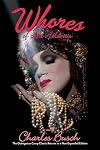
Julian Young has been struggling for quite some time to get his one-man show off the ground, performing in small theaters across the country. At one booking in Boise, Idaho, his frustration at playing only in smaller theaters finally comes to a head when a fire rips through the Way-Off-Broadway Theater, and he's forced to head back to New York. Not content to keep at the temp jobs that fill his days, he convinces long-time friend Joel Finley to help him stage one last show -- "Whores of Lost show more Atlantis" -- at a trendy East Village theater known as Golgotha. Assembling a cast of inexperienced actors and casting himself in the lead as Milena, the play becomes an underground hit.
The novel follows Julian and his troupe -- The Imitation of Life Players -- as they make their way from a cult hit into a possible run off-Broadway, maneuvering through the ups and downs of intricate relationships, AIDS, a disgruntled diva by the name of Kiko, Julian's new-found stardom as a drag performer, and a love interest for Julian with the charming and mysterious Don Caspar.
It's very easy to see find a comparison between the character Julian Young and the author Charles Busch. Julian speaks and acts like one of the grand ladies of film from the Golden Age of Hollywood, a role very similar to Busch in one of his films such as "Die, Mommie, Die!" or "Psycho Beach Party". That no-nonsense strength that Julian finds from those ladies slowly builds and changes him as he begins to grow accustomed to his new female persona, and at times it frightens and confuses him as he sometimes can't distinguish between the two himself.
But it's the stories about the relationships that the actors form as the story progresses -- the romances between fellow actors, coming up with new shows every week, taking care of one of their own when he becomes very ill -- that move this story along. And I like that Busch doesn't focus solely on Julian. None of the characters in the novel "Whores of Lost Atlantis" is a secondary character; each one depends upon the others to not only get the shows running but to keep their lives in order. I thoroughly enjoyed getting to know this group.
Busch's underground theater world of the East Village is also vividly drawn, from the darkened interior of Golgotha to the characters themselves. He totally enveloped me in that world, making me feel I was sitting in the audience as the troupe performed their risqué pieces or following them through the city as they searched for costume pieces or sponsors for their potential off-Broadway run.
"Whores of Lost Atlantis" is a fun romp through the world of theater, and fans of both theater and Charles Busch should definitely read this one. show less
The novel follows Julian and his troupe -- The Imitation of Life Players -- as they make their way from a cult hit into a possible run off-Broadway, maneuvering through the ups and downs of intricate relationships, AIDS, a disgruntled diva by the name of Kiko, Julian's new-found stardom as a drag performer, and a love interest for Julian with the charming and mysterious Don Caspar.
It's very easy to see find a comparison between the character Julian Young and the author Charles Busch. Julian speaks and acts like one of the grand ladies of film from the Golden Age of Hollywood, a role very similar to Busch in one of his films such as "Die, Mommie, Die!" or "Psycho Beach Party". That no-nonsense strength that Julian finds from those ladies slowly builds and changes him as he begins to grow accustomed to his new female persona, and at times it frightens and confuses him as he sometimes can't distinguish between the two himself.
But it's the stories about the relationships that the actors form as the story progresses -- the romances between fellow actors, coming up with new shows every week, taking care of one of their own when he becomes very ill -- that move this story along. And I like that Busch doesn't focus solely on Julian. None of the characters in the novel "Whores of Lost Atlantis" is a secondary character; each one depends upon the others to not only get the shows running but to keep their lives in order. I thoroughly enjoyed getting to know this group.
Busch's underground theater world of the East Village is also vividly drawn, from the darkened interior of Golgotha to the characters themselves. He totally enveloped me in that world, making me feel I was sitting in the audience as the troupe performed their risqué pieces or following them through the city as they searched for costume pieces or sponsors for their potential off-Broadway run.
"Whores of Lost Atlantis" is a fun romp through the world of theater, and fans of both theater and Charles Busch should definitely read this one. show less
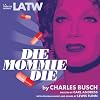
An audio production of this darkly comic mystery play. Angela Arden is desperate to get out of her marriage to Hollywood movie producer, Sol Sussman, and what better way than poison. Her daughter, Edith, however is distraught by her father's death, convinced her mother did it, and will stop at nothing to prove it. A highly entertaining and campy take on a mystery, Charles Busch constantly steals the show as Angela (based on some of the laughter from the live audience at the recording, there show more are additional comic moments just from having the actors on the stage that the audio audience sadly misses). I was happily surprised by the resolution of the mystery and utterly enjoyed the journey. show less
Awards


You May Also Like


Associated Authors
Statistics
- Works
- 45
- Also by
- 4
- Members
- 602
- Popularity
- #41,740
- Rating
- 4.2
- Reviews
- 8
- ISBNs
- 49
- Favorited
- 4