

James Norman Hall (1887–1951)
Author of Mutiny on the Bounty
About the Author
James Norman Hall, 1887 - 1951 James Norman Hall was born at Colfax, Iowa. He attended public schools in Colfax, and entered Grinnell College, Iowa, graduating in 1910. From 1910 to 1914 he was a social worker in Boston, working for Society for the Prevention of Cruelty to Children. At the outbreak show more of World War I, Hall joined the British Army. He served in the 9th Battalion Royal Fusiliers, taking part in the Battle of Loos. His war memoirs were published in 1916 under the title Kitcher's Mob and High Adventure. Hall re-enlisted in 1916 as a member of the Lafayette Flying Corps. During those years, he met Charles Nordhoff, a pilot serving in the same corps. When Hall and Nordhoff received an advance from Harper's to write travel articles, they moved to Tahiti. In 1921 their travel book Faery Lands of the South Seas was published. Eventually they parted ways, with Hall continuing with travel books and Nordhoff publishing novels. In 1929 Nordhoff's and Hall's jointly written book about flying, Falcons of France was published. Hall suggested the team start to write Mutiny on the Bounty in 1932, and ended up a trilogy that included Men against the Sea in 1933 and Pitcairn's Island in 1934. Nordhoff and Hall published six more coauthored novels, although the last three were largely composed by Hall. Several of these books were filmed. In his later years, Hall wrote children stories about Dr. Dogbody, a peg-legged old sailor, travel essays, narrative poems, and an collection of short stories. In 1950, Hall returned to the United States to accept an honorary doctorate from Grinnell University. He died the next year in Tahiti in 1951. His posthumously published memoirs, My Island Home, appeared in 1952. (Bowker Author Biography) show less
Image credit: James Norman Hall - Photo: Sylvie-Anne Gougeon
Series
Works by James Norman Hall
Best-in-Books: Grand Hotel / Voice of Bugle Ann / Life with Father / Mutiny on the Bounty / Postman Always Rings Twice (1962) — Contributor — 3 copies
Under the South, 2 copies
Prisoner Of War 1 copy
Associated Works
World War I and America: Told by the Americans Who Lived It (1918) — Contributor — 225 copies, 1 review
Stories of the Sea — Contributor — 4 copies
The Best Short Stories of 1929 and the Yearbook of the American Short Story (1929) — Contributor — 3 copies
A Modern Galaxy — Contributor — 2 copies
Mutiny on the Bounty: An Award-Winning Three-Part Classic Serial: A Full-Cast BBC Radio Drama (1997) — Work based on — 1 copy, 1 review
Omnibook Magazine March 1953 1 copy
Tagged
Common Knowledge
- Canonical name
- Hall, James Norman
- Legal name
- Hall, James Norman
- Birthdate
- 1887-04-22
- Date of death
- 1951-07-05
- Gender
- male
- Education
- Ma. Grinnell College, Grinnell, Iowa (1910)
- Occupations
- author
essayist
poet
soldier
Social worker Society for the Prevention of Cruelty to Children, Boston
Pilot, WWI - Awards and honors
- Honorary doctorate degree in literature Grinnell College, Grinnell, Iowa (1950)
- Nationality
- USA
- Birthplace
- Colfax, Iowa, USA
- Places of residence
- Colfax, Iowa, USA
Boston, Massachusetts, USA
Arue, Tahiti - Place of death
- Arue, Tahiti
- Burial location
- a hill above his house in Arue, Tahiti
- Associated Place (for map)
- USA
Members
Reviews
https://nwhyte.livejournal.com/2927397.html
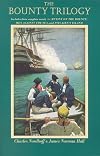
The three books are pretty distinct. The first, Mutiny on the Bounty, is narrated by Byam, the fictional midshipman played by Franchot Tone in the film; the Bligh of the book is if anything even more monstrous than the Bligh of the film, and the confusion of the mutiny itself - a ten-minute spurt of late-night impulse which had long-lasting effects - better conveyed. The Tahitians are referred to invariably as "Indians", but otherwise treated as a show more dignified culture which the English sailors disrupt by their presence; the only cannibal joke is directed against the cheapskate purveyors of Portsmouth, who allegedly look out for black sailors to add to their mix.
However, it's an anti-Semitic novel - an aspect completely dropped from the film. At Spithead, when we first encounter the Bounty, "sharp-faced Jews, in their wherries, hovered alongside, eager to lend money at interest against pay day, or to sell on credit the worthless trinkets on their trays" and the second in command declares that "I'd like to sink the lot of those Jews". Samuel, Bligh's clerk, is described as "a smug, tight-lipped little man, of a Jewish cast of countenance" and later explicitly as "a London Jew". In fact, the real Samuel appears to have been from Edinburgh, where a George Samuel was a burgess in 1699; so this anti-Semitism is entirely gratuitously introduced to the historical record by Nordhoff and Hall. (As indeed are many of Bligh's portrayed acts of tyranny.)
Given what is said about so many historical characters, it's a bit odd that Nordhoff and Hall chose to disguise the real midshipman Peter Heywood as the fictional Alexander Byam.
One of the shock moments in the film is that when the Pandora comes to Tahiti to arrest the mutineers, it turns out that Bligh is in command. In the book, as in history, he was by then on another assignment elsewhere. Otherwise the film sticks pretty closely to the book.
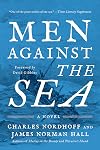
I read Men Against the Sea during a particularly insomniac night; it's the shortest of the three books, told in the voice of the (historical) surgeon's mate of the Bounty, Thomas Ledward, explaining the epic 41-day, 6,500 km journey taken by Bligh and 18 others in an 7-metre long open boat from the site of the mutiny (near Tofua, one of the Tonga islands) to Kupang at the western end of Timor, avoiding the potentially hostile shores of Australia and other islands - one man was killed at the very beginning, on Tofua. It is an extraordinary feat of navigation, and Nordhoff and Hall succeed in spinning it out; the internal tensions among the 18 survivors are easy to imagine and well portrayed. The impact of their ordeal on the men's digestive systems also is a disturbing but reasonable detail. Interestingly, Samuel is portrayed here as just another crew member; the previous book's anti-Semitism has disappeared. The book ends with Ledward taking his leave of Bligh, who is on his way back to London. In real life, Ledward was one of the five crewmen who died very soon after they reached Batavia (where they all went shortly after arriving in Timor).
Pitcairn's Island, unlike the other two volumes, has no narrator, apart from the last three chapters which are told by Alexander Smith aka John Adams. Of the fifteen men (nine English and six Tahitians) who landed at Pitcairn in 1789, he was the only survivor when the island was eventually discovered by the American ship Topaz in 1808; Smith/Adams himself gave several different accounts of what had happened during the remaining two decades of his life, and one of the women who moved there in 1789 eventually returned to Tahiti and gave her own account. It's a messy story of violence, alcoholism, and sexual confusion, in an earthly paradise - Pitcairn has the natural resources to support a couple of hundred inhabitants, but even so the small settlement disintegrated fatally.
Nordhoff and Hall dramatise some parts - Fletcher Christian here lives for a few agonising days after the inevitable killing starts, whereas most historical accounts agree that he was one of the first to die - and undersell others - I would very much like someone to write the story from the Tahitian women's perspective, given that they outnumbered the men by three to one after the first spate of killings, and by twelve to one from 1800 when the second last mutineer died. It's also striking that the society was a very young one - Fletcher Christian was 24 when the mutiny took place, and 28 when he was killed; the other mutineers (and presumably the Tahitian men and women they brought with them to Pitcairn) must have been mostly the same age or even younger. Nordhoff and Hall fall back on the clichés of the veteran tars, the unsophisticated "Indians" or "Maori", and their statesmanlike leader, rather than the possible truth of the confused young men and women in an extraordinary situation. But the moment of discovery of the island by the Topaz is particularly well done, and is almost worth the read in itself. show less
The three books are pretty distinct. The first, Mutiny on the Bounty, is narrated by Byam, the fictional midshipman played by Franchot Tone in the film; the Bligh of the book is if anything even more monstrous than the Bligh of the film, and the confusion of the mutiny itself - a ten-minute spurt of late-night impulse which had long-lasting effects - better conveyed. The Tahitians are referred to invariably as "Indians", but otherwise treated as a show more dignified culture which the English sailors disrupt by their presence; the only cannibal joke is directed against the cheapskate purveyors of Portsmouth, who allegedly look out for black sailors to add to their mix.
However, it's an anti-Semitic novel - an aspect completely dropped from the film. At Spithead, when we first encounter the Bounty, "sharp-faced Jews, in their wherries, hovered alongside, eager to lend money at interest against pay day, or to sell on credit the worthless trinkets on their trays" and the second in command declares that "I'd like to sink the lot of those Jews". Samuel, Bligh's clerk, is described as "a smug, tight-lipped little man, of a Jewish cast of countenance" and later explicitly as "a London Jew". In fact, the real Samuel appears to have been from Edinburgh, where a George Samuel was a burgess in 1699; so this anti-Semitism is entirely gratuitously introduced to the historical record by Nordhoff and Hall. (As indeed are many of Bligh's portrayed acts of tyranny.)
Given what is said about so many historical characters, it's a bit odd that Nordhoff and Hall chose to disguise the real midshipman Peter Heywood as the fictional Alexander Byam.
One of the shock moments in the film is that when the Pandora comes to Tahiti to arrest the mutineers, it turns out that Bligh is in command. In the book, as in history, he was by then on another assignment elsewhere. Otherwise the film sticks pretty closely to the book.
I read Men Against the Sea during a particularly insomniac night; it's the shortest of the three books, told in the voice of the (historical) surgeon's mate of the Bounty, Thomas Ledward, explaining the epic 41-day, 6,500 km journey taken by Bligh and 18 others in an 7-metre long open boat from the site of the mutiny (near Tofua, one of the Tonga islands) to Kupang at the western end of Timor, avoiding the potentially hostile shores of Australia and other islands - one man was killed at the very beginning, on Tofua. It is an extraordinary feat of navigation, and Nordhoff and Hall succeed in spinning it out; the internal tensions among the 18 survivors are easy to imagine and well portrayed. The impact of their ordeal on the men's digestive systems also is a disturbing but reasonable detail. Interestingly, Samuel is portrayed here as just another crew member; the previous book's anti-Semitism has disappeared. The book ends with Ledward taking his leave of Bligh, who is on his way back to London. In real life, Ledward was one of the five crewmen who died very soon after they reached Batavia (where they all went shortly after arriving in Timor).
Pitcairn's Island, unlike the other two volumes, has no narrator, apart from the last three chapters which are told by Alexander Smith aka John Adams. Of the fifteen men (nine English and six Tahitians) who landed at Pitcairn in 1789, he was the only survivor when the island was eventually discovered by the American ship Topaz in 1808; Smith/Adams himself gave several different accounts of what had happened during the remaining two decades of his life, and one of the women who moved there in 1789 eventually returned to Tahiti and gave her own account. It's a messy story of violence, alcoholism, and sexual confusion, in an earthly paradise - Pitcairn has the natural resources to support a couple of hundred inhabitants, but even so the small settlement disintegrated fatally.
Nordhoff and Hall dramatise some parts - Fletcher Christian here lives for a few agonising days after the inevitable killing starts, whereas most historical accounts agree that he was one of the first to die - and undersell others - I would very much like someone to write the story from the Tahitian women's perspective, given that they outnumbered the men by three to one after the first spate of killings, and by twelve to one from 1800 when the second last mutineer died. It's also striking that the society was a very young one - Fletcher Christian was 24 when the mutiny took place, and 28 when he was killed; the other mutineers (and presumably the Tahitian men and women they brought with them to Pitcairn) must have been mostly the same age or even younger. Nordhoff and Hall fall back on the clichés of the veteran tars, the unsophisticated "Indians" or "Maori", and their statesmanlike leader, rather than the possible truth of the confused young men and women in an extraordinary situation. But the moment of discovery of the island by the Topaz is particularly well done, and is almost worth the read in itself. show less
https://nwhyte.livejournal.com/2927397.html
I read Men Against the Sea during a particularly insomniac night; it's the shortest of the three books, told in the voice of the (historical) surgeon's mate of the Bounty, Thomas Ledward, explaining the epic 41-day, 6,500 km journey taken by Bligh and 18 others in an 7-metre long open boat from the site of the mutiny (near Tofua, one of the Tonga islands) to Kupang at the western end of Timor, avoiding the potentially hostile shores of Australia and show more other islands - one man was killed at the very beginning, on Tofua. It is an extraordinary feat of navigation, and Nordhoff and Hall succeed in spinning it out; the internal tensions among the 18 survivors are easy to imagine and well portrayed. The impact of their ordeal on the men's digestive systems also is a disturbing but reasonable detail. Interestingly, Samuel is portrayed here as just another crew member; the previous book's anti-Semitism has disappeared. The book ends with Ledward taking his leave of Bligh, who is on his way back to London. In real life, Ledward was one of the five crewmen who died very soon after they reached Batavia (where they all went shortly after arriving in Timor). show less
I read Men Against the Sea during a particularly insomniac night; it's the shortest of the three books, told in the voice of the (historical) surgeon's mate of the Bounty, Thomas Ledward, explaining the epic 41-day, 6,500 km journey taken by Bligh and 18 others in an 7-metre long open boat from the site of the mutiny (near Tofua, one of the Tonga islands) to Kupang at the western end of Timor, avoiding the potentially hostile shores of Australia and show more other islands - one man was killed at the very beginning, on Tofua. It is an extraordinary feat of navigation, and Nordhoff and Hall succeed in spinning it out; the internal tensions among the 18 survivors are easy to imagine and well portrayed. The impact of their ordeal on the men's digestive systems also is a disturbing but reasonable detail. Interestingly, Samuel is portrayed here as just another crew member; the previous book's anti-Semitism has disappeared. The book ends with Ledward taking his leave of Bligh, who is on his way back to London. In real life, Ledward was one of the five crewmen who died very soon after they reached Batavia (where they all went shortly after arriving in Timor). show less
A story told as a frame, sometime in the late 1920s(?): the narrator, Dr. Kersaint is sitting on the afterdeck of a schooner moored off the island Manukura in the Polynesian coral atolls in the far eastern Pacific. He is chatting with a newly appointed gov't representative to the islands, Vernier. He proceeds to tell an unbelievable story but told in such a way as to invite the listener, and we readers, to enter into the story itself. The formal style and beginning of the novel reminded a show more bit of the beginning of Conrad's Heart of Darkness.
The doctor describes the captain, Capt Nagle, a regular visitor to the farflung village in his supply boat, the Katopua, reaching Manukura twice a year, without fail. He introduces us also to his crew, specifically a Manukura native named Terangi, who as a young teen, is taken on board to learn the seafaring trade (and also to prevent him to signing up to serve in WWI). By war's end, Terangi is a handsome, unusually strong first mate, and had recently married when in his home port. Later, at a nearby port off another island, Cpt Nagle and his men are visiting a local tavern. Terangi is accosted by a drunken white "Colonial" because Terangi refused to give the man his seat. After the man slapped Terangi, Terangi returned with a powerful blow of his own, unfortunately breaking the man's jaw. Rather than let it go, or fine the young Polynesian, he brought up charges against Terangi in the British colonial courts in Tahiti. Subsequently, and to Capt Nagle's deep frustration (he tried very hard to get the charges dismissed) Terangi was sentenced to 6 mo in jail. He tried to counsel Terangi to be patient, and promised to inform his young wife Marama when the Katopua would return to Manukura what had transpired. But he feared, because he knew the nature of Tuamotu men (Polynesians from this particular region) that they were unaccustomed to white colonial people's ways, and would not easily submit to prison discipline. And he was right; Terangi easily escaped from the prison, & did so multiple times, but the Tahitian people turned him in, time and again, partly to appease the colonial authorities, and partly (eventually) because there was a reward placed for his capture.
The story goes on to describe daily life and happenings back at Manukura: there were the four European residents (de Laage, the French colonial Administrator; his wife Madame Germaine DeLaage, Father Paul, and the doctor himself. ) There were over 150 other Manukura people, many whom could count their Polynesian ancestors back many, many generations.
Of course, the travails and multiple escapes of Terangi add pathos to the story: his stalwart wife waiting patiently for him to return home, a young baby girl birthed without her father even seeing her, the colonial authorities dictating longer and longer prison sentences for his escapes, and the pride but worry experienced by Terangi's family members, hoping he could somehow, some way return to Manukura in peace. We also become better acquainted with Father Paul, a man who was sent out from France to serve the Tuamotu people almost 50 years ago, and learned to not only embrace his farflung post, but to learn the Manukura tongue & to love the people as his flock.
While written in the mid 1930s, with the subsequent white colonial overlay attitude still so commonly accepted back then, the authors present everyone in the story with sympathy and respect - including the Manukura characters.
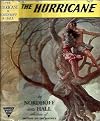
Of course, the story begins to accelerate towards the climax, when Terangi manages to escape once again, not just Tahiti, but finds his way -barely- out on the open ocean- to return for one more reunion, brief as it may be, with his wife & now growing daughter on his home island. Terrible weather is brewing out on the open Pacific, and the authors do an excellent job building the suspense for what will surely be the worst storm the Manukura inhabitants have ever experienced; it is titled The Hurricane! As we learn of Terangi's secret arrival, the Administrator's suspicions of his whereabouts, & insistence on searching for him throughout the many nearby islands, & Terangi's family & friends actions to maintain his freedom, we also are picking up details of the weather. One of the authors' best techniques are providing the small details that heighten the tension: Madame de Laage's barometer begins to drop precipitously, and the doctor, her friend, realizes with quiet horror that the hurricane will be bearing down on their small island, merely so many feet above sea level, even at its one "hill". The ominious storm, and how the people try to "ride it out" are described with empathy, and appropriate terror, and great detail by the narrator, Dr. Kersaint, who miraculously lives through it. The other -very few- survivors - and the closing story of Terangi carry the reader forward to the closing pages.
I couldn't put it down; it is as good a tale as many a reviewer deems it: "A grand yarn, full of action and told with unaffected beauty," (NY Times Book Review). show less
The doctor describes the captain, Capt Nagle, a regular visitor to the farflung village in his supply boat, the Katopua, reaching Manukura twice a year, without fail. He introduces us also to his crew, specifically a Manukura native named Terangi, who as a young teen, is taken on board to learn the seafaring trade (and also to prevent him to signing up to serve in WWI). By war's end, Terangi is a handsome, unusually strong first mate, and had recently married when in his home port. Later, at a nearby port off another island, Cpt Nagle and his men are visiting a local tavern. Terangi is accosted by a drunken white "Colonial" because Terangi refused to give the man his seat. After the man slapped Terangi, Terangi returned with a powerful blow of his own, unfortunately breaking the man's jaw. Rather than let it go, or fine the young Polynesian, he brought up charges against Terangi in the British colonial courts in Tahiti. Subsequently, and to Capt Nagle's deep frustration (he tried very hard to get the charges dismissed) Terangi was sentenced to 6 mo in jail. He tried to counsel Terangi to be patient, and promised to inform his young wife Marama when the Katopua would return to Manukura what had transpired. But he feared, because he knew the nature of Tuamotu men (Polynesians from this particular region) that they were unaccustomed to white colonial people's ways, and would not easily submit to prison discipline. And he was right; Terangi easily escaped from the prison, & did so multiple times, but the Tahitian people turned him in, time and again, partly to appease the colonial authorities, and partly (eventually) because there was a reward placed for his capture.
The story goes on to describe daily life and happenings back at Manukura: there were the four European residents (de Laage, the French colonial Administrator; his wife Madame Germaine DeLaage, Father Paul, and the doctor himself. ) There were over 150 other Manukura people, many whom could count their Polynesian ancestors back many, many generations.
Of course, the travails and multiple escapes of Terangi add pathos to the story: his stalwart wife waiting patiently for him to return home, a young baby girl birthed without her father even seeing her, the colonial authorities dictating longer and longer prison sentences for his escapes, and the pride but worry experienced by Terangi's family members, hoping he could somehow, some way return to Manukura in peace. We also become better acquainted with Father Paul, a man who was sent out from France to serve the Tuamotu people almost 50 years ago, and learned to not only embrace his farflung post, but to learn the Manukura tongue & to love the people as his flock.
While written in the mid 1930s, with the subsequent white colonial overlay attitude still so commonly accepted back then, the authors present everyone in the story with sympathy and respect - including the Manukura characters.
Of course, the story begins to accelerate towards the climax, when Terangi manages to escape once again, not just Tahiti, but finds his way -barely- out on the open ocean- to return for one more reunion, brief as it may be, with his wife & now growing daughter on his home island. Terrible weather is brewing out on the open Pacific, and the authors do an excellent job building the suspense for what will surely be the worst storm the Manukura inhabitants have ever experienced; it is titled The Hurricane! As we learn of Terangi's secret arrival, the Administrator's suspicions of his whereabouts, & insistence on searching for him throughout the many nearby islands, & Terangi's family & friends actions to maintain his freedom, we also are picking up details of the weather. One of the authors' best techniques are providing the small details that heighten the tension: Madame de Laage's barometer begins to drop precipitously, and the doctor, her friend, realizes with quiet horror that the hurricane will be bearing down on their small island, merely so many feet above sea level, even at its one "hill". The ominious storm, and how the people try to "ride it out" are described with empathy, and appropriate terror, and great detail by the narrator, Dr. Kersaint, who miraculously lives through it. The other -very few- survivors - and the closing story of Terangi carry the reader forward to the closing pages.
I couldn't put it down; it is as good a tale as many a reviewer deems it: "A grand yarn, full of action and told with unaffected beauty," (NY Times Book Review). show less

Charles Nordhoff is listed as the co-author. But this is James Norman Hall's book. Entirely. It is apparent in everything from the childhood setting in Iowa to the imagery that also appears in other books that Hall had already finished or would write later, including Lost Island and his autobiography, My Island Home. Also conspicuous is a complete change in writing style and tone. The High Barbaree is filled with contemplative narration. Some critics, including Hall himself, saw this as the show more writer's weakness. It's not. It's what separates this work from his others and makes it, in retrospect, his forgotten masterpiece. Nordhoff was excellent at framing the action in their co-authored books. That is what made their most cinematic friendly books into their most successful, The Mutiny on the Bounty and The Hurricane. But The High Barbaree walks a fine line between the surreality of a dissolving dream and the sure-footedness of a belief in a higher spiritual realm.
The story itself is set during World War II in the South Pacific, in the vast expanse of open ocean amidst the Caroline and Marshall islands. Survivors of a Catalina PBY flying boat are adrift and awaiting rescue. As one day merges into another on the becalmed ocean, the central character, Alec Brooke, remembers a childhood story of a lost island paradise near where their plane has landed in the sea. The High Barbaree is that island. It is a refuge for all those broken by war and disaster. It is a place of memory, of a time when all things were unsullied by machinery, industrial devastation, and war. And it is home. A final destination for all. show less
The story itself is set during World War II in the South Pacific, in the vast expanse of open ocean amidst the Caroline and Marshall islands. Survivors of a Catalina PBY flying boat are adrift and awaiting rescue. As one day merges into another on the becalmed ocean, the central character, Alec Brooke, remembers a childhood story of a lost island paradise near where their plane has landed in the sea. The High Barbaree is that island. It is a refuge for all those broken by war and disaster. It is a place of memory, of a time when all things were unsullied by machinery, industrial devastation, and war. And it is home. A final destination for all. show less
Lists
Awards


You May Also Like


Associated Authors
Statistics
- Works
- 43
- Also by
- 20
- Members
- 4,301
- Popularity
- #5,837
- Rating
- 3.9
- Reviews
- 96
- ISBNs
- 192
- Languages
- 10
- Favorited
- 3