
Gerald Weissmann (1930–2019)
Author of The Woods Hole Cantata: Essays on Science and Society
About the Author
Gerald Weissmann is a professor of medicine and director of the Biotechnology Study Center at New York University School of Medicine. He lives in New York City and Woods Holer, Massachusetts.
Works by Gerald Weissmann
Tagged
Common Knowledge
- Birthdate
- 1930-08-07
- Date of death
- 2019-07-10
- Gender
- male
- Education
- Columbia University (BA)
New York University School of Medicine (MD) - Occupations
- doctor
professor
rheumatologist - Organizations
- New York University
The FASEB Journal (Book Review Editor)
Academia Nazionale dei Lincei
Royal Society of Medicine
U.S. Army Medical Corps - Nationality
- USA (naturalized)
- Birthplace
- Vienna, Austria
- Place of death
- New York, New York, USA (probably)
- Associated Place (for map)
- USA
Members
Reviews
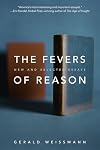
Another wonderful collection by the brilliant doctor and writer Gerald Weissmann, a polymath of extraordinary reach, has me breathless with ideas and opinion. His range goes from Darwin and Oliver Wendell Holmes to Eisenhower(an interesting take on the current gun violence) with a very memorable romp through the life of Elizabeth Blackwell, M.D. Though written separately, these pieces hang together with surprising fluidity and grace. That said, they are also not for the timid or unprepared. show more Weissmann writes for a learned audience who will get the myriad references and asides and histories that pepper his astute essays .The only writerly drawback that I noticed is his excessive use of the pun -which is ironic since he quotes his hero Holmes as deploring puns: "people who make puns are like wanton boys that put coppers on the railroad tracks.They amuse themselves and other children, but their little trick may upset the freight train of conversation...." Fortunately, the conversation here is never derailed and will hopefully continue apace for years to come. show less
 This review was written for LibraryThing Early Reviewers.
This collection of essays primarily focuses on medicine and biology (or subjects as least somewhat related to medicine or biology), plus a fair number that are about science or scientists more generally, and few odd pieces that don't necessarily seem to fit in with the rest (such as a slightly snarky one about college football scholarships).
I really wish I liked these more than I did. It seems like I should have liked them more than I did. The subject matter is mostly pretty interesting. I show more very much appreciate the way Weissmann makes a point of highlighting the contributions of women and immigrants. I even agree with lots of the personal and political opinions he includes. (Yes, homeopathy is bunk! Gay rights are important! I'm with ya, buddy!)
And yet... There's no good way to say this, but Weissmann's prose just really bores me, and I find it remarkably hard to put my finger on why, because it's not actively horrible or anything. Maybe it's just a little too unfocused, not sufficiently unpacking thoughts I'd like to know more about before wandering off after ones I find less interesting. Maybe it's that the writing is a little dry and, at least when he's talking about his own field of rheumatology, sometimes a little too technical. Maybe it's that the occasional bit of humor and word play he indulges in fails to land very well with me and make me feel, perhaps unfairly, that he's trying to substitute cleverness for clarity. Maybe it's just that he includes lengthy quotes from people like Oliver Wendell Holmes and Lewis Thomas whose vivid writing makes his look extra-dull by comparison. Or maybe it's just me; maybe I'm simply not the right audience for this particular book, despite a general appreciation for science writing. Whatever is it, though, I have to admit, it was often hard to keep my mind on the sentences I was reading.
Which certainly isn't to say that I didn't find anything worthwhile here when I did manage to keep my mind on it. For one thing, I've come to the conclusion that I definitely want to read some Oliver Wendell Holmes. And I'm rather glad to have read the essay on the pioneering female physician Elizabeth Blackwell, which I think was quite possibly the best thing in this collection. I guess I was just hoping, overall, for something I'd find a little more lively and engaging.
Rating: I've talked myself into giving this a 3/5, which is a half star higher than I feel like I want to rate it based on how I felt about it, but may be closer to what it objectively deserves, given that I think at least some of my failure to get on with Weissmann's writing probably is as much me as him. show less
I really wish I liked these more than I did. It seems like I should have liked them more than I did. The subject matter is mostly pretty interesting. I show more very much appreciate the way Weissmann makes a point of highlighting the contributions of women and immigrants. I even agree with lots of the personal and political opinions he includes. (Yes, homeopathy is bunk! Gay rights are important! I'm with ya, buddy!)
And yet... There's no good way to say this, but Weissmann's prose just really bores me, and I find it remarkably hard to put my finger on why, because it's not actively horrible or anything. Maybe it's just a little too unfocused, not sufficiently unpacking thoughts I'd like to know more about before wandering off after ones I find less interesting. Maybe it's that the writing is a little dry and, at least when he's talking about his own field of rheumatology, sometimes a little too technical. Maybe it's that the occasional bit of humor and word play he indulges in fails to land very well with me and make me feel, perhaps unfairly, that he's trying to substitute cleverness for clarity. Maybe it's just that he includes lengthy quotes from people like Oliver Wendell Holmes and Lewis Thomas whose vivid writing makes his look extra-dull by comparison. Or maybe it's just me; maybe I'm simply not the right audience for this particular book, despite a general appreciation for science writing. Whatever is it, though, I have to admit, it was often hard to keep my mind on the sentences I was reading.
Which certainly isn't to say that I didn't find anything worthwhile here when I did manage to keep my mind on it. For one thing, I've come to the conclusion that I definitely want to read some Oliver Wendell Holmes. And I'm rather glad to have read the essay on the pioneering female physician Elizabeth Blackwell, which I think was quite possibly the best thing in this collection. I guess I was just hoping, overall, for something I'd find a little more lively and engaging.
Rating: I've talked myself into giving this a 3/5, which is a half star higher than I feel like I want to rate it based on how I felt about it, but may be closer to what it objectively deserves, given that I think at least some of my failure to get on with Weissmann's writing probably is as much me as him. show less
This review was written for LibraryThing Early Reviewers.Scientist and essayist Gerald Weissmann puts a human, empathic face to the hard science that reaches our newspapers every morning. From brief explorations into an understanding of the containment and eradication of Ebola and the moral questions attached to human gene manipulation, to a celebration of Dwight D. Eisenhower's humanist life in condemning our intransigent gun culture, Weissmann shows that the history of medicine and disease is often bound tightly with world history, as the story show more of lupus and Queen Anne illustrates.
Further essays explain everything you need to know about college football (brain vs brawn), the perils of henna (observation vs experimentation), the debunking of intelligent design and quackery of all styles and times. Homeopathy is not given a pass by Doctor Weissmann.
Neither is he a believer in the power of prayer. Darwin’s cousin, Francis Galton got it right over a hundred years ago and many recent scientific studies agree - being the beneficiary of intercessory prayers may actually be bad for your health.
Included are brilliant, timely essays on scholar-activist Katherine Lee Bates, author of America The Beautiful; Alice James, memoirist, and Marie-Anne Lavoisier and the discovery of the power of oxygen.
Throughout these essays Weissmann carries the torch for inclusion- the groundbreaking work of women scientists and the undeniable evidence that immigrant scientists are needed to make America great. We see that patriarchal society has, at best, slowed scientific progress.
The book includes a review of Richard Dawkins' Brief Candle in the Dark and concludes with an appreciation of the life and work of Weissmann's mentor and friend Lewis Thomas.
The Fevers of Reason is a wonderful compilation of the best writing from physician, scientist and essayist Gerald Weissmann. show less
Further essays explain everything you need to know about college football (brain vs brawn), the perils of henna (observation vs experimentation), the debunking of intelligent design and quackery of all styles and times. Homeopathy is not given a pass by Doctor Weissmann.
Neither is he a believer in the power of prayer. Darwin’s cousin, Francis Galton got it right over a hundred years ago and many recent scientific studies agree - being the beneficiary of intercessory prayers may actually be bad for your health.
Included are brilliant, timely essays on scholar-activist Katherine Lee Bates, author of America The Beautiful; Alice James, memoirist, and Marie-Anne Lavoisier and the discovery of the power of oxygen.
Throughout these essays Weissmann carries the torch for inclusion- the groundbreaking work of women scientists and the undeniable evidence that immigrant scientists are needed to make America great. We see that patriarchal society has, at best, slowed scientific progress.
The book includes a review of Richard Dawkins' Brief Candle in the Dark and concludes with an appreciation of the life and work of Weissmann's mentor and friend Lewis Thomas.
The Fevers of Reason is a wonderful compilation of the best writing from physician, scientist and essayist Gerald Weissmann. show less
This review was written for LibraryThing Early Reviewers.A tough one to rate, as my interest in the essay topics varied quite a lot and my enjoyment swung between two and four “stars.” The first essay in the book is heavy with scientific terminology, and this was a recurring stumbling block for me throughout the book (in his Acknowledgements at the end Weissmann thanks “Ms. Andrea Cody, the administrator of the Biotechnology Study Center at the NYU School of Medicine” for her work in “keeping my prose intelligible to humans,” but I show more think that perhaps he'd have done better to have entrusted this task to a reader with less scientific expertise.). My other complaint is that Weissmann's disdain for religious believers, or, as he describes them, “the credulous,” becomes a wearing refrain, even in essays where it is barely relevant.
Despite these drawbacks (which may not be negatives at all to more scientifically literate and/or nonreligious readers), there was much that I enjoyed in the book. The essays are divided into four groups, plus a final piece at the end devoted to Lewis Thomas, and each, in different ways, addresses the interplay of culture, history, and science. As I mentioned, Weissmann's writing about medical topics tends to get a bit too detailed, but he is excellent with his more biographical pieces. I particularly enjoyed the one on Eisenhower in the first section. My favorite part of the book was section three, “Two for the Road,” which focuses on “couples, mainly of the scientific persuasion, but also two of the literary sort (Katherine Lee Bates, of “America the Beautiful” fame, and Alice James, Henry James's sister). But the ones on the Lavoisiers, Elizabeth Blackwell (and her sisters), and Marie and Pierre Curie were wonderful too. In the fourth section, “Beside the Golden Door,” (which focuses on the contributions made by immigrants), I particularly enjoyed the first essay, about the efforts of Einstein and others to arrange the immigration (and escape from the Nazis) of Nobel winning scientists, and the last, which was about the work of the African-American scientist, Percy Lavon Julian in developing methods of producing cortisone in mass quantities.
I won't look for any more books by this author – he did not engage and delight me the way, say, Stephen Jay Gould, Oliver Sacks, or Lewis Thomas do – but I did enjoy many of the essays, and I learned some things along the way.
I received this book from LibraryThing through their Early Reviewers program with the understanding that the content of my review would not affect my likelihood of receiving books through the program in the future. Many thanks to Bellevue Literary Press, Gerald Weissmann, and LibraryThing! show less
Despite these drawbacks (which may not be negatives at all to more scientifically literate and/or nonreligious readers), there was much that I enjoyed in the book. The essays are divided into four groups, plus a final piece at the end devoted to Lewis Thomas, and each, in different ways, addresses the interplay of culture, history, and science. As I mentioned, Weissmann's writing about medical topics tends to get a bit too detailed, but he is excellent with his more biographical pieces. I particularly enjoyed the one on Eisenhower in the first section. My favorite part of the book was section three, “Two for the Road,” which focuses on “couples, mainly of the scientific persuasion, but also two of the literary sort (Katherine Lee Bates, of “America the Beautiful” fame, and Alice James, Henry James's sister). But the ones on the Lavoisiers, Elizabeth Blackwell (and her sisters), and Marie and Pierre Curie were wonderful too. In the fourth section, “Beside the Golden Door,” (which focuses on the contributions made by immigrants), I particularly enjoyed the first essay, about the efforts of Einstein and others to arrange the immigration (and escape from the Nazis) of Nobel winning scientists, and the last, which was about the work of the African-American scientist, Percy Lavon Julian in developing methods of producing cortisone in mass quantities.
I won't look for any more books by this author – he did not engage and delight me the way, say, Stephen Jay Gould, Oliver Sacks, or Lewis Thomas do – but I did enjoy many of the essays, and I learned some things along the way.
I received this book from LibraryThing through their Early Reviewers program with the understanding that the content of my review would not affect my likelihood of receiving books through the program in the future. Many thanks to Bellevue Literary Press, Gerald Weissmann, and LibraryThing! show less
This review was written for LibraryThing Early Reviewers.Lists
Science (1)
You May Also Like


Associated Authors
Statistics
- Works
- 14
- Members
- 396
- Popularity
- #61,230
- Rating
- 3.5
- Reviews
- 10
- ISBNs
- 25
- Languages
- 1
