
William Dean Howells (1837–1920)
Author of The Rise of Silas Lapham
About the Author
William Dean Howells was born in Martin's Ferry, Ohio on March 1, 1837. He dropped out of school to work as a typesetter and a printer's apprentice. He taught himself through intensive reading and the study of Spanish, French, Latin, and German. He wrote a campaign biography of Abraham Lincoln in show more 1860. Lincoln appointed him U.S. consul in Venice, Italy in 1861 as a reward. After returning to the U.S. several years later, he became an assistant editor for The Atlantic Monthly, later becoming editor from 1871 to 1881. He also wrote columns for Harper's New Monthly Magazine and occasional pieces for The North American Review. As an editor and critic, he was a proponent of American realism. Although he wrote over a 100 books in various genres including novels, poems, literary criticism, plays, memoirs, and travel narratives, he is best known for his realistic fiction. His novels include A Modern Instance, The Rise of Silas Lapham, A Hazard of New Fortunes, The Undiscovered Country, A Chance Acquaintance, An Imperative Duty, Annie Kilburn, and The Coast of Bohemia. He received several honorary degrees from universities as well as a Gold Medal for fiction (later renamed after him as the Howells Medal) from the National Institute of Arts and Letters. He died from pneumonia on May 11, 1920. (Bowker Author Biography) show less
Disambiguation Notice:
This is the author page for the American diplomat, novelist and critic. For the anthropologist, please see William Howells.
Image credit: from Wikipedia
Series
Works by William Dean Howells
Novels 1875-1886: A Foregone Conclusion, A Modern Instance, Indian Summer, The Rise of Silas Lapham (1982) 345 copies, 3 reviews
William Dean Howells : Novels 1886-1888 : The Minister's Charge / April Hopes / Annie Kilburn (Library of America) (1989) 264 copies
Literary friends and acquaintance : a personal retrospect of American authorship (2007) 41 copies, 1 review
Cambridge Neighbors: From Literary Friends and Acquaintance (World Cultural Heritage Library) (2009) 7 copies, 1 review
The mouse-trap Farce, 5 copies
Three villages 4 copies
Complete Works of Mark Twain 4 copies
A Fearful Responsibility 4 copies
A day's pleasure 4 copies
Letters home 3 copies
Heroines of Fiction 2 copies
The country printer 2 copies
Heroines of Fiction (Volume 1) 2 copies
VENETIAN LIFE. VOLUME I ONLY 2 copies
MARK TWAIN-HOWELLS LETTERS: The Correspondence of Samuel L. Clemens & William D. Howells, 1869-1910 (2volumes) (1960) 2 copies
The Howells Story Book 2 copies
Собрание сочинений в восьми томах 2 copies
Il mio amico Mark Twain 1 copy
of Silas Lapham 1 copy
World of Chance 1 copy
Boy's Town 1 copy
Kentons 1 copy
Italian Journeys, Vol. 1 1 copy
Howells Criticism and Fiction and other essays edited by Clara Marburg Kirk and Rudolf Kirk (1959) 1 copy
The Elevator: Farce 1 copy
Imaginary Interviews 1 copy
Italian Journeys, Vol. 2 1 copy
Chance Acquaintance 1 copy
Coast of Behemia 1 copy
Riscurile parvenirii 1 copy
Room Forty-Five : A Farce 1 copy
Christmas Everyday Gift Set 1 copy
a story of a play 1 copy
novels, 1886- 1 copy
“Henry James, Jr.” 1 copy
Un Caz Modern 1 copy
Associated Works
Adventures of Huckleberry Finn [Norton Critical Edition, 2nd ed.] (1977) — Contributor — 328 copies, 4 reviews
The Lincoln Anthology: Great Writers on His Life and Legacy from 1860 to Now (2008) — Contributor — 172 copies, 1 review
An American Album: One Hundred and Fifty Years of Harper's Magazine (2000) — Contributor — 145 copies, 1 review
The Norton Anthology of American Literature, Volume 2: 1865 to Present (1979) — Contributor, some editions — 136 copies
The Glorious American Essay: One Hundred Essays from Colonial Times to the Present (2020) — Contributor — 116 copies
Writing New York: A Literary Anthology (Expanded 10th-Anniversary Edition) (2008) — Contributor — 101 copies, 1 review
Delphi Complete Works of Charles Dickens (Illustrated) (2012) — Contributor, some editions — 96 copies
The Heath Anthology of American Literature, Concise Edition (2003) — Contributor — 73 copies, 1 review
The Blithedale Romance [Norton Critical Edition, 2nd ed.] (2010) — Contributor — 62 copies, 2 reviews
Benjamin Franklin's Autobiography [Norton Critical Edition, 2nd ed.] (2012) — Contributor — 47 copies
Published and Perished: Memoria, Eulogies, and Remembrances of American Writers (2002) — Contributor — 41 copies, 1 review
Best plays of the early American theatre : from the beginning to 1916 (1967) — Contributor — 18 copies
The Romantic Friendship Reader: Love Stories Between Men in Victorian America (2003) — Contributor — 17 copies
Tagged
Common Knowledge
- Birthdate
- 1837-03-01
- Date of death
- 1920-05-11
- Gender
- male
- Education
- self-educated
- Occupations
- novelist
poet
playwright
editor
literary critic
travel writer (show all 14)
biographer
reporter
U.S. Consul (to Venice)
clerk, Ohio State House of Representatives
short story writer
translator
essayist
children's book author - Organizations
- Ohio State Journal
Atlantic Monthly
Anti-Imperialist League
American Academy of Arts and Letters (president) - Awards and honors
- American Academy of Arts and Letters (president and member)
William Dean Howells House, Cambridge, Massachusetts - Relationships
- Howells, John Mead (son)
Howells, Mildred (daughter) - Nationality
- USA
- Birthplace
- Martins Ferry, Ohio, USA
- Places of residence
- Martins Ferry, Ohio, USA
New York, New York, USA
Hamilton, Ohio, USA
Cambridge, Massachusetts, USA
Kittery Point, Maine, USA
England, UK (show all 7)
Italy - Place of death
- New York, New York, USA
- Burial location
- Cambridge Cemetery, Cambridge, Massachusetts, USA
- Disambiguation notice
- This is the author page for the American diplomat, novelist and critic. For the anthropologist, please see William Howells.
- Associated Place (for map)
- USA
Members
Reviews

review of
W.D. Howells' The Landlord at Lion's Head
by tENTATIVELY, a cONVENIENCE - December 11, 2012
I got this at a bkstore that's closing up shop. This is at least the 7th bkstore to do so in PGH in the 17 yrs I've lived here. Only 1 bkstore that I can think of has replaced them. Not a good sign. On the spine of this 1897 hardback the author's name is written as "HOWELLS". When I bought it (for a dollar) I thought it read "HGWELLS". This bk is almost physically identical in size & color show more to 2 H.G. Wells bks I already have (The Research Magnificent & Mr. Britling Sees It Through) - even down to the gold ink of the lettering. Hence the ease of my mistake. & I got another Howells bk under the same conditions.
So here I am w/ 2 bks by an author I don't recall ever having heard of. As it turns out, he's an American who lived, according to Wikipedia, from March 1, 1837 to May 11, 1920. Then again, this novel is listed there as from 1908 & my edition is from 1897, copyrighted 1896 - so much for Wikipedia's accuracy. Wikipedia also lists at least 50 bks by him including a collaboration w/ his friend Mark Twain. I reckon most Americans have heard of Mark Twain but how many have heard of William Dean Howells?! Only the title of what's reputed to've been his most famous novel, The Rise of Silas Lapham, seems even vaguely familiar.
SO, what we have here is a prolific American author, supposedly nicknamed "The Dean of American Letters" (presumably a pun off his middle name), now largely forgotten a mere 92 yrs after his death. Looking on one online bkstore that brags of over "8,000,000" bks I find ONE by Howells. I find a few more on Amazon, 1st editions from the 19th century, reasonably priced. What's going on here?
Howells is, by reputation, a 'realist'. I usually prefer works of the imagination to works based more on observation of human nature but I like both. If I were to choose between Lautrémont's Les Chants de Maldoror (1868) & this bk, it wd be no contest. Lautrémont was a visionary genius. But Howells is far from deserving this apparent post-mortem neglect. It seems to me that, once again, canonization is rearing its ugly head. How many highly literate Americans even know much about 19th century American authors? A friend of mine (who's taught 19th c American lit) & I listed how many such authors we cd think of off the tops of our heads. We came up w/ something like 16. That's less than 1 for every 6 yrs of the century! Surely there were many more remarkable writers of the time!
When reading a 'realist' work I reckon the test, for me, is: how convinced am I of the 'realism'? What seems realistic in a novel about a hotel to a person who doesn't run one might be very different indeed to someone who actually run one. What was interesting for me about this novel was that, even tho it's framed by a very different time of societal proprieties, it still rang 'true' in terms of subtleties of human nature & issues of human conduct.
I wdn't credit this bk w/ having any formal innovations. It's a classic 19th century novel of a nature that, it seems to me, was already decades old. No matter, that doesn't completely devalue it for me despite my thirst for innovation. Having the main locale be a country summer hotel provides a solid pretext for a rotating cast of traveling characters & Howells uses this to advantage w/o just milking it as a gimmick.
While there's plenty of subtle drama here, it doesn't depend on tragedy - unlike so much these days, no-one has to be murdered in order for the plot to be engrossing. Reading it, & enjoying it, & caring about the characters, made me feel like I am, indeed, 'old-fashioned' - despite my having been about as immersed in the 'avant-garde' my whole life as just about anyone who ever has been.
Howells doesn't oversimplify, always a relief to me. The ultimate character of the title is somewhat annoying, somewhat sympathetic, & not overly depicted in stereotyping ways. He's an individual - at the same time that he's presented as a person involved in ordinary day-to-day class struggle - ie: he's not political but he's caught up in class struggle in a personal way.
A crucial scene is one where Jeff, the landlord of the title, has brought food out to clients of the hotel on a picnic. One of the 'ladies' treats him like a servant & tries to put a good face on trying to get him out of the way so he doesn't 'contaminate' (my word choice) their little party. Jeff is aware of how he's being treated. His mother, the actual landlady of the hotel at the time, learns of this & evicts the offending woman from the hotel. In a sense, this conflict then fuels much of what happens later as Jeff grows into a young man at Harvard & manipulates people who look down on him from their privileged positions.
The novel's rich enuf in details: the people who populate the hotel, Boston, alluded-to trips to Europe & Egypt, Theosophists (only mentioned as "them Blavetsky fellers" (p 190) but still present) & the use of the planchette for 'spirit communication'. I'll be reading more by Howells (maybe) but not anytime soon. If I can help revive interest in him, I'm happy to do so. At the very least, reading this made me want to visit the country in New England where Lion's Head mountain is. show less
W.D. Howells' The Landlord at Lion's Head
by tENTATIVELY, a cONVENIENCE - December 11, 2012
I got this at a bkstore that's closing up shop. This is at least the 7th bkstore to do so in PGH in the 17 yrs I've lived here. Only 1 bkstore that I can think of has replaced them. Not a good sign. On the spine of this 1897 hardback the author's name is written as "HOWELLS". When I bought it (for a dollar) I thought it read "HGWELLS". This bk is almost physically identical in size & color show more to 2 H.G. Wells bks I already have (The Research Magnificent & Mr. Britling Sees It Through) - even down to the gold ink of the lettering. Hence the ease of my mistake. & I got another Howells bk under the same conditions.
So here I am w/ 2 bks by an author I don't recall ever having heard of. As it turns out, he's an American who lived, according to Wikipedia, from March 1, 1837 to May 11, 1920. Then again, this novel is listed there as from 1908 & my edition is from 1897, copyrighted 1896 - so much for Wikipedia's accuracy. Wikipedia also lists at least 50 bks by him including a collaboration w/ his friend Mark Twain. I reckon most Americans have heard of Mark Twain but how many have heard of William Dean Howells?! Only the title of what's reputed to've been his most famous novel, The Rise of Silas Lapham, seems even vaguely familiar.
SO, what we have here is a prolific American author, supposedly nicknamed "The Dean of American Letters" (presumably a pun off his middle name), now largely forgotten a mere 92 yrs after his death. Looking on one online bkstore that brags of over "8,000,000" bks I find ONE by Howells. I find a few more on Amazon, 1st editions from the 19th century, reasonably priced. What's going on here?
Howells is, by reputation, a 'realist'. I usually prefer works of the imagination to works based more on observation of human nature but I like both. If I were to choose between Lautrémont's Les Chants de Maldoror (1868) & this bk, it wd be no contest. Lautrémont was a visionary genius. But Howells is far from deserving this apparent post-mortem neglect. It seems to me that, once again, canonization is rearing its ugly head. How many highly literate Americans even know much about 19th century American authors? A friend of mine (who's taught 19th c American lit) & I listed how many such authors we cd think of off the tops of our heads. We came up w/ something like 16. That's less than 1 for every 6 yrs of the century! Surely there were many more remarkable writers of the time!
When reading a 'realist' work I reckon the test, for me, is: how convinced am I of the 'realism'? What seems realistic in a novel about a hotel to a person who doesn't run one might be very different indeed to someone who actually run one. What was interesting for me about this novel was that, even tho it's framed by a very different time of societal proprieties, it still rang 'true' in terms of subtleties of human nature & issues of human conduct.
I wdn't credit this bk w/ having any formal innovations. It's a classic 19th century novel of a nature that, it seems to me, was already decades old. No matter, that doesn't completely devalue it for me despite my thirst for innovation. Having the main locale be a country summer hotel provides a solid pretext for a rotating cast of traveling characters & Howells uses this to advantage w/o just milking it as a gimmick.
While there's plenty of subtle drama here, it doesn't depend on tragedy - unlike so much these days, no-one has to be murdered in order for the plot to be engrossing. Reading it, & enjoying it, & caring about the characters, made me feel like I am, indeed, 'old-fashioned' - despite my having been about as immersed in the 'avant-garde' my whole life as just about anyone who ever has been.
Howells doesn't oversimplify, always a relief to me. The ultimate character of the title is somewhat annoying, somewhat sympathetic, & not overly depicted in stereotyping ways. He's an individual - at the same time that he's presented as a person involved in ordinary day-to-day class struggle - ie: he's not political but he's caught up in class struggle in a personal way.
A crucial scene is one where Jeff, the landlord of the title, has brought food out to clients of the hotel on a picnic. One of the 'ladies' treats him like a servant & tries to put a good face on trying to get him out of the way so he doesn't 'contaminate' (my word choice) their little party. Jeff is aware of how he's being treated. His mother, the actual landlady of the hotel at the time, learns of this & evicts the offending woman from the hotel. In a sense, this conflict then fuels much of what happens later as Jeff grows into a young man at Harvard & manipulates people who look down on him from their privileged positions.
The novel's rich enuf in details: the people who populate the hotel, Boston, alluded-to trips to Europe & Egypt, Theosophists (only mentioned as "them Blavetsky fellers" (p 190) but still present) & the use of the planchette for 'spirit communication'. I'll be reading more by Howells (maybe) but not anytime soon. If I can help revive interest in him, I'm happy to do so. At the very least, reading this made me want to visit the country in New England where Lion's Head mountain is. show less
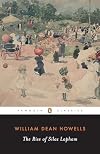
William Dean Howells was born in 1837 and wrote prolifically until his death in 1920. The Rise of Silas Lapham is likely the best remembered, and most often read, of his works. It is a humorous novel with twin, intertwined plots. The first of business and social success, and then failure, in Gilded Age Boston. The other a love farce, and a commentary on ideas of romance in then current novels.
The book starts out slowly with a magazine writer interviewing Silas Lapham about his rise to show more success. Silas has had the good fortune of having a “paint mine” on his farm in Vermont, from which he’s been able to produce paint of such high quality that it has made him a fortune. The interview gambit serves to introduce the main characters and set up some of the tension that will play out through the book. After that slow start the plots start boiling.
The nouveau riche Laphams have relocated to Boston, and, owing to their country ways, they’ve stayed to themselves and haven’t tried to climb the social ladder to Boston’s high society. That all changes when a young man from a well established family seems to take an interest in one of their two daughters, and then flatters Silas by asking to come to work for him.
What follows is a series of misunderstandings, both in business and in love, between the honest country bred Laphams and the Boston Brahmins they find themselves mixing with.
The book stands the test of time. The language is perhaps formal, but not too formal. The style is perhaps dated, but not too dated. The humor comes through clearly. I often had a smile on my face as I raced through the pages. There are things going on in this book that make it “important” enough that it is still taught in some classrooms. But it is very accessible and easy to read as entertainment.
Reading this today, in 2022, with its young lovers and its social climbing, the whole thing struck me as being kind of an American version of Bridgerton (the TV show - I’ve not read the book). Or perhaps Bridgerton, being the later creation, is a British version of Silas Lapham. I guess the comparison is inevitable for a male reader like me, as Howells is often seen as a “women’s writer”.
As is true today, the primary audience for fiction in the 1880s was women. Howells knew that, and that is likely why he's given a prominent role to Silas's wife Persis Lapham. She is both a moral guide in business to her husband (and an equal partner in the early years), and the one the family looks to for guidance through the thicket of etiquette and expectation in Boston society. She is a fully fledged, complex character with both strengths and flaws.
Howells was also known as a “realist”. As to his place in American writing, he is sometimes said to fall between Mark Twain and Henry James. He was friends with both. James said of him that “[h]e adores the real, the natural, the colloquial, the moderate, the optimistic, the domestic, and the democratic...” That sensibility is, I think, the main reason this book has held up so well.
It doesn’t feel right to me to put Star ratings on classics like this. I recommend this book. I found that I liked it a lot more than I thought I would. “Silas Lapham” sounds like such an old-fashioned name that it does the book it's attached to a disservice. The book holds up much better than that old-fashioned name. show less
The book starts out slowly with a magazine writer interviewing Silas Lapham about his rise to show more success. Silas has had the good fortune of having a “paint mine” on his farm in Vermont, from which he’s been able to produce paint of such high quality that it has made him a fortune. The interview gambit serves to introduce the main characters and set up some of the tension that will play out through the book. After that slow start the plots start boiling.
The nouveau riche Laphams have relocated to Boston, and, owing to their country ways, they’ve stayed to themselves and haven’t tried to climb the social ladder to Boston’s high society. That all changes when a young man from a well established family seems to take an interest in one of their two daughters, and then flatters Silas by asking to come to work for him.
What follows is a series of misunderstandings, both in business and in love, between the honest country bred Laphams and the Boston Brahmins they find themselves mixing with.
The book stands the test of time. The language is perhaps formal, but not too formal. The style is perhaps dated, but not too dated. The humor comes through clearly. I often had a smile on my face as I raced through the pages. There are things going on in this book that make it “important” enough that it is still taught in some classrooms. But it is very accessible and easy to read as entertainment.
Reading this today, in 2022, with its young lovers and its social climbing, the whole thing struck me as being kind of an American version of Bridgerton (the TV show - I’ve not read the book). Or perhaps Bridgerton, being the later creation, is a British version of Silas Lapham. I guess the comparison is inevitable for a male reader like me, as Howells is often seen as a “women’s writer”.
As is true today, the primary audience for fiction in the 1880s was women. Howells knew that, and that is likely why he's given a prominent role to Silas's wife Persis Lapham. She is both a moral guide in business to her husband (and an equal partner in the early years), and the one the family looks to for guidance through the thicket of etiquette and expectation in Boston society. She is a fully fledged, complex character with both strengths and flaws.
Howells was also known as a “realist”. As to his place in American writing, he is sometimes said to fall between Mark Twain and Henry James. He was friends with both. James said of him that “[h]e adores the real, the natural, the colloquial, the moderate, the optimistic, the domestic, and the democratic...” That sensibility is, I think, the main reason this book has held up so well.
It doesn’t feel right to me to put Star ratings on classics like this. I recommend this book. I found that I liked it a lot more than I thought I would. “Silas Lapham” sounds like such an old-fashioned name that it does the book it's attached to a disservice. The book holds up much better than that old-fashioned name. show less
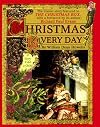
Well it's interesting; I'll say that much for it. But it's also cynical and sad. A Christmas story about a little girl who can visit a magical wish-granting Christmas fairy still misses the wonder that such a tale might evoke, and it turns into an obvious moral lesson. I thought it was pretty depressing.
That said, the framing device—a harried father telling the story to his daughter (who keeps poking him)—really makes it work. The father and daughter are interesting, and these parts are show more really funny and amusing. She keeps interrupting, too! I suppose the tale within the tale is meant to parody the moral lessons of the time, especially considering how stressed-out the storyteller probably is. But I don't think this will be one of my holiday favorites, either. show less
That said, the framing device—a harried father telling the story to his daughter (who keeps poking him)—really makes it work. The father and daughter are interesting, and these parts are show more really funny and amusing. She keeps interrupting, too! I suppose the tale within the tale is meant to parody the moral lessons of the time, especially considering how stressed-out the storyteller probably is. But I don't think this will be one of my holiday favorites, either. show less
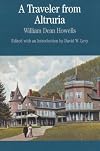
Utopian fiction, without the utopian part of it :P. So this entire thing is done as a series of conversations, its like one big lecture, so not great.
Its a fairly easy read though and since its about the gap between rich and poor its still relevant today. In fact i would say too relevant, or at least too familiar.
There are things of interest here. The writing is easy and witty at times. There's some some very blinkered sexism which you can laugh or wince at. Plus a brief mention of a show more mega-corporation controlling all aspects of a country , perhaps one of the first appearances of such an idea.
However i'm getting more discerning with every book i read and in a world of infinite books i felt like deducting a star. show less
Its a fairly easy read though and since its about the gap between rich and poor its still relevant today. In fact i would say too relevant, or at least too familiar.
There are things of interest here. The writing is easy and witty at times. There's some some very blinkered sexism which you can laugh or wince at. Plus a brief mention of a show more
However i'm getting more discerning with every book i read and in a world of infinite books i felt like deducting a star.
Lists
Awards


You May Also Like


Associated Authors
Statistics
- Works
- 240
- Also by
- 52
- Members
- 5,427
- Popularity
- #4,588
- Rating
- 4.4
- Reviews
- 44
- ISBNs
- 918
- Languages
- 8
- Favorited
- 10


