
Melba Pattillo Beals
Author of Warriors Don't Cry: A Searing Memoir of the Battle to Integrate Little Rock's Central High
About the Author
Melba Pattillo Beals is a recipient of this country's highest honor, the Congressional Gold Medal, for her role, as a fifteen-year-old, in the integration of Central High School in Little Rock, Arkansas. She has been a university professor, a television broadcaster and news reporter, a radio talk show more show host, and a writer for various magazines. Her award-winning book Warriors Don't Cry has sold more than one million copies. She lives in San Francisco and is the mother of three adult children. show less
Image credit: Spc. Jeffrey Stevenson, from the 101st Airborne Division (Air Assault) escorts Little Rock Nine member Melba Pattillo Beals to the newly dedicated Little Rock Central High School National Historic Site Visitor Center after the dedciation ceremony Sept. 24, 2007. Photo by Sgt. 1st Class N. Maxfield Operation Arkansas By The U.S. Army - arkansasUploaded by Gary Dee, CC BY 2.0, https://commons.wikimedia.org/w/index.php?curid=17792865
Works by Melba Pattillo Beals
Warriors Don't Cry: A Searing Memoir of the Battle to Integrate Little Rock's Central High (1994) 1,598 copies, 35 reviews
Associated Works
Booknotes: America's Finest Authors on Reading, Writing, and the Power of Ideas (1997) — Contributor — 456 copies, 5 reviews
Tagged
Common Knowledge
- Birthdate
- 1941-12-07
- Gender
- female
- Education
- San Francisco State University (BA - Journalism)
Columbia University (School of Journalism) - Occupations
- journalist
- Awards and honors
- Congressional Gold Medal
- Nationality
- USA
- Places of residence
- Little Rock, Arkansas, USA
Santa Rosa, California, USA
San Francisco, California, USA
New York, New York, USA - Associated Place (for map)
- USA
Members
Reviews
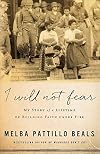
Despite the 1954 U.S. Supreme Court ruling against it, racial segregation in public schools was still prevalent in Little Rock, Arkansas for years afterward. In 1957, nine African American students were chosen to integrate the city’s all-white Central High School. Those students became known as the Little Rock Nine. One of their number, author Melba Pattillo Beals, recounts this matter and more in her memoir, I Will Not Fear: My Story of a Lifetime of Building Faith Under Fire.
As the title show more indicates, this isn’t just an account contained within the Civil Rights Movement of the 1950s and 60s, but it spans much more of the author’s lifetime and experiences. Even so, issues of prejudice and equal (or unequal) rights, including gender inequality, appear frequently throughout this story of adversity, faith, and perseverance.
This isn’t a book about detached, historical “figures” but about people. It’s not a testimony of immediate victories for social justice, or complete accord within the black community. Beals wasn’t even always sure she was doing the right thing by being a part of integration.
The author makes interesting points, including how racism isn’t merely about donning conspicuous white hoods or blatantly calling black people “niggers.” Subtle racism is just as vicious, and also treacherous, particularly when it’s institutionalized or otherwise trickier to call out and combat. Still, one of my biggest takeaways from the book is that when it comes to injustice and other challenges, you have to know when it’s time to hold your peace and simply keep on living, and when it’s time to speak up and fight.
Again, this book is about much more than racism and civil rights, but I’d recommend it to anyone with an interest in social justice, Christian memoirs, or both.
___________
Revell provided me with a complimentary copy of this book for an honest review. show less
As the title show more indicates, this isn’t just an account contained within the Civil Rights Movement of the 1950s and 60s, but it spans much more of the author’s lifetime and experiences. Even so, issues of prejudice and equal (or unequal) rights, including gender inequality, appear frequently throughout this story of adversity, faith, and perseverance.
This isn’t a book about detached, historical “figures” but about people. It’s not a testimony of immediate victories for social justice, or complete accord within the black community. Beals wasn’t even always sure she was doing the right thing by being a part of integration.
The author makes interesting points, including how racism isn’t merely about donning conspicuous white hoods or blatantly calling black people “niggers.” Subtle racism is just as vicious, and also treacherous, particularly when it’s institutionalized or otherwise trickier to call out and combat. Still, one of my biggest takeaways from the book is that when it comes to injustice and other challenges, you have to know when it’s time to hold your peace and simply keep on living, and when it’s time to speak up and fight.
Again, this book is about much more than racism and civil rights, but I’d recommend it to anyone with an interest in social justice, Christian memoirs, or both.
___________
Revell provided me with a complimentary copy of this book for an honest review. show less
Warriors Don't Cry: A Searing Memoir of the Battle to Integrate Little Rock's Central High by Melba Pattillo Beals
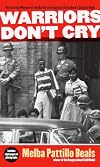
After a tour of Central High School in Little Rock, I was inspired to pick up this book. I read the Young Readers Edition. I don't know how the Little Rock nine made it through the year. To take on that mantle in the face of such determined hatred and harassment and find the strength to go to school day after day during the 1957-1958 school year, it's amazing.

I was not very familiar with the history of the Little Rock Nine nor had I ever heard the name of Melba Pattillo Beals before hearing about this book so I had no idea what to expect when I began to read. As one of the nine African American high school students to be selected to integrate the all-white Central High School in Little Rock, Arkansas in 1957, Melba's story is one of incredible fortitude and resoluteness in the face of adversity. Her memoirs are filled with awful moments of gross show more injustice, physical attacks, and even death threats yet she chose to never retaliate in like manner. She stood firm and spoke out when necessary, but she didn't resort to the low behaviors of those who would torment (both verbally and physically) her and her family.
At around 200 pages, this is a short book, but it packs a hefty message. Beals begins the narrative with the story of her birth and shares the struggles her mother endured just to simply get hospital care with her difficult pregnancy. She continues her story with highlights from her life—which are told in mostly chronological order—and brings the reader up through current day. While she does spend a few chapters on the events surrounding the integration of the high school in Little Rock, it is not the main focal point of the book and she moves on to focus primarily on her life following that period. (See her other books, Warriors Don’t Cry and March Forward, Girl, for more about her early years in Arkansas.)
Beals' grandmother, "Grandma India", had a great impact on her in her formative days and that influence has stayed with her to this day. Throughout the book, she references anecdotes about her grandmother and recounts conversations and oft-quoted sayings that Grandma India said. A couple of my favorites are:
"Above all else, God loves you. He has your pictures on His refrigerator just as I do."
"Faith is the consistent trust that God is all powerful and always on your side if you need help."
At the end of each chapter, Beals includes a sentence or two which sums up the theme of that chapter. It's as if she's giving the reader the takeaway or lesson which can be gleaned from her experiences which she's just recounted. One line which appears at the end of chapter 13 stood out to me. Beals writes, "God is our employer, no matter who we see as our earthly boss. At all times we must be aware that we are serving God in our work."
I Will Not Fear is a gripping story of an incredible woman who stood strong through all sorts of adversity. Reading this firsthand account of the despicable ways she was treated by so many was heartrending, but also encouraging and inspirational because of her attitude and faith and reliance on God through it all. show less
At around 200 pages, this is a short book, but it packs a hefty message. Beals begins the narrative with the story of her birth and shares the struggles her mother endured just to simply get hospital care with her difficult pregnancy. She continues her story with highlights from her life—which are told in mostly chronological order—and brings the reader up through current day. While she does spend a few chapters on the events surrounding the integration of the high school in Little Rock, it is not the main focal point of the book and she moves on to focus primarily on her life following that period. (See her other books, Warriors Don’t Cry and March Forward, Girl, for more about her early years in Arkansas.)
Beals' grandmother, "Grandma India", had a great impact on her in her formative days and that influence has stayed with her to this day. Throughout the book, she references anecdotes about her grandmother and recounts conversations and oft-quoted sayings that Grandma India said. A couple of my favorites are:
"Above all else, God loves you. He has your pictures on His refrigerator just as I do."
"Faith is the consistent trust that God is all powerful and always on your side if you need help."
At the end of each chapter, Beals includes a sentence or two which sums up the theme of that chapter. It's as if she's giving the reader the takeaway or lesson which can be gleaned from her experiences which she's just recounted. One line which appears at the end of chapter 13 stood out to me. Beals writes, "God is our employer, no matter who we see as our earthly boss. At all times we must be aware that we are serving God in our work."
I Will Not Fear is a gripping story of an incredible woman who stood strong through all sorts of adversity. Reading this firsthand account of the despicable ways she was treated by so many was heartrending, but also encouraging and inspirational because of her attitude and faith and reliance on God through it all. show less
Warriors Don't Cry - A Searing Memoir Of The Battle To Integrate Little Rock's Central High by Melba Pattillo Beals

Beals was one of the Little Rock Nine -- the nine black students who integrated Central High in Little Rock, Arkansas, in 1957. Living hell is an appropriate term for what they went through. On their first day in class, the mob outside became so dangerous that officials inside the school discussed whether they should give up one of the black students to the mob -- that it might create enough of a distraction that they might be able to get the other eight out alive.
(My brain breaks. You've show more got nine terrified kids in your office, some of whom are still bleeding from the in-school violence that morning, the mob outside is bribing the police officers into taking off their badges and joining them, and you're discussing whether or not it makes sense to turn one of the kids over to the lynch mob? And not only are you even considering this, you're discussing this right in front of the kids? As if they do not exist? As if they do not need you to care for and protect them, both psychologically and physically?)
Even after the 101st Airborne was sent to Little Rock to subdue the mob outside the school, the violence continued inside the school, this time executed by their classmates. Despite the presence of a bodyguard from the 101st who followed Beals from class to class, Beals was throttled during assembly, stabbed during class, had acid shot into her eyes with a squirt gun, had a stick of lit dynamite thrown at her in the stairwell... These weren't isolated freak incidents. They were the highlights of an unremitting campaign of violence: of being slapped, pushed down stairs, spat on, kicked, punched, sprayed with ink or urine...
And then, at Thanksgiving, the 101st Airborne were withdrawn from Central High, leaving Beals and her eight classmates on their own.
If you can pull your eyes away from the violence, there are other important aspects to this story: political thrusts and counter-thrusts, social dynamics, peer pressure, psychological tactics. The ferocity and persistence of the violence was largely incited by the actions of one man, the Arkansas governor. The Nine were under pressure within their black community to give up the fight; everyone was suffering retaliatory violence and economic pressure, not just these nine students. As the year continued, the segregationists did not "get used to" the presence of the black students and start settling down, as so many had predicted; instead, the segregationists became more organized and more effective. Beals hints at other folks' stories: the white vice-principal who gradually stopped being an ally as the social pressure on her increased; the Airborne bodyguard who tried to secretly teach her the psychological necessities of battle; the white student who attended segregationist planning meetings and fed Beals information about where and when the most lethal attacks would be, but who also went crazy on Beals, both blaming her for "screwing up his senior year" and considering her his property since he had saved her life so many times over.
Somehow, Beals accomplished the goal she set for herself: to make it to the end of the school year, still alive and still enrolled. (One of her black classmates did not make it: she was suspended at mid-year, and then later expelled, for spilling a bowl of chili on her aggressors. Again my brain breaks.) Yet Beals never graduated from Central High -- all the high schools in the district were closed the following year -- what would have been Beals' senior year -- and then, because of escalating death threats, Beals fled Arkansas and finished high school in California.
The book is written through the voice of the fifteen year old girl Beals was at the time, and so is emotionally raw and bewildered, without the moderating perspective of the forty years that have passed. The story is both powerful and chilling, and liable to rock the comfortable worlds of people who never understood what segregation in the South meant. show less
(My brain breaks. You've show more got nine terrified kids in your office, some of whom are still bleeding from the in-school violence that morning, the mob outside is bribing the police officers into taking off their badges and joining them, and you're discussing whether or not it makes sense to turn one of the kids over to the lynch mob? And not only are you even considering this, you're discussing this right in front of the kids? As if they do not exist? As if they do not need you to care for and protect them, both psychologically and physically?)
Even after the 101st Airborne was sent to Little Rock to subdue the mob outside the school, the violence continued inside the school, this time executed by their classmates. Despite the presence of a bodyguard from the 101st who followed Beals from class to class, Beals was throttled during assembly, stabbed during class, had acid shot into her eyes with a squirt gun, had a stick of lit dynamite thrown at her in the stairwell... These weren't isolated freak incidents. They were the highlights of an unremitting campaign of violence: of being slapped, pushed down stairs, spat on, kicked, punched, sprayed with ink or urine...
And then, at Thanksgiving, the 101st Airborne were withdrawn from Central High, leaving Beals and her eight classmates on their own.
If you can pull your eyes away from the violence, there are other important aspects to this story: political thrusts and counter-thrusts, social dynamics, peer pressure, psychological tactics. The ferocity and persistence of the violence was largely incited by the actions of one man, the Arkansas governor. The Nine were under pressure within their black community to give up the fight; everyone was suffering retaliatory violence and economic pressure, not just these nine students. As the year continued, the segregationists did not "get used to" the presence of the black students and start settling down, as so many had predicted; instead, the segregationists became more organized and more effective. Beals hints at other folks' stories: the white vice-principal who gradually stopped being an ally as the social pressure on her increased; the Airborne bodyguard who tried to secretly teach her the psychological necessities of battle; the white student who attended segregationist planning meetings and fed Beals information about where and when the most lethal attacks would be, but who also went crazy on Beals, both blaming her for "screwing up his senior year" and considering her his property since he had saved her life so many times over.
Somehow, Beals accomplished the goal she set for herself: to make it to the end of the school year, still alive and still enrolled. (One of her black classmates did not make it: she was suspended at mid-year, and then later expelled, for spilling a bowl of chili on her aggressors. Again my brain breaks.) Yet Beals never graduated from Central High -- all the high schools in the district were closed the following year -- what would have been Beals' senior year -- and then, because of escalating death threats, Beals fled Arkansas and finished high school in California.
The book is written through the voice of the fifteen year old girl Beals was at the time, and so is emotionally raw and bewildered, without the moderating perspective of the forty years that have passed. The story is both powerful and chilling, and liable to rock the comfortable worlds of people who never understood what segregation in the South meant. show less
Lists
Awards


You May Also Like


Associated Authors
Statistics
- Works
- 7
- Also by
- 2
- Members
- 2,181
- Popularity
- #11,745
- Rating
- 4.1
- Reviews
- 47
- ISBNs
- 48
- Languages
- 2
- Favorited
- 1