
Max Décharné
Author of Straight from the Fridge, Dad: A Dictionary of Hipster Slang
About the Author
Max Decharne was born in England, and can still speak English when his business demands it. He has flung various books and records at the public, and travelled the world, firstly as a member of Gallon Drunk, and since 1995 with The Flaming Stars. He is a regular contributor to Mojo, and divides his show more drinking time between London and Berlin show less
Works by Max Décharné
Associated Works
Tagged
Common Knowledge
- Canonical name
- Décharné, Max
- Gender
- male
- Nationality
- England
- Associated Place (for map)
- England
Members
Reviews

Max Decharne has produced an encyclopedic account of something he evidently cares about - the rockabilly music genre that emerged out of country, blues, western swing and, above all, boogie-woogie in its heartlands of Tennessee, Kentucky and West Virginia and in Texas-Oklahoma.
Decharne is quite precise in explaining the roots of what Elvis Presley triggered. It was initially the rebellious music of the young in the South before it got cleaned up and 'nationalised' only to fall before first show more the saccharine sweetness of teen idols and then the British invasion.
The bulk of the book is a somewhat dense but still a possibly definitive account of a surprisingly short period of time - roughly 1954 to 1959 with a long dedicated tail in which England (to some extent Japan and the rest of the world) played a major role in reviving the genre and sustaining it until today.
He usefully explores the sources of 'rockabilly'. This term covers something more precise in style and origins than rock'n'roll and, though a kissing cousin and with much cross-over, different from the more dominant country musical tradition of the American South.
Those origins ensure that its rebelliousness included a lack of interest in racial division since both white and black music shared in its creation. Its rawness and rebelliousness would later allow some cultural cross-over in the UK between rockabilly and punk fans.
As a record of a cultural moment with an extensive bibliography, Decharne is to be congratulated even if the book sometimes reads like one giant Wikipedia article. There are times when his enthusiasm perhaps over-eggs his pudding. It could also have done with an index.
Certainly the importance of Elvis Presley in popular music is not up for debate even if the King is as much known now for soppy ballads as erotic gyrations. In fact, Elvis is more typical than we might think given the number of working musicians who switched from rock to country.
Decharne might try to argue for his favoured form but it seems that a lot of the 'greats' were more interested in a musical career in general than in a specifically rockabilly one. Roy Orbison, Johnny Cash,Wanda Jackson and many others moved easily between genres when necessary.
Where Decharne is very good is in describing the market in which rockabilly emerged - initially in county fairs and rough joints, thence to small enterprising record labels and on to big ticket national entertainment platforms and finally to the small-scale but global touring circuit.
He covers not only how it came to be and what it was but how it manifested itself in TV performances and in film. He uses his own experience to describe its unfolding as a later British phenomenon that revived the genre back in its homeland - a reverse late invasion to that of 60s Britpop.
Decharne exhaustively lays out how independent small-time entrepreneurs released material from the 1970s that had not been released in its heyday and arranged for original artists to cross over to the UK and tour.
An honest assessment is that rockerbilly (which can be raw and very enjoyable), like punk, is best seen as a moment in history that expressed a particular need for sensation arising out of disparate sources and needs. After that, it becomes nostalgia for those who were not there.
This is often the way with cultural innovation. It is not there but the seeds are. The seeds germinate into something creative and exciting. Small and then big capital takes it up and exhausts it. What remains develops a nostalgic cult following that gives it a brief new lease of life. It is studied.
Today, we have a fuller record of the era and the music (not all of it as good as perhaps Decharne would like it to be) and easy availability via Spotify of the bulk of it. Collectors can collect. Fans can still connect. This book acts as an excellent guide in that context. show less
Decharne is quite precise in explaining the roots of what Elvis Presley triggered. It was initially the rebellious music of the young in the South before it got cleaned up and 'nationalised' only to fall before first show more the saccharine sweetness of teen idols and then the British invasion.
The bulk of the book is a somewhat dense but still a possibly definitive account of a surprisingly short period of time - roughly 1954 to 1959 with a long dedicated tail in which England (to some extent Japan and the rest of the world) played a major role in reviving the genre and sustaining it until today.
He usefully explores the sources of 'rockabilly'. This term covers something more precise in style and origins than rock'n'roll and, though a kissing cousin and with much cross-over, different from the more dominant country musical tradition of the American South.
Those origins ensure that its rebelliousness included a lack of interest in racial division since both white and black music shared in its creation. Its rawness and rebelliousness would later allow some cultural cross-over in the UK between rockabilly and punk fans.
As a record of a cultural moment with an extensive bibliography, Decharne is to be congratulated even if the book sometimes reads like one giant Wikipedia article. There are times when his enthusiasm perhaps over-eggs his pudding. It could also have done with an index.
Certainly the importance of Elvis Presley in popular music is not up for debate even if the King is as much known now for soppy ballads as erotic gyrations. In fact, Elvis is more typical than we might think given the number of working musicians who switched from rock to country.
Decharne might try to argue for his favoured form but it seems that a lot of the 'greats' were more interested in a musical career in general than in a specifically rockabilly one. Roy Orbison, Johnny Cash,Wanda Jackson and many others moved easily between genres when necessary.
Where Decharne is very good is in describing the market in which rockabilly emerged - initially in county fairs and rough joints, thence to small enterprising record labels and on to big ticket national entertainment platforms and finally to the small-scale but global touring circuit.
He covers not only how it came to be and what it was but how it manifested itself in TV performances and in film. He uses his own experience to describe its unfolding as a later British phenomenon that revived the genre back in its homeland - a reverse late invasion to that of 60s Britpop.
Decharne exhaustively lays out how independent small-time entrepreneurs released material from the 1970s that had not been released in its heyday and arranged for original artists to cross over to the UK and tour.
An honest assessment is that rockerbilly (which can be raw and very enjoyable), like punk, is best seen as a moment in history that expressed a particular need for sensation arising out of disparate sources and needs. After that, it becomes nostalgia for those who were not there.
This is often the way with cultural innovation. It is not there but the seeds are. The seeds germinate into something creative and exciting. Small and then big capital takes it up and exhausts it. What remains develops a nostalgic cult following that gives it a brief new lease of life. It is studied.
Today, we have a fuller record of the era and the music (not all of it as good as perhaps Decharne would like it to be) and easy availability via Spotify of the bulk of it. Collectors can collect. Fans can still connect. This book acts as an excellent guide in that context. show less

I have read at least a dozen books on the history of crime and punishment in London. Some were seriously academic, some were wildy populist. It seems that the memory of Jack the Ripper and Tyburn exerts a lasting fascination for writers and readers alike. In such a crowded genre, it would be easy to end up repeating what has been covered so many times before. However, Decharne has done a great job of searching out obscure stories, some of which are likely never to have been published before. show more He avoids the temptation to include the obvious, there is no mention of the Ripper, or Crippen, or Christie or any of those staples. Beginning in the 14th century and continuing up until the 1950s, he presents a variety of cases, all of which have only one thing in common, they were capital crimes and someone ended up taking the short final walk to the stake, the block or the gallows at Smithfield, Tower Hill, Tyburn or Newgate. There are revolutionaries, heretics, highwaymen, cold-blooded killers and those who were just in the wrong place at the wrong time. He captures the flavour of the times by making heavy use of contemporary broadsheet and newspaper accounts, and also is at pains to locate the scenes of the crimes in the context of London's modern geography. This is an excellent read, well thought-out, extremely well-researched and exceptionally well-written. For those true crime buffs who might be jaded by reading the same old stories over and over again, or anyone just interested in yet another thread in London's enormous history, I thoroughly recommend this book show less
I'm still not 100% sure of the delineation point between rockabilly and rock 'n' roll after reading Rocket in my Pocket but it probably doesn't matter too much.
The author gives us the history of rockabilly, from the time Elvis and Carl started to make music to the twenty first century, and while there are some big names noted, from the aforementioned Carl and Elvis, to the Killer himself, Jerry Lee Lewis, Wanda Jackson, Johnny Cash and Billy Lee Riley, there were many so obscure that their show more neighbours probably weren't aware they had been musicians.
In the final pages, Decherne poignantly notes that so few of the 1950s rockabilly stars were still going, and which was magnified for me as the news of the Killer's passing occurred during my read. At least Wanda Jackson still lives.
And finally, any book that mentions Alberto Zoppe's Midgets is a must-read as far as I'm concerned. show less
The author gives us the history of rockabilly, from the time Elvis and Carl started to make music to the twenty first century, and while there are some big names noted, from the aforementioned Carl and Elvis, to the Killer himself, Jerry Lee Lewis, Wanda Jackson, Johnny Cash and Billy Lee Riley, there were many so obscure that their show more neighbours probably weren't aware they had been musicians.
In the final pages, Decherne poignantly notes that so few of the 1950s rockabilly stars were still going, and which was magnified for me as the news of the Killer's passing occurred during my read. At least Wanda Jackson still lives.
And finally, any book that mentions Alberto Zoppe's Midgets is a must-read as far as I'm concerned. show less
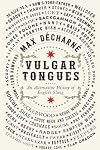
Slang is everywhere, but may be on its last legs, this book says. That's but a side argument in a look at the development of slang in the English language.
This seemed like a fun topic, and I was looking forward to learning more history about slang, but the book ultimately wasn't what I was hoping for.
For one thing, I was disappointed that almost half the book was about sex, body parts or intoxicants. I guess that's where a lot of slang comes from, but it felt like those sections went on a show more bit too long.
The other disappointment is that this was really written from a British point of view, so some of the words and references were, in a word, foreign to Americans. Luckily, I'm an Anglophile so I did get some of the references, but if you aren't familiar with, say, Cockney rhyming slang, you'll be lost. Some American slang is folded in, but not as much as compared with the rest of the book.
The one thing that stuck with me was a conclusion made at the end of the book, on the offensiveness of the best slang. Yes, slang does offend, that's a given. But in our touchy times, that may be the unpardonable sin:
"Ultimately, slang will have no place in this world, because the best of it is almost guaranteed to offend someone, somewhere."
Let's hope that conclusion is wrong, because slang is and should remain part of language, offensive or not.
I received this book through a Goodreads giveaway.
For more of my reviews, go to Ralphsbooks. show less
This seemed like a fun topic, and I was looking forward to learning more history about slang, but the book ultimately wasn't what I was hoping for.
For one thing, I was disappointed that almost half the book was about sex, body parts or intoxicants. I guess that's where a lot of slang comes from, but it felt like those sections went on a show more bit too long.
The other disappointment is that this was really written from a British point of view, so some of the words and references were, in a word, foreign to Americans. Luckily, I'm an Anglophile so I did get some of the references, but if you aren't familiar with, say, Cockney rhyming slang, you'll be lost. Some American slang is folded in, but not as much as compared with the rest of the book.
The one thing that stuck with me was a conclusion made at the end of the book, on the offensiveness of the best slang. Yes, slang does offend, that's a given. But in our touchy times, that may be the unpardonable sin:
"Ultimately, slang will have no place in this world, because the best of it is almost guaranteed to offend someone, somewhere."
Let's hope that conclusion is wrong, because slang is and should remain part of language, offensive or not.
I received this book through a Goodreads giveaway.
For more of my reviews, go to Ralphsbooks. show less
You May Also Like


Associated Authors
Statistics
- Works
- 9
- Also by
- 3
- Members
- 429
- Popularity
- #56,933
- Rating
- 3.3
- Reviews
- 8
- ISBNs
- 30
- Languages
- 1