
Nina Fitzpatrick
Author of Fables of the Irish Intelligentsia
About the Author
Disambiguation Notice:
Nina Fitzpatrick was actually two people, Nina Witoszek, writer and academic, originally from Poland, and the Irish writer Pat Sheeran who died in 2001. Their first book, Tales of the Irish Intelligentsia won the prestigious Irish Times / Air Lingus Fiction Award but was later withdrawn because of the mystery surrounding the authorship. Both authors also wrote both collaboratively and separately under their own names.
Works by Nina Fitzpatrick
The English Disease 1 copy
Aqua [1998 film] — Screenwriter — 1 copy
Associated Works
Talking to the dead : a study of Irish funerary traditions (1998) — Alternative name of collaborative authors, some editions — 1 copy
Gearrscannáin (Shorts, 2004) — Contributor — 1 copy
Tagged
Common Knowledge
- Birthdate
- unknown
- Gender
- n/a
- Relationships
- Witoszek, Nina (co-creator)
Sheeran, Pat (co-creator) - Nationality
- Ireland
- Disambiguation notice
- Nina Fitzpatrick was actually two people, Nina Witoszek, writer and academic, originally from Poland, and the Irish writer Pat Sheeran who died in 2001. Their first book, Tales of the Irish Intelligentsia won the prestigious Irish Times / Air Lingus Fiction Award but was later withdrawn because of the mystery surrounding the authorship. Both authors also wrote both collaboratively and separately under their own names.
- Associated Place (for map)
- Ireland
Members
Reviews
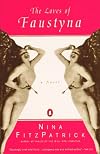
This book joins my list of favorite reads. The various quotes and descriptions on this book do not do justice to the witty and smart writing. Every page brought a turn of phrase, play on words or metaphor that delighted me. I've chosen just one example;
There were two large windows in my new apartment in Krzemionki. The east window looked out on a small square where a scabby weeping willow hunched under the relentless gaze of the housewives from the surrounding tenements. The west window show more faced onto the street and was crossed by five parallel telegraph wires.
One September evening Aleksander sat opposite the west window and composed his Pigeon Symphony Opus 3. Every evening, when the traffic eased, the pigeons perched like notes on a stave opposite our apartment and Aleksander copied them down. He hummed their positions to himself, a, h, c, e, patiently orchestrating the fidgets of the dowdy birds.
I told him plagiarizing from nature was worse than socialist realism but he said no, not at all, he was Poland's first ecological composer.
This image of birds making a line of music, pigeons no less, sent me off to look out my window to see if I could find extraordinary in the ordinary.
The story takes place in late 50s through early 80s Poland, during a time of oppression so thorough it looked normal. The author manages to make that normality into a fabulous commentary on the politics of dissent. I've read writing by other dissidents of the time, like Vaclav Havel, and they are filled with the horror of the writer's situation. This book takes a similar horror and paints it with a different stroke so as to appear lighthearted all the while being just as dark. Magical.
I was so captivated by the writing that I wanted to read more of Fitzpatrick's books, so I went hunting. Turns out there is a story behind the name. Nina Fitzpatrick is two people, Nina Witoszek, originally of Poland, and the Irish writer Pat Sheeran (a male). Their first book, Tales of the Irish Intelligentsia won a prestigious award that was later revoked because of the mystery surrounding the authorship. show less
There were two large windows in my new apartment in Krzemionki. The east window looked out on a small square where a scabby weeping willow hunched under the relentless gaze of the housewives from the surrounding tenements. The west window show more faced onto the street and was crossed by five parallel telegraph wires.
One September evening Aleksander sat opposite the west window and composed his Pigeon Symphony Opus 3. Every evening, when the traffic eased, the pigeons perched like notes on a stave opposite our apartment and Aleksander copied them down. He hummed their positions to himself, a, h, c, e, patiently orchestrating the fidgets of the dowdy birds.
I told him plagiarizing from nature was worse than socialist realism but he said no, not at all, he was Poland's first ecological composer.
This image of birds making a line of music, pigeons no less, sent me off to look out my window to see if I could find extraordinary in the ordinary.
The story takes place in late 50s through early 80s Poland, during a time of oppression so thorough it looked normal. The author manages to make that normality into a fabulous commentary on the politics of dissent. I've read writing by other dissidents of the time, like Vaclav Havel, and they are filled with the horror of the writer's situation. This book takes a similar horror and paints it with a different stroke so as to appear lighthearted all the while being just as dark. Magical.
I was so captivated by the writing that I wanted to read more of Fitzpatrick's books, so I went hunting. Turns out there is a story behind the name. Nina Fitzpatrick is two people, Nina Witoszek, originally of Poland, and the Irish writer Pat Sheeran (a male). Their first book, Tales of the Irish Intelligentsia won a prestigious award that was later revoked because of the mystery surrounding the authorship. show less

Unfortunately, only the first story of Nina Fitzpatrick's story collection Fables of the Irish intelligentsia is brilliant and humourous.
Humour is based on a subtle balance or recognition and expectation, and sufficient banter in the margin. While Fables of the Irish intelligentsia is a short story collection, characters from the first stories re-appear in later stories, creating a sense of unity. This is badly needed in a collection which sweeps broad and wildly through ideas and world show more views which no one would associate with Ireland. The result are hilarious stories, with very few points of recognition, while the readers falls from one unexpected situation to the next. Incoherent, and ultimately, of little true interest. Very disappointing. show less
Humour is based on a subtle balance or recognition and expectation, and sufficient banter in the margin. While Fables of the Irish intelligentsia is a short story collection, characters from the first stories re-appear in later stories, creating a sense of unity. This is badly needed in a collection which sweeps broad and wildly through ideas and world show more views which no one would associate with Ireland. The result are hilarious stories, with very few points of recognition, while the readers falls from one unexpected situation to the next. Incoherent, and ultimately, of little true interest. Very disappointing. show less
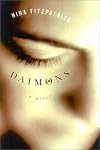
Daimons by Nina Fitzpatrick
Young and pregnant Athna is cast out by her Mother in shame, to live in a shack on the shores of Uggala (Ireland) until after she gives birth. Only Danny and Father Francis seem to accept her for who she is. Athna struggles to be accepted by society and her family, and come to like herself.
Cleverly written in alternating chapters through each persons "Daimon". I found the mysticism of each (persons) Daimon very interesting and intriguing. I also enjoyed the Irish show more setting. Overall I found Daimons a satisfying story of family, friendship and love. I feel others will enjoy it as well. show less
Young and pregnant Athna is cast out by her Mother in shame, to live in a shack on the shores of Uggala (Ireland) until after she gives birth. Only Danny and Father Francis seem to accept her for who she is. Athna struggles to be accepted by society and her family, and come to like herself.
Cleverly written in alternating chapters through each persons "Daimon". I found the mysticism of each (persons) Daimon very interesting and intriguing. I also enjoyed the Irish show more setting. Overall I found Daimons a satisfying story of family, friendship and love. I feel others will enjoy it as well. show less
Magical novel by Nina Fitzpatrick, who is the co-author of "Fables of the Irish Intelligentsia". Reminds me of Rebecca -- quick-witted, ache-ingly real, but tending to the exaggerated, with a lush sense of place.
You May Also Like


Associated Authors
Statistics
- Works
- 6
- Also by
- 4
- Members
- 181
- Popularity
- #119,335
- Rating
- 3.6
- Reviews
- 5
- ISBNs
- 11
- Languages
- 3