
Joan Brady (1) (1939–2024)
Author of Theory of War
For other authors named Joan Brady, see the disambiguation page.
Works by Joan Brady
Tagged
Common Knowledge
- Legal name
- Brady Masters, Joan
- Other names
- Brady, Joan
- Birthdate
- 1939-12-04
- Date of death
- 2024-06-18
- Gender
- female
- Education
- Columbia University
- Occupations
- ballet dancer
fiction writer - Relationships
- Syfers, Judy (sibling)
Masters, Dexter (husband)
Masters, Alexander (son) - Nationality
- USA
UK - Birthplace
- San Francisco, California, USA
- Places of residence
- San Francisco, California, USA
New York, New York, USA
Totnes, Devon, England, UK
Oxford, Oxfordshire, England, UK
Members
Reviews
Venom by Joan Brady

Venom is a suspense-filled thriller: well-written, fast-paced, and deliciously convoluted. It tells a complicated tale of industrial espionage and international skulduggery. And along the way, it introduces some memorable characters, and even has a bit of romance thrown in. Something for everyone.
The story revolves around Helen Freyl, a twenty-nine year old physics genius, with "fine bones" and "porcelain skin," and a fortune inherited from her father. Both her parents and the man she loved show more have died violently. So when she's offered a fellowship with the Follaton Medical Foundation in London, she jumps at the chance to spend a year in England, helping them with their public relations problems. The Foundation's work is concerned with victims of the Chernobyl disaster, and they need someone to help them explain their scientific research to the public and the press – a job that seems perfect for Helen.
David Marion is also young and attractive, but has lived a very different life from Helen's. Recently released from prison, he was a neglected and abused child who grew up with none of Helen's advantages. But in prison he made connections with some powerful people (one of whom was Helen's father) who took up his case and won his pardon. Now, however, someone on the outside is trying to get him killed, and he's gone underground to try to find out who and why.
I won't say much more about the plot, since I don't want to give anything away. But bee venom and the search for a cure for radiation poisoning feature prominently. People get killed along the way, and the surprises keep coming right up to the end.
Even though the book tells a complicated story, I think it's just slightly longer than it needs to be. Also, there aren't many really likable characters in the book; and the two major characters, David and Helen, are the least sympathetic of them all. Some of the plot elements were a little hard to accept, even for the thriller genre which always calls for a certain amount of suspension of disbelief. And the romance between Helen and David is a stretch, given that they come from such different worlds. But I enjoyed this one more than I thought I would at the outset, and I'd definitely recommend it to anyone looking for a real page-turner.
(This review refers to an uncorrected proof of the novel which was provided by the publisher.) show less
The story revolves around Helen Freyl, a twenty-nine year old physics genius, with "fine bones" and "porcelain skin," and a fortune inherited from her father. Both her parents and the man she loved show more have died violently. So when she's offered a fellowship with the Follaton Medical Foundation in London, she jumps at the chance to spend a year in England, helping them with their public relations problems. The Foundation's work is concerned with victims of the Chernobyl disaster, and they need someone to help them explain their scientific research to the public and the press – a job that seems perfect for Helen.
David Marion is also young and attractive, but has lived a very different life from Helen's. Recently released from prison, he was a neglected and abused child who grew up with none of Helen's advantages. But in prison he made connections with some powerful people (one of whom was Helen's father) who took up his case and won his pardon. Now, however, someone on the outside is trying to get him killed, and he's gone underground to try to find out who and why.
I won't say much more about the plot, since I don't want to give anything away. But bee venom and the search for a cure for radiation poisoning feature prominently. People get killed along the way, and the surprises keep coming right up to the end.
Even though the book tells a complicated story, I think it's just slightly longer than it needs to be. Also, there aren't many really likable characters in the book; and the two major characters, David and Helen, are the least sympathetic of them all. Some of the plot elements were a little hard to accept, even for the thriller genre which always calls for a certain amount of suspension of disbelief. And the romance between Helen and David is a stretch, given that they come from such different worlds. But I enjoyed this one more than I thought I would at the outset, and I'd definitely recommend it to anyone looking for a real page-turner.
(This review refers to an uncorrected proof of the novel which was provided by the publisher.) show less
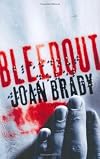
This is the first Joan Brady book I have read and I loved it! It contained a lot of detail about things I am not interested in (complex financial stuff) but it was done well and easy to understand. It did not distract from the story and you did not have to have a complete understanding to enjoy the book.
I loved all the twists and turns throughout the story and I was surprised by the ending. The author had me on a roller coaster while I was trying to figure out who committed the murder. I show more love reading a book that makes me tense and keeps me guessing all the way to the end of the book. I will definitely look at other Joan Brady books after reading "Bleedout." show less
I loved all the twists and turns throughout the story and I was surprised by the ending. The author had me on a roller coaster while I was trying to figure out who committed the murder. I show more love reading a book that makes me tense and keeps me guessing all the way to the end of the book. I will definitely look at other Joan Brady books after reading "Bleedout." show less
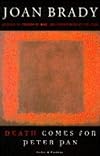
When I read Joan Brady's book "Theory of War" in the early 90's I was blown away. It was so sad and so true. Thereafter, I would watch at bookstores for a new book by her but never found one. This was before the internet and I would ask occasionally at bookstores, but no one seemed to have heard of her. Then a couple of years ago I noticed a review by her of another book which I think was in the Times Literary Supplement and I thought that she at least was writing and surely she had written show more more books. With a little further digging and thanks to Abebooks, I obtained a lovely Secker & Warburg 1996 1st edition of Death Comes for Peter Pan. Of course I loved it but it was a more complex book, sort of like reading Lovely Bones and then The Almost Moon by Alice Sebold. The difference is that I don't think Ms Sebold really showed her genius until The Almost Moon. Theory of War was a masterpiece.
The abuse of children (in Theory of War the story of the white slave trade in America that occurred shortly after the Cvil War, where white children, many orphans, were sold as slaves to farmers) draws unconditional sympathy. I sat and cried.
In Peter Pan, the author also portrays a clear and real injustice, the treatment of elderly Medicare patients, in care facilities, in the US. Her afterword confirms this and hopefully things have improved since the writing of this book. The description of the warehousing of sick elderly people and the callous miserly allocation of funds for their care in this book is shocking.
Ms Brady is far too good a writer to use her characters just to make a point .The various characters in the book are not entirely sympathetic nor are the bad guys wholly bad. The main character Alice, in her thirties, struggles for proper care for her husband, thirty years her senior, when he develops a debilitating degenerative brain condition. Alice is young and desperate to keep her husband with her. She reacts in what she believes is a principled approach, that she will do the very best for her husband. That means demanding the best. Adult children sometimes have similar reactions to a dying parent. They have unreasonable expectations of hospitals and the medical profession. They want any medical procedure that might help even if the benefits are shortlived. They expect their doctors to care on a personal level and show that. They are inevitably in conflict with the medical system
This is the story of Alice's journey through the medical professions of two countries. Having been frustrated by The British system who essentially advise no active intervention, Alice suddenly and desperately remembers that the American medical profession is wonderful. No more cold British types. She wants an American smile and an American "we can do anything attitude". She decides to move her husband to the US and does so immediately, callously sending their young child off to boarding school in Switzerland. (She picked up something from the British there ). Her subsequent conflict with the American medical system is inevitable.
Alice is not always an admirable character. Her deference to her much older husband has prevented her from maturing and developing her own intelligence and independence. She worships her self centred husband and has lived through him for years having nothing of her own (like a job), Hence her genuine grief is mixed with hysteria at the thought of losing him. Her own father reminds her of her child and that she must communicate with and comfort him. Alice is unmoved. She must save her husband. Alice is courageous and self-sacrificing. She spends every possible moment at the hospital. Almost from the start she is challenged by the hospital about a discharge date. Alice goes through the initial normal disbelief that it is not enough to be desperately ill, indeed dying, to be kept in an active treatment hospital. She works on keeping him there sometimes a day at a time, pleading, threatening but faced with the challenge of finding longer term care for him. This leads her to the nursing home issue.
This book is a very interesting and complex story and it is about far more than Alice's ongoing medical challenge. It is never boring and full of surprises. Layers of history are explored in the families of Alice and her husband Peter and this is an equally interesting story, moving back and forth from the American midwest to New York and Washington. Family secrets are explored and family secrets are often shocking.
This is a great read and a good story. I know I've said it before but it is always a delight in a modern novel to find a plot. show less
The abuse of children (in Theory of War the story of the white slave trade in America that occurred shortly after the Cvil War, where white children, many orphans, were sold as slaves to farmers) draws unconditional sympathy. I sat and cried.
In Peter Pan, the author also portrays a clear and real injustice, the treatment of elderly Medicare patients, in care facilities, in the US. Her afterword confirms this and hopefully things have improved since the writing of this book. The description of the warehousing of sick elderly people and the callous miserly allocation of funds for their care in this book is shocking.
Ms Brady is far too good a writer to use her characters just to make a point .The various characters in the book are not entirely sympathetic nor are the bad guys wholly bad. The main character Alice, in her thirties, struggles for proper care for her husband, thirty years her senior, when he develops a debilitating degenerative brain condition. Alice is young and desperate to keep her husband with her. She reacts in what she believes is a principled approach, that she will do the very best for her husband. That means demanding the best. Adult children sometimes have similar reactions to a dying parent. They have unreasonable expectations of hospitals and the medical profession. They want any medical procedure that might help even if the benefits are shortlived. They expect their doctors to care on a personal level and show that. They are inevitably in conflict with the medical system
This is the story of Alice's journey through the medical professions of two countries. Having been frustrated by The British system who essentially advise no active intervention, Alice suddenly and desperately remembers that the American medical profession is wonderful. No more cold British types. She wants an American smile and an American "we can do anything attitude". She decides to move her husband to the US and does so immediately, callously sending their young child off to boarding school in Switzerland. (She picked up something from the British there ). Her subsequent conflict with the American medical system is inevitable.
Alice is not always an admirable character. Her deference to her much older husband has prevented her from maturing and developing her own intelligence and independence. She worships her self centred husband and has lived through him for years having nothing of her own (like a job), Hence her genuine grief is mixed with hysteria at the thought of losing him. Her own father reminds her of her child and that she must communicate with and comfort him. Alice is unmoved. She must save her husband. Alice is courageous and self-sacrificing. She spends every possible moment at the hospital. Almost from the start she is challenged by the hospital about a discharge date. Alice goes through the initial normal disbelief that it is not enough to be desperately ill, indeed dying, to be kept in an active treatment hospital. She works on keeping him there sometimes a day at a time, pleading, threatening but faced with the challenge of finding longer term care for him. This leads her to the nursing home issue.
This book is a very interesting and complex story and it is about far more than Alice's ongoing medical challenge. It is never boring and full of surprises. Layers of history are explored in the families of Alice and her husband Peter and this is an equally interesting story, moving back and forth from the American midwest to New York and Washington. Family secrets are explored and family secrets are often shocking.
This is a great read and a good story. I know I've said it before but it is always a delight in a modern novel to find a plot. show less

I've always liked stories and memoirs about people in environments like ballet, monasteries - the cloistered world of striving, the fascinating details - and this was satisfying. But the blurb on my edition really misrepresents the book. Yes, it's about her years in ballet, and how she eventually left it, but also about her unconventional family and her power struggles with her mother, who was quite a piece of work.
Lists
Awards


You May Also Like


Statistics
- Works
- 10
- Members
- 571
- Popularity
- #43,840
- Rating
- 3.6
- Reviews
- 10
- ISBNs
- 168
- Languages
- 10