
Alfred Lord Tennyson (1809–1892)
Author of Idylls of the King
About the Author
Alfred Tennyson was born on August 6, 1809 in Somersby, England. He attended Trinity College in Cambridge. Tennyson is chiefly known for his poetry, an art form that had interested him since the age of six. His best known work is the Idylls of the King. Tennyson was appointed Poet Laureate of show more England in 1850 and became the Baron of Aldworth and Farrington in 1883. Tennyson was still writing his his 80s, and died on October 6, 1892 near Haslemere, England. (Bowker Author Biography) If there were a contest for the title "greatest Victorian poet," Tennyson would in death, as in life, obtain the prize. He had the finest ear of any English poet, admitting to know the metrical value of every word in the English language except "scissors." In addition, his ability to evoke a closely rendered scene was unsurpassed. Therefore, although those who sought to attack Tennyson called him "the stupidest of the English poets," he remains the only one ennobled for his poetry. Tennyson was born at Somersby rectory in Lincolnshire, the son of the rector there, and was educated at Louth Grammar School and Trinity College, Cambridge. His earliest published verse, Poems Chiefly Lyrical (1830) and Poems (1833), were considered too sentimental by many critics. Signs of future greatness could be detected in some of the poems in these collections, however. In 1842, a new volume entitled Poems was published. This work, consisting of heavily revised poems from the two earlier collections as well as many new poems, helped to establish Tennyson's fame. His masterpiece, In Memoriam (1850), crowned his fame. The work is a tribute to his close friend Arthur Henry Hallam, whose sudden death in 1833 was a crucial event in the poet's life. The year it was published he succeeded Wordsworth as poet laureate of England. Thereafter, he became tremendously popular and held the respect and admiration of the nation, including Queen Victoria and Prince Albert. From that point, Tennyson also became the poet of the establishment, and for the next 40 years he was the Parnassian idol whom younger poets would vainly seek to topple. In many of his poems, including "Ulysses," "The Princess," and "Idylls of the King" (1859--1885), Tennyson trumpeted the creed of the benevolent tyrant. It was this embrace of an authoritarian universe that, as much as his versecraft, had earned him the respect of the British monarchs. His lifelong fascination with King Arthur was the inspiration for Idylls of the King, a series of 12 narrative poems published over a period of 26 years. In 1888, Tennyson chronologically arranged these 12 poems, thus depicting the full story of Arthur and his vision of the perfect state. Tennyson's last poem, "Crossing the Bar," was a 16-line lyric written while crossing from Lymington to the Isle of Wight. It was included in a collection entitled Demeter and Other Poems published in 1889. Tennyson's most characteristic form of poetry was the idyl, a poem of country life. These poems frequently take the form of dramatic reveries that tell a story. Mood is often created through the power of richly described settings. All of Tennyson's work reflects his talent for achieving fine shades of poetic expression, and his lyrics express the emotions and experiences shared by all people. His work is also notable for its heroic quality. In 1883, Tennyson was awarded the title of Baron Tennyson by Queen Victoria; his full title was Baron of Aldworth and Farringford. When he died in 1892, he was buried in the Poet's Corner of Westminster Abbey. Tennyson's letters show almost nothing of the vividness and brilliance of his poetry, but Cecil Y. Lang and Edgar F. Shannon have been publishing them for their sidelights. More important for an understanding of Tennyson's poetry, the century-long ban on publishing the contents of Tennyson's notebooks, held by Trinity College in Cambridge, was lifted not long ago; an edition of In Memoriam, incorporating these variants, was brought out by Susan Shatto and Marion Shaw in 1982. (Bowker Author Biography) show less
Image credit: Owen Barfield World Wide Website
Series
Works by Alfred Lord Tennyson
The Poems and Plays of Alfred Lord Tennyson (Modern Library Giants, 42.1) (1938) 313 copies, 1 review
Tennyson: Poems: Edited by Peter Washington (Everyman's Library Pocket Poets Series) (2004) 259 copies
Selections from the Poems of Tennyson: With parts of the Idylls of the King, (Lake English Classics) (1913) 33 copies
Idylls of the king: The coming of Arthur, Gareth and Lynette, Lancelot and Elaine, The Holy Grail (2009) 31 copies
Tennyson's Gareth and Lynette, Lancelot and Elaine and The passing of Arthur; (2009) 25 copies, 1 review
The shorter poems of Alfred Tennyson; (Macmillan's pocket American and English classics) (1903) 12 copies
The Coming of Arthur/ Gareth and Lynette/ Lancelot and Elaine/ Quest of the Holy Grail/ Passing Of Arthur Tennyson''s Idylls of the King (1903) 8 copies
The Poetic and Dramatic Works of Alfred Lord Tennyson. Cambridge edition. (Edited by W. J. Rolfe.). (2011) 7 copies
The Letters of Alfred Lord Tennyson, Volume I: 1821-1850 (Letters of Alfred Lord Tennyson, 1821-1850) (1981) 6 copies
Poetical Works of Alfred Lord Tennyson, Globe Edition, Poet Laureate, 1899 (GLOBE EDITION) (1899) 6 copies
Poems of Alfred Lord Tennyson, Selected with a Biographical Introduction and Notes, By His Grandson. Charles Tennyson (1965) 6 copies
Select Poems of Alfred Lord Tennyson. Edited with notes by William J. Rolfe Household edition (1886) 5 copies
Sir Gawain and the Green Knight, the Lady of Shallot, the Lady of the Fountain, and Other Classic Poems and Tales of Camelot (2011) 5 copies
Oriana, and other poems 5 copies
Enoch Arden and Other Poems with a Biographical Sketch and Explanatory Notes Riverside Literature Series Number 73 (1895) 5 copies
The poems of Alfred Tennyson 4 copies
Tennyson: Selected Poetry 4 copies
Alfred Lord Tennyson - Enoch Arden & Other Poems: "If I had a flower for every time I thought of you, I could walk in my garden forever." (2017) 4 copies
Poetical Works of Lord Alfred Tennyson: Including in Memoriam, Maud, The Princess, Idylls of the King, Enoch Ared Etc. (1900) 4 copies
The miller's daughter 4 copies
Timbuctoo : A poem, which obtained the Chancellor's medal at the Cambridge commencement, M.DCCC.XXIX 4 copies
The coming of Arthur and other idylls of the king (Riverside Literature Series Number 99) (2015) 4 copies
Tears, Idle Tears {poem} 3 copies
To Virgil : written at the request of the Mantuans for the nineteenth centenary of Virgil's death 3 copies
Fairy Lilian and other poems 3 copies
A Selection from the Works of Alfred Tennyson. Arranged by Walter Fancutt (Kingsgate Pocket Poets. no. 4.) (1943) 3 copies
Holly from Tennyson 3 copies
Guinevere 3 copies
Selections from Tennyson 3 copies
THE WORKS OF ALFRED LORD TENNYSON with Etchings by John Jellicoe and Herbert Railton. 1893. [ILLUSTRATED] (1893) 3 copies
The poems of Lord Tennyson 3 copies
Poemas 2 copies
Tennyson's Idylls of The King 2 copies
Tennyson Poetry 2 copies
Alfred Lord Tennyson - In Memoriam A.H.H.: “Dreams are true while they last, and do we not live in dreams?” (2017) 2 copies
THE HOLY GRAIL (from The Idyls of the King;) and - SIR GALAHAD - Maynard's English Classic Series Number (91) Ninety On (1891) 2 copies
Tennyson: Poetical Works and Plays 2 copies
Poetical Works of Tennyson including In Memoriam, Maud, The Princess, Idylls of the King etc. (1902) 2 copies
Tennyson, The Harvard Manuscripts - Notebooks 1-4 (MS Eng 952) (Ms Eng 952, Tennyson Archive) (1987) 2 copies
Moments with Tennyson 2 copies
Tennyson's Idylls Of The King: The Coming Of Arthur; Gareth And Lynette; Lancelot And Elaine; Guinevere; The Passing Of Arthur; (2015) 2 copies
Poems of Alfred Tennyson. Poet-Laureate of England. Farringford Edition Illustrated [Two Volumes in One] (1877) 2 copies
Cycle of songs from Maud by Alfred Tennyson — Lyrics — 2 copies
Demeter (MacMillan, London, ’93) 2 copies
Wayside Thoughts from Tennyson 2 copies
Idylls of the King Vol. II 2 copies
SOUVENIR OF BECKET: FIRST PRESENTED AT THE LYCEUM THEATRE, 6TH FEB., 1893 BY HENRY IRVING. (1904) 2 copies
Mariana 2 copies
Selections from Tennyson's Poem's 2 copies
Tennyson's Idylls of the King Edited with Introduction and Notes By Charles W. French, A.m. (1925) 2 copies
The Coming of Arthur, the Passing of Arthur, a Dream of Fair Women, the Lotos-Eaters, Ulysses, Ode on the Death of the Duke of Wellington, the (2010) 2 copies
THE APPROACH TO TENNYSON 2 copies
"Come into the garden, Maud," 2 copies
Poems of Alfred Tennyson 2 copies
Tennyson: Including Lotos Eaters, Ulysses, Ode on the Death, Maud, The Coming and the Passing of Arthur (2004) 2 copies
The Falcon 2 copies
The works of Tennyson 1 copy
Songs and Lyrics 1 copy
Poems by Alfred Tennyson 1 copy
Oriana : and other poems 1 copy
Poems. Vol 2 1 copy
Poetry & Prose 1 copy
The Works of ... 1 copy
Tennyson : Selected Poems 1 copy
Works 1 copy
Lyrics and poems 1 copy
Idylls of the King 1 copy
Selctions from Tennyson 1 copy
Poems of Lord Tennyson -.in 2 Volumes (Two Volumes of The Library of Poetical Literature 32 Volume Set) (1930) 1 copy
The Poems of Lord Tennyson 1 copy
Poems : selections. Vol. II 1 copy
Becket; The cup ; The falcon 1 copy
Selected Poems 1 copy
Poems of Tennyson; volume 1 1 copy
The Poetical Works of Alfred Tennyson, Poet Laureate, Etc. : Complete in Two Volumes, Vol. # 1 1 copy
Idylls of the King. Vivien. Elaine. Enid. Guinevere ... with ... Decorations by G. W. Rhead and L. Rhead. (1898) 1 copy
The Poems of Lord Tennyson 1 copy
The day-dream 1 copy
Tennyson year book 1 copy
Idyls of the King 1 copy
The Works of Tennyson 1 copy
The Open Air 1 copy
Tales of the Dark Romantics and Beyond: Tales of the Dark Romantics — Contributor — 1 copy
Alfred Lord Tennyson (Bloom's Modern Critical Views) (2000-08-03) — Author — 1 copy
THE POETICAL WORKS OF ALFRED 1 copy
Gareth & Lynette etc 1 copy
The Holy Grail etc 1 copy
Maud and other Poems 1 copy
Poems-Chiefly Lyrical 1 copy
Tennyson's Shorter Poems 1 copy
Vivien and Guinevere 1 copy
Sweet and Low 1 copy
Selected Poems from Tennyson 1 copy
Idylls of the King, part 1 1 copy
Flower in the Crannied Wall 1 copy
The Daisy 1 copy
Ask Me No More 1 copy
Tennyson's poems, vol. 1 1 copy
In Memoriam Vol. II 1 copy
Tennyson: Poems 1 copy
Königsidyllen 1 copy
tennyson poems 1 copy
Again the Feast 1 copy
The Splendor Falls 1 copy
Everyman's Library 1 copy
Library of Classic Poets 1 copy
Select poems of Alfred Tennyson, (The belles-lettres series. Section VI. Nineteenth century poets) 1 copy
The Palace of Art 1 copy
St. Agnes' Eve 1 copy
The Two Voices 1 copy
Choric Song 1 copy
The Poet 1 copy
Song 1 copy
To the Queen 1 copy
The Passing of Arthur 1 copy
Pelleas and Ettarre 1 copy
Balin and Balan 1 copy
The Marriage of Geraint 1 copy
Dedication 1 copy
Dikter 1 copy
Dora 1 copy
Select Poems of Alfred Tennyson — Author — 1 copy
The Works of Tennyson 1 copy
The Works of Alfred Tennyson 1 copy
Stories from Tennyson 1 copy
Brilliants from Tennyson 1 copy
The Lady of Shalot 1 copy
In memoriam e altre poesie 1 copy
The Poetical Works of Alfred Tennyson, Poet Laureate -- Including Music and Lyrics (Harper's Complete Edition - Illustrated) (1871) 1 copy
Becket and Other Plays 1 copy
Tennyson Poems-Illlustrated 1 copy
Tennyson's The Princess 1 copy
Tiresias. 1 copy
Tennyson for the Young 1 copy
The Death of Oenone 1 copy
The Best Poems of Tennyson 1 copy
English poetry 1 copy
The Revenge [poem] 1 copy
Pearls from Tennyson 1 copy
Poems, vol. I 1 copy
Poems. With illustrations by Millais, Stanfield, Creswick, Mulready, Horsley, etc. New edition. 1 copy, 1 review
In memoriam (testo a fronte) 1 copy
Tennyson Selected Poems. Chosen and edited by Michael Millgate (New Oxford English Series.) (1966) 1 copy
Poetic Works Vol I 1 copy
The Lotos-Eaters, Ulysses, Ode on the Death of the Duke of Wellington, Maud, The Coming of Arthur, The Passing of Arthur (1999) 1 copy
The poems and plays. . . . 1 copy
An Arthurian Miscellany 1 copy
50 Greatest Poems 1 copy
Viviane 1 copy
Poems, vol. II 1 copy
Poems 1832 - 1842 1 copy
Poems of Tennyson. Edited by Henry Van Dyke and D. Laurance Chambers The Athenaeum Press Series 1 copy
Poems and Ballads 1 copy
The Copp Clark Literature Series: Selections from the Idylls: The Coming of Arthur, The Holy Grail 1 copy
Poems of Tennyson including The Princess, In Memoriam, Maud, Idylls of the King, Enoch Arden, etc [ Oxford Edition ] (1900) 1 copy
Poems Of Lord Tennyson 1 copy
A bouquet from Tennyson 1 copy
Associated Works
Paradise Lost [Norton Critical Edition] (1667) — Contributor, some editions — 2,419 copies, 14 reviews
The Making of a Poem: A Norton Anthology of Poetic Forms (2000) — Contributor — 1,469 copies, 9 reviews
The Best Poems of the English Language: From Chaucer Through Robert Frost (2004) — Contributor — 1,244 copies, 3 reviews
Literature: An Introduction to Fiction, Poetry, and Drama (1995) — Contributor, some editions — 1,018 copies, 7 reviews
Perrine's Literature: Structure, Sound, and Sense (1970) — Contributor, some editions — 891 copies, 4 reviews
The Illustrated Treasury of Children's Literature, Volumes 1-2 (1955) — Contributor — 523 copies, 4 reviews
World Poetry: An Anthology of Verse from Antiquity to Our Time (1998) — Contributor — 496 copies, 2 reviews
Hymns of the Church of Jesus Christ of Latter-day Saints (1985) — Contributor — 318 copies, 3 reviews
The Norton Anthology of English Literature, 4th Edition, Volume 2 (1979) — Contributor — 269 copies, 1 review
Teaching with Fire: Poetry That Sustains the Courage to Teach (2003) — Contributor — 224 copies, 1 review
The Children's Treasury: Best Loved Stories and Poems from Around the World (1987) — Contributor — 164 copies, 2 reviews
Poetry Speaks Expanded: Hear Poets Read Their Own Work from Tennyson to Plath (2007) — Contributor — 157 copies, 2 reviews
Leading from Within: Poetry That Sustains the Courage to Lead (2007) — Contributor — 115 copies, 3 reviews
The Sophisticated Cat: A Gathering of Stories, Poems, and Miscellaneous Writings About Cats (1992) — Contributor — 112 copies, 1 review
Gentlemen, Scholars and Scoundrels: A Treasury of the Best of Harper's Magazine from 1850 to the Present (1972) — Contributor — 62 copies
The Dedalus Book of English Decadence: Vile Emperors and Elegant Degenerates (2004) — Contributor — 60 copies
Buzz Words: Poems About Insects (Everyman's Library Pocket Poets Series) (2021) — Contributor — 56 copies
Voices of the Industrial Revolution: Selected Readings from the Liberal Economists and Their Critics (1961) — Contributor — 50 copies
The Dedalus Book of British Fantasy: 19th Century (European Literary Fantasy Anthologies) (1991) — Contributor — 47 copies
Out of the Best Books: An Anthology of Literature, Vol. 1: The Individual and Human Values (1964) — Contributor — 40 copies
Out of the Best Books: An Anthology of Literature, Vol. 3: Intelligent Family Living (1967) — Contributor — 34 copies
The Roads from Bethlehem: Christmas Literature from Writers Ancient and Modern (1993) — Contributor — 34 copies, 1 review
Pre-Raphaelite Circle: NPG Insights, The Pre-Raphaelite Circle (National Portrait Gallery Insights) (2005) — Featured Artist — 33 copies
Out of the Best Books: An Anthology of Literature, Vol. 4: The World Around Us (1968) — Contributor — 28 copies
Edexcel Poetry Anthology for Advanced subsidiary and advanced GCE examinations in English Literature (2000) — Contributor, some editions — 6 copies
Die englische Literatur 08 in Text und Darstellung. 19. Jahrhundert 2 (1982) — Contributor — 5 copies
The Bibelot Volume XVIII: A Reprint of Poetry and Prose for Book Lovers, Chose in Part from Scarce Editions and Sources Not Generally Known. (1912) — Contributor — 4 copies
An Evening of poetry at the Skinners' Hall : for the benefit of the Royal Hospital and Home for Incurables, 15th June 1973 — Contributor — 1 copy
Dramatische Werke / Frithiofs-Sage / Enoch Arden - Illustrierte Ausgabe — Contributor — 1 copy
Morte de Smudgie — Contributor — 1 copy
Tagged
Common Knowledge
- Legal name
- Tennyson, Alfred, Baron Tennyson
- Other names
- Tennyson, Alfred
Lord Tennyson, Alfred
Tennyson - 1st Baron Tennyson, Alfred - Birthdate
- 1809-08-06
- Date of death
- 1892-10-06
- Gender
- male
- Education
- University of Cambridge (Trinity)
Louth Grammar School
Scaitcliffe School, Englefield Green
King Edward VI Grammar School, Louth - Occupations
- poet
- Organizations
- Cambridge Apostles
- Awards and honors
- Poet Laureate of England (1850)
Hereditary Peerage (First Baron Tennyson ∙ 1884)
Fellow of the Royal Society - Relationships
- Tennyson, Hallam (son)
Tennyson, Charles (brother)
Tennyson, Emily Sellwood Tennys (wife)
Jesse, F. Tennyson (great-grandniece)
Tennyson, Pen (great-grandson) - Nationality
- UK
- Birthplace
- Somersby, Lincolnshire, England, UK
- Places of residence
- Somersby, Lincolnshire, England, UK
Cambridge, Cambridgeshire, England, UK
Essex, England, UK
Freshwater, Isle of Wight, England, UK - Place of death
- Haslemere, Surrey, England, UK
- Burial location
- Westminster Abbey, London, England, UK
- Map Location
- England, UK
Members
Discussions
Victorian Poetry: In Memoriam A.H.H., Goblin Market and Other Poems, and other treasures in Club Read 2022 (November 2022)
Reviews
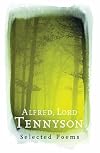
In the two other books I've read in this Selected Poems series by Phoenix – Edgar Allan Poe and Robert Burns – I enjoyed the poems but thought the selection was a bit lacking. This was especially true of the Burns one, which omitted a number of the Scot's more famous poems. Happily, no one had blunder'd in this Tennyson selection, which includes 'The Charge of the Light Brigade' and an abridged form of 'In Memoriam A. H. H.' (which gave us the phrases Ring out the old, ring in the new" show more and "'Tis better to have loved and lost/Than never to have loved at all.", among others).
That said, it was the poems that I was less familiar with which enchanted me the most. 'Break, Break, Break' was a touching short poem about longing for days past, whilst 'Locksley Hall' was a long magisterial piece covering everything from lost love to encroaching death, the torture of memory and the progress of mankind. 'Morte d'Arthur' was a beautifully romantic and chivalric telling of the death of King Arthur and the return of Excalibur to the Lady of the Lake, and 'Come Down, O Maid' was a sweet metaphorical poem encouraging women to stop being so distant and to choose happy love. There was also 'The Lotos-Eaters', in which Odysseus' crew grow tired of adventure and strife ("Most weary seem'd the sea, weary the oar,/Weary the wandering fields of barren foam.") and decide that, although their home remains "far beyond the wave; we will no longer roam."
But the best by far is the remarkable 'Ulysses', which again takes the Odyssey as its inspiration and delivers a stirring cry for adventure and aspiration. (Tennyson's poem put me in mind of one of my favourite poems, 'Ithaca' by C. P. Cavafy. What is it about Greek mythology that makes for such great poetry?) Just when you think you've found the poem's best line, an even finer one follows. That, in fact, could be said for the entire collection, which does justice to Tennyson's considerable talent." show less
That said, it was the poems that I was less familiar with which enchanted me the most. 'Break, Break, Break' was a touching short poem about longing for days past, whilst 'Locksley Hall' was a long magisterial piece covering everything from lost love to encroaching death, the torture of memory and the progress of mankind. 'Morte d'Arthur' was a beautifully romantic and chivalric telling of the death of King Arthur and the return of Excalibur to the Lady of the Lake, and 'Come Down, O Maid' was a sweet metaphorical poem encouraging women to stop being so distant and to choose happy love. There was also 'The Lotos-Eaters', in which Odysseus' crew grow tired of adventure and strife ("Most weary seem'd the sea, weary the oar,/Weary the wandering fields of barren foam.") and decide that, although their home remains "far beyond the wave; we will no longer roam."
But the best by far is the remarkable 'Ulysses', which again takes the Odyssey as its inspiration and delivers a stirring cry for adventure and aspiration. (Tennyson's poem put me in mind of one of my favourite poems, 'Ithaca' by C. P. Cavafy. What is it about Greek mythology that makes for such great poetry?) Just when you think you've found the poem's best line, an even finer one follows. That, in fact, could be said for the entire collection, which does justice to Tennyson's considerable talent." show less

This is probably the ultimate mid-Victorian poem, everything you need to know about British culture around the time of the Great Exhibition condensed into one novella-length (just under 3000 lines) piece of verse. Reflecting on his reaction to the sudden death of his college friend Arthur Hallam at the age of 22 in 1833, Tennyson analyses the process of grieving and recovery, and examines what death means to him in the context of Christian (Anglican) religious ideas and the way they have show more been shaken up by recent scientific discoveries. Fossils, descent from apes, age of the planet, Nature "So careful of the type ... So careless of the single life", and all the rest of it. You name it, it's in there somewhere.
The sections of the poem follow a roughly chronological sequence, starting with the poet reacting to news of his friend's death and following in his imagination the progress of the ship bringing his remains back to Britain, and ending years later with the happy marriage of the poet's sister Emilia, who had been engaged to marry Arthur. Along the way he goes back and forward through different ways of dealing with grief and loss, sometimes depressed and desperate, sometimes reconciled to the idea that "'Tis better to have loved and lost / Than never to have loved at all."
And of course this is a poem full of lines that have entered the language, from "Nature red in tooth and claw" to "Ring out, wild bells". It was a huge hit in its time, and copies flew off the presses, especially after Queen Victoria announced that she had taken great consolation from it after the death of her husband in 1862. Tennyson ended up with the Laureateship and a peerage, with a standing more like that of a former prime minister than a poet.
Reading it 170 years on, of course there's a lot that feels archaic, and the endless pattern of tetrameter quatrains in ABBA rhyme-scheme can seem a bit mechanical, but there's also a lot in his insight into the way we deal with loss and death that still feels relevant and helpful: I don't suppose many people read this without thinking about the way the poet's reflections would map onto a loss in their own lives, and probably feeling better about it as a result. show less
The sections of the poem follow a roughly chronological sequence, starting with the poet reacting to news of his friend's death and following in his imagination the progress of the ship bringing his remains back to Britain, and ending years later with the happy marriage of the poet's sister Emilia, who had been engaged to marry Arthur. Along the way he goes back and forward through different ways of dealing with grief and loss, sometimes depressed and desperate, sometimes reconciled to the idea that "'Tis better to have loved and lost / Than never to have loved at all."
And of course this is a poem full of lines that have entered the language, from "Nature red in tooth and claw" to "Ring out, wild bells". It was a huge hit in its time, and copies flew off the presses, especially after Queen Victoria announced that she had taken great consolation from it after the death of her husband in 1862. Tennyson ended up with the Laureateship and a peerage, with a standing more like that of a former prime minister than a poet.
Reading it 170 years on, of course there's a lot that feels archaic, and the endless pattern of tetrameter quatrains in ABBA rhyme-scheme can seem a bit mechanical, but there's also a lot in his insight into the way we deal with loss and death that still feels relevant and helpful: I don't suppose many people read this without thinking about the way the poet's reflections would map onto a loss in their own lives, and probably feeling better about it as a result. show less
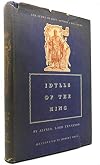
Rest in peace Arthur 3
I was skeptical going into this at first since it’s a 19th century text and I was curious as to how much Tennyson would change from Malory and earlier works. I really enjoyed it, though. I think it’s beautifully written and I love all the imagery Tennyson uses. Malory’s Grail Quest is still my favorite version of it, but I do still *really* like Tennyson’s take on it. Writing it in past tense and hearing it through Percival instead of reading it as the quest was show more going on was a choice I really liked. The Grail Quest has always felt like the beginning of the end to me and I think Percival’s recollection really adds it that. I also loved the last line of ‘The Last Tournament’ - “And Mordred thought ‘the time is hard at hand’” hell yeah dude it’s your time to shine go kill your dad !!
Also the art in my edition is absolutely gorgeous. The only character that’s drawn different from my mental image of them is Geraint/Erec and the Bedivere and Galahad portraits are my favorite. Also Gawain looks extremely fruity in his but of course he does. show less
I was skeptical going into this at first since it’s a 19th century text and I was curious as to how much Tennyson would change from Malory and earlier works. I really enjoyed it, though. I think it’s beautifully written and I love all the imagery Tennyson uses. Malory’s Grail Quest is still my favorite version of it, but I do still *really* like Tennyson’s take on it. Writing it in past tense and hearing it through Percival instead of reading it as the quest was show more going on was a choice I really liked. The Grail Quest has always felt like the beginning of the end to me and I think Percival’s recollection really adds it that. I also loved the last line of ‘The Last Tournament’ - “And Mordred thought ‘the time is hard at hand’” hell yeah dude it’s your time to shine go kill your dad !!
Also the art in my edition is absolutely gorgeous. The only character that’s drawn different from my mental image of them is Geraint/Erec and the Bedivere and Galahad portraits are my favorite. Also Gawain looks extremely fruity in his but of course he does. show less
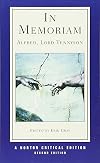
I've read bits of In Memoriam before, but never the whole thing. It's very good. I liked the bits to do with evolution ("Nature, red in tooth and claw") the most, of course (the epilogue contains some very powerful imagery, and also he mentions dragons at one point!), but my favorite bit was a little bit of business about hands. First, in Canto LXXX we get:
His credit thus shall set me free;
And, influence-rich to soothe and save,
Unused example from the grave
Reach out dead hands to show more comfort me.
Tennyson's talking about how if he had died and Hallam had lived, Hallam would have handled it much better, and that morbid hypothetical should be his example. But what a chilling image! "Dead hands to comfort me"? But later, in Canto CXIX, he manages to make this reassuring:
And bless thee, for thy lips are bland,
And bright the friendship of thine eye;
And in my thoughts with scarce a sigh
I take the pressure of thine hand.
Now Hallam's image is a source of comfort and pleasure for him, even if he can never let him go. The whole book is filled with brilliant intersecting imagery like that. show less
His credit thus shall set me free;
And, influence-rich to soothe and save,
Unused example from the grave
Reach out dead hands to show more comfort me.
Tennyson's talking about how if he had died and Hallam had lived, Hallam would have handled it much better, and that morbid hypothetical should be his example. But what a chilling image! "Dead hands to comfort me"? But later, in Canto CXIX, he manages to make this reassuring:
And bless thee, for thy lips are bland,
And bright the friendship of thine eye;
And in my thoughts with scarce a sigh
I take the pressure of thine hand.
Now Hallam's image is a source of comfort and pleasure for him, even if he can never let him go. The whole book is filled with brilliant intersecting imagery like that. show less
Lists
Ambleside Books (1)
Victorian Period (1)
2024-25 reading (1)
Awards


You May Also Like


Associated Authors
Statistics
- Works
- 708
- Also by
- 102
- Members
- 14,252
- Popularity
- #1,617
- Rating
- 4.1
- Reviews
- 95
- ISBNs
- 591
- Languages
- 9
- Favorited
- 60

