
Harriet McBryde Johnson (1957–2008)
Author of Accidents of Nature
About the Author
Harriet McBryde Johnson has been a lawyer in Charleston, South Carolina, Since 1985. She holds the world endurance record (fourteen years without interruption) for protesting the Jerry Lewis telethon for the Muscular Dystrophy Association
Works by Harriet McBryde Johnson
Associated Works
Disability Visibility: First-Person Stories from the Twenty-First Century (2020) — Contributor — 922 copies, 17 reviews
Tagged
Common Knowledge
- Birthdate
- 1957-07-08
- Date of death
- 2008-06-04
- Gender
- female
- Education
- Charleston Southern University (BS|History)
College of Charleston (MA|Public Administration)
University of South Carolina (JD) - Occupations
- lawyer
- Nationality
- USA
- Places of residence
- Charleston, South Carolina, USA
- Place of death
- Charleston, South Carolina, USA
- Associated Place (for map)
- Charleston, South Carolina, USA
Members
Reviews
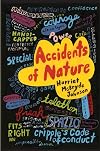
Harriet McBryde Johnson may have looked at her life as being "too late to die young;" however, she died younger than she should have and her unique, powerful voice was lost to us. I tend to be skeptical about freshman novels, skeptical about the first person, skeptical about authorial self-inserts and skeptical about manifestos parading as novels. Accidents of Nature falls into all of the above categories; however, it is transcendent.
First and foremost, for a lawyer with no formal training show more on creative writing, Johnson has an unbelievable knack with characterization. Her characters are understated, but unique; flawed but sympathetic. Even characters that disagree with her point of view are granted strengths. The message in Accidents of Nature is very similar to that of "Too Late to Die Young;" however, in novel format, it is somehow easier to understand -- that Johnson is suggesting an approach that is taken to all people with disabilities, not just razor sharp Southern ADA lawyers who happen to be disabled. And while groups such as Disability is Natural are beginning to champion similar movements, Johnson is one of the first and one of the loudest to take her approach to the disability movement. Accidents of Nature is guaranteed to challenge how all of us think disability and Johnson makes it clear, by inserting a caricature of herself, that even she is not above reproach.
I read this in a sitting, but it will stay with me for a long, long time. show less
First and foremost, for a lawyer with no formal training show more on creative writing, Johnson has an unbelievable knack with characterization. Her characters are understated, but unique; flawed but sympathetic. Even characters that disagree with her point of view are granted strengths. The message in Accidents of Nature is very similar to that of "Too Late to Die Young;" however, in novel format, it is somehow easier to understand -- that Johnson is suggesting an approach that is taken to all people with disabilities, not just razor sharp Southern ADA lawyers who happen to be disabled. And while groups such as Disability is Natural are beginning to champion similar movements, Johnson is one of the first and one of the loudest to take her approach to the disability movement. Accidents of Nature is guaranteed to challenge how all of us think disability and Johnson makes it clear, by inserting a caricature of herself, that even she is not above reproach.
I read this in a sitting, but it will stay with me for a long, long time. show less
Nuanced and engaging portrait of that moment in time before people got that telethons suck. Also before people got that "mixing the races" was no big deal. The narrator's syrupy southern accent was a bit distracting, as were the Mary Sue tendencies of Sara, but overall I enjoyed the story of Jean's awakening. I dug the insight into the struggles of Jean, who has CP, to communicate, and how it felt when her body didn't go along with the wishes of her mind.
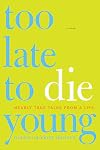
This sat on my shelf for over three years! I am sorry that I did not pick it up to read sooner, so it could have found more readers.
The title is great. I wish I'd thought of it. It is also perfect for this particular group of stories.
Johnson subtitles the book "nearly true tales from a life". The tales are about her life, from early childhood into middle age, as a person with a neuro-muscular disease. She did not want to know specifically which disease, and it didn't matter anyway. The show more stories begin with her realization that she would some day die. And that whatever disability she had would likely figure into that death. She came to grips with the realization early and got on with it. Saying to herself such things as "As long as I'm going to die I might as well be in Kindergarten"...on up to "...I might as well have a law degree" and "I might as well be a lawyer". She spent no time on self-pity.
The stories are arranged chronologically so the book really reads as a memoir. The underlying theme is that people with disabilities are no less likely to be happy or to live full lives than are able-bodied persons. It seems like a no-brainer but to much of the world it is not. Taking the message further, Johnson fought for accommodation for persons with disabilities so that it would not be so unnecessarily difficult for them to get all they can from life.
The tales are told with a brand of humor that is easy to like, that seems to come naturally to her. The book is thus easy and fun to read, yet it packs a powerful punch. show less
The title is great. I wish I'd thought of it. It is also perfect for this particular group of stories.
Johnson subtitles the book "nearly true tales from a life". The tales are about her life, from early childhood into middle age, as a person with a neuro-muscular disease. She did not want to know specifically which disease, and it didn't matter anyway. The show more stories begin with her realization that she would some day die. And that whatever disability she had would likely figure into that death. She came to grips with the realization early and got on with it. Saying to herself such things as "As long as I'm going to die I might as well be in Kindergarten"...on up to "...I might as well have a law degree" and "I might as well be a lawyer". She spent no time on self-pity.
The stories are arranged chronologically so the book really reads as a memoir. The underlying theme is that people with disabilities are no less likely to be happy or to live full lives than are able-bodied persons. It seems like a no-brainer but to much of the world it is not. Taking the message further, Johnson fought for accommodation for persons with disabilities so that it would not be so unnecessarily difficult for them to get all they can from life.
The tales are told with a brand of humor that is easy to like, that seems to come naturally to her. The book is thus easy and fun to read, yet it packs a powerful punch. show less
In the audio version reader Jenna Lamia brings the story to full, well-rounded life. At this disability summer camp, the kids are not to be pitied or praised for their courage, but accepted as who they are, foibles and all. Very sharp story; characters are funny and human.
Jean has cerebral palsy and attends a regular high school in North Carolina. In the summer of 1970 she attends a camp for kids with various disabilities. It's her first experience being around so many others who are also show more handicapped. She meets Sara who has muscular dystrophy and is in her eighth summer at Camp Courage. Sara is an intelligent, opinionated activist when it comes to demanding respect for people with disabilities. She agitates in the camp against the patronizing, everyone-is-a-winner attitude of the camp staff. Jean, who has more experience in the "norm" world than Sara, doesn't always agree with her ideas but they do change her perspective on the world as a "crip." Author is also disabled. show less
Jean has cerebral palsy and attends a regular high school in North Carolina. In the summer of 1970 she attends a camp for kids with various disabilities. It's her first experience being around so many others who are also show more handicapped. She meets Sara who has muscular dystrophy and is in her eighth summer at Camp Courage. Sara is an intelligent, opinionated activist when it comes to demanding respect for people with disabilities. She agitates in the camp against the patronizing, everyone-is-a-winner attitude of the camp staff. Jean, who has more experience in the "norm" world than Sara, doesn't always agree with her ideas but they do change her perspective on the world as a "crip." Author is also disabled. show less
Lists
Awards


You May Also Like


Associated Authors
Statistics
- Works
- 3
- Also by
- 2
- Members
- 357
- Popularity
- #67,135
- Rating
- 4.1
- Reviews
- 22
- ISBNs
- 11