
Frederick C. Crews (1933–2024)
Author of The Pooh Perplex: A Freshman Casebook
About the Author
Frederick Crews taught at the University of California, Berkeley for thirty-six years.
Works by Frederick C. Crews
The Patch Commission 2 copies
Starting over: a college reader 2 copies
Associated Works
The Blithedale Romance [Norton Critical Edition, 1st ed.] (1978) — Contributor — 192 copies, 2 reviews
The Literary Animal: Evolution and the Nature of Narrative (2005) — Foreword, some editions — 86 copies
Tagged
Common Knowledge
- Legal name
- Crews, Frederick Campbell
- Birthdate
- 1933-02-20
- Date of death
- 2024-06-21
- Gender
- male
- Education
- Yale University (English|1955)
Princeton University (Ph.D.|Literature|1958) - Occupations
- writer
author
professor (Emeritus ∙ University of California ∙ Berkeley)
literary critic - Organizations
- University of California, Berkeley
- Awards and honors
- Fulbright Lectureship (Turin ∙ Italy ∙ [1961])
Center for Advanced Study in the Behavioral Sciences Fellow (1965-1966)
National Council on the Arts and Humanities, Essay Prize (1968)
Guggenheim Fellowship (Literary criticism ∙ 1970)
University of California, Berkeley, Distinguished Teaching Award (1985)
American Academy of Arts and Sciences member (1991) (show all 11)
University of California, Berkeley, Faculty Research Lecturer ( [1991])
Northwestern University Press, Editorial Board, “Rethinking Theory” series (1992-present)
Berkeley Citation (1994)
Commission for Scientific Medicine and Mental Health fellow (2003-present)
Berkeley Fellow (2005–present) - Agent
- Michael Carlisle
- Relationships
- Crews, Elizabeth (wife)
- Nationality
- USA
- Birthplace
- Philadelphia, Pennsylvania, USA
- Places of residence
- Berkeley, California, USA
- Place of death
- Oakland, California, USA
- Associated Place (for map)
- California, USA
Members
Reviews
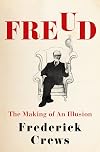
Like the object of his study, Professor Crews has the fortune or misfortune of being extremely well documented. A prolific essayist who has returned to and revised his ideas a number of times since the 1950s, Crews has written the culmination of his lifelong engagement with Freud and Freudianism. It is this "ism" that motivates his turn from literary criticism to deep biographical research. The goal of his study is to demonstrate the social and cultural factors that enabled the "cult of show more Freud," including what he calls the "commercial spirit" that motivated Freud's cultivation of his own career. This is an overwhelming book, with a nearly unmanageable depth of detail. Crews' singular focus on showing Freud to be a self-aware huckster draws the threads together. One wonders, though, if this book would have been more necessary a generation ago. Scholars and physicians alike tend to be trained more eclectically today and with less of a self-consciousness of membership in a school or system. It is not that the book's unearthing of historical detail is unwelcome, but perhaps Crews overstates the need for debunking the myth of Freud if, as he reports, psychoanalysis is all-but-passe in the various fields of mental health. Moreover, the implicit point seems to be that any of Freud's insights into psyche and culture are tainted by his methods and his behavior. Cannot it be true that Freud noticed some things worth noticing and express them fluently, and also that his attempts to ingratiate himself with the scientific community caused harm? Still, as a work that contextualizes a perhaps infamous intellectual life, it is a valuable corrective. A small reader's quibble: the advanced readers copy did not include an index; a work this extensive on a body of writing as varied and deep as Freud's would be served well by an index of references to particular Freudian texts (e.g., "Totem and Taboo," "The Interpretation of Dreams," etc.). show less
 This review was written for LibraryThing Early Reviewers.
Half a lifetime after sending up the critical clichés of the day in The Pooh perplex, Crews came back with another virtuoso performance, imagining a complete spoof symposium — supposedly taking place during the 2000 MLA Conference — of postmodern critiques of A A Milne’s classic children’s books. We get Derrida-deconstruction, Marxist, feminist and postcolonial analysis, a repressed-memory specialist who demonstrates that Piglet must have been sexually abused by his creator, a show more fan-fic freak, and a sacrificial Bloom-style conservative, amongst others, all with silly names and hilarious CVs full of in-jokes. Their papers are lovingly researched and full of references and incomprehensible quotations from what look like completely genuine postmodern authorities. At the end we learn that the whole symposium (including Crews’s introduction) has been engineered by a Stanley Fish lookalike who admits that he couldn’t care less about the content of the individual contributions but knows that Eng Lit can’t survive as a discipline without healthy controversy and the occasional scandal that gets out into the wider world.
By 2000, Crews was probably flogging a dead horse, and of course he was parodying people who (apart from the conservatives) very much enjoyed parodying themselves and would have been horrified at the idea that anyone was taking their ideas literally, so you can’t really call this a hard-hitting satire. But it is quite entertaining. show less
By 2000, Crews was probably flogging a dead horse, and of course he was parodying people who (apart from the conservatives) very much enjoyed parodying themselves and would have been horrified at the idea that anyone was taking their ideas literally, so you can’t really call this a hard-hitting satire. But it is quite entertaining. show less
Here's a newsflash: Sigmund Freud, one of the most influential figures of the last century, was a misogynist, an antisemite (as a member of the Jewish elite, he looked down upon those who were not as cultured as himself), an indifferent physician, a cocaine user, and a sloppy scientist with an aversion to quantifying results. These and other unsavory revelations form the core of Frederick Crews's biography of the father of psychoanalysis. Crews's thesis is that the great man's starstruck show more followers did their best to hide or gloss over their hero's less than admirable traits. Freud's own talent for self-promotion played into the development of his "genius" reputation as well. In Crews's telling, Freud is an out-and-out jerk sorely lacking in redeeming qualities.
At over six hundred pages, not counting the references or bibliography, this book is not suitable for the casual reader. If I had been aware of the book's heft, level of detail, and mean-spiritedness, I, as a non-specialist with only a passing interest in the history of psychology, would not have requested it. show less
At over six hundred pages, not counting the references or bibliography, this book is not suitable for the casual reader. If I had been aware of the book's heft, level of detail, and mean-spiritedness, I, as a non-specialist with only a passing interest in the history of psychology, would not have requested it. show less
This review was written for LibraryThing Early Reviewers.I grew up thinking of Sigmund Freud as a great philosophical writer, an intellectual, an accomplished scientist, and the esteemed inventor of psychology. I also read his works in college, in both English and German. While I understood that Freud wasn’t perfect – he seemed more than a little misogynistic and his theories seemed too focused on sex – it wasn’t until I read Frederick Crews’ new book, Freud: The Making of an Illusion, that I realized what a callous and ego-centric show more con-man Freud was and how he is undeserving of any fame at all, being deserving, at best, of nothing but infamy.
Crews doesn’t expect any reader to take his word for it. He goes into exhaustive detail about the basis for his conclusions, extensively cataloging Freud’s many problems and the problems with Freud’s theories. In fact, Crews provides so more detail and support that most readers will probably tire of reading about Freud before they finish Crew’s book. That’s not a criticism of Crews: anything less would likely have left too much breathing room for Freud’s fans to continue to falsely praise his life and work as something other than a venal and self-enriching scam. It’s just to say that Crews is so convincing, and provides so much evidence and so many examples in support of his conclusions, that I, at least, tired of reading about such a scumbag as Freud seems to have been. I found myself objecting to anyone so vile being given so much attention, even by someone who writes as brilliantly as Crews.
In sum, Crews effectively exposes Freud and the many deceptions in which Freud engaged in his all-consuming quest for fame and wealth, a quest that doesn’t seem to have included much, if any, concern for the health of his patients or anyone else subject to treatments based on his Freud’s unsupported and untested ideas.
But Crews doesn’t stop with exposing Freud. In the process of exposing Freud, Crews also exposes the many Freud apologists throughout the years, people who learned the truth about Freud and his theories but who, for self-serving reasons of their own, bent over backwards to help continue to deceive the world and those in psychoanalysis about the spuriousness of Freud’s theories and teachings.
If you retain any respect for Freud, read this book and I suspect that respect will quickly evaporate. I can’t imagine that anyone, at least any honest writer or scientist, will ever be able to counter Crews’ exhaustive research and well-supported conclusions about Freud. Hopefully this book will be the nail in the coffin of Freud’s fame and the use of his theories. At least one can hope. Well done Mr. Crews. show less
Crews doesn’t expect any reader to take his word for it. He goes into exhaustive detail about the basis for his conclusions, extensively cataloging Freud’s many problems and the problems with Freud’s theories. In fact, Crews provides so more detail and support that most readers will probably tire of reading about Freud before they finish Crew’s book. That’s not a criticism of Crews: anything less would likely have left too much breathing room for Freud’s fans to continue to falsely praise his life and work as something other than a venal and self-enriching scam. It’s just to say that Crews is so convincing, and provides so much evidence and so many examples in support of his conclusions, that I, at least, tired of reading about such a scumbag as Freud seems to have been. I found myself objecting to anyone so vile being given so much attention, even by someone who writes as brilliantly as Crews.
In sum, Crews effectively exposes Freud and the many deceptions in which Freud engaged in his all-consuming quest for fame and wealth, a quest that doesn’t seem to have included much, if any, concern for the health of his patients or anyone else subject to treatments based on his Freud’s unsupported and untested ideas.
But Crews doesn’t stop with exposing Freud. In the process of exposing Freud, Crews also exposes the many Freud apologists throughout the years, people who learned the truth about Freud and his theories but who, for self-serving reasons of their own, bent over backwards to help continue to deceive the world and those in psychoanalysis about the spuriousness of Freud’s theories and teachings.
If you retain any respect for Freud, read this book and I suspect that respect will quickly evaporate. I can’t imagine that anyone, at least any honest writer or scientist, will ever be able to counter Crews’ exhaustive research and well-supported conclusions about Freud. Hopefully this book will be the nail in the coffin of Freud’s fame and the use of his theories. At least one can hope. Well done Mr. Crews. show less
This review was written for LibraryThing Early Reviewers.Lists
Awards


You May Also Like


Associated Authors
Statistics
- Works
- 26
- Also by
- 5
- Members
- 2,158
- Popularity
- #11,911
- Rating
- 3.7
- Reviews
- 30
- ISBNs
- 65
- Favorited
- 2
