
Marty Crump
Author of Headless Males Make Great Lovers: And Other Unusual Natural Histories
About the Author
Marty Crump is Adjunct Professor of Biology at Northern Arizona University and a Conservation Fellow of the Wildlife Conservation Society.
Works by Marty Crump
Tagged
Common Knowledge
- Gender
- female
Members
Reviews

Summary: In Headless Males Make Great Lovers, Marty Crump sets out to give her readers a peek into the crazy world of natural history - that is, the study of how animals live their lives. She breaks it down into five broad categories: mating behavior, parental behavior, predation, protection, and communication, and covers such examples as male salamanders using fang-like protrusions on their jaw to directly inject pheromones into the female to make her receptive to mating; frogs that store show more their eggs in their vocal sacs and then belch up their tadpoles once they've hatched; and deep-sea anglerfish where a male will bite on to a much larger female, and hang on until she's ready to lay her eggs... which may take months.
Review: I've been a sucker for natural history factoids ever since my parents first got me my first subscription to Zoobooks; the stuff that some animal species do in the daily course of living is so crazy, so bizzare, and so completely foreign to our own experience that it tops the strangest things a sci-fi novelist could hope to dream up. So, despite the fact that I already knew about a lot of what Crump was writing about (and in fact was spotting places where I thought she missed an opportunity to introduce some neat relevant trivia tidbits), this book was still like candy to me. And personally, one of the best parts was that Crump actually presented some examples that I hadn't heard of, and I learned some things I didn't know before - like the fact that baby kangaroos spend their first four months continuously attached to a nipple in their mom's pouch, or that rattlesnakes can shed and re-grow their fangs, or that dung beetles in India bury 50,000 tons of human waste per day! So cool!
While this book is definitely aimed at people who agree with me that that sort of thing is cool, not gross (well, okay, kind of gross), it's not geared exclusively towards scientists. Crump is very good at keeping her science accessible to the layperson without talking down to her readers or sacrificing accuracy, and the prose is bright and clean and easy to read. I realize it's not going to be everyone's cup of tea, but I think the fact that I had a fun time reading it, even when I already knew about the salamanders or the fish or whatever, speaks pretty highly in its favor. 4 out of 5 stars.
Recommendation: Not exclusive to scientists, I think this would be fun for anyone with more than a passing interest in natural history: zoo- and museum-goers, Discovery Channel watchers, National Geographic subscribers, etc. show less
Review: I've been a sucker for natural history factoids ever since my parents first got me my first subscription to Zoobooks; the stuff that some animal species do in the daily course of living is so crazy, so bizzare, and so completely foreign to our own experience that it tops the strangest things a sci-fi novelist could hope to dream up. So, despite the fact that I already knew about a lot of what Crump was writing about (and in fact was spotting places where I thought she missed an opportunity to introduce some neat relevant trivia tidbits), this book was still like candy to me. And personally, one of the best parts was that Crump actually presented some examples that I hadn't heard of, and I learned some things I didn't know before - like the fact that baby kangaroos spend their first four months continuously attached to a nipple in their mom's pouch, or that rattlesnakes can shed and re-grow their fangs, or that dung beetles in India bury 50,000 tons of human waste per day! So cool!
While this book is definitely aimed at people who agree with me that that sort of thing is cool, not gross (well, okay, kind of gross), it's not geared exclusively towards scientists. Crump is very good at keeping her science accessible to the layperson without talking down to her readers or sacrificing accuracy, and the prose is bright and clean and easy to read. I realize it's not going to be everyone's cup of tea, but I think the fact that I had a fun time reading it, even when I already knew about the salamanders or the fish or whatever, speaks pretty highly in its favor. 4 out of 5 stars.
Recommendation: Not exclusive to scientists, I think this would be fun for anyone with more than a passing interest in natural history: zoo- and museum-goers, Discovery Channel watchers, National Geographic subscribers, etc. show less
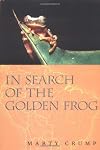
This is a memoir of one field biologist's 25 years of work in the tropics (mainly Ecuador, but also Costa Rica, Brazil, Argentina, and Chile). Marty Crump works with amphibians, particularly frogs, so there is definitely an under-current of the declining amphibian problem and conservation, as well as a lot of juicy natural history (and quite a few pictures, although mostly B&W). Those are really undertones, though, and people looking for a deep political message or clearly-organized science show more will be disappointed. This is a memoir, a diary, a collection of vignettes, a love note to field work, frogs, the tropics, and biology in general. This book resonated with me for a lot - I've been to some (although not many) of the sites she mentions, and seen many (although not most) of the species she talks about. While I marvel at how accurately she captures the feeling of the forests and field stations, I also marvel at how different things are now from when she first stepped foot in the tropics over 30 years ago, in both biological and social terms. I also really appreciated the talk of having and raising kids while in the field. It's not a subject that gets mentioned a lot, and it's certainly rare to hear someone admit to not only feeling guilty about leaving their kids to go to the field, but also feeling guilty about leaving their fieldwork to spend time with their kids. My enjoyment of this book is probably colored quite a bit by my similar interests and career path, but it's clearly and engagingly written, and does provide an accurate and interesting picture of tropical fieldwork for the layperson. show less

Reality is strange. Reality is, in fact, often stranger than anything humans can come up with in fiction. For anyone who is reasonably educated in the field of zoology, it is readily apparent that no matter how imaginative science fiction and fantasy authors are in their descriptions of alien or fantastical biology, they simply have a hard time matching the wild diversity and bizarreness of the natural world. In Headless Males Make Great Lovers & Other Unusual Natural Histories Marty Crump show more places this truth front and center, and gives an accounting of a wide array of bizarre ways that animals breed, care for their young, find food, defend themselves from predators, and communicate. Using nontechnical language Crump effortlessly moves from animal to animal, describing their strange behaviour patterns, explaining the rigors of the lives this sort of activity requires from the creatures, and explains the survival value that some of the odder animal adaptations bring to the animals.
The book is divided up into five sections, each one covering a broad aspect of animal physiology and behaviour. Within each of these broadly defined sections are chapters that group the various animal behaviours into related categories. So, for example, under the section title "Ain't Love Grand" (which covers breeding strategies), there are chapters titled "Sneakers and Deceivers" (covering animals that try to sneak their way into the breeding market), "Trading Food for Sex" (about animals that use food to entice or even ensnare their mates), and of course "Headless Males Make Great Lovers" (about animals, including the praying mantis, where the male has to be careful to avoid being eaten by his partner). As one can tell from the chapter titles, Crump approaches each topic with a mixture of humor combined with the eye of a serious scientist resulting in a book that is both enjoyable to read, and packed with information.
But Crump doesn't just describe the animals and their behaviour. She places their behaviour in context, explaining what survival benefit the often seemingly inexplicable physical and behavioral adaptations give to the various creatures. But Crump also highlights the often extraordinary costs that these attributes extract from the animals, in many cases requiring them to sacrifice their health, well-being, or even their lives in the pursuit of survival and reproduction. Crump places many of the various species into evolutionary context, explaining how these attributes could have developed, and offering the best explanation we have for how such oddity could not only arise, but thrive and prosper. Finally, Crump does this not just by relating facts like a textbook, but by recounting stories from her own research, the research of her colleagues, and her own experiences traveling the world to study fauna on its home ground (with all the attendant hazards that entails). This gives the book a personal touch that draws the reader in even further, and makes the examples that much more compelling.
And the information is often times so extraordinary that if one were to come across the animals described in a work of fiction, one might well assume they were too strange to exist. From praying mantises whose mating reflexes are so strong that the male will continue to mount and mate with a female after it's head has been removed, or even after most of its upper body has been consumed, to male Australian redback spiders who intentionally place themselves into their partner's mouths to be eaten, to frogs that lay their eggs on land and keep them moist by periodically urinating on them, to poison dart frogs that lay additional eggs after their tadpoles hatch to serve as food for the newborns, and on and on. And this list only scratches the surface of the weird, the strange, and the downright creepy that exists out there. The only real problem I had with the book was that it is relatively short at a mere 175 pages of text (plus a list of references and an index). I am sure there is more wonderful bizarreness in the world, and I would have loved to have more included.
Still, a book that leaves you wishing you had more content is usually a great book to read, and this one is no exception. For anyone who is interested in the stranger side of zoology and is not already a practicing zoologist, this book is probably a must read. However, this book is so entertaining that it would be fun to read for almost anyone with any interest in the natural world. In the end, short of traveling the world with a trained zoologist in tow, it is hard to think of a better way to get a guided tour of the strange and wondrous beauty of nature in all of its wild glory.
This review has also been posted to my blog Dreaming About Other Worlds. show less
The book is divided up into five sections, each one covering a broad aspect of animal physiology and behaviour. Within each of these broadly defined sections are chapters that group the various animal behaviours into related categories. So, for example, under the section title "Ain't Love Grand" (which covers breeding strategies), there are chapters titled "Sneakers and Deceivers" (covering animals that try to sneak their way into the breeding market), "Trading Food for Sex" (about animals that use food to entice or even ensnare their mates), and of course "Headless Males Make Great Lovers" (about animals, including the praying mantis, where the male has to be careful to avoid being eaten by his partner). As one can tell from the chapter titles, Crump approaches each topic with a mixture of humor combined with the eye of a serious scientist resulting in a book that is both enjoyable to read, and packed with information.
But Crump doesn't just describe the animals and their behaviour. She places their behaviour in context, explaining what survival benefit the often seemingly inexplicable physical and behavioral adaptations give to the various creatures. But Crump also highlights the often extraordinary costs that these attributes extract from the animals, in many cases requiring them to sacrifice their health, well-being, or even their lives in the pursuit of survival and reproduction. Crump places many of the various species into evolutionary context, explaining how these attributes could have developed, and offering the best explanation we have for how such oddity could not only arise, but thrive and prosper. Finally, Crump does this not just by relating facts like a textbook, but by recounting stories from her own research, the research of her colleagues, and her own experiences traveling the world to study fauna on its home ground (with all the attendant hazards that entails). This gives the book a personal touch that draws the reader in even further, and makes the examples that much more compelling.
And the information is often times so extraordinary that if one were to come across the animals described in a work of fiction, one might well assume they were too strange to exist. From praying mantises whose mating reflexes are so strong that the male will continue to mount and mate with a female after it's head has been removed, or even after most of its upper body has been consumed, to male Australian redback spiders who intentionally place themselves into their partner's mouths to be eaten, to frogs that lay their eggs on land and keep them moist by periodically urinating on them, to poison dart frogs that lay additional eggs after their tadpoles hatch to serve as food for the newborns, and on and on. And this list only scratches the surface of the weird, the strange, and the downright creepy that exists out there. The only real problem I had with the book was that it is relatively short at a mere 175 pages of text (plus a list of references and an index). I am sure there is more wonderful bizarreness in the world, and I would have loved to have more included.
Still, a book that leaves you wishing you had more content is usually a great book to read, and this one is no exception. For anyone who is interested in the stranger side of zoology and is not already a practicing zoologist, this book is probably a must read. However, this book is so entertaining that it would be fun to read for almost anyone with any interest in the natural world. In the end, short of traveling the world with a trained zoologist in tow, it is hard to think of a better way to get a guided tour of the strange and wondrous beauty of nature in all of its wild glory.
This review has also been posted to my blog Dreaming About Other Worlds. show less
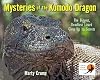
This review could be subtitled: Why backlists are cool! I discovered this book over a year after it had been published, and then it sat in my to review pile for another year after that - but it is still AMAZING. The giant grotesque lizards! The dead rats! Fifteen year olds playing with giant lizards!
There are several threads woven into this nonfiction title. There are the facts and life of Komodo dragons, there is the research of the Auffenberg family in 1969, and there is the current study show more of these fascinating reptiles.
From 1969 to 1970, the Auffenbergs, including their fifteen year old son Kurt and a university student from Bali, Putra Sastrawan, studied Komodo dragons. The story leads up to the Auffenbergs' research with the history of dragon study until they became endangered in the 1960s. But the study of Komodo dragons isn't finished; new, amazing facts and abilities came to light in the 1990s and in 2006 and scientists and zookeepers are learning more every day about these strange reptiles.
Additional information includes brief facts about Indonesia, the Komodo dragon life cycle, sense of smell, conservation status, and the Komodo Survival Program. There is an extensive bibliography, glossary, further reading, and index.
Verdict: This book may be a few years old, but it's fresh and new! Kids will be awed by the amazing facts and photos and the text is simple enough for most middle grade readers. Recommended.
ISBN: 9781590787571; Published October 2010 by Boyds Mills Press; Borrowed from the library; Purchased for the library show less
There are several threads woven into this nonfiction title. There are the facts and life of Komodo dragons, there is the research of the Auffenberg family in 1969, and there is the current study show more of these fascinating reptiles.
From 1969 to 1970, the Auffenbergs, including their fifteen year old son Kurt and a university student from Bali, Putra Sastrawan, studied Komodo dragons. The story leads up to the Auffenbergs' research with the history of dragon study until they became endangered in the 1960s. But the study of Komodo dragons isn't finished; new, amazing facts and abilities came to light in the 1990s and in 2006 and scientists and zookeepers are learning more every day about these strange reptiles.
Additional information includes brief facts about Indonesia, the Komodo dragon life cycle, sense of smell, conservation status, and the Komodo Survival Program. There is an extensive bibliography, glossary, further reading, and index.
Verdict: This book may be a few years old, but it's fresh and new! Kids will be awed by the amazing facts and photos and the text is simple enough for most middle grade readers. Recommended.
ISBN: 9781590787571; Published October 2010 by Boyds Mills Press; Borrowed from the library; Purchased for the library show less
Awards


You May Also Like


Associated Authors
Statistics
- Works
- 12
- Members
- 333
- Popularity
- #71,380
- Rating
- 4.0
- Reviews
- 16
- ISBNs
- 25
- Languages
- 2