
Elizabeth Currid-Halkett
Author of The Sum of Small Things: A Theory of the Aspirational Class
About the Author
Elizabeth Currid-Halkett is the James Irvine Chair in Urban and Regional Planning and professor of public policy at the University of Southern California.
Works by Elizabeth Currid-Halkett
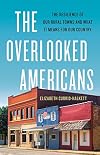
The Overlooked Americans: The Resilience of Our Rural Towns and What It Means for Our Country (2023) 27 copies, 3 reviews
Tagged
Common Knowledge
There is no Common Knowledge data for this author yet. You can help.
Members
Reviews
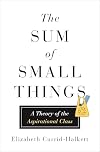
Most of us no longer engage in conspicuous consumption to signal what class we are in. But we do engage in inconspicuous consumption, and conspicuous production, and conspicuous leisure, to achieve the same ends. To briefly define each of these: inconspicuous consumption is spending more on health care, insurance, kids' educations, and in-home help. Conspicuous production is emphasis on where and how things are produced. Conspicuous leisure might be breastfeeding and attachment parenting. show more
It's different from the days when someone used silver cutlery or drove a flashy car to signal how upper-class they were. Now, an NPR tote bag does the same thing, according to the author. It doesn't signal that we are rich, because anyone on a barista or artist salary can and does afford such a thing; it signals us as members of a particular class, which she dubs the "aspirational class."
I had a hard time keeping my head wrapped around how "aspirational class" is different from "liberal." Also, a lot of this book was a big "ouch" for me. But I LIKE buying overpriced organic vegetables, and supporting local businesses wherever possible! I genuinely like it! I'm not just "signaling" something. I like it because... why? I feel somehow it improves the world, right? Do I really have to start shopping at Wal-mart and buying supermarket brands of everything in order to be "genuine"? Won't that just be signaling a different thing?
Sayeth the author: "Does being different from others, being better than others at acquiring possessions or the perfect heirloom tomatoes, or making the decision and investment to breast-feed or feed your family organic produce really advance society at all?" When we remember that none of these thing are options for huge segments of society who lack the means, we ought to be honest and recognize that to really make the world a better place, we would do better to work towards flattening out the economic inequality around us.
So, ouch, and touche, and point taken. But it still doesn't mean people sport their farmer's market produce in public in order to engage in signaling that they are of the 'aspirational class'. If they (fine, WE!) are signaling anything, it's that we are on Team Liberal. It does make me uncomfortable. Food for thought. show less
It's different from the days when someone used silver cutlery or drove a flashy car to signal how upper-class they were. Now, an NPR tote bag does the same thing, according to the author. It doesn't signal that we are rich, because anyone on a barista or artist salary can and does afford such a thing; it signals us as members of a particular class, which she dubs the "aspirational class."
I had a hard time keeping my head wrapped around how "aspirational class" is different from "liberal." Also, a lot of this book was a big "ouch" for me. But I LIKE buying overpriced organic vegetables, and supporting local businesses wherever possible! I genuinely like it! I'm not just "signaling" something. I like it because... why? I feel somehow it improves the world, right? Do I really have to start shopping at Wal-mart and buying supermarket brands of everything in order to be "genuine"? Won't that just be signaling a different thing?
Sayeth the author: "Does being different from others, being better than others at acquiring possessions or the perfect heirloom tomatoes, or making the decision and investment to breast-feed or feed your family organic produce really advance society at all?" When we remember that none of these thing are options for huge segments of society who lack the means, we ought to be honest and recognize that to really make the world a better place, we would do better to work towards flattening out the economic inequality around us.
So, ouch, and touche, and point taken. But it still doesn't mean people sport their farmer's market produce in public in order to engage in signaling that they are of the 'aspirational class'. If they (fine, WE!) are signaling anything, it's that we are on Team Liberal. It does make me uncomfortable. Food for thought. show less
The Overlooked Americans: The Resilience of Our Rural Towns and What It Means for Our Country by Elizabeth Currid-Halkett
I wouldn't bother with this title if you want an accurate take on how rural American communities are doing and what makes them distinctive. The author's snowball method missed so many perspectives that this would need a total redo to be considered useful. As a social scientist and urban planner, I can tell you that using snowballing to interrogate a research question where you don't have experience is a promising but wholly inadequate approach. And I wish that the quantitative sources used show more (from reputable sources such as the NORC General Social Survey and the University of Michigan HRS) helped round out the picture, but they were poorly utilized (example: "I wanted to see what upper-middle-class urban neighborhoods' projected income looked like so I typed in the zip codes for [three places]"), to say the least. Aside from that, anyone who is living in rural America can tell you that the author's takes on the impacts of addiction, inclusion, and a host of other topics are too far off the mark to be taken seriously. And not a single mention of community colleges anywhere. Anyhow, read Deborah and James Fallows, Kerri Arsenault, or Michael Perry if you want an accurate picture on rural places and their residents. show less
The Overlooked Americans: The Resilience of Our Rural Towns and What It Means for Our Country by Elizabeth Currid-Halkett
Wokeism (n): The Tendency Towards Social Justice Turned Toxic. Got your attention with the headline here, right? Good. Now sit down in that chair right there and let me show you how "it's done".
When you get beyond David Auerbach's Meganets, when you get beyond Tobias Rose-Stockwell's Outrage Machine, when you get to the *person* you think you so adamantly oppose...
... what happens when you find out that while they may come from a different culture than you, the human condition remains the show more same across cultures, and ultimately they share quite a bit of commonality with you?
What happens when you find out the monster at your door, the horrid kaiju that is threatening your children and your very way of life...
... is just another person who is just trying to protect his own way of life and his own kids, who thinks that *you* are the horrid kaiju threatening *his* kids and way of life?
What happens when you stop shooting at each other for just one minute...
... and find out that you had far more in common than you ever had different all along?
Don't get me wrong, this book has a few problems. Currid-Halkett still tends to be at least somewhat elitist and/ or condescending to those opinions she disagrees with, and there is quite a lot of discussion of COVID here - the latter point being the star deduction, as even in 2023 I remain adamant in my one-man war against any book that mentions COVID, and the single star deduction is my only "real" "weapon" there.
Overall though, it is on the higher end of normally well documented, at 29% bibliography, and fairly well reasoned overall. For those that want to avoid the fates shown in David French's Divided We Fall... this book is one that so very many people will need to read and take to heart.
Very much recommended. show less
When you get beyond David Auerbach's Meganets, when you get beyond Tobias Rose-Stockwell's Outrage Machine, when you get to the *person* you think you so adamantly oppose...
... what happens when you find out that while they may come from a different culture than you, the human condition remains the show more same across cultures, and ultimately they share quite a bit of commonality with you?
What happens when you find out the monster at your door, the horrid kaiju that is threatening your children and your very way of life...
... is just another person who is just trying to protect his own way of life and his own kids, who thinks that *you* are the horrid kaiju threatening *his* kids and way of life?
What happens when you stop shooting at each other for just one minute...
... and find out that you had far more in common than you ever had different all along?
Don't get me wrong, this book has a few problems. Currid-Halkett still tends to be at least somewhat elitist and/ or condescending to those opinions she disagrees with, and there is quite a lot of discussion of COVID here - the latter point being the star deduction, as even in 2023 I remain adamant in my one-man war against any book that mentions COVID, and the single star deduction is my only "real" "weapon" there.
Overall though, it is on the higher end of normally well documented, at 29% bibliography, and fairly well reasoned overall. For those that want to avoid the fates shown in David French's Divided We Fall... this book is one that so very many people will need to read and take to heart.
Very much recommended. show less
If you're interested in the interplay between consumption and status, you'll like (three stars) this book. The problem, though, is that while the author provides some interesting information (and is thus worth picking up for the references alone), I found myself confused about the ultimate normative argument and dubious about some of the descriptive claims. Here are some of my lingering questions/comments:
- What is her normative evaluation of the aspirational class? On one hand, she seems to show more think it's worse because these people are spending money on the kinds of inconspicuous goods, like education for their kids, that is more likely to reproduce inequality than if they spent on clothes. So, she argues, they are exacerbating inequality. But... is that right? As compared to what? In other words, is this more likely to increase or perpetuate inequality than a world without this class? I suspect it matters a bit whose in the class. And, as we see, it's not just (or really, primarily) the uber wealthy. Instead, it's populated by people who have invested a lot (often, though not exclusively, with the serious financial aid of their parents) in the accumulation of social and cultural capital. They have advanced degrees, know all the cool music, read the right stuff, etc. But if these people aren't coming primarily from the super wealthy, then doesn't that mean that the aspirational class gives more people options for succeeding in the class wars? That is, you don't *have* to be born rich to be high-status because you can develop your cultural capital instead. Indeed, the author points out numerous times that one interesting this about the aspirational class is that it cannot be easily delineated by economic capital. That is, these people aren't all themselves or the children of people with lots of money. If that's right, why is the creation of this class *worse than the alternative* for inequality? Does the opening up of new ways to raise your status instead help challenge the status of the uber-wealthy? Does it move us in the direction of equality?
One theory you could have about why this is bad (though not one she provides, though one I'm interested in) would compare the fracturing of class and status to the fracturing of the American corporate elite. (See Mark S. Mizruchi's book, The Fracturing of the American Corporate Elite - HUP 2013). Today, we see class and status power fractured - where once the same individuals were vested with all capital (economic, social, cultural), today those are split. Some people have social but not economic, economic but not cultural, etc. (See Mike Savage Social Class in the 21st Century [discussing the UK but the same idea would hold]). The problem with this is that fracturing makes it harder to identify and fix issues of inequality, or to regulate for whatever end you want. It also makes collective action more difficult. If lots more people have ways to get at least some capital (economic or social or cultural) maybe they are less likely to think the status games are problematic (because they can play more easily). Maybe this dynamic exacerbates long-term inequality. That'd be an interesting argument but it's not there.
- But moving back to the book, in addition to asserting that the aspirational class is bad of equality, she also suggests ways that their consumption habits might *decrease* inequality. She talks about "conspicuous production" (clever catchphrase that I will use!) and how those within this class care about where a product is from, who made it, etc. Now, that can lead to market demand for animals treated well, or improved labor practices (consider the strategies used by the Coalition of Immokalee Workers). If that's right, isn't this new class helping?
Now, one concern is that these people don't actually care about e.g., the environment, workers, happy animals, etc. they just want to paint a pretty picture in their head of those things. If that's right, then of course conspicuous production isn't likely to help those picking the organic fruit. But she never gives us data to understand if this is what's happening. She mentions one other scholar who takes this view (and I have worried about this in other work) but what does she think? Where is the data?
And, again, if this enjoyment of conspicuous production *does* help make the world a slightly more just place, isn't that at least kinda-sorta good?
- One possible concern (and one she very briefly mentions but does not develop) is that the aspirational class, because its fueled by belief in meritocracy and its members have often gotten into the class by working hard, thinks they deserve their status in the world and others deserve their status too. And this desert will help them justify their own position and their not-helping those who got screwed in the where-and-t0-whom-you-were-born lottery. But 1) this stands in contrast to her argument that the aspirational class cares a lot about those less well-off than them (she mentions Maslow's hierarchy here) and 2) is belied by their spending on conspicuous production (unless she thinks they don't *really* care about production, but she never gives us data to show this).
In short: there are a lot of internal contradictions in the description of this group. (I am interested in the ethics of consumption and was thus a bit disappointed by the internal tensions in her characterization of these people).
- Lastly, I don't get the title. Her point isn't the sum of *small* things, it's the sum of *invisible* things. Or invisible things made visible. Or big-invisible things. Part of the argument is that the aspirational class, while still spending on conspicuous consumption spends more these days on 1) conspicuous production and 2) inconspicuous consumption (e.g. healthcare, education, outsourcing domestic labor (childcare, housework, etc.)). Both of these are supposed to stand in contrast to the gaudy (accd. to the aspirational class [and me]) Louis Vuitton logos, Chanel labels, etc. in that they aren't conspicuous. The operative trait of aspirational class spending is that the most important segment of it lacks visibility. And as for size, this spending is the opposite of a sum of small things. One of the bigger problems for the author is that those lower down the status food chain cannot replicate the purchases of the aspirational class because they are so not-small! You can save your money and get a decently expensive purse but most can't save enough to put their kids through college today. You can't, if you are poor, buy yourself the free time necessary to read all the hip books, reviews, and online articles. So while a minor thing, the title makes no sense to me.
There are some incredibly interesting and challenging questions raised by the consumer behaviors. In our current political climate we see, from #boycottuber to massive pushes to get big companies to pull ads from sites like Breitbart, consumer purchasing power being treated as a political tool. It's also, as this book details, considered by those within the aspirational class to be a moral issue as well. Or, at least, maybe. How to think about this, especially in a purportedly liberal democracy where the market is thought distinct from the political sphere, is exciting and important. But this book didn't help me think more carefully about these issues. Nonetheless, the data provided on how various groups spend is itself valuable for those interested in these questions. Overall, I enjoyed the book and will cite it in future work. show less
- What is her normative evaluation of the aspirational class? On one hand, she seems to show more think it's worse because these people are spending money on the kinds of inconspicuous goods, like education for their kids, that is more likely to reproduce inequality than if they spent on clothes. So, she argues, they are exacerbating inequality. But... is that right? As compared to what? In other words, is this more likely to increase or perpetuate inequality than a world without this class? I suspect it matters a bit whose in the class. And, as we see, it's not just (or really, primarily) the uber wealthy. Instead, it's populated by people who have invested a lot (often, though not exclusively, with the serious financial aid of their parents) in the accumulation of social and cultural capital. They have advanced degrees, know all the cool music, read the right stuff, etc. But if these people aren't coming primarily from the super wealthy, then doesn't that mean that the aspirational class gives more people options for succeeding in the class wars? That is, you don't *have* to be born rich to be high-status because you can develop your cultural capital instead. Indeed, the author points out numerous times that one interesting this about the aspirational class is that it cannot be easily delineated by economic capital. That is, these people aren't all themselves or the children of people with lots of money. If that's right, why is the creation of this class *worse than the alternative* for inequality? Does the opening up of new ways to raise your status instead help challenge the status of the uber-wealthy? Does it move us in the direction of equality?
One theory you could have about why this is bad (though not one she provides, though one I'm interested in) would compare the fracturing of class and status to the fracturing of the American corporate elite. (See Mark S. Mizruchi's book, The Fracturing of the American Corporate Elite - HUP 2013). Today, we see class and status power fractured - where once the same individuals were vested with all capital (economic, social, cultural), today those are split. Some people have social but not economic, economic but not cultural, etc. (See Mike Savage Social Class in the 21st Century [discussing the UK but the same idea would hold]). The problem with this is that fracturing makes it harder to identify and fix issues of inequality, or to regulate for whatever end you want. It also makes collective action more difficult. If lots more people have ways to get at least some capital (economic or social or cultural) maybe they are less likely to think the status games are problematic (because they can play more easily). Maybe this dynamic exacerbates long-term inequality. That'd be an interesting argument but it's not there.
- But moving back to the book, in addition to asserting that the aspirational class is bad of equality, she also suggests ways that their consumption habits might *decrease* inequality. She talks about "conspicuous production" (clever catchphrase that I will use!) and how those within this class care about where a product is from, who made it, etc. Now, that can lead to market demand for animals treated well, or improved labor practices (consider the strategies used by the Coalition of Immokalee Workers). If that's right, isn't this new class helping?
Now, one concern is that these people don't actually care about e.g., the environment, workers, happy animals, etc. they just want to paint a pretty picture in their head of those things. If that's right, then of course conspicuous production isn't likely to help those picking the organic fruit. But she never gives us data to understand if this is what's happening. She mentions one other scholar who takes this view (and I have worried about this in other work) but what does she think? Where is the data?
And, again, if this enjoyment of conspicuous production *does* help make the world a slightly more just place, isn't that at least kinda-sorta good?
- One possible concern (and one she very briefly mentions but does not develop) is that the aspirational class, because its fueled by belief in meritocracy and its members have often gotten into the class by working hard, thinks they deserve their status in the world and others deserve their status too. And this desert will help them justify their own position and their not-helping those who got screwed in the where-and-t0-whom-you-were-born lottery. But 1) this stands in contrast to her argument that the aspirational class cares a lot about those less well-off than them (she mentions Maslow's hierarchy here) and 2) is belied by their spending on conspicuous production (unless she thinks they don't *really* care about production, but she never gives us data to show this).
In short: there are a lot of internal contradictions in the description of this group. (I am interested in the ethics of consumption and was thus a bit disappointed by the internal tensions in her characterization of these people).
- Lastly, I don't get the title. Her point isn't the sum of *small* things, it's the sum of *invisible* things. Or invisible things made visible. Or big-invisible things. Part of the argument is that the aspirational class, while still spending on conspicuous consumption spends more these days on 1) conspicuous production and 2) inconspicuous consumption (e.g. healthcare, education, outsourcing domestic labor (childcare, housework, etc.)). Both of these are supposed to stand in contrast to the gaudy (accd. to the aspirational class [and me]) Louis Vuitton logos, Chanel labels, etc. in that they aren't conspicuous. The operative trait of aspirational class spending is that the most important segment of it lacks visibility. And as for size, this spending is the opposite of a sum of small things. One of the bigger problems for the author is that those lower down the status food chain cannot replicate the purchases of the aspirational class because they are so not-small! You can save your money and get a decently expensive purse but most can't save enough to put their kids through college today. You can't, if you are poor, buy yourself the free time necessary to read all the hip books, reviews, and online articles. So while a minor thing, the title makes no sense to me.
There are some incredibly interesting and challenging questions raised by the consumer behaviors. In our current political climate we see, from #boycottuber to massive pushes to get big companies to pull ads from sites like Breitbart, consumer purchasing power being treated as a political tool. It's also, as this book details, considered by those within the aspirational class to be a moral issue as well. Or, at least, maybe. How to think about this, especially in a purportedly liberal democracy where the market is thought distinct from the political sphere, is exciting and important. But this book didn't help me think more carefully about these issues. Nonetheless, the data provided on how various groups spend is itself valuable for those interested in these questions. Overall, I enjoyed the book and will cite it in future work. show less
You May Also Like


Statistics
- Works
- 4
- Members
- 233
- Popularity
- #96,931
- Rating
- 3.1
- Reviews
- 8
- ISBNs
- 15
- Languages
- 1