
Raymond Federman (1928–2009)
Author of Double or Nothing
About the Author
Raymond Federman retired in 1999 as Melodia E. Jones Chair of Literature at SUNY-Buffalo.
Image credit: By Hpschaefer - Own work, CC BY 3.0, https://commons.wikimedia.org/w/index.php?curid=4259867
Works by Raymond Federman
Me Too 1 copy
The Rigmarole of Contrariety 1 copy
Associated Works
Before Columbus Foundation Fiction Anthology: Selections from the American Book Awards 1980-1990 (1992) — Contributor — 69 copies
Tagged
Common Knowledge
- Legal name
- Federman, Raymond
- Birthdate
- 1928-05-15
- Date of death
- 2009-10-06
- Gender
- male
- Education
- Columbia University (BA)
University of California, Los Angeles - Occupations
- poet
playwright
lecturer
literary critic
professor (Creative Writing and Comparative Literature)
translator - Organizations
- Coordinating Council of Literary Magazines
State University of New York, Buffalo
University of California, Santa Barbara
United States Army (Korean War) - Awards and honors
- Frances Steloff Fiction Prize (1971 | 1971 | 1985 | 1966 | 1982-83 | 1985 | 1986 | 1989-90)
Guggenheim Fellowship (1977)
Fulbright Fellowship (1982)
National Endowment for the Arts fellowship (1985) - Relationships
- Beckett, Samuel (friend)
- Short biography
- Raymond Federman was born to a Jewish family in Montrouge, France. His parents were Marguerite (Epstein) and Simon Federman, a painter, and he had two sisters, Jacqueline and Sarah. He was 14 years old in 1942 during World War II when the Nazis arrived at his family's apartment in Paris. His mother pushed him into a small stairway landing closet to hide just before the rest of the family was taken away. He never saw his parents and sisters again: all four were killed in the extermination camp at Auschwitz. Federman hid for the rest of the war on farms in southern France. He emigrated to the USA in 1947 and served in the U.S. Army in Korea and Japan. Afterwards, he studied at Columbia University, earning a bachelor's degree in 1957. He then went to UCLA, where he received an M.A. in 1958 and a Ph.D. in 1963 with a dissertation on Samuel Beckett. Federman wrote in English and French and taught at the University of California, Santa Barbara and at SUNY Buffalo. He was named Distinguished Professor in 1990, and was appointed in 1992 to the Melodia E. Jones Chair of Literature, which he held until retiring in 1999. From 1979 to 1982, he was co-director of the Fiction Collective, a publishing house dedicated to experimental fiction. Federman's writing was experimental and postmodern, featuring unorthodox formats, punctuation, and typography. He coined the term "surfiction" to describe the way his work moved between fiction and nonfiction. He often returned to his early life in autobiographical works with black humor. He was a prolific writer who published 10 novels, five volumes of poetry, four books on Samuel Beckett (who became a friend), three collections of essays, and numerous articles, plays, and translations of French writers. His own works have been translated into many languages. Several books have been written about Federman's work, including Federman From A to X-X-X-X by Larry McCaffery, Thomas Hartl and Doug Rice (1998), and Federman's Fictions: Innovation, Theory, and the Holocaust (2010). His last book was released posthumously in 2010: SHHH: The Story of a Childhood ("Shhh" was what his mother whispered to Federman when she pushed him into the closet).
- Nationality
- France (birth)
USA (citizen) - Birthplace
- Montrouge, France
- Places of residence
- Buffalo, New York, USA
Los Angeles, California, USA
Berlin, Germany
Paris, France
Israel
Rancho Bernardo, California, USA - Place of death
- San Diego, California, USA
Members
Reviews

There was that inevitable knock announcing doom at their door. Raymond Federman's mother swept up her boy in her arms, the youngest of her three children, and told him to be quiet no matter what he heard -- no matter what -- to just trust her and do as he was told, and then secreted him inside a third story closet. Raymond was fourteen years old: Small enough to fit inside that cramped closet, but big enough to understand too well the horror, to know the fear and feel the impending loss he'd show more never forget.
From the pitch black confines of his impromptu hideout, he listened without a sound as the Nazis stormed his parent's house, and as they forced his family out, Federman forced himself not to cry, to obey the directive of his dear mother, and fought back his tears. A year later, Federman was the only surviving member of his family, an orphan among millions of other orphans, thanks to the Holocaust. But he lived to tell a story, thanks to his resourceful, quick-thinking mother, who saved his life even as she lost hers. The Voice in the Closet (1979) recounts this tragic story in a remarkable (and uniquely revolving) poetic way, without punctuation, so that you, the intrepid (if not nonexistent) reader of Raymond Federman, are cleverly coerced into paying closer attention to the cadence and intonation of his closeted voice:
"...my life began in a closet a symbolic rebirth in retrospect as he shoves me in his stories whines his radical laughter up and down pulverized pages with his balls mad fizzling punctuation question of changing one's perspective view the self from the inside from the point of view of its capacity its will power federman achieve the vocation of your name beyond all forms of anthropologism a positive child anthropomorphism rather than the sad off-spring of a family giggling they pushed me into the closet among empty skins and dusty hats my mother my father the soldiers they cut little boys' hands old wife's tale send him into life his life cut me now from your voice not that I be what I was machine but what I will be mother father quick downstairs already the boots same old problem he tried oh how he tried of course imagining that the self must be remade unmade caught from some retroactive present apprehended reinstated I presume looking back how naive into the past my life began not again whereas in fact my mother was crying softly as the door closes on me...."
Raw, free associative, captivating catharsis -- seeking meaning and self-hood out of that closet abyss -- I suppose, if any relevant meaning can be melted down out of the exposed nerve endings of Federman's prose in The Voice in the Closet, is what the story arguably means, assuming meaning can even survive the shadowy Hell of Holocaust.
The early, unimaginable experience of Raymond Federman's grief-ridden childhood, needless to say, seared his imagination, already a bit whimsically bent to begin with, forever, and became the rawest source of raw material he'd construct every innovative novel he ever wrote out of; whether it was the concrete poetic hijinx of his two most acclaimed (and most "experimental") books, Double or Nothing: A Real Fictitious Discourse (1972) or Take It or Leave It: An Exaggerated Second-hand Tale to be Read Aloud Either Standing or Sitting (1976), or the more conventionally constructed and quote-unquote normally narrated (though no less imaginative) novels, The Twofold Vibration (1982) or Smiles on Washington Square: A Love Story of Sorts (1985).
Federman, whichever novel he wrote, spent his entire career writing from the impossibly discombobulating repercussions that came out of the natural consequences of that childhood closet: writing, remembering, re-envisioning and, most importantly, voicing his existence and purpose from that dark and lonely refuge whose walls reverberated with certain death and a more doubtful life.
The Voice in the Closet examines in depth the intricacies of Federman's creative process as well, a symbolic closet housing his Muse -- whom he even gave a name to, calling it "Moinous" -- a creative construct, for Federman, as palpable as a beloved's body he could caress. It's a long short story, in a sense, that never begins and never ends, disassociated as it is, written from the future, from the all-too-real horrific reality it recalls as it seeks to forget or reinvent, while simultaneously scouring every shard of recollection and experience to make both sense of and a less painful interpretation of the unspeakable losses intrinsic to him; its primary concerns, overarching the narrative, being Federman's slew of convoluted, intersecting pasts, presents, futures, identities, memories, consciousnesses, all communicating with one another in a cacophony of babbling voices whose collective dialogue helped him survive the Holocaust in secret solitude, and served further as imaginative fuel for his later, hyper-realized metafictional masterpieces.
Federman sought to relate in A Voice in the Closet a concurrent rebirthing and negation (or death; consider the title of his late work, Return to Manure, as indication of his career-long artistic intentions) of the story he wrote -- a paradoxical tactic he trademarked in nearly all of his novels, poetry, translations, and even in the prolific Samuel Beckett criticism he offered a mostly apathetic (except in France) audience; and, a tactic, I should add, that purposely mirrored the psychology of his experience: his wish to erase while at the same time reinvent his identity, experience and history. Who wouldn't want to erase and reinvent their victimized life inside the Holocaust?
Raymond Federman was complicated. His books, obviously, are neither easy reading or most everybody's cup of tea. But I love his writing regardless. Yet recognize that not everybody does. Not even his publishers! The twenty-plus pages of unpunctuated, run on writing that would eventually become known as The Voice in the Closet, was originally rejected for inclusion in the novel Federman intended it for -- The Twofold Vibration. Publishers would later reject Federman's novel, Smiles on Washington Square (by far his most conventional or "accessible" novel ever) a dozen times before it found a home with Sun and Moon Press.
Federman's rich legacy includes, as I alluded, the authorship of five books of literary criticism on Samuel Beckett, that character known simply as "Sam" in so many of his novels, who was his mentor and lifelong friend at UCLA, tight pals until the day Beckett died in 1989. Federman's doctoral dissertation, in fact, Journey to Chaos (1965), was the first published book-length literary criticism that tackled Beckett's early fiction.
Raymond Federman's astonishing creative outcry of grief and release and eventual laughter relayed bones-bared in The Voice in the Closet is powerful beyond words. Its interior monologue dramatizes how Federman, the Jewish kid the Universe abandoned, figured out his life on its own terrifying and tenuous terms in the wild parentless void of post-Nazi apocalypse through which he daily roamed -- lost, feral, forgotten -- a microcosm of many. It's an unforgettable journey to and through Federman's personal chaos that courageous readers willing to endure a flamboyant outburst or two of vicarious tragedy and profoundest pain should embark upon soon.
For more on Raymond Federman, here's my review of Smiles on Washington Square: A Love Story of Sorts and here's a longer piece on my correspondence with Raymond Federman that I was so lucky enough to have with him just six months before he passed away. show less
From the pitch black confines of his impromptu hideout, he listened without a sound as the Nazis stormed his parent's house, and as they forced his family out, Federman forced himself not to cry, to obey the directive of his dear mother, and fought back his tears. A year later, Federman was the only surviving member of his family, an orphan among millions of other orphans, thanks to the Holocaust. But he lived to tell a story, thanks to his resourceful, quick-thinking mother, who saved his life even as she lost hers. The Voice in the Closet (1979) recounts this tragic story in a remarkable (and uniquely revolving) poetic way, without punctuation, so that you, the intrepid (if not nonexistent) reader of Raymond Federman, are cleverly coerced into paying closer attention to the cadence and intonation of his closeted voice:
"...my life began in a closet a symbolic rebirth in retrospect as he shoves me in his stories whines his radical laughter up and down pulverized pages with his balls mad fizzling punctuation question of changing one's perspective view the self from the inside from the point of view of its capacity its will power federman achieve the vocation of your name beyond all forms of anthropologism a positive child anthropomorphism rather than the sad off-spring of a family giggling they pushed me into the closet among empty skins and dusty hats my mother my father the soldiers they cut little boys' hands old wife's tale send him into life his life cut me now from your voice not that I be what I was machine but what I will be mother father quick downstairs already the boots same old problem he tried oh how he tried of course imagining that the self must be remade unmade caught from some retroactive present apprehended reinstated I presume looking back how naive into the past my life began not again whereas in fact my mother was crying softly as the door closes on me...."
Raw, free associative, captivating catharsis -- seeking meaning and self-hood out of that closet abyss -- I suppose, if any relevant meaning can be melted down out of the exposed nerve endings of Federman's prose in The Voice in the Closet, is what the story arguably means, assuming meaning can even survive the shadowy Hell of Holocaust.
The early, unimaginable experience of Raymond Federman's grief-ridden childhood, needless to say, seared his imagination, already a bit whimsically bent to begin with, forever, and became the rawest source of raw material he'd construct every innovative novel he ever wrote out of; whether it was the concrete poetic hijinx of his two most acclaimed (and most "experimental") books, Double or Nothing: A Real Fictitious Discourse (1972) or Take It or Leave It: An Exaggerated Second-hand Tale to be Read Aloud Either Standing or Sitting (1976), or the more conventionally constructed and quote-unquote normally narrated (though no less imaginative) novels, The Twofold Vibration (1982) or Smiles on Washington Square: A Love Story of Sorts (1985).
Federman, whichever novel he wrote, spent his entire career writing from the impossibly discombobulating repercussions that came out of the natural consequences of that childhood closet: writing, remembering, re-envisioning and, most importantly, voicing his existence and purpose from that dark and lonely refuge whose walls reverberated with certain death and a more doubtful life.
The Voice in the Closet examines in depth the intricacies of Federman's creative process as well, a symbolic closet housing his Muse -- whom he even gave a name to, calling it "Moinous" -- a creative construct, for Federman, as palpable as a beloved's body he could caress. It's a long short story, in a sense, that never begins and never ends, disassociated as it is, written from the future, from the all-too-real horrific reality it recalls as it seeks to forget or reinvent, while simultaneously scouring every shard of recollection and experience to make both sense of and a less painful interpretation of the unspeakable losses intrinsic to him; its primary concerns, overarching the narrative, being Federman's slew of convoluted, intersecting pasts, presents, futures, identities, memories, consciousnesses, all communicating with one another in a cacophony of babbling voices whose collective dialogue helped him survive the Holocaust in secret solitude, and served further as imaginative fuel for his later, hyper-realized metafictional masterpieces.
Federman sought to relate in A Voice in the Closet a concurrent rebirthing and negation (or death; consider the title of his late work, Return to Manure, as indication of his career-long artistic intentions) of the story he wrote -- a paradoxical tactic he trademarked in nearly all of his novels, poetry, translations, and even in the prolific Samuel Beckett criticism he offered a mostly apathetic (except in France) audience; and, a tactic, I should add, that purposely mirrored the psychology of his experience: his wish to erase while at the same time reinvent his identity, experience and history. Who wouldn't want to erase and reinvent their victimized life inside the Holocaust?
Raymond Federman was complicated. His books, obviously, are neither easy reading or most everybody's cup of tea. But I love his writing regardless. Yet recognize that not everybody does. Not even his publishers! The twenty-plus pages of unpunctuated, run on writing that would eventually become known as The Voice in the Closet, was originally rejected for inclusion in the novel Federman intended it for -- The Twofold Vibration. Publishers would later reject Federman's novel, Smiles on Washington Square (by far his most conventional or "accessible" novel ever) a dozen times before it found a home with Sun and Moon Press.
Federman's rich legacy includes, as I alluded, the authorship of five books of literary criticism on Samuel Beckett, that character known simply as "Sam" in so many of his novels, who was his mentor and lifelong friend at UCLA, tight pals until the day Beckett died in 1989. Federman's doctoral dissertation, in fact, Journey to Chaos (1965), was the first published book-length literary criticism that tackled Beckett's early fiction.
Raymond Federman's astonishing creative outcry of grief and release and eventual laughter relayed bones-bared in The Voice in the Closet is powerful beyond words. Its interior monologue dramatizes how Federman, the Jewish kid the Universe abandoned, figured out his life on its own terrifying and tenuous terms in the wild parentless void of post-Nazi apocalypse through which he daily roamed -- lost, feral, forgotten -- a microcosm of many. It's an unforgettable journey to and through Federman's personal chaos that courageous readers willing to endure a flamboyant outburst or two of vicarious tragedy and profoundest pain should embark upon soon.
For more on Raymond Federman, here's my review of Smiles on Washington Square: A Love Story of Sorts and here's a longer piece on my correspondence with Raymond Federman that I was so lucky enough to have with him just six months before he passed away. show less

Finding any book by Raymond Federman either new or used at any bricks-and-mortar bookseller in the United States is next to impossible. Not so in Europe, and especially France, where Federman was born in 1928, and where also, like John Hawkes before him, he has become nearly as large a literary legend as Victor Hugo. Well, almost.
I searched for anything by Federman for six years (I loathe the thought of ordering books online -- especially from Amazon -- without seeing and feeling and even show more sniffing out what condition they're in -- a phobia, I realize), without success. But then one lucky evening at the Bookman in Orange, CA, this slender volume, Smiles on Washington Square (A Love Story of Sorts) published by Sun and Moon press, materialized like a dream in mint condition (had it even been read? opened?) before me.
I think like most U.S. citizens (excluding fusty and fastidious English professors), I'd never heard of Raymond Federman until happening upon Larry McAfferey's "20th Century Greatest Hits," a fascinating Top 100 list focused on English language novels and dominated primarily by postmodern, experimental works. Federman's 1976 novel, Take It Or Leave it, ranks 11th on the list, one spot behind Finnegans Wake; while 1971s, Double or Nothing: A Real Fictitious Discourse (Federman's first English novel) places 46th.
Smiles on Washington Square (A Love Story of Sorts), from 1985, didn't make the list, though it was awarded The American Book Award by The Before Columbus Foundation. Federman has also received a Guggenheim Fellowship (among many other professional awards) and published four books of essential, highly regarded criticism on Samuel Beckett (one of Federman's mentors) as well as producing five volumes of poetry and numerous plays. And yet , going on its fifth decade-in-a-row now, the ignoramuses that make up the 99.9% of the U.S. reading public have all but completely ignored this innovative writer. Mystifying. He's 80 now, one of the last living first wave of postmodernists, retired from teaching but not from writing, never from writing, living in San Diego, and has been kind enough to respond to my couple of wordy and nerdy emails. So how could I not, in just this dinky way here, repay him the kindness and promote his body of neglected books?
Smiles on Washington Square (A Love Story of Sorts) centers on the characters, Moinous and Sucette, who both may be merely the product of one another's imaginations. But which character is real and which imaginary, one must read to the very end to find out. To know at least for sure. I was convinced three-quarters of the way through (and my initial impression may in fact still be correct, for the ending's gorgeously ambiguous) that Moinous was a character in a short story that Sucette was writing for school. A love story of sorts, from Federman's title, about a young man and woman who meet (or, rather, smile) at one another in Washington Square. But keeping in mind Moinous' cultural isolation (he's fresh from France, a stranger to New York, like Federman once was) and his poverty (he becomes homeless and sleeps on a wood bench at the train station), and that he has extreme difficulty procuring and maintaining employment, even as a dishwasher ... while Sucette, at least Sucette's involvement in the love story we read about, might be a mirage imagined by Moinous' lonely, isolated mind. He's sees this beautiful woman, Sucette, smile at him in Washington Square, at an anti-McCarthy rally which turns violent, a rally where a politically clueless Moinous, in fact, gets batoned and beaten by the police, but thankfully, Sucette is there (or is she?) to help him to her apartment, bandage his wounds, offering him tea and talk -- they talk for hours -- though a long (for Moinous) forty-two days will transpire before their simple tea and talk becomes passionate consummation, that is, if you believe Moinous' imagination, and his unending complaints, why oh why is she making me wait this long?
The novel circulates between Moinous' lonely longings for companionship and Sucette's writing of her short story, the two narratives intertwined but only intersecting at those smiles on Washington Square. Does a relationship between the two exist beyond those ephemeral smiles? Not to spoil the outcome, since only eight other LTers have this compassionate, convoluted but not confusing examination of people's loneliness and sad isolations in their collections, so I seriously doubt I'm spoiling anything for much of anybody, but to answer the previous question -- is there a relationship between Moinous and Sucette beyond their smiles in Washington Square -- I doubt it. What happens during the narrative, you could say, never happens. Being either Moinous' fantasies, or Sucette's fiction.
Are your daydreams (mine?) of finding that lovely person whom you'll love and whom will also love you in return, and in this mysterious reciprocal exchange of love, ease the heart's pangs of loneliness and longing for human connection, intimacy, and belonging -- are these daily daydreams one often experiences and yearns for anymore real -- real in an actualized sense that what you're daydreaming about is truly occuring -- than a love story in a work of fiction? Of course I think that's Federman's entire point: how our disconnectedness results in fantasies which often only then further exacerbate our disconnectedness and loneliness and rob us of the potential friends or lovers staring us in the face. Why didn't Moinous (assuming he didn't and that I've interpreted Federman's book of 148 pages correctly) do more than smile at Sucette? Was he too shy just to walk over to her and say hi? Why did he prefer his fantasy "relationship" with Sucette instead of making something actual happen between them--and vice versa? Sucette, apparently, lives in her own fiction world of storywriting, but is she content in her loneliness and isolation, or does perhaps creating a "reality" on paper of a love story of sorts, somehow make her loneliness less real? Is that why she writes--to apply a balm of fantasy to her isolated reality?
Thought provoking work, Smiles on Washington Square (A Love Story of Sorts). I'm pretty positive I won't be searching for another six years for another of Raymond Federman's evocative books. In fact, after I finish this sentence, I'm ordering both Take It Or Leave It and Double or Nothing: A Real Fictitious Discourse online. But not from Amazon. Good idea if others did the same. show less
I searched for anything by Federman for six years (I loathe the thought of ordering books online -- especially from Amazon -- without seeing and feeling and even show more sniffing out what condition they're in -- a phobia, I realize), without success. But then one lucky evening at the Bookman in Orange, CA, this slender volume, Smiles on Washington Square (A Love Story of Sorts) published by Sun and Moon press, materialized like a dream in mint condition (had it even been read? opened?) before me.
I think like most U.S. citizens (excluding fusty and fastidious English professors), I'd never heard of Raymond Federman until happening upon Larry McAfferey's "20th Century Greatest Hits," a fascinating Top 100 list focused on English language novels and dominated primarily by postmodern, experimental works. Federman's 1976 novel, Take It Or Leave it, ranks 11th on the list, one spot behind Finnegans Wake; while 1971s, Double or Nothing: A Real Fictitious Discourse (Federman's first English novel) places 46th.
Smiles on Washington Square (A Love Story of Sorts), from 1985, didn't make the list, though it was awarded The American Book Award by The Before Columbus Foundation. Federman has also received a Guggenheim Fellowship (among many other professional awards) and published four books of essential, highly regarded criticism on Samuel Beckett (one of Federman's mentors) as well as producing five volumes of poetry and numerous plays. And yet , going on its fifth decade-in-a-row now, the ignoramuses that make up the 99.9% of the U.S. reading public have all but completely ignored this innovative writer. Mystifying. He's 80 now, one of the last living first wave of postmodernists, retired from teaching but not from writing, never from writing, living in San Diego, and has been kind enough to respond to my couple of wordy and nerdy emails. So how could I not, in just this dinky way here, repay him the kindness and promote his body of neglected books?
Smiles on Washington Square (A Love Story of Sorts) centers on the characters, Moinous and Sucette, who both may be merely the product of one another's imaginations. But which character is real and which imaginary, one must read to the very end to find out. To know at least for sure. I was convinced three-quarters of the way through (and my initial impression may in fact still be correct, for the ending's gorgeously ambiguous) that Moinous was a character in a short story that Sucette was writing for school. A love story of sorts, from Federman's title, about a young man and woman who meet (or, rather, smile) at one another in Washington Square. But keeping in mind Moinous' cultural isolation (he's fresh from France, a stranger to New York, like Federman once was) and his poverty (he becomes homeless and sleeps on a wood bench at the train station), and that he has extreme difficulty procuring and maintaining employment, even as a dishwasher ... while Sucette, at least Sucette's involvement in the love story we read about, might be a mirage imagined by Moinous' lonely, isolated mind. He's sees this beautiful woman, Sucette, smile at him in Washington Square, at an anti-McCarthy rally which turns violent, a rally where a politically clueless Moinous, in fact, gets batoned and beaten by the police, but thankfully, Sucette is there (or is she?) to help him to her apartment, bandage his wounds, offering him tea and talk -- they talk for hours -- though a long (for Moinous) forty-two days will transpire before their simple tea and talk becomes passionate consummation, that is, if you believe Moinous' imagination, and his unending complaints, why oh why is she making me wait this long?
The novel circulates between Moinous' lonely longings for companionship and Sucette's writing of her short story, the two narratives intertwined but only intersecting at those smiles on Washington Square. Does a relationship between the two exist beyond those ephemeral smiles? Not to spoil the outcome, since only eight other LTers have this compassionate, convoluted but not confusing examination of people's loneliness and sad isolations in their collections, so I seriously doubt I'm spoiling anything for much of anybody, but to answer the previous question -- is there a relationship between Moinous and Sucette beyond their smiles in Washington Square -- I doubt it. What happens during the narrative, you could say, never happens. Being either Moinous' fantasies, or Sucette's fiction.
Are your daydreams (mine?) of finding that lovely person whom you'll love and whom will also love you in return, and in this mysterious reciprocal exchange of love, ease the heart's pangs of loneliness and longing for human connection, intimacy, and belonging -- are these daily daydreams one often experiences and yearns for anymore real -- real in an actualized sense that what you're daydreaming about is truly occuring -- than a love story in a work of fiction? Of course I think that's Federman's entire point: how our disconnectedness results in fantasies which often only then further exacerbate our disconnectedness and loneliness and rob us of the potential friends or lovers staring us in the face. Why didn't Moinous (assuming he didn't and that I've interpreted Federman's book of 148 pages correctly) do more than smile at Sucette? Was he too shy just to walk over to her and say hi? Why did he prefer his fantasy "relationship" with Sucette instead of making something actual happen between them--and vice versa? Sucette, apparently, lives in her own fiction world of storywriting, but is she content in her loneliness and isolation, or does perhaps creating a "reality" on paper of a love story of sorts, somehow make her loneliness less real? Is that why she writes--to apply a balm of fantasy to her isolated reality?
Thought provoking work, Smiles on Washington Square (A Love Story of Sorts). I'm pretty positive I won't be searching for another six years for another of Raymond Federman's evocative books. In fact, after I finish this sentence, I'm ordering both Take It Or Leave It and Double or Nothing: A Real Fictitious Discourse online. But not from Amazon. Good idea if others did the same. show less
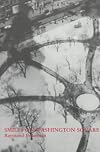
A charming take on the 'two strangers meet and fall in love over one glance' theme, cleverly written in Raymond Federman's metafictional style, which is well suited to dangle readers over the tantalizing cliff of will this work out or not, will these two people meet again, and if they do, will they fall in love, and if they do that, will it last, or perhaps...was it all imagined. Regardless of how the reader chooses to interpret this story, Federman's prose feels very sincere, even in his show more mockery. There is no pretension in his writing. It is instead imbued with a pleasant warmth of humanness, which is not what one typically expects to find in postmodern fiction. A fine little novel by a writer (still) deserving of a wider readership. show less
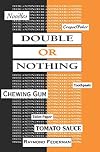
Gladly, it is over. I do believe that as time passes I will appreciate more my reading of this most-original book. But for now brand me burned, rightly forgiven, and smoldering on the stake.
Lists
Awards


You May Also Like


Associated Authors
Statistics
- Works
- 35
- Also by
- 6
- Members
- 542
- Popularity
- #45,992
- Rating
- 3.7
- Reviews
- 9
- ISBNs
- 88
- Languages
- 5
- Favorited
- 1