
Tom Godwin (1915–1980)
Author of Space Prison
Series
Works by Tom Godwin
The Last Victory 4 copies
The Barbarians 3 copies
The Greater Thing [short fiction] 3 copies
The Harvest [short story] 3 copies
The Best Sci-Fi Books of Tom Godwin: For The Cold Equations, Space Prison, The Nothing Equation, The Barbarians, Cry from a Far Planet (2020) 2 copies
You Created Us 2 copies
Mother Of Invention 2 copies
The Gulf Between 1 copy
No Species Alone 1 copy
Le fredde equazioni 1 copy
Empathy 1 copy
Associated Works
The Science Fiction Hall of Fame, Volume One: The Greatest Science Fiction Stories of All Time (1970) — Contributor — 2,116 copies, 34 reviews
The Best Science Fiction Stories and Novels: Ninth Series (2024) — Contributor — 42 copies, 1 review
Analog Science Fact/Science Fiction: Vol. LXVIII, No. 4 (December 1961) (1961) — Contributor — 8 copies
Amazing Stories Vol. 31, No. 12 [December 1957] — Contributor — 2 copies
Tagged
Common Knowledge
- Legal name
- Godwin, Thomas William
- Birthdate
- 1915-06-06
- Date of death
- 1980-08-31
- Gender
- male
- Nationality
- USA
- Birthplace
- Arizona (?), USA
- Place of death
- Las Vegas, Nevada, USA
- Associated Place (for map)
- USA
Members
Reviews

The characterisation is simplistic but this story (first published in Astounding Science Fiction in 1954) still affects the reader as a version of a hoary old problem in moral philosophy about making choices when the death of one will save many others although the one has committed no fault.
Well, not exactly. The one is a pretty teenage girl, ordinary but bright, who stowed away on a space ship where the precise calculations required to land a rescue mission safely means that any stowaway show more must be jettisoned to their death within a very short time frame.
That is a fault, of course -stowing away. The pilot who has to jettison her is certainly not at fault and her fault is only that of naivete, sentiment or ignorance, little more than that. Those are qualities that most teenagers have to have as they move towards adulthood.
We might place some fault in the fleet system that makes such tight calculations on rocket fuel although there may be very significant cost reasons involved and there may be considerable fault in the failure of the fleet to mount sufficient security and checks before the ship departed.
So, there may be cost-cutting or negligence involved (standard aspects of big bureaucratic systems) but the blame game changes nothing. There she is. The ship cannot turn back and the pilot will destroy both of them and the scientific group he is helping if he fails to jettison her.
And there we have it ... an extreme but oddly credible acount of moral choice that is no choice at all at the frontier of space. It is a story that undoubtedly reflects the much messier moral choices made all the time in a world war only a decade earlier which haunted the post-war generation.
The inherent message seems to be that highly risky grand enterprises are no places for the naive, ignorant or sentimental and that the innocent are likely to be their victims simply because (and this is the central message) iron laws, scientific laws, dictate the terms of survival at any frontier. show less
Well, not exactly. The one is a pretty teenage girl, ordinary but bright, who stowed away on a space ship where the precise calculations required to land a rescue mission safely means that any stowaway show more must be jettisoned to their death within a very short time frame.
That is a fault, of course -stowing away. The pilot who has to jettison her is certainly not at fault and her fault is only that of naivete, sentiment or ignorance, little more than that. Those are qualities that most teenagers have to have as they move towards adulthood.
We might place some fault in the fleet system that makes such tight calculations on rocket fuel although there may be very significant cost reasons involved and there may be considerable fault in the failure of the fleet to mount sufficient security and checks before the ship departed.
So, there may be cost-cutting or negligence involved (standard aspects of big bureaucratic systems) but the blame game changes nothing. There she is. The ship cannot turn back and the pilot will destroy both of them and the scientific group he is helping if he fails to jettison her.
And there we have it ... an extreme but oddly credible acount of moral choice that is no choice at all at the frontier of space. It is a story that undoubtedly reflects the much messier moral choices made all the time in a world war only a decade earlier which haunted the post-war generation.
The inherent message seems to be that highly risky grand enterprises are no places for the naive, ignorant or sentimental and that the innocent are likely to be their victims simply because (and this is the central message) iron laws, scientific laws, dictate the terms of survival at any frontier. show less

Structurally it's a very well written story, but it never questions beyond its own belief system. Why is the system built without safeguards for the "cold equations"? Money. The equation is that we put money over human life and then use "the cold laws of nature" to excuse our behavior. As propaganda, it is 5 stars, one of the best of its kind.
0/5
TLDR: Tom Godwin kills a young woman because Campbell wanted a story to tug at 1950's America's mawkish heartstrings.
A ridiculously contrived and improbable set of circumstances lead to a shuttle pilot having to choose between saving a stowaway and completing his mission.
This is a world where the punishment for stowing away is death, yet the public and passengers on interstellar spacecraft are never informed of this, and the doors to shuttle craft are left unlocked and unguarded.
This is a show more world where every ounce is at a premium on spacecraft, yet shuttle craft are build with enough space in their cabins for someone to hide away, including several comfortably large lockers, yet these shuttles are not searched before launch. Did I mention these craft where every ounce is at a premium also have air locks?
This is a world where these craft are provided with exactly enough fuel margin for the pilot to notice he is burning too fast, discover stowaways and dispose of them, but not enough to complete the mission with a stowaway.
This is a world where the pilot is provided with a gun, but no tool with which to dismantle all the dead weight in the cabin, which he could then throw out the airlock.
Finally, this is a world where the shuttle craft sent on an emergency mission, too small for a nuclear reactor so powered by chemical rockets is provided with artificial gravity. Yet no-one has thought of adapting the amazing and lightweight gizmotron providing the artificial gravity or even more amazing mcguffin powering it as a means of propulsion.
And did I mention the moral of this story is that you should take personal responsibility for your actions, not that gross corporate and governmental malfeasance causes avoidable deaths?
EDIT: Reread for some bizarre reason and noticed the bit about artificial gravity. It just makes the story even more outrageously bad. show less
TLDR: Tom Godwin kills a young woman because Campbell wanted a story to tug at 1950's America's mawkish heartstrings.
A ridiculously contrived and improbable set of circumstances lead to a shuttle pilot having to choose between saving a stowaway and completing his mission.
This is a world where the punishment for stowing away is death, yet the public and passengers on interstellar spacecraft are never informed of this, and the doors to shuttle craft are left unlocked and unguarded.
This is a show more world where every ounce is at a premium on spacecraft, yet shuttle craft are build with enough space in their cabins for someone to hide away, including several comfortably large lockers, yet these shuttles are not searched before launch. Did I mention these craft where every ounce is at a premium also have air locks?
This is a world where these craft are provided with exactly enough fuel margin for the pilot to notice he is burning too fast, discover stowaways and dispose of them, but not enough to complete the mission with a stowaway.
This is a world where the pilot is provided with a gun, but no tool with which to dismantle all the dead weight in the cabin, which he could then throw out the airlock.
Finally, this is a world where the shuttle craft sent on an emergency mission, too small for a nuclear reactor so powered by chemical rockets is provided with artificial gravity. Yet no-one has thought of adapting the amazing and lightweight gizmotron providing the artificial gravity or even more amazing mcguffin powering it as a means of propulsion.
And did I mention the moral of this story is that you should take personal responsibility for your actions, not that gross corporate and governmental malfeasance causes avoidable deaths?
EDIT: Reread for some bizarre reason and noticed the bit about artificial gravity. It just makes the story even more outrageously bad. show less
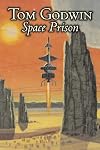
Ok, I needed a break from sophisticated Book Review recommended books, and even from contemporary genre or science fiction. So, something from the 1950s pulp era for a laugh, & I found it, a recommend for Tom Godwin's "Space Prison" from 1958. Originally more accurately named "The Survivors" but it didn't sell enough to even bind all the printed copies, so it got a face lift in 1960 with the sexy title "Space Prison." But it's Godwin, writer of a well-known story "The Cold Equations" - a show more beloved story that's made it into every single "best-of" collection, and which has been incarnated as a number of films and tv episodes. Seemed like a good bet, yes? No? So, how was "Space Prison?" Very very 1950s pulp, like a bag of potato chips, salty and not very nutritious, but very very quickly consumed. Men fight, women cook, the bad alien "Gerns" have a suspiciously "swarthy" appearance. Of course the plot was absurb and unbelievable. (There was some accurate science, though, mineralogy believe it or not!) The bad guys maroon the "we will survive no matter what" humans on a world that could well have been an inspiration for Harrision's "Deathworld" many years later. Of course they prevail. E. E. "Doc" Smith would have been proud. Pure junk, but in a good way. Sort of. Ok, back to real reading. show less
Lists
Awards
You May Also Like


Associated Authors
Statistics
- Works
- 31
- Also by
- 37
- Members
- 665
- Popularity
- #37,922
- Rating
- 4.0
- Reviews
- 30
- ISBNs
- 52
- Languages
- 4