
Stefanie Pintoff
Author of In the Shadow of Gotham
About the Author
Image credit: Photo by Alison Sheehy
Series
Works by Stefanie Pintoff
Tagged
Common Knowledge
- Legal name
- Pintoff, Stefanie
- Birthdate
- 20th century
- Gender
- female
- Occupations
- crime fiction writer
- Agent
- David Hale Smith
- Nationality
- USA
- Places of residence
- New York, New York, USA
- Associated Place (for map)
- New York, USA
Members
Reviews

Spoilers set to kill.
Because everyone compares this with Caleb Carr’s masterful novels, and I couldn’t help thinking of them too when I read the synopsis, I’ll continue with the comparison even though it doesn’t go Pintoff’s way.
Even without Carr’s books to refer to as a model of sorts, this novel wouldn’t be a stand-out. Not for me. Maybe it’s because I read a lot of detective fiction, but I fingered the guilty party way ahead of Alistair and Simon. For two guys who are show more supposed to be really clever and ahead of the curve, they were incapable of looking within their inner circle and they blew it. The signs were very clear in both situation and in behavior. And maybe it’s because my husband’s former boss, also named Horace, eventually was indicted and is now serving a long sentence for embezzlement that I first suspected him. When Fred showed up in the end, seemingly by coincidence, I knew he had to be in on it, too. I wasn’t shocked when he pulled a gun. Creep.
Anyway, as far as the characters go I found Simon to be stilted, insecure and a weird candidate for a cop. He spoke strangely and the way the book was narrated just came across as maladroit and stiff. This is supposed to be a street detective fresh from the cesspit that is New York in 1900? No way. He’s way too awkward and unsure of himself. I didn’t buy it. The pining for the dead fiancée was sort of nice at first, hey we’ve got a sensitive guy on our hands, but after a while it just seemed part of the whole wrongness about Simon as a cop. He has no vice, no hang-up, no outlet for his grief over his loss. Made him less human despite the angst.
And Alistair is a frigging bore. Always lecturing, always grandstanding. Ugh. Unattractive. At least he wasn’t trying to out-Kriezler Kriezler. He wasn’t weird and inscrutable. He wasn’t eccentric and brilliant. He wasn’t mercurial and Holmesian. Thankfully. He was fording his way into a new field and it rang mostly true; his need to convince person after person that the work was worthwhile, his need to explain theories and techniques, his need to attach himself to a university etc. The foundation though I found to be a bit of a stretch…and the self-funding and all that. Seemed a bit too much too soon if you know what I mean.
The bits about contemporary police procedures were interesting, as were the bits about women’s Suffragism and their struggle to win the vote. Those elements were nice and not overly done. But, something was missing. None of it was personal in the way that Carr made it personal. And the emotional pitch wasn’t as acute either; I didn’t really feel tense during my whole reading. No one was desperate. No one was at their wits end, no matter how much Simon opined that he was and I’ll probably give the next installment a miss. show less
Because everyone compares this with Caleb Carr’s masterful novels, and I couldn’t help thinking of them too when I read the synopsis, I’ll continue with the comparison even though it doesn’t go Pintoff’s way.
Even without Carr’s books to refer to as a model of sorts, this novel wouldn’t be a stand-out. Not for me. Maybe it’s because I read a lot of detective fiction, but I fingered the guilty party way ahead of Alistair and Simon. For two guys who are show more supposed to be really clever and ahead of the curve, they were incapable of looking within their inner circle and they blew it. The signs were very clear in both situation and in behavior. And maybe it’s because my husband’s former boss, also named Horace, eventually was indicted and is now serving a long sentence for embezzlement that I first suspected him. When Fred showed up in the end, seemingly by coincidence, I knew he had to be in on it, too. I wasn’t shocked when he pulled a gun. Creep.
Anyway, as far as the characters go I found Simon to be stilted, insecure and a weird candidate for a cop. He spoke strangely and the way the book was narrated just came across as maladroit and stiff. This is supposed to be a street detective fresh from the cesspit that is New York in 1900? No way. He’s way too awkward and unsure of himself. I didn’t buy it. The pining for the dead fiancée was sort of nice at first, hey we’ve got a sensitive guy on our hands, but after a while it just seemed part of the whole wrongness about Simon as a cop. He has no vice, no hang-up, no outlet for his grief over his loss. Made him less human despite the angst.
And Alistair is a frigging bore. Always lecturing, always grandstanding. Ugh. Unattractive. At least he wasn’t trying to out-Kriezler Kriezler. He wasn’t weird and inscrutable. He wasn’t eccentric and brilliant. He wasn’t mercurial and Holmesian. Thankfully. He was fording his way into a new field and it rang mostly true; his need to convince person after person that the work was worthwhile, his need to explain theories and techniques, his need to attach himself to a university etc. The foundation though I found to be a bit of a stretch…and the self-funding and all that. Seemed a bit too much too soon if you know what I mean.
The bits about contemporary police procedures were interesting, as were the bits about women’s Suffragism and their struggle to win the vote. Those elements were nice and not overly done. But, something was missing. None of it was personal in the way that Carr made it personal. And the emotional pitch wasn’t as acute either; I didn’t really feel tense during my whole reading. No one was desperate. No one was at their wits end, no matter how much Simon opined that he was and I’ll probably give the next installment a miss. show less

The third historical mystery featuring Det. Simon Ziele is better than the second, making better use of the 1906 New York City setting by tying the anarchist activity of that time into the plot. A judge presiding over the trial of an anarchist, whose bomb killed a child among other victims, is found brutally murdered in his home. Criminology professor Alistair Sinclair, a friend of the judge since they were classmates at Harvard Law School, calls on Simon, now reinstated with the NYPD, to show more find the killer, despite the case being outside Ziele's jurisdiction. While Ziele risks his career to help, he is increasingly aware that Alistair is keeping secrets from him, while he also must contend with the brother of his deceased fiancee, a young man involved with the anarchists. That both Simon and Alistair have something personal at stake gives the story a bit more tension than the previous book had. I figured out some of the mystery, but not all, and found this a fast, compelling read. show less
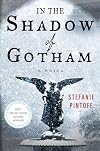
Stefanie Pintoff has just won the Edgar Award for Best First Novel by an American Author for In the Shadow of Gotham, and it is a well-deserved win. This historical mystery, set in the very early 20th century, is in many ways about new crime investigation techniques just being born: fingerprinting and profiling, most obviously, but basically the whole idea of a scientific approach to figuring out whodunit. The book is populated with interesting characters, including several strong women in show more an age when those women who agitated for the right to vote were considered odd, and those who wanted a career downright unnatural. All of these historical elements are folded into a strong plot with a genuine mystery that challenges the reader into beating the detective protagonist to the solution.
Detective Simon Ziele has just transferred from the New York Police Department to a smaller department in Dobson, just north of the city, in the wake of the loss of his fiancée in a ferry disaster. Simon has some newfangled ideas about criminal investigation, which his boss doesn’t much approve of. But those ideas come in handy when a murder occurs in the quiet town. Sarah Wingate, a visitor to a prominent and wealthy family, was murdered in a particularly brutal fashion, and seemingly without motive. It is a challenge that the small police department, firmly mired in the 19th century, does not seem equipped to solve.
But Ziele proceeds with his investigation in ways unexpected by his contemporaries. Most particularly, he joins forces with Alistair Sinclair, a professor at Columbia Law School, who has been studying the psychology or criminal behavior based on the work of Eugene Vidocq in France. Together, they hope to work backwards from the crime to create a profile – though they don’t phrase it that way – of the killer. In fact, Sinclair believes he already knows who committed the crime.
It is, of course, much more complicated than that. But the book is a fascinating study in the development of criminal investigation. It is fun for a fan of criminal procedurals like “CSI” and “Criminal Minds” to watch how the procedures now taken almost for granted began in the minds of early psychologists and law enforcement officials to become the science that solves many of today’s crimes.
While that is what fascinated me most about this book, there is plenty else here for whatever suits the reader’s fancy. Sinclair is skillfully conceived, a combination of self-interest and scholarly study that seems almost contradictory. Ziele is an interesting man attempting to find his place in society. The victim is a fascinating woman, a mathematician of surprising promise in a time when women and mathematics were considered to be virtual opposites. And I greatly enjoyed Isabella Sinclair, Alistair’s daughter-in-law, a young widow who seems likely to be Ziele’s love interest as a series – and it does appear to be a series, as A Curtain Falls, starring Detective Ziele, is to be released on May 11 – develops.
In the Shadow of Gotham is a very promising first novel from Pintoff, a graduate of Columbia University Law School with a Ph.D. in literature from New York University. I can’t wait to read what she comes up with next. show less
Detective Simon Ziele has just transferred from the New York Police Department to a smaller department in Dobson, just north of the city, in the wake of the loss of his fiancée in a ferry disaster. Simon has some newfangled ideas about criminal investigation, which his boss doesn’t much approve of. But those ideas come in handy when a murder occurs in the quiet town. Sarah Wingate, a visitor to a prominent and wealthy family, was murdered in a particularly brutal fashion, and seemingly without motive. It is a challenge that the small police department, firmly mired in the 19th century, does not seem equipped to solve.
But Ziele proceeds with his investigation in ways unexpected by his contemporaries. Most particularly, he joins forces with Alistair Sinclair, a professor at Columbia Law School, who has been studying the psychology or criminal behavior based on the work of Eugene Vidocq in France. Together, they hope to work backwards from the crime to create a profile – though they don’t phrase it that way – of the killer. In fact, Sinclair believes he already knows who committed the crime.
It is, of course, much more complicated than that. But the book is a fascinating study in the development of criminal investigation. It is fun for a fan of criminal procedurals like “CSI” and “Criminal Minds” to watch how the procedures now taken almost for granted began in the minds of early psychologists and law enforcement officials to become the science that solves many of today’s crimes.
While that is what fascinated me most about this book, there is plenty else here for whatever suits the reader’s fancy. Sinclair is skillfully conceived, a combination of self-interest and scholarly study that seems almost contradictory. Ziele is an interesting man attempting to find his place in society. The victim is a fascinating woman, a mathematician of surprising promise in a time when women and mathematics were considered to be virtual opposites. And I greatly enjoyed Isabella Sinclair, Alistair’s daughter-in-law, a young widow who seems likely to be Ziele’s love interest as a series – and it does appear to be a series, as A Curtain Falls, starring Detective Ziele, is to be released on May 11 – develops.
In the Shadow of Gotham is a very promising first novel from Pintoff, a graduate of Columbia University Law School with a Ph.D. in literature from New York University. I can’t wait to read what she comes up with next. show less
This is a really good debut novel & it is obvious why it won a "First Crime Novel Award" from the Mystery Writers of America. This book reminded a lot of The Alienist, but also of other books that deal with New York in the same time period; in particular, Banished Children of Eve by Peter Quinn & the classic Low Life by Luc Sante. I was pleased to see that she referenced Sante's work & I went promptly to my bookshelf to put Low Life on my TBR (again) list.
This book has the feel of its time show more period while still managing a modern sensibility. I cared about the characters & about the mystery. There were plenty of clues, but the perpetrator wasn't glaringly obvious & that made the book more fun, too.
I especially appreciated her depiction of women in the time period. She presented many different kinds of women living in many different ways & that was nice to see. So often we are given one-dimensional female characters in historical fiction who pursue only one avenue - it's nice to see a multitude of other options on display. Her portrayal of Mamie, the brothel keeper, made me think of Sin in the Second City by Karen Abbot which I also loved. Yes, I really do like this time period.
Wonderfully written, complex, atmospheric read. I hope she writes another one. show less
This book has the feel of its time show more period while still managing a modern sensibility. I cared about the characters & about the mystery. There were plenty of clues, but the perpetrator wasn't glaringly obvious & that made the book more fun, too.
I especially appreciated her depiction of women in the time period. She presented many different kinds of women living in many different ways & that was nice to see. So often we are given one-dimensional female characters in historical fiction who pursue only one avenue - it's nice to see a multitude of other options on display. Her portrayal of Mamie, the brothel keeper, made me think of Sin in the Second City by Karen Abbot which I also loved. Yes, I really do like this time period.
Wonderfully written, complex, atmospheric read. I hope she writes another one. show less
Lists
Edgar Award (1)
Awards


You May Also Like


Statistics
- Works
- 6
- Members
- 1,296
- Popularity
- #19,806
- Rating
- 3.5
- Reviews
- 69
- ISBNs
- 28
- Languages
- 2
- Favorited
- 3

