
Jo Graham (1) (1968–)
Author of Black Ships
For other authors named Jo Graham, see the disambiguation page.
About the Author
Image credit: Robert Walters
Series
Works by Jo Graham
Tagged
Common Knowledge
- Birthdate
- 1968
- Gender
- female
- Education
- University of North Carolina, Chapel Hill (BA ∙ Military History)
- Occupations
- writer
author
novelist
political operative
advocate, event planner, and fundraiser - Agent
- Robin Rue (Writers House)
- Nationality
- USA
- Birthplace
- North Carolina, USA
- Places of residence
- Clarksburg, Maryland, USA
Chapel Hill, North Carolina, USA - Associated Place (for map)
- North Carolina, USA
Members
Reviews
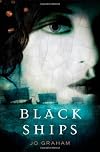
"The world has ended. And I don't know why I yet live."
"You live... because the world ends and then begins."
Summary: The Trojan war marked the beginning of a time of great upheaval, with the great cities falling, vast numbers of people either killed or dispossessed and homeless, and the old world going up in the smoke of raiders' fires. Into this world is born Gull, the daughter of a Trojan woman brought to Greece as a slave. When she is young, she becomes an acolyte to Pythia, the show more handmaiden of the Lady of the Dead. On her sixteenth birthday, Gull sees black ships sail into the harbor - Prince Aeneas and his warships, the people of her blood, come to wreak revenge and reclaim their kinsmen from slavery. She makes her choice and leaves with them, where she - and her Lady - must help to guide the straggling remnants of a people across the sea, to Byblos, Egypt, and beyond, through a world that is failing around them, struggling to find a future and a home.
Recommendation: I'm having a hard time finding words that can do justice to how much I enjoyed this book. I've never read the Aeneid, which is this book's inspiration, but taking the story of Black Ships on its own merits, it's wonderful. To see how people react to the world almost literally falling apart around them... it's an incredible period of history, this turning point, the falling into a Dark Age, and it's one I'd never considered before. Guiding us through this world is Gull, whose voice is strong and beautiful, but still recognizable and immediate - the motivations of all of the characters are familiar and believable, and they are relatable as young people doing their best to find a future in an uncertain world. I thought the religious aspects added a complex touch as well, bringing in the mysticism that we associate with that time period, without overplaying it or stretching credibility too far.
However, as much as I loved the characters and the story, what tipped this book into five-star territory for me was the writing. It's deceptively simple and unobtrusive, but at the same time, I found it achingly beautiful and incredibly haunting. I can't describe it any better than to say that it was the kind of writing that seemed to expand inside my chest, grabbing my heart and making it hard to breathe, even at parts that wouldn't ordinarily be particularly emotionally stirring. The writing fit the subject and the narrator perfectly, and vice versa. It's not a match that comes along often, and to find it in a debut novel blew me away.
Recommendation: Highly recommended. It's not everyone's cup of tea, I'm sure, but anyone with even a vague interest in historical fiction, Mists of Avalon-type fantasy, or the ancient world should definitely seek this one out. show less
"You live... because the world ends and then begins."
Summary: The Trojan war marked the beginning of a time of great upheaval, with the great cities falling, vast numbers of people either killed or dispossessed and homeless, and the old world going up in the smoke of raiders' fires. Into this world is born Gull, the daughter of a Trojan woman brought to Greece as a slave. When she is young, she becomes an acolyte to Pythia, the show more handmaiden of the Lady of the Dead. On her sixteenth birthday, Gull sees black ships sail into the harbor - Prince Aeneas and his warships, the people of her blood, come to wreak revenge and reclaim their kinsmen from slavery. She makes her choice and leaves with them, where she - and her Lady - must help to guide the straggling remnants of a people across the sea, to Byblos, Egypt, and beyond, through a world that is failing around them, struggling to find a future and a home.
Recommendation: I'm having a hard time finding words that can do justice to how much I enjoyed this book. I've never read the Aeneid, which is this book's inspiration, but taking the story of Black Ships on its own merits, it's wonderful. To see how people react to the world almost literally falling apart around them... it's an incredible period of history, this turning point, the falling into a Dark Age, and it's one I'd never considered before. Guiding us through this world is Gull, whose voice is strong and beautiful, but still recognizable and immediate - the motivations of all of the characters are familiar and believable, and they are relatable as young people doing their best to find a future in an uncertain world. I thought the religious aspects added a complex touch as well, bringing in the mysticism that we associate with that time period, without overplaying it or stretching credibility too far.
However, as much as I loved the characters and the story, what tipped this book into five-star territory for me was the writing. It's deceptively simple and unobtrusive, but at the same time, I found it achingly beautiful and incredibly haunting. I can't describe it any better than to say that it was the kind of writing that seemed to expand inside my chest, grabbing my heart and making it hard to breathe, even at parts that wouldn't ordinarily be particularly emotionally stirring. The writing fit the subject and the narrator perfectly, and vice versa. It's not a match that comes along often, and to find it in a debut novel blew me away.
Recommendation: Highly recommended. It's not everyone's cup of tea, I'm sure, but anyone with even a vague interest in historical fiction, Mists of Avalon-type fantasy, or the ancient world should definitely seek this one out. show less
 This review was written for LibraryThing Early Reviewers.
STARGATE ATLANTIS: Unascended (book 7 in the Legacy series) (Stargate Atlantis: Legacy series) by Jo Graham
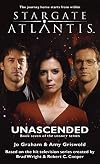
Wow, this is just so wonderful. Unascended brings back Elizabeth Weir in one thread, while having a teriffic story involving all the other characters converge with the search for her. I’m so busy that normally I’d rate it five stars and leave it at that, but it deserves at least a few words of praise for Jo Graham and Amy Griswold, who have written a marvelous and exciting story with a number of tentacles, all of them interesting, fast-flowing, and very compelling.
A climate machine, the show more Asgard, the ATA gene, the residual effects and fallout of Rodney’s time as a Wraith, Daniel’s explorations in the Pegasus Galaxy, the new treaty with the Wraith, and Rodney’s steadfast belief, against all prevailing evidence, that Elizabeth is alive in the flesh again, and not as a Replicator, make this a richly rewarding treasure for Stargate Atlantis fans.
All the characters are spot-on here, just as they were in Exogenesis. Their interactions are resonating and priceless. Rodney believes Elizabeth was punished for helping him while in the other realm, and has been unascended. Convincing everyone else is another matter. But this is Rodney we’re talking about, after all.
Daniel is around a bit much for my taste in Unascended, because he can grate on me sometimes; he shares many of Rodney’s more annoying ticks, but he doesn’t have the endearing warmth beneath of Rodney. That is not enough however to detract in the least from what is a splendid novel in the Atlantis line of books. Being book #7 in the Legacy story-line, this one ends on a cliffhanger. Just as Elizabeth is reunited with Shepard, Ronan, Teyla, Rodney and the gang, something puts it all in jeopardy.
Let’s just say I’m glad I already have book #8, Third Path, on deck and at hand, so I can pick right up with the story and see how it all wraps up when I have time. I can easily imagine this as a big two-part entry in the series. Fans didn’t get to see Elizabeth return in the actual series, but Jo Graham and Amy Griswold have made that come to fruition in a book worthy for all who lamented Weir’s departure. Great stuff, and essential reading for Stargate Atlantis fans. Highly recommended! show less
A climate machine, the show more Asgard, the ATA gene, the residual effects and fallout of Rodney’s time as a Wraith, Daniel’s explorations in the Pegasus Galaxy, the new treaty with the Wraith, and Rodney’s steadfast belief, against all prevailing evidence, that Elizabeth is alive in the flesh again, and not as a Replicator, make this a richly rewarding treasure for Stargate Atlantis fans.
All the characters are spot-on here, just as they were in Exogenesis. Their interactions are resonating and priceless. Rodney believes Elizabeth was punished for helping him while in the other realm, and has been unascended. Convincing everyone else is another matter. But this is Rodney we’re talking about, after all.
Daniel is around a bit much for my taste in Unascended, because he can grate on me sometimes; he shares many of Rodney’s more annoying ticks, but he doesn’t have the endearing warmth beneath of Rodney. That is not enough however to detract in the least from what is a splendid novel in the Atlantis line of books. Being book #7 in the Legacy story-line, this one ends on a cliffhanger. Just as Elizabeth is reunited with Shepard, Ronan, Teyla, Rodney and the gang, something puts it all in jeopardy.
Let’s just say I’m glad I already have book #8, Third Path, on deck and at hand, so I can pick right up with the story and see how it all wraps up when I have time. I can easily imagine this as a big two-part entry in the series. Fans didn’t get to see Elizabeth return in the actual series, but Jo Graham and Amy Griswold have made that come to fruition in a book worthy for all who lamented Weir’s departure. Great stuff, and essential reading for Stargate Atlantis fans. Highly recommended! show less
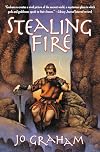
I enjoyed Graham's first novel, BLACK SHIPS--overall there I was impressed with how Graham drew from recent archeological and historic scholarship to bring to life the Late Bronze Age world--but I'm afraid I find STEALING FIRE less successful.
With historical fiction, I want to enter that other world, feel and think for a while as an Ancient Greek or Egyptian would. With fantasy, I want magic and world-building that places us in another world entirely, even if there's a historical basis. But show more STEALING FIRE doesn't for me excel as either fantasy or historical novel.
I felt Graham was anachronistically superimposing her own modern New Age, egalitarian, and feminist values on her characters. It doesn't help that in this novel her first person narrator, Lydias, is made out to be also the author's past and future reincarnated protagonists from BLACK SHIPS and HAND OF ISIS. It's like that old joke that everyone was Marie Antoinette in another life. So life after life a guy gets to hang out with the rich and famous? Aeneas, Cleopatra and Alexander?
Moreover, Lydias isn't at all disturbed at the revelation he was once and will be a woman; he doesn't have to struggle to see women as equals as would a man of that time. I understand an author wanting to bend historic attitudes to make a character more sympathetic to modern readers, but it might have worked better if Lydias had more of an arc where I could understand why his mindset is different than his contemporaries beyond his origins as a slave--or if his visions themselves touched off a a revolution in his thinking. And after all, a visit from a deity should be life-changing, not the almost casual thing it is in this novel; the novel doesn't convey the awe and terror the characters should feel at being confronted with the divine.
The elements of the magical in this novel are I feel too thin to really consider it a fantasy, yet are also harder to rationalize as hallucinations or such in the same way as they were in BLACK SHIPS, breaking any sense of historic realism. Overall though the book felt to me more historical novel than real fantasy, but on those terms doesn't work for me because it fails to convince me I'm reading about people born over two thousand years ago.
Despite my criticisms, this is an enjoyable book overall, stylistically clean, a good, fast read with likable characters, but it doesn't make me feel I've sunk into the Hellenistic world just after the death of Alexander--I keep comparing it in my mind to the same ground covered by Mary Renault in her Alexander books: FIRE FROM HEAVEN, THE PERSIAN BOY and FUNERAL GAMES. I'm afraid STEALING FIRE suffers from the comparison. show less
With historical fiction, I want to enter that other world, feel and think for a while as an Ancient Greek or Egyptian would. With fantasy, I want magic and world-building that places us in another world entirely, even if there's a historical basis. But show more STEALING FIRE doesn't for me excel as either fantasy or historical novel.
I felt Graham was anachronistically superimposing her own modern New Age, egalitarian, and feminist values on her characters. It doesn't help that in this novel her first person narrator, Lydias, is made out to be also the author's past and future reincarnated protagonists from BLACK SHIPS and HAND OF ISIS. It's like that old joke that everyone was Marie Antoinette in another life. So life after life a guy gets to hang out with the rich and famous? Aeneas, Cleopatra and Alexander?
Moreover, Lydias isn't at all disturbed at the revelation he was once and will be a woman; he doesn't have to struggle to see women as equals as would a man of that time. I understand an author wanting to bend historic attitudes to make a character more sympathetic to modern readers, but it might have worked better if Lydias had more of an arc where I could understand why his mindset is different than his contemporaries beyond his origins as a slave--or if his visions themselves touched off a a revolution in his thinking. And after all, a visit from a deity should be life-changing, not the almost casual thing it is in this novel; the novel doesn't convey the awe and terror the characters should feel at being confronted with the divine.
The elements of the magical in this novel are I feel too thin to really consider it a fantasy, yet are also harder to rationalize as hallucinations or such in the same way as they were in BLACK SHIPS, breaking any sense of historic realism. Overall though the book felt to me more historical novel than real fantasy, but on those terms doesn't work for me because it fails to convince me I'm reading about people born over two thousand years ago.
Despite my criticisms, this is an enjoyable book overall, stylistically clean, a good, fast read with likable characters, but it doesn't make me feel I've sunk into the Hellenistic world just after the death of Alexander--I keep comparing it in my mind to the same ground covered by Mary Renault in her Alexander books: FIRE FROM HEAVEN, THE PERSIAN BOY and FUNERAL GAMES. I'm afraid STEALING FIRE suffers from the comparison. show less
This review was written for LibraryThing Early Reviewers.ADVANCE READER COPY
Based on the Aeneid by Virgil, Black Ships is a historical fiction about the Wilusans' search for a homeland after the destruction of Troy, and about their trials as they are lead around the Mediterranean by Aeneas, their prince and future King until at last they settle on the site of present day Rome, founding that city. The narrative is told in the first person, by Gull, who becomes Pythia, the Sybil or oracle to Aeneas, speaking to her people on behalf of the Lady of show more the Dead. My concerns about the story being told in the first person were quickly dispelled, as Jo Graham handled this sometimes difficult "voice" with skill. This is a very impressive first novel by someone who shows she has the potential to become a good writer, particularly in this genre.
Gull's mother Kyla is raped and kidnapped into slavery by Achaian raiders who almost destroy what is left of the Wilusans, as the raiders take most of the women away to Pylos on the Greek Peninsula. The product of this rape, Gull, faces a life of slavery but has her foot crushed by a chariot wheel, which makes her worthless in that capacity. Desperate to find a safe life for her daughter, Kyla takes her to Pythia, the current oracle or voice of The Lady, to serve as an acolyte. The Lady quickly makes it evident that Gull will be her next Pythia and so the story begins.
Although it is fiction, Jo Graham has done her homework, both with the conditions of the time and with the Aeneid itself, creating a story which echoes the intent of Virgil's original while giving a small history lesson about the Mediterranean area of that era. Egypt is shown as the ancient land and rising power that it was under Ramses, while the lawlessness and chaos of umpteen different tribes jockeying for land and power everywhere else is well depicted. Where her real success lay, for this reader, was in depicting characters who were very believable and about whom I could care and have an interest. She developed the relationships of Aeneas and Xandros, Xandros and Gull, Gull and Hry, the Egyptian seer, Aeneas and his father, Anchises, with restraint and a lovely understated style. I'm not quite sure where she was going with the relationship between Xandros and Ashtera but it didn't create an insurmountable block in the story for me. Gull as Pythia was a very good character, with no histrionics or over the top dramatics as the avatar of the goddess that a less skilled writer might have indulged in but rather as a strong woman with a sense of dignity and real purpose in how she served both the Lady and her King.
Graham is also particularly strong in her depiction of the vessels used at that time, of sailing/rowing them and using them in warfare. I also enjoyed her conceit of having Aeneas invent the Romans' phalanx style of warfare, using new style swords and developing shields. The sea was everything to the peoples clustered around its edges and Graham allows this to imbue her tale but sees the shift to the land at the end with the movement away from its edges to a more agrarian lifestyle.
I enjoyed reading the Advanced Reader's Copy of this book very much indeed. If a reader enjoys historical fiction, I wouldn't hesitate to recommend "Black Ships" despite a couple of bumpy spots in the narrative. Well done, Jo Graham! I hope you write many more. show less
Based on the Aeneid by Virgil, Black Ships is a historical fiction about the Wilusans' search for a homeland after the destruction of Troy, and about their trials as they are lead around the Mediterranean by Aeneas, their prince and future King until at last they settle on the site of present day Rome, founding that city. The narrative is told in the first person, by Gull, who becomes Pythia, the Sybil or oracle to Aeneas, speaking to her people on behalf of the Lady of show more the Dead. My concerns about the story being told in the first person were quickly dispelled, as Jo Graham handled this sometimes difficult "voice" with skill. This is a very impressive first novel by someone who shows she has the potential to become a good writer, particularly in this genre.
Gull's mother Kyla is raped and kidnapped into slavery by Achaian raiders who almost destroy what is left of the Wilusans, as the raiders take most of the women away to Pylos on the Greek Peninsula. The product of this rape, Gull, faces a life of slavery but has her foot crushed by a chariot wheel, which makes her worthless in that capacity. Desperate to find a safe life for her daughter, Kyla takes her to Pythia, the current oracle or voice of The Lady, to serve as an acolyte. The Lady quickly makes it evident that Gull will be her next Pythia and so the story begins.
Although it is fiction, Jo Graham has done her homework, both with the conditions of the time and with the Aeneid itself, creating a story which echoes the intent of Virgil's original while giving a small history lesson about the Mediterranean area of that era. Egypt is shown as the ancient land and rising power that it was under Ramses, while the lawlessness and chaos of umpteen different tribes jockeying for land and power everywhere else is well depicted. Where her real success lay, for this reader, was in depicting characters who were very believable and about whom I could care and have an interest. She developed the relationships of Aeneas and Xandros, Xandros and Gull, Gull and Hry, the Egyptian seer, Aeneas and his father, Anchises, with restraint and a lovely understated style. I'm not quite sure where she was going with the relationship between Xandros and Ashtera but it didn't create an insurmountable block in the story for me. Gull as Pythia was a very good character, with no histrionics or over the top dramatics as the avatar of the goddess that a less skilled writer might have indulged in but rather as a strong woman with a sense of dignity and real purpose in how she served both the Lady and her King.
Graham is also particularly strong in her depiction of the vessels used at that time, of sailing/rowing them and using them in warfare. I also enjoyed her conceit of having Aeneas invent the Romans' phalanx style of warfare, using new style swords and developing shields. The sea was everything to the peoples clustered around its edges and Graham allows this to imbue her tale but sees the shift to the land at the end with the movement away from its edges to a more agrarian lifestyle.
I enjoyed reading the Advanced Reader's Copy of this book very much indeed. If a reader enjoys historical fiction, I wouldn't hesitate to recommend "Black Ships" despite a couple of bumpy spots in the narrative. Well done, Jo Graham! I hope you write many more. show less
This review was written for LibraryThing Early Reviewers.Lists
Awards


You May Also Like
Associated Authors
Statistics
- Works
- 26
- Members
- 2,104
- Popularity
- #12,233
- Rating
- 3.9
- Reviews
- 167
- ISBNs
- 78
- Languages
- 1
