
Chloé Delaume
Author of Le Coeur synthétique
About the Author
Image credit: Leafar
Works by Chloé Delaume
Tagged
Common Knowledge
- Canonical name
- Chloé Delaume
- Legal name
- Nathalie Dalain
- Birthdate
- 1973-03-10
- Gender
- female
- Occupations
- Writer
- Nationality
- France
- Places of residence
- Paris, France
- Map Location
- France
Members
Reviews
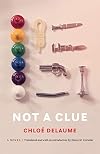
Translated from the original French, Not a Clue is a life size game of Clue involving six psychiatric patients. Each character takes on the persona of one of the Clue pieces, is placed in one of the rooms on the board, and has possession of one weapon. Each are accused of killing Dr. Black.
As a fan of the game Clue, I was thrilled for the chance to review a copy of Not a Clue, which is set to be released December 1, 2018. I was expecting something fun and a little bizarre since the suspects show more are psychiatric patients. However, what I got was a dizzying compilation of six characters with various psychiatric problems, an interfering author who repeatedly states she is unwilling to interfere, an omniscient narrator who doesn’t actually do a good job of it, and Dr. Black who apparently speaks to us from beyond death.
On one hand, I was a bit in awe of this book. It’s unique and pushes boundaries. Back in college, I read House of Leaves, an experimental horror book by Mark Z. Danielewski. I was intrigued and delighted by the experimental quality of the writing and layout, but honestly have very little recollection of what the heck it was about. I was equally delighted by the writing in Not a Clue. Even though it was a little difficult to get into with the incredible dearth of punctuation, I was nevertheless interested in how this book was written. Psychological definitions and explanations were woven throughout. Even though it made the book feel a little choppy, I still appreciated it as a former psychology student, especially since it made complete sense when it was injected. The character sketches were amusing and somewhat thought-provoking and sometimes it was difficult to tell what was real and what was fictional in each person’s life.
On the other hand, this book also grated on my nerves. As the story went along, I was a little dismayed when I reached the halfway point and had only met two of the suspects. They were both well-thought out and very well developed, which made me wonder if this book was maybe incomplete or if the remaining four suspects were only going to be glossed over. In the end, I was disappointed at the treatment the last four characters received, confused by the officers that were occasionally interjected, annoyed with the omniscient narrator who didn’t seem well-liked, and started to wonder if the author either ran out of steam while writing and that’s why only the first two suspects were well-developed or if the novel was meant to go that way. After finishing the book, I’m still not sure.
I was much more invested in the first half of the book and just wanted the second half to pass as quickly as possible. I very much enjoyed how the first two characters were fleshed out, but the pattern was the same for all six of them. It became tiring and repetitive and, by the last one, I had little interest in getting to know them, not that they were very well developed, anyways. But with all the changing characters and the annoying omniscient narrator, I just wanted the book to end.
The idea for the book was interesting and was what drew me to it. The game of Clue and six psychiatric patients? Yes and yes. I was expecting a wild and bizarre ride. What I got was mostly just bizarre. I appreciated what the author was trying to do and greatly enjoyed her boundary pushing, but I was quite tired of it by the end and am still left wondering how the game actually played into the story. I get that the suspects, rooms, and weapons were involved and the characters more or less correlated with the game’s characters, but the game in the story never felt anything more than flimsy and I probably would have enjoyed it without the overlay of the game.
In the end, I have my doubts as to whether or not Dr. Black was actually killed. Actually, I still have no idea who Dr. Black is/was and why he might have been killed. Then again, the why has never really been a part of the game. And I really didn’t care that he might have been killed. I also, in my disgruntled moments, think the author’s character is the one who was killed. Gee, if I were one of the six patients and had to make do with how my story was told, I might be willing to off her myself.
Not a Clue isn’t a terrible book. It was intriguing and definitely different. It’s well worth a look, but be prepared for a strange ride that may or may not leave you feeling fulfilled.
Thank you so much to NetGalley and the publisher for a copy of this book in exchange for a review. show less
As a fan of the game Clue, I was thrilled for the chance to review a copy of Not a Clue, which is set to be released December 1, 2018. I was expecting something fun and a little bizarre since the suspects show more are psychiatric patients. However, what I got was a dizzying compilation of six characters with various psychiatric problems, an interfering author who repeatedly states she is unwilling to interfere, an omniscient narrator who doesn’t actually do a good job of it, and Dr. Black who apparently speaks to us from beyond death.
On one hand, I was a bit in awe of this book. It’s unique and pushes boundaries. Back in college, I read House of Leaves, an experimental horror book by Mark Z. Danielewski. I was intrigued and delighted by the experimental quality of the writing and layout, but honestly have very little recollection of what the heck it was about. I was equally delighted by the writing in Not a Clue. Even though it was a little difficult to get into with the incredible dearth of punctuation, I was nevertheless interested in how this book was written. Psychological definitions and explanations were woven throughout. Even though it made the book feel a little choppy, I still appreciated it as a former psychology student, especially since it made complete sense when it was injected. The character sketches were amusing and somewhat thought-provoking and sometimes it was difficult to tell what was real and what was fictional in each person’s life.
On the other hand, this book also grated on my nerves. As the story went along, I was a little dismayed when I reached the halfway point and had only met two of the suspects. They were both well-thought out and very well developed, which made me wonder if this book was maybe incomplete or if the remaining four suspects were only going to be glossed over. In the end, I was disappointed at the treatment the last four characters received, confused by the officers that were occasionally interjected, annoyed with the omniscient narrator who didn’t seem well-liked, and started to wonder if the author either ran out of steam while writing and that’s why only the first two suspects were well-developed or if the novel was meant to go that way. After finishing the book, I’m still not sure.
I was much more invested in the first half of the book and just wanted the second half to pass as quickly as possible. I very much enjoyed how the first two characters were fleshed out, but the pattern was the same for all six of them. It became tiring and repetitive and, by the last one, I had little interest in getting to know them, not that they were very well developed, anyways. But with all the changing characters and the annoying omniscient narrator, I just wanted the book to end.
The idea for the book was interesting and was what drew me to it. The game of Clue and six psychiatric patients? Yes and yes. I was expecting a wild and bizarre ride. What I got was mostly just bizarre. I appreciated what the author was trying to do and greatly enjoyed her boundary pushing, but I was quite tired of it by the end and am still left wondering how the game actually played into the story. I get that the suspects, rooms, and weapons were involved and the characters more or less correlated with the game’s characters, but the game in the story never felt anything more than flimsy and I probably would have enjoyed it without the overlay of the game.
In the end, I have my doubts as to whether or not Dr. Black was actually killed. Actually, I still have no idea who Dr. Black is/was and why he might have been killed. Then again, the why has never really been a part of the game. And I really didn’t care that he might have been killed. I also, in my disgruntled moments, think the author’s character is the one who was killed. Gee, if I were one of the six patients and had to make do with how my story was told, I might be willing to off her myself.
Not a Clue isn’t a terrible book. It was intriguing and definitely different. It’s well worth a look, but be prepared for a strange ride that may or may not leave you feeling fulfilled.
Thank you so much to NetGalley and the publisher for a copy of this book in exchange for a review. show less
le problème c'est que c'est sensé parler du Grand Blanc, de ce qui s'est passé pendant que les femmes étaient au pouvoir, mais en fait ça parle uniquement (et uniquement apr la voix de la sibylle) de l'histoire des dieux grecs... sans revenir sur le futur ou l'apocalypse, décue par le traitement, ca veut ressembler à l'Illyade mais en fait c'est décousu
Pauvre folle d’aimer, d’espoir et d’impossible. Folle et enfermée dans un déni passionnel.
Avec une écriture sublime (qui m’a réveillé d’anciens souvenirs de Kundera), Chloé Delaume dévoile les tourments de Clotilde, emportée dans les tourbillons d’un impossible amour.
C’est vertigineux, souvent drôle, subtile et écrasant.
Pauvre pauvre folle
Avec une écriture sublime (qui m’a réveillé d’anciens souvenirs de Kundera), Chloé Delaume dévoile les tourments de Clotilde, emportée dans les tourbillons d’un impossible amour.
C’est vertigineux, souvent drôle, subtile et écrasant.
Pauvre pauvre folle
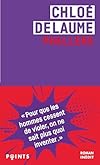
Voilà un petit bouquin qui vaudrait bien 5 étoiles rien que pour son trigger warning hilarant ! Merci Chloé de penser à nous, petites choses fragiles !
« Calmez-vous, Messieurs, ça va bien se passer
Le trigger warning est un avertissement au public. Il prévient qu’une œuvre contient des éléments pouvant déclencher le souvenir d’un traumatisme.
Personnellement je ne suis pas pour, mais il faut tout envisager tant la situation est actuellement tendue.
Certaines diront que, une femme show more étant agressée sexuellement ou violée toutes les sept minutes, ce qui se passe dans cette fiction relève du cathartique.
Certains agiteront Freud, tous les petits garçons connaissent « l’intense angoisse de castration ».
C’est par égard pour eux que se trace cet encadré. »
Et si certaines femmes, par la grâce du fantastique, devenaient des super-héroïnes ?
Une bonne blague, (zut, c’est juste une blague ?) sans beaucoup plus de prétentions, mais qui m’a bien fait rigoler !
… Et derrière la blague… toutes les sept minutes ! show less
« Calmez-vous, Messieurs, ça va bien se passer
Le trigger warning est un avertissement au public. Il prévient qu’une œuvre contient des éléments pouvant déclencher le souvenir d’un traumatisme.
Personnellement je ne suis pas pour, mais il faut tout envisager tant la situation est actuellement tendue.
Certaines diront que, une femme show more étant agressée sexuellement ou violée toutes les sept minutes, ce qui se passe dans cette fiction relève du cathartique.
Certains agiteront Freud, tous les petits garçons connaissent « l’intense angoisse de castration ».
C’est par égard pour eux que se trace cet encadré. »
Et si certaines femmes, par la grâce du fantastique, devenaient des super-héroïnes ?
Une bonne blague, (zut, c’est juste une blague ?) sans beaucoup plus de prétentions, mais qui m’a bien fait rigoler !
… Et derrière la blague… toutes les sept minutes ! show less
Apr 27, 2024French
Awards


You May Also Like


Associated Authors
Statistics
- Works
- 26
- Members
- 218
- Popularity
- #102,473
- Rating
- 3.4
- Reviews
- 11
- ISBNs
- 38
- Languages
- 2