

Adam Braver
Author of Mr. Lincoln's Wars: A Novel in Thirteen Stories
About the Author
Adam Braver teaches creative writing at Roger Williams University in Bristol, Rhode Island.
Works by Adam Braver
Associated Works
The Lincoln Anthology: Great Writers on His Life and Legacy from 1860 to Now (2008) — Contributor — 172 copies, 1 review
Tagged
Common Knowledge
- Canonical name
- Braver, Adam
- Birthdate
- 1963-04-17
- Gender
- male
- Education
- Goddard College (M.F.A. | Creative Writing)
- Occupations
- writer
professor - Organizations
- Roger Williams University
- Nationality
- USA
- Associated Place (for map)
- USA
Members
Reviews
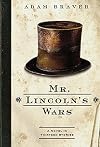
[Mr. Lincoln's Wars] by Adam Braver I really enjoyed this novel in stories told from various perspectives, set at different times before, during and immediately after the Civil War. Braver is a fine story-teller, and despite what I consider a terrible lapse in judgment (I can't imagine it was just plain ignorance) with regard to some anachronistic language usage and a couple outright gaffs that defy historical fact, I wanted to keep reading, and am quite happy to recommend this book to show more others. The writing is excellent, the stories are strong enough to stand alone, yet work as a whole very well, Braver has imagined moments I've not seen dealt with in literature before, and made them quite vivid. But then there's this (which I will put under a cut, just in case anyone wants to avoid knowing what I found so wrong--it's just possible not everyone would notice or object, I suppose): With regard to the language issue, characters speak in a colloquial fashion that sometimes sounds distinctly out of time; for instance, the frequent use of "okay" in speech and thought was not, I'm fairly certain, common in the 19th century. And surely, surely, Mary Todd Lincoln did not use it. I'm willing to grant that there must have been intimate moments between Lincoln and his wife, and that they may have said things to each other in those moments that would not fit with our image of them as public figures a century and a half hence. Still, I cannot believe that Mr. Lincoln ever actually used the word "sexier" to describe his wife, when whispering in her ear, as Braver has him do. As for the historical gaffs, one story has a man carrying around a letter from Lincoln, purportedly one that notified him of his son's death in battle, and included a typewritten signature line. Typewriters did not go into commercial production for several years after the end of the Civil War, and were not in use by White House staff until about 1880. And there are two scenes, one early and one in the White House, where Lincoln is drinking whisky voluntarily and quite prodigiously. History is mighty clear that he did not like the effect alcohol had on him, and therefore was a tee-totaler. These things grate. And more so because in other instances (a description of part of the autopsy on Lincoln's body, for example) it is obvious that Braver must have done some detailed research. Still, as I said, I do recommend it, and gave it 4 stars. It could have had full five with a stout-hearted editor and a little fact-checking. show less
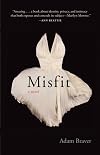
This is a Marilyn Monroe novel, which is to say Braver uses what worked for him in November 22 1963 and uses a framework of facts to come up with his own internal narrative. The book moves around in time, starting out broad and finishing up in tight focus on her last days, and I ended up liking this more than I thought when I started.
I'm not sure how nuanced it really was -- there was something a little Creative Writing-y to it -- but Braver does a decent job painting a picture (if not a show more super definitive one) of Marilyn Monroe as a complex creature. I still think there's something fish-in-a-barrel to her -- we know just enough about her to play around with the rest -- but that seems to come with the territory. And there are some great, cruel little cameos by Frank Sinatra and Pat Lawford that just made the story. show less
I'm not sure how nuanced it really was -- there was something a little Creative Writing-y to it -- but Braver does a decent job painting a picture (if not a show more super definitive one) of Marilyn Monroe as a complex creature. I still think there's something fish-in-a-barrel to her -- we know just enough about her to play around with the rest -- but that seems to come with the territory. And there are some great, cruel little cameos by Frank Sinatra and Pat Lawford that just made the story. show less
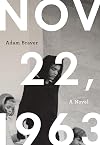
Interesting take on the dividing line between history and fiction. Aside from what the book is ostensibly about—the JFK assassination—it's also very much concerned with what it is to be a historian and researcher, how much of oneself moves in and out of a fixed story. There are a lot of ways to read this, I think, which makes it really engaging. Also the book itself is very beautiful, with a lot of attention paid toward the design and feel, which enhances the feeling of it being an show more interactive kind of text. This is something I could definitely reread at some point and have an entirely different experience. show less
An assemblage of voices related to the fateful day of November 22, 1963. Small shards that reflect the mournfulness of the days surrounding the Kennedy assassination, the daily movements or thoughts that become entombed forever because they are associated with such a monumental event. A requiem for the old. A requiem for the new. 3.5 stars.
Awards

You May Also Like


Associated Authors
Statistics
- Works
- 10
- Also by
- 2
- Members
- 430
- Popularity
- #56,814
- Rating
- 3.8
- Reviews
- 16
- ISBNs
- 26
- Languages
- 2