
René Depestre
Author of Hadriana in All My Dreams
About the Author
Series
Works by René Depestre
Associated Works
The Serpent and the Fire: Poetries of the Americas from Origins to Present (2024) — Contributor — 17 copies
Tree 4: Winter 1974 — Contributor — 2 copies
Paris Exiles, Vol. 1 No. 1, Winter 1984 — Contributor — 1 copy
Kunst aus Haiti : Ausstellung der Berliner Festspiele GmbH — Contributor — 1 copy
Tagged
Common Knowledge
- Canonical name
- Depestre, René
- Legal name
- Depestre, René
- Other names
- Dépestre, René
- Birthdate
- 1926-08-29
- Gender
- male
- Education
- Faculté de la Sorbonne (Etudes de lettres et sciences politique, 19 46 | 19 50)
Lycée Alexandre-Pétion, Port-au-Prince, Haïti (1940|1944)
Ecole primaire des Frères de l'Instruction chrétienne, Haïti - Organizations
- Unesco (Collaborateur)
- Awards and honors
- Prix du roman de la Société des gens de lettres (1988)
Prix du roman de l'Académie royale de langue et de littérature françaises de Belgique (1988)
Prix Tchicaya U Tam'si pour la poésie africaine (1991) - Nationality
- France
Haiti (birth) - Birthplace
- Jacmel, Haïti
- Places of residence
- Languedoc, France
Lézignan-Corbières, Occitanie, France - Map Location
- Haiti
Members
Reviews
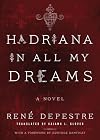
Every review I see here likes the book, or loves the book, so please read this review with caution: it could very well be that I'm about to describe my own problems rather than the book's. Let me also say that I've started and put this book down three times and now I'm giving up. Why? Because what other reviewers are calling "erotic" I would call a romanticization of rape that feels unrelenting in the book's early pages. "Superb adolescents, having gone to bed virgins, safe within the cocoon show more of the family would awaken dismayed, with blood everywhere, brutally deflowered" (40). But it's okay, because these girls, adolescents in this paragraph, are described as "women" in the next, and we're told that, despite the blood and brutality, they had dreams of "swooning joy" (40). To which I say, there are plenty of books that don't ask me to pretend that rape is no big deal, so why should I waste my time with this piece of shit? show less
 This review was written for LibraryThing Early Reviewers.
Hadriana dans tous mes rêves is essentially the story of a beautiful young woman who collapses on her wedding day in Jacmel in 1938, is buried, and then goes missing from the cemetery. And we all know what it means when a Haitian corpse goes missing...
The highlight of the book is of course the description of the Jacmel carnival, intended as a celebration of the wedding of the most popular young people in town but in the event a gloriously extravagant voudou wake around Hadriana's open show more coffin. Depestre is particularly interested in how the participants' perception of events is influenced by their belief in the supernatural, so we get this twice in subtly different forms, once from Patrick's impressionable point of view and once from Hadriana's more detached perspective. Either way, it's quite a party, and Depestre pulls out all the stops to give us the kind of extravagant description that wouldn't be out of place in a novel written in the 20s or 30s. Everything is very heavily eroticised, at times to an extent verging on the pornographic. Depestre is obviously making a point about the way sexual fantasies reinforce and encourage collective beliefs, but he's also clearly taking advantage of his privileged position as author to indulge his own sexual fantasies. This may be a book about an independent-minded young woman triumphing over a macho culture, but it doesn't really seem to qualify as a feminist work.
There's some amazing writing here, and it's definitely an interesting and enjoyable book to read, but I did end up with an uncomfortable feeling that Depestre was cheating a bit: we get both an entertaining, erotically-charged zombie story and a Marxist, postcolonial account of how voudou beliefs fit into the dominant ideology, but he plays the postmodern joker and refuses to commit to either of those ways of reading the book. show less
The highlight of the book is of course the description of the Jacmel carnival, intended as a celebration of the wedding of the most popular young people in town but in the event a gloriously extravagant voudou wake around Hadriana's open show more coffin. Depestre is particularly interested in how the participants' perception of events is influenced by their belief in the supernatural, so we get this twice in subtly different forms, once from Patrick's impressionable point of view and once from Hadriana's more detached perspective. Either way, it's quite a party, and Depestre pulls out all the stops to give us the kind of extravagant description that wouldn't be out of place in a novel written in the 20s or 30s. Everything is very heavily eroticised, at times to an extent verging on the pornographic. Depestre is obviously making a point about the way sexual fantasies reinforce and encourage collective beliefs, but he's also clearly taking advantage of his privileged position as author to indulge his own sexual fantasies. This may be a book about an independent-minded young woman triumphing over a macho culture, but it doesn't really seem to qualify as a feminist work.
There's some amazing writing here, and it's definitely an interesting and enjoyable book to read, but I did end up with an uncomfortable feeling that Depestre was cheating a bit: we get both an entertaining, erotically-charged zombie story and a Marxist, postcolonial account of how voudou beliefs fit into the dominant ideology, but he plays the postmodern joker and refuses to commit to either of those ways of reading the book. show less
While Hadriana is technically a "zombie" tale, it's nothing like the typical zombie tale most modern-day Americans would envision. This is a mix of vodou, clashing with the colonial settlements/religion, a boisterous Haitian carnival celebrating life, death (or not-death), & sex. It's somber, satirical, sexy, unsettling, sad, surreal, sometimes funny, & bursting with imagery. Carnal, magical, & quite unique. A fascinating story.
A humorous, erotic, dreamlike, magical-realist tale of Voudou, Zombies, and folklore. Hadiana presents a microcosm of Haitian (more specifically Jacmelian) culture set in the late 1930s when the author would have been a pre-teen. The book is a very warm recounting of all-things Haitian; a sort of love story/memoir of and for Haiti by a homegrown author who left in near-permanent exile to become a Marxist activist and promote global anti-European decolonization efforts after WWII.
Although I show more enjoyed the work greatly (it's full of warmth, color, and sensuality), I found the overall message somewhat puzzling as is often the case with magical-realist and surrealist novels. Hadriana appears to involve racial and sexual catharsis, but perhaps is intended simply as entertainment touching on myriad aspects of Haitian culture, again as love memoir. Likely it was meant to be fully understood only by native Haitians. Regardless, I highly recommend it! show less
Although I show more enjoyed the work greatly (it's full of warmth, color, and sensuality), I found the overall message somewhat puzzling as is often the case with magical-realist and surrealist novels. Hadriana appears to involve racial and sexual catharsis, but perhaps is intended simply as entertainment touching on myriad aspects of Haitian culture, again as love memoir. Likely it was meant to be fully understood only by native Haitians. Regardless, I highly recommend it! show less
This review was written for LibraryThing Early Reviewers.Lists
Awards


You May Also Like


Associated Authors
Statistics
- Works
- 35
- Also by
- 5
- Members
- 337
- Popularity
- #70,619
- Rating
- 3.6
- Reviews
- 19
- ISBNs
- 55
- Languages
- 8
- Favorited
- 1


