
Alexis De Veaux
Author of Warrior Poet: A Biography of Audre Lorde
About the Author
Image credit: from author's webpage
Works by Alexis De Veaux
Spirit Talk 1 copy
Associated Works
Gay and Lesbian Poetry in Our Time (Stonewall Inn Editions) (1988) — Contributor — 189 copies, 1 review
Does Your Mama Know? An Anthology of Black Lesbian Coming Out Stories (1997) — Contributor — 137 copies, 1 review
Black Like Us: A Century of Lesbian, Gay, and Bisexual African American Fiction (2002) — Contributor — 127 copies, 1 review
Children of the Night: The Best Short Stories by Black Writers, 1967 to the Present (1995) — Contributor — 126 copies
Black-Eyed Susans and Midnight Birds: Stories by and about Black Women (1990) — Contributor — 114 copies
Jo's Girls: Tomboy Tales of High Adventure, True Grit, and Real Life (1997) — Contributor — 48 copies
Voices Rising: Celebrating 20 Years of Black Lesbian, Gay, Bisexual and Transgender Writing (Other Countries) (2007) — Contributor — 25 copies, 1 review
Tagged
Common Knowledge
- Other names
- Deveaux, Alexis
- Birthdate
- 1948
- Gender
- female
- Education
- Empire State College (BA)
University of Buffalo (MA, PhD) - Occupations
- Women's Studies professor, State University of New York, Buffalo
- Nationality
- USA
- Birthplace
- Harlem, Manhattan, New York, New York, USA
- Places of residence
- Harlem, Manhattan, New York, New York, USA
- Associated Place (for map)
- Harlem, Manhattan, New York, New York, USA
Members
Reviews

It's not my nature to read a book a second time. It's very rare that I will want to go back and read one again, and that has always been with books that have been so big and full of information that I wanted to make sure I had absorbed it all. This book is quite slender, and yet, it reveals itself in very intricate and nuanced ways, hiding that complexity from the reader at first, and eventually getting you hooked on it and craving more. I need to go back and take this ride again. What is it show more about? Why would I spoil your fun and tell you? Let's just say it's about living between possibilities. show less
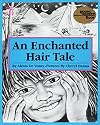
Reminded of by the much newer Caldecott book [b:Crown: An Ode to the Fresh Cut|34144489|Crown An Ode to the Fresh Cut|Derrick Barnes|https://i.gr-assets.com/images/S/compressed.photo.goodreads.com/books/1489076010l/34144489._SX50_.jpg|55181311]. But this is ever so poetic. I've loved it since it was new and used it when I was teaching.
The poetry has a certain syncopation, a certain intentional occasional bump of the beat that makes it fit the theme perfectly. The art is both a subtle b&w show more pencil, and a bold filling-the-page drama. The characters, theme, and unfolding of the plot are all engaging and important.
I wish that I could make it clear to you how wonderful it is. Go to openlibrary.org and see for yourself.
Oh, and it's #OwnVoices, too. show less
The poetry has a certain syncopation, a certain intentional occasional bump of the beat that makes it fit the theme perfectly. The art is both a subtle b&w show more pencil, and a bold filling-the-page drama. The characters, theme, and unfolding of the plot are all engaging and important.
I wish that I could make it clear to you how wonderful it is. Go to openlibrary.org and see for yourself.
Oh, and it's #OwnVoices, too. show less
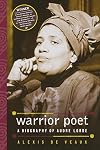
Lorde's life had many similarities to Neruda's. She, too, came from a family full of secrets that included half-siblings she didn't know about until late in life; her relationships--with both men and women--were marked by loyalty rather than fidelity; and she, too, suffered from disappointment in the political arena, most notably from the persistence of racism in the women's movement.
De Veaux divides the book into two sections: life before Lorde was diagnosed with the cancer that eventually show more killed her, and life after. It suffers slightly from an overly academic style--although the notes are extremely useful, there's information in them that would serve readers better if it were fully developed in the text. De Veaux makes clear that, although many may remember Lorde primarily as a political activist and feminist theorist--the author of the groundbreaking essay "The Master's Tools Will Never Dismantle the Master's House," among others--her identity as a poet took priority. While De Veaux addresses the poems' development, this is not necessarily a literary biography; however, access to Lorde's papers and to interviews with close friends and family members certainly opens up her life in detail.
These are well-written and exhaustive examinations of remarkable lives, perhaps most useful for their revelation that art and politics are not strange bedfellows at all.
http://www.newsreview.com/sacramento/Content?oid=oid%3A32835 show less
De Veaux divides the book into two sections: life before Lorde was diagnosed with the cancer that eventually show more killed her, and life after. It suffers slightly from an overly academic style--although the notes are extremely useful, there's information in them that would serve readers better if it were fully developed in the text. De Veaux makes clear that, although many may remember Lorde primarily as a political activist and feminist theorist--the author of the groundbreaking essay "The Master's Tools Will Never Dismantle the Master's House," among others--her identity as a poet took priority. While De Veaux addresses the poems' development, this is not necessarily a literary biography; however, access to Lorde's papers and to interviews with close friends and family members certainly opens up her life in detail.
These are well-written and exhaustive examinations of remarkable lives, perhaps most useful for their revelation that art and politics are not strange bedfellows at all.
http://www.newsreview.com/sacramento/Content?oid=oid%3A32835 show less
This is the first biography of Audre Lorde, the iconic lesbian feminist poet who died of breast cancer in 1992. De Veaux, chair of the Women’s Studies Department at the University of Buffalo (SUNY) has written a thorough and engaging account of Lorde’s development as a theorist and poet, divided into two parts, before and after her diagnosis with breast cancer in 1977. Describing her decision to end the biography on Lorde’s move to St Croix six years before her death, De Vreaux sums up show more her life as a quest for a spiritual homeland. My major problem with this book is that its political agenda, with its emphasis on race and gender issues, eclipses the other elements; most regrettably character description. Family, friends, fellow students and activists are all described in terms of their effect on Lordes’ growing awareness of her racial, gender and sexual identity and self-identification, but otherwise have little presence. A great set text for a course on the history of contemporary black American feminist theory – but not an entirely successful biography. show less
Lists
Awards


You May Also Like


Associated Authors
Statistics
- Works
- 12
- Also by
- 17
- Members
- 356
- Popularity
- #67,309
- Rating
- 4.1
- Reviews
- 5
- ISBNs
- 16