
Marc David Baer
Author of The Ottomans: Khans, Caesars and Caliphs
About the Author
Marc David Baer is professor of international history at the London School of Economics and Political Science. He is the author of Honored by the Glory of Islam: Conversion and Conquest in Ottoman Europe (2008); The Dnme: Jewish Converts, Muslim Revolutionaries, and Secular Turks (2010); and show more Sultanic Saviors and Tolerant Turks: Writing Ottoman Jewish History, Denying the Armenian Genocide (2020). show less
Disambiguation Notice:
Marc Baer, professor at Hope College, is not the same person as Marc David Baer, professor at London School of Economics and Political Science.
Works by Marc David Baer
Sultanic Saviors and Tolerant Turks: Writing Ottoman Jewish History, Denying the Armenian Genocide (2020) 9 copies, 1 review
Associated Works
Tagged
Common Knowledge
- Other names
- Бэр, Марк Дэвид
- Birthdate
- 1970-04-23
- Gender
- male
- Education
- Northwestern University (BA)
University of Chicago (2001, PhD, History) - Organizations
- London School of Economics and Political Science (Professor of International History)
- Birthplace
- Columbia, South Carolina, USA
- Map Location
- UK
- Disambiguation notice
- Marc Baer, professor at Hope College, is not the same person as Marc David Baer, professor at London School of Economics and Political Science.
Members
Reviews
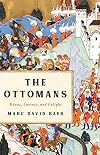
This chock-a-block history of the Ottoman Empire from its origins in the 14th century to its demise in the 20th covers a multitude of topics, but still maintains a coherent momentum. I have been reading histories of Turkey and visiting the country for 50 years, and there was still a lot in this book that I did not know. The author does not shy away from horrific episodes in Ottoman history, nor does he avoid awkward topics. He also argues that Ottoman history should be considered as part of show more European history -- one element in the book that I did not find entirely convincing. Still, a great read. show less
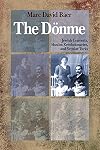
Finally an intriguing account of a very important part of Turkey's history that is highly readable yet conforming to highest academic standards. I consider Dr. Baer a very brave person, because as far as I know the topic of 'dönme' or anything related to Sabetay Sevi is very controversial in Turkey. Conspiracy theories regarding those people (who are often called 'Sabetayist' in Turkish) are dime a dozen. It is only after reading this book that I gained an amount of more or less objective show more knowledge about this part of Turkish - Ottoman history. The author not only provides a great deal of references (as should any respectable historian do) but also provides his sociological analyses of a people who witnessed huge transformations such as the catastrophic forced population exchange (between Greece and Turkey) during 1920s, the fall of Ottoman empire and foundation of Turkish republic and the changing role of religion throughout these big events.
There are still some mysterious parts which probably need more light to be shed upon but I think this will require another book and maybe further interviews. The author says that the topic was considered to be very sensitive by some of the people he interviewed and some of them who accepted to give information refused to do so after a week. I think this shows that the topic is still very alive for these group of people whom Muslims did not consider real Muslims and claimed that they were Jews, yet at the same time Jewish communities plainly claimed that those people were not Jews and followed the orders of a false prophet, a heretic according to them. As if this was not enough, those 'dönme' people from Thessaloniki were also engaged with Sufi orders to complicate the analysis even more. I guess when people are looking for clear-cut categories, black and white distinctions, not being identified 'cleanly' with a 'well established and more or less accepted' category poses a lot of problems for some.
I really wonder what the reactions will be when (and if) this book is translated into Turkish, it may put an end into some of the conspiracy theories (because the author claims that based on his research the people who were supposed to follow Sabetay Sevi are no longer a closed group, they married with other people and assimilated into the general Turkish population long time ago) or at the same time it may trigger even more conspiracy theories (thinking about Dr. Yalçın Küçük, a famous Turkish author who is one of the champions of these kind of conspiracy theories, I'm inclined to believe that this option is a strong one).
I sincerely recommend this book to anybody who wants to understand the early years of Turkish Republic as well as the Ottoman period with its events that led to the new country better. The reactions as well as strategies employed by a very interesting and highly intellectual group of people who really had a very mysterious position and did not marry outside of their group for a very long time is anything but boring. Dr. Baer wrote one of the most exciting history books I've read for a long time. If only I could go back in time to visit that fountain built by Hamdi Bey, the mayor of Selanik then, and which delivered cherry juice... show less
There are still some mysterious parts which probably need more light to be shed upon but I think this will require another book and maybe further interviews. The author says that the topic was considered to be very sensitive by some of the people he interviewed and some of them who accepted to give information refused to do so after a week. I think this shows that the topic is still very alive for these group of people whom Muslims did not consider real Muslims and claimed that they were Jews, yet at the same time Jewish communities plainly claimed that those people were not Jews and followed the orders of a false prophet, a heretic according to them. As if this was not enough, those 'dönme' people from Thessaloniki were also engaged with Sufi orders to complicate the analysis even more. I guess when people are looking for clear-cut categories, black and white distinctions, not being identified 'cleanly' with a 'well established and more or less accepted' category poses a lot of problems for some.
I really wonder what the reactions will be when (and if) this book is translated into Turkish, it may put an end into some of the conspiracy theories (because the author claims that based on his research the people who were supposed to follow Sabetay Sevi are no longer a closed group, they married with other people and assimilated into the general Turkish population long time ago) or at the same time it may trigger even more conspiracy theories (thinking about Dr. Yalçın Küçük, a famous Turkish author who is one of the champions of these kind of conspiracy theories, I'm inclined to believe that this option is a strong one).
I sincerely recommend this book to anybody who wants to understand the early years of Turkish Republic as well as the Ottoman period with its events that led to the new country better. The reactions as well as strategies employed by a very interesting and highly intellectual group of people who really had a very mysterious position and did not marry outside of their group for a very long time is anything but boring. Dr. Baer wrote one of the most exciting history books I've read for a long time. If only I could go back in time to visit that fountain built by Hamdi Bey, the mayor of Selanik then, and which delivered cherry juice... show less
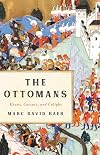
A thorough history of the Ottoman Empire from its origin in Anatolia in the 13th century until its collapse in the early 20th century.
The author correctly recognizes how the Ottoman Empire is generally only tangentially studied and appreciated: it is known for finally capturing Constantinople and eliminating the Byzantine Empire; it was romanticized as the land of sultans and his harem; it represented a continual threat to central Europe; they were part of the Central Powers. Yet the show more Ottomans are seen as wholly Other, Eastern; not part of the European world.
The author thus tells the history of the Ottomans to try to refute that view. He speaks of their alliances with the Byzantines at times, the multinational, multiethnic, and multireligious nature of the Empire, its frequent tolerance, and how it saw itself as the next iteration of the Roman Empire, its leaders as Caesars, and the people of southeastern Europe as Rumis, or Romans.
The lives of the various leaders are told as well as their successes and failures; much is said about the nature of the harem and the institutional bureaucracy. Much is made of the sexuality of the age and how it privileged the love of young boys over that of women, but also how that view was attempted to be fully reformed in the 19th century. The author tries to suggest that the Ottomans were about discovery also, but the evidence for such a view is spotty. He is on much firmer ground regarding how Ottoman influence was profoundly felt throughout Europe, and how European influence profoundly influenced the Ottoman Empire.
It is somewhat anachronistic to glorify the empire as a multicultural haven; yes, many groups found greater tolerance under the Ottomans than they did under other regimes, but even as this story goes, it becomes clear that in times of crisis it reasserted itself as a fundamentally Muslim enterprise. Its undoing is well described by the nationalism that fueled the 19th and early 20th centuries: both the nationalism of the peoples who separated from the empire, and the Turkish nationalism that overtook the empire's leadership.
A good corrective to neglect of the Ottoman Empire, even if its arguments are often a bit overstated.
**--galley received as part of early review program show less
The author correctly recognizes how the Ottoman Empire is generally only tangentially studied and appreciated: it is known for finally capturing Constantinople and eliminating the Byzantine Empire; it was romanticized as the land of sultans and his harem; it represented a continual threat to central Europe; they were part of the Central Powers. Yet the show more Ottomans are seen as wholly Other, Eastern; not part of the European world.
The author thus tells the history of the Ottomans to try to refute that view. He speaks of their alliances with the Byzantines at times, the multinational, multiethnic, and multireligious nature of the Empire, its frequent tolerance, and how it saw itself as the next iteration of the Roman Empire, its leaders as Caesars, and the people of southeastern Europe as Rumis, or Romans.
The lives of the various leaders are told as well as their successes and failures; much is said about the nature of the harem and the institutional bureaucracy. Much is made of the sexuality of the age and how it privileged the love of young boys over that of women, but also how that view was attempted to be fully reformed in the 19th century. The author tries to suggest that the Ottomans were about discovery also, but the evidence for such a view is spotty. He is on much firmer ground regarding how Ottoman influence was profoundly felt throughout Europe, and how European influence profoundly influenced the Ottoman Empire.
It is somewhat anachronistic to glorify the empire as a multicultural haven; yes, many groups found greater tolerance under the Ottomans than they did under other regimes, but even as this story goes, it becomes clear that in times of crisis it reasserted itself as a fundamentally Muslim enterprise. Its undoing is well described by the nationalism that fueled the 19th and early 20th centuries: both the nationalism of the peoples who separated from the empire, and the Turkish nationalism that overtook the empire's leadership.
A good corrective to neglect of the Ottoman Empire, even if its arguments are often a bit overstated.
**--galley received as part of early review program show less
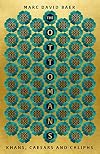
A massive work that is notwithstanding very readable and intelligent, Baer's history pulls together East and West and explains beautifully how the Ottoman Empire was indeed part of Europe's culture and history, and often a light in a very dark story of internal oppression. Europe's history is much richer, and much more complex with the addition of the Ottomans.
Lists
Turkey (1)
Awards


You May Also Like


Associated Authors
Statistics
- Works
- 11
- Also by
- 1
- Members
- 510
- Popularity
- #48,630
- Rating
- 3.9
- Reviews
- 7
- ISBNs
- 38
- Languages
- 6
- Favorited
- 1
