
Hilary Bailey (1936–2017)
Author of New Worlds 8
About the Author
Works by Hilary Bailey
The Ramparts 1 copy
Associated Works
Tagged
Common Knowledge
- Canonical name
- Bailey, Hilary
- Birthdate
- 1936-09-19
- Date of death
- 2017-01-19
- Gender
- female
- Education
- Newnham College, Cambridge University
- Occupations
- writer
editor
critic - Organizations
- Cambridge University Women's Union (founder member)
- Relationships
- Moorcock, Michael (husband, divorced)
- Nationality
- UK
- Birthplace
- Bromley, Kent, England, UK
- Associated Place (for map)
- England, UK
Members
Reviews
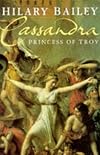
I suppose I'd better start by saying I'm generally annoyed by writers resorting to elaborate devices to get in first-person narration for their (often historical/mythical, but not always) protagonist, no matter how unlikely that seems—here Bailey needs Cassandra to survive long beyond the defeat and sack of Troy in order to start writing her memoirs twenty years later. After all that elaboration, you might think that it's all going to be Cassandra, but in fact it isn't, we stray into the show more heads of other people at certain points. I don't think tight first-person or third-person narration is the only way to tell a story, but I certainly find it disappointing when writers go to considerable lengths to find a first-person narrative device, but then stray off it.
I didn't think it was possible to write a boring novel about Cassandra and Troy, but ultimately this one was one. show less
I didn't think it was possible to write a boring novel about Cassandra and Troy, but ultimately this one was one. show less
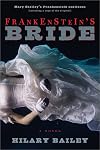
Jonathan Goodall is a wealthy Englishman who befriends Victor Frankenstein in 1825. Soon after their meeting, he is asked by the scientist to help restore the speaking voice of Maria Clementi, the mute opera singer with a mysterious past. Victor’s scholarly interest rapidly turns to an all encompassing obsession. Jonathan struggles to help Victor return to reality, but a hulking figure appears around the Frankenstein house. When Victor’s wife and child are killed, Jonathan immediately show more suspects the mysterious figure. Victor dismisses the possibility and, after a very short depression, redoubles his efforts in pursuing Maria. Can Jonathan awaken Victor from his obsession and stop the murderer from striking again?
Frankenstein’s Bride occurs after the events in Mary Shelley’s classic novel, but with a major change: Victor created a mate for his creation. It’s an intriguing premise, but the concept in actuality has many flaws. Hilary Bailey doesn’t make it clear what events in the original occurred in relation to her novel. She decided to make a random person not in the first novel the narrator. He doesn’t figure anything out until the very end when everything is spelled out for him, but the “mystery” is pretty glaringly obvious from the beginning. She also decided to change the aspects of the main characters. Frankenstein’s monster is reduced in stature (from around 8 feet tall to 6 ½ feet tall) and in intelligence. One of the best things about the creature is that he speaks with the eloquence of an intellectual and has the capacity for good or evil. His shorter stature makes him into a regular, but deformed man who is mentally feeble and barely able to speak. The philosophical implications about the nature of man are absent because of these changes. Victor’s character is also very much changed. In the original, Frankenstein and his creation can be sympathized with. Neither is completely good or evil. In this novel, Victor is characterized as cruel, bordering on evil. The ambiguity is gone and what is left is a badly plotted, slow moving melodramatic story.
The other big problem I had with the book is its plausibility within its own world and the way it affects my suspension of disbelief. The reader is expected to believe that Victor is able to physically overpower his creation by himself and somehow successfully imprison him. Even if a dozen people imprisoned him, he could easily enough escape based on his strength and cunning. Also, the bride looks like anybody while Frankenstein sticks out like a sore thumb. The only weak reason for this is that Victor figured out a different way to reanimate which isn’t described in the least, which I found very disappointing.
Besides the author’s decisions, the actual writing is enjoyable. I also liked how deliciously vicious and manipulative the Bride acted. I was totally on her side for most of it because how evil Victor was written. The ending also made me smile.
Overall, Frankenstein’s Bride was a disappointment, but there were some shining moments within the text. show less
Frankenstein’s Bride occurs after the events in Mary Shelley’s classic novel, but with a major change: Victor created a mate for his creation. It’s an intriguing premise, but the concept in actuality has many flaws. Hilary Bailey doesn’t make it clear what events in the original occurred in relation to her novel. She decided to make a random person not in the first novel the narrator. He doesn’t figure anything out until the very end when everything is spelled out for him, but the “mystery” is pretty glaringly obvious from the beginning. She also decided to change the aspects of the main characters. Frankenstein’s monster is reduced in stature (from around 8 feet tall to 6 ½ feet tall) and in intelligence. One of the best things about the creature is that he speaks with the eloquence of an intellectual and has the capacity for good or evil. His shorter stature makes him into a regular, but deformed man who is mentally feeble and barely able to speak. The philosophical implications about the nature of man are absent because of these changes. Victor’s character is also very much changed. In the original, Frankenstein and his creation can be sympathized with. Neither is completely good or evil. In this novel, Victor is characterized as cruel, bordering on evil. The ambiguity is gone and what is left is a badly plotted, slow moving melodramatic story.
The other big problem I had with the book is its plausibility within its own world and the way it affects my suspension of disbelief. The reader is expected to believe that Victor is able to physically overpower his creation by himself and somehow successfully imprison him. Even if a dozen people imprisoned him, he could easily enough escape based on his strength and cunning. Also, the bride looks like anybody while Frankenstein sticks out like a sore thumb. The only weak reason for this is that Victor figured out a different way to reanimate which isn’t described in the least, which I found very disappointing.
Besides the author’s decisions, the actual writing is enjoyable. I also liked how deliciously vicious and manipulative the Bride acted. I was totally on her side for most of it because how evil Victor was written. The ending also made me smile.
Overall, Frankenstein’s Bride was a disappointment, but there were some shining moments within the text. show less
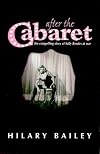
An interesting, if somewhat uneven further look at the memorable character of Sally Bowles. This book owes more to the movie Cabaret than Isherwood's Berlin Stories.

A wonderful story with a dab of magical realism about the Nazi occupation of Great Britain in the 1950s. The setting is real enough to taste. A gem.
Lists
The Trojan War (1)
You May Also Like


Associated Authors
Statistics
- Works
- 30
- Also by
- 20
- Members
- 466
- Popularity
- #52,774
- Rating
- 3.4
- Reviews
- 11
- ISBNs
- 83
- Languages
- 4
- Favorited
- 1