
Wil McCarthy
Author of Bloom
About the Author
Wil McCarthy is a novelist, the science columnist for the SciFi channel, and the Chief Technology Officer for Galileo Shipyards, an aerospace research corporation. He has written articles for various publications, including Wired. He lives in Lakewood, Colorado
Image credit: via Goodreads
Series
Works by Wil McCarthy
Hacking Matter: Levitating Chairs, Quantum Mirages, and the Infinite Weirdness of Programmable Atoms (2003) 179 copies, 3 reviews
Thieves' Sky (Rich Man's Sky Book 4) 3 copies
Heisenberg Elementary 3 copies
They Will Raise You in a Box 2 copies
The Necromancer in Love 2 copies
Once Upon A Matter Crushed 1 copy
Soul Printer 1 copy
Boundary Condition 1 copy
Amerikano Hiakia 1 copy
The Freshmen Hookup 1 copy
The Technetium Rush 1 copy
Apologies to the Dead 1 copy
Complete Short Fiction 1 copy
Garbage Day 1 copy
Marklord Pete 1 copy
El colapsio 1 copy
Associated Works
Analog Science Fiction and Fact: Vol. CXXII, No. 7 & 8 (July/August 2002) (2002) — Contributor — 14 copies, 1 review
Analog Science Fiction and Fact: Vol. CXXXVI, No. 1 & 2 (January/February 2016) (2016) — Contributor — 9 copies
High Fantastic: Colorado's Fantasy, Dark Fantasy and Science Fiction (1995) — Contributor — 7 copies
Tagged
Common Knowledge
- Birthdate
- 1966-09-16
- Gender
- male
- Nationality
- USA
- Places of residence
- Colorado, USA
- Associated Place (for map)
- Colorado, USA
Members
Reviews
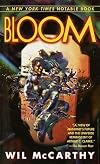
(Alistair) Now this is fun and reasonably hard SF.
It is the sometime in the mid-21st century, and escaped nanotechnology has essentially devoured the Earth and the rest of the inner solar system, turning it into a seething mass of "technogenic life", known as the Mycosystem. The humans, and their descendants, who managed to get off Earth in time are now dwelling in the outer solar system (the Immunity) and the asteroid belt (the Gladholders), living in an essentially constant state of alert show more because of the Mycosystem's spores, which are borne outwards by the solar wind and cause the eponymous "blooms" of technogenic life when they land somewhere warmer than the generally cold outer system - meaning, principally, in human settlements.
The book itself centers around a mission launched by the Immunity to probe the Inner System, in a ship with a specially designed hull that should - hopefully - hold off mycoric infections, told from the point of view of a journalist/commentator/historian asked to go along on the mission. Sent on their way early by sabotage, they need to make an unscheduled stop in the Gladholds for resupply - who have a very different culture and approach to nanotech immune systems - discover the possibility of humans surviving in the depths of the inner system, and are caught up even more in the clash between the standard Immunity view of the Mycosystem and that of the Temples of Transcendent Evolution, a religion focused on the Mycosystem as a spiritual entity, and a conscious, intelligent being rather than a mere froth of nanites - before finally making contact with the Mycosystem itself...
...which, alas, was something of an anticlimax. Not to say that it didn't fit nicely - almost too closely - with where we'd been led up to, but I'll confess that I did find the actual denouement rather unsatisfying when viewed in the context of the preceding chapters. Which is not to say that it wasn't a good book, which it was, but it needed more at the end to be really satisfying.
( http://weblog.siliconcerebrate.com/cerebrate/2008/02/bloom-wil-mccarthy.html )
(Amy) And now, a ten-year-old book about nanotech.
I am often fairly enh about nanotech books - not because I have any objection to the concept; quite the contrary, I find it an entirely satisfactory technological concept and, frankly, I'm ready for it to be invented. The medical applications alone would be revolutionary. No, I often dislike nanobooks because a substantial subset of them are pure, unadulterated scaremongery. Bah. And had my husband not recommended it, I would probably never have read this one, either, because as its setting is the outer solar system some years after humanity fled the inner solar system even as it was being eaten by runaway "mycora", I was fairly sure it, too, was one such cautionary tale.
Not . . . quite, as it happens. Full discussion of this would be spoileriffic in the extreme, which even for oldish books I should prefer to avoid, but the protagonist's worldview expands quite a bit through the course of the book, and he begins to question his assumptions about the very nature of the Mycosystem.
I enjoyed this book far more than I expected to, and in fact regard it as an interesting exploration of the social implications of a nano-spread of this magnitude. Not a cautionary tale at all, but rather a snapshot of the adaptability of the human race, on at least two successive levels. Very well done.
( http://weblog.siliconcerebrate.com/zenos-library/2008/05/bloom-wil-mccarthy.html ) show less
It is the sometime in the mid-21st century, and escaped nanotechnology has essentially devoured the Earth and the rest of the inner solar system, turning it into a seething mass of "technogenic life", known as the Mycosystem. The humans, and their descendants, who managed to get off Earth in time are now dwelling in the outer solar system (the Immunity) and the asteroid belt (the Gladholders), living in an essentially constant state of alert show more because of the Mycosystem's spores, which are borne outwards by the solar wind and cause the eponymous "blooms" of technogenic life when they land somewhere warmer than the generally cold outer system - meaning, principally, in human settlements.
The book itself centers around a mission launched by the Immunity to probe the Inner System, in a ship with a specially designed hull that should - hopefully - hold off mycoric infections, told from the point of view of a journalist/commentator/historian asked to go along on the mission. Sent on their way early by sabotage, they need to make an unscheduled stop in the Gladholds for resupply - who have a very different culture and approach to nanotech immune systems - discover the possibility of humans surviving in the depths of the inner system, and are caught up even more in the clash between the standard Immunity view of the Mycosystem and that of the Temples of Transcendent Evolution, a religion focused on the Mycosystem as a spiritual entity, and a conscious, intelligent being rather than a mere froth of nanites - before finally making contact with the Mycosystem itself...
...which, alas, was something of an anticlimax. Not to say that it didn't fit nicely - almost too closely - with where we'd been led up to, but I'll confess that I did find the actual denouement rather unsatisfying when viewed in the context of the preceding chapters. Which is not to say that it wasn't a good book, which it was, but it needed more at the end to be really satisfying.
( http://weblog.siliconcerebrate.com/cerebrate/2008/02/bloom-wil-mccarthy.html )
(Amy) And now, a ten-year-old book about nanotech.
I am often fairly enh about nanotech books - not because I have any objection to the concept; quite the contrary, I find it an entirely satisfactory technological concept and, frankly, I'm ready for it to be invented. The medical applications alone would be revolutionary. No, I often dislike nanobooks because a substantial subset of them are pure, unadulterated scaremongery. Bah. And had my husband not recommended it, I would probably never have read this one, either, because as its setting is the outer solar system some years after humanity fled the inner solar system even as it was being eaten by runaway "mycora", I was fairly sure it, too, was one such cautionary tale.
Not . . . quite, as it happens. Full discussion of this would be spoileriffic in the extreme, which even for oldish books I should prefer to avoid, but the protagonist's worldview expands quite a bit through the course of the book, and he begins to question his assumptions about the very nature of the Mycosystem.
I enjoyed this book far more than I expected to, and in fact regard it as an interesting exploration of the social implications of a nano-spread of this magnitude. Not a cautionary tale at all, but rather a snapshot of the adaptability of the human race, on at least two successive levels. Very well done.
( http://weblog.siliconcerebrate.com/zenos-library/2008/05/bloom-wil-mccarthy.html ) show less
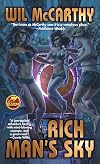
I am glad to see Wil McCarthy getting back into science fiction with a near-future space opera with enough inventive tech to fill a much longer book.
McCarthy envisions a future in which space and lunar habitats are dominated by Russian oligarchs and capitalists with more money than they know to spend. Each has his own agenda. Meanwhile, NASA and the U.S. government want to get involved. And, oh yes, some monks are working to create sustainable agriculture on the Moon.
Our protagonist, Alice, show more is an ex-combat medic working undercover for the U.S. president. She hopes to take over the nascent space colony at L1, even if it kills her. Dona, another agent, finds herself working for a Russian gangster who wants to control the helium-three economy in cislunar space.
The novel has as much sex, science, and martial arts as anyone could wish.
My only complaint is that McCarthy is wildly optimistic about the pace of technological development. Do you really think we will have permanent colonies on the Moon and L1 by 2051? Not even Elon in his dreams. show less
McCarthy envisions a future in which space and lunar habitats are dominated by Russian oligarchs and capitalists with more money than they know to spend. Each has his own agenda. Meanwhile, NASA and the U.S. government want to get involved. And, oh yes, some monks are working to create sustainable agriculture on the Moon.
Our protagonist, Alice, show more is an ex-combat medic working undercover for the U.S. president. She hopes to take over the nascent space colony at L1, even if it kills her. Dona, another agent, finds herself working for a Russian gangster who wants to control the helium-three economy in cislunar space.
The novel has as much sex, science, and martial arts as anyone could wish.
My only complaint is that McCarthy is wildly optimistic about the pace of technological development. Do you really think we will have permanent colonies on the Moon and L1 by 2051? Not even Elon in his dreams. show less
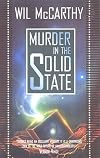
The Solid State is near future America which has reduced (at least in the official stats) crime, drugs, and the sort of terrorism which took out the Golden Gate Bridge. It’s a term from the Gray Party, a minority, but influential, political party. (A cynical joke has it that the Democrats want to be your mother, the Republicans your father, and the Grays your probation officer.)
The technological device behind the Solid State is the Vandergroot Molecular Sniffer, a piece of hardware that show more detects minute traces of drugs, gun oil, and explosives.
For those like our hero David Sanger, a post-doc researcher in nanotechnology, the Solid State is a derisive term for the state of nanotechnology: folding proteins and clunky with huge machines that are merely the spinoffs of biological research. He is chafing at the bit to develop real molecular machines and has not only invented a tiny chain link for tranmission of power and but a substance that, depending on the scale of material it’s employed on, is either a powerful glue or lubricant.
And the man Sanger holds most responsible for this technological stagnation is none other than “Big Otto” Vandergroot, the man who invented that molecular sniffer. Sanger regards Vandergroot as man whose only real talent is in manufacturing technology and tying up patents. Their enmity was made official with a court case where Sanger successfully defended himself against Vandergroot’s charge of patent violation.
So, it’s no surprise that when Sanger and Vandergroot both attend the Association for Molecular Fabrication Research, International in Baltimore, they get into an argument. What’s less expected is that Vandergroot pulls out a collapsible plastic foil. (Given that his own invention has enabled the confiscation of all firearms, a plastic sword is one of the few weapons available for self-defense.) Using his own training in unarmed self-defense (a mandatory college course in this future) and another sword some unknown person slips him, Sanger defends himself, and both parties draw blood.
And it’s no surprise that, after Vandergroot is found fatally stabbed later that day, Sanger is the suspect. And things go from bad to worse when somebody steals all of Sanger’s research notes and their backups and police break into his apartment to frame Sanger for another murder. Sanger and his girlfriend, the rather cold and sarcastic Marian, have to go on the lam.
The pleasures of the story aren’t mainly in the mystery. The broad outlines of the plot against Sanger are somewhat predictable and the revelation of the guilty parties is not a shock. Those are concluded about halfway through. The rest of the novel is Sanger striking back, and there, too, the broad outlines of his strategy are predictable.
The pleasures come in the background details of this world and how nanotechnology research and fabrication are actually done and how Sanger gets his revenge.
Sanger and Marian, a reporter and part-owner of a Philadelphia community paper, find themselves hiding out in the bad parts of Philadelphia and encounter the somewhat improbable black woman Bitty Lemieux. She’s sort of a neighborhood fixer who serves as a broker for exchanging services legal and illegal. She immediately recognizes the two don’t belong there but sees some potential in helping Sanger.
But then, like all the eight major characters in the novel, Lemieux serves a symbolic function as laid out in a schematic of social forces Sanger dreams one night.
Lemieux is “survival”, and the most interesting character in the novel, Sanger’s friend and lawyer Bowser Jones, symbolizes “freedom”. He is something of a genius, a part-time lawyer who can quickly bring himself up to speed in various areas of the law, a collector of all sorts of obscure licenses, practitioner of arcane skills, and a collector of illegal technology and technology he suspects soon will be illegal. He’s the kind of guy who does keep a bug-out bag handy for either the apocalypse or fleeing the law.
He’s a civil libertarian, a man whose presence is so powerful that Sanger finds himself mentally arguing with him even when Bowser is not present. The novel is something of Sanger’s political awakening with Bowser telling Sanger his apolitical stance is nonsense. As a scientist taking public money, he’s involved in politics.
Surprisingly, for a novel that was a semifinalist for that year’s libertarian Prometheus Award, Bowser is a reasonable man. He pushes back against Marian’s disdain for the police, and he seems to look somewhat askance at Sanger’s and some of his colleagues’ intent to serve as Prometheuses putting a new and dangerous fire in the hands of the common man.
Like Bruce Sterling’s Holy Fire, published about the same time and now about thirty years old, reading this novel induces, at times, a sort of double vision of an imagined world that came partly true. It’s not just the ramped up security state but also a section on Neverland, what we would now call a massive, multi-player online game. It plays a crucial role here in that Marian is a major player in the game, and it’s used as a place to conduct secret meetings and for Sanger to virtually train in some weapon skills.
It’s a good novel, fast-paced and with some pleasing ambiguity about whether the reader should be as enthusiastic about Sanger’s research as he is. show less
The technological device behind the Solid State is the Vandergroot Molecular Sniffer, a piece of hardware that show more detects minute traces of drugs, gun oil, and explosives.
For those like our hero David Sanger, a post-doc researcher in nanotechnology, the Solid State is a derisive term for the state of nanotechnology: folding proteins and clunky with huge machines that are merely the spinoffs of biological research. He is chafing at the bit to develop real molecular machines and has not only invented a tiny chain link for tranmission of power and but a substance that, depending on the scale of material it’s employed on, is either a powerful glue or lubricant.
And the man Sanger holds most responsible for this technological stagnation is none other than “Big Otto” Vandergroot, the man who invented that molecular sniffer. Sanger regards Vandergroot as man whose only real talent is in manufacturing technology and tying up patents. Their enmity was made official with a court case where Sanger successfully defended himself against Vandergroot’s charge of patent violation.
So, it’s no surprise that when Sanger and Vandergroot both attend the Association for Molecular Fabrication Research, International in Baltimore, they get into an argument. What’s less expected is that Vandergroot pulls out a collapsible plastic foil. (Given that his own invention has enabled the confiscation of all firearms, a plastic sword is one of the few weapons available for self-defense.) Using his own training in unarmed self-defense (a mandatory college course in this future) and another sword some unknown person slips him, Sanger defends himself, and both parties draw blood.
And it’s no surprise that, after Vandergroot is found fatally stabbed later that day, Sanger is the suspect. And things go from bad to worse when somebody steals all of Sanger’s research notes and their backups and police break into his apartment to frame Sanger for another murder. Sanger and his girlfriend, the rather cold and sarcastic Marian, have to go on the lam.
The pleasures of the story aren’t mainly in the mystery. The broad outlines of the plot against Sanger are somewhat predictable and the revelation of the guilty parties is not a shock. Those are concluded about halfway through. The rest of the novel is Sanger striking back, and there, too, the broad outlines of his strategy are predictable.
The pleasures come in the background details of this world and how nanotechnology research and fabrication are actually done and how Sanger gets his revenge.
Sanger and Marian, a reporter and part-owner of a Philadelphia community paper, find themselves hiding out in the bad parts of Philadelphia and encounter the somewhat improbable black woman Bitty Lemieux. She’s sort of a neighborhood fixer who serves as a broker for exchanging services legal and illegal. She immediately recognizes the two don’t belong there but sees some potential in helping Sanger.
But then, like all the eight major characters in the novel, Lemieux serves a symbolic function as laid out in a schematic of social forces Sanger dreams one night.
Lemieux is “survival”, and the most interesting character in the novel, Sanger’s friend and lawyer Bowser Jones, symbolizes “freedom”. He is something of a genius, a part-time lawyer who can quickly bring himself up to speed in various areas of the law, a collector of all sorts of obscure licenses, practitioner of arcane skills, and a collector of illegal technology and technology he suspects soon will be illegal. He’s the kind of guy who does keep a bug-out bag handy for either the apocalypse or fleeing the law.
He’s a civil libertarian, a man whose presence is so powerful that Sanger finds himself mentally arguing with him even when Bowser is not present. The novel is something of Sanger’s political awakening with Bowser telling Sanger his apolitical stance is nonsense. As a scientist taking public money, he’s involved in politics.
Surprisingly, for a novel that was a semifinalist for that year’s libertarian Prometheus Award, Bowser is a reasonable man. He pushes back against Marian’s disdain for the police, and he seems to look somewhat askance at Sanger’s and some of his colleagues’ intent to serve as Prometheuses putting a new and dangerous fire in the hands of the common man.
Like Bruce Sterling’s Holy Fire, published about the same time and now about thirty years old, reading this novel induces, at times, a sort of double vision of an imagined world that came partly true. It’s not just the ramped up security state but also a section on Neverland, what we would now call a massive, multi-player online game. It plays a crucial role here in that Marian is a major player in the game, and it’s used as a place to conduct secret meetings and for Sanger to virtually train in some weapon skills.
It’s a good novel, fast-paced and with some pleasing ambiguity about whether the reader should be as enthusiastic about Sanger’s research as he is. show less
Sometime in the mid-twenty-first century, a nanotechnology accident of unknown origin devours Earth and then the moon. The end result, the Mycosystem, is a growing rot feeding on any organic and inorganic material it encounters. Like its fungal namesake, it spreads by spores.
Riding on the solar wind, these spores cause "blooms" when they enter the human habitats inside Ganymede, Callisto and assorted asteroids. For twenty years, man has survived by developing elaborate "immune systems" to show more fight the blooms. However, recent blooms show an alarming sophistication and ability to skirt these countermeasures. Armored against "technogenic life", the spaceship Louis Pasteur departs for the depths of the Mycosystem, Earth and Mars. Its mission is to determine whether the Mycosystem has developed the ability to inhabit new niches in the Solar System.
Documenting the mission is John Strasheim, a former cobbler given the chance to practice his talents as an amateur journalist. But, shortly after the mission is underway, evidence comes forth that humans still exist in the Mycosystem -- and that someone wants the mission to fail.
This book has a lot to like. McCarthy tells a taut, hard science story. His nanotechnology is not magic. Indeed, he shows various ways -- ph balances, chemicals, too much and too little energy -- the "gray goo" type of nanotechnology accident could be contained. He also delves into ideas of complex systems, their emergent properties, and the implications of using evolutionary design to combat the Mycosystem and understand it.
McCarthy also does a very good job with the characterization of narrator Strasheim as he learns new truths about the Mycosystem and confronts the possibility of a violent death. The captain of the Louis Pasteur is also a memorable character, a man so lacking in a sense of humor that he literally has one surgically implanted. My only complaint with the novel is that McCarthy doesn't bring to life the other crew members of the Pasteur except for Renata Baucum, a Mycosystem specialist antagonistic to Strasheim.
McCarthy keeps his scientific and political mystery brief and fast moving. While the revelations of the Mycosystem's nature are not totally unexpected, McCarthy brings in enough interesting detail and ambiguity to make it interesting show less
Riding on the solar wind, these spores cause "blooms" when they enter the human habitats inside Ganymede, Callisto and assorted asteroids. For twenty years, man has survived by developing elaborate "immune systems" to show more fight the blooms. However, recent blooms show an alarming sophistication and ability to skirt these countermeasures. Armored against "technogenic life", the spaceship Louis Pasteur departs for the depths of the Mycosystem, Earth and Mars. Its mission is to determine whether the Mycosystem has developed the ability to inhabit new niches in the Solar System.
Documenting the mission is John Strasheim, a former cobbler given the chance to practice his talents as an amateur journalist. But, shortly after the mission is underway, evidence comes forth that humans still exist in the Mycosystem -- and that someone wants the mission to fail.
This book has a lot to like. McCarthy tells a taut, hard science story. His nanotechnology is not magic. Indeed, he shows various ways -- ph balances, chemicals, too much and too little energy -- the "gray goo" type of nanotechnology accident could be contained. He also delves into ideas of complex systems, their emergent properties, and the implications of using evolutionary design to combat the Mycosystem and understand it.
McCarthy also does a very good job with the characterization of narrator Strasheim as he learns new truths about the Mycosystem and confronts the possibility of a violent death. The captain of the Louis Pasteur is also a memorable character, a man so lacking in a sense of humor that he literally has one surgically implanted. My only complaint with the novel is that McCarthy doesn't bring to life the other crew members of the Pasteur except for Renata Baucum, a Mycosystem specialist antagonistic to Strasheim.
McCarthy keeps his scientific and political mystery brief and fast moving. While the revelations of the Mycosystem's nature are not totally unexpected, McCarthy brings in enough interesting detail and ambiguity to make it interesting show less
Lists
Awards


You May Also Like


Associated Authors
Statistics
- Works
- 34
- Also by
- 21
- Members
- 2,189
- Popularity
- #11,714
- Rating
- 3.5
- Reviews
- 42
- ISBNs
- 77
- Languages
- 4
- Favorited
- 7