
Ross Douthat
Author of Bad Religion: How We Became a Nation of Heretics
About the Author
Ross Douthat is a columnist for the New York Times op-ed page. He is the author of To Change the Church, Bad Religion, and Privilege, and coauthor of Grand New Party. He is the film critic for National Review, and he cohosts the New York Times's, weekly op-ed podcast The Argument. He lives in New show more Haven with his wife and four children. show less
Works by Ross Douthat
Grand New Party: How Republicans Can Win the Working Class and Save the American Dream (2008) 95 copies, 5 reviews
Associated Works
Life, Liberty, and the Pursuit of Happiness: Ten Years of the Claremont Review of Books (2012) — Contributor — 16 copies
Tagged
Common Knowledge
- Canonical name
- Douthat, Ross
- Legal name
- Douthat, Ross Gregory
- Birthdate
- 1979-11-28
- Gender
- male
- Education
- Harvard University
- Occupations
- columnist
film critic
blogger
author - Organizations
- The Atlantic Monthly
National Review
The New York Times - Relationships
- Douthat, Charles (father)
- Nationality
- USA
- Birthplace
- San Francisco, California, USA
- Places of residence
- New Haven, Connecticut, USA
Washington, D.C., USA - Associated Place (for map)
- USA
Members
Discussions
Douthat: The Crisis of Contemporary Catholicism in Catholic Tradition (June 2016)
Bad Religion in Let's Talk Religion (May 2012)
Reviews
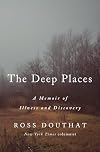
I never thought that I would learn so much about Lyme disease, but I am so thankful that I was able to read The Deep Places. Ross’s illness paralleled his life’s situations so eerily, not only by being haunted by his undiagnosed illness, but also everything that he went through with the dream house that he bought right as he started to get sick.
I identified so much with Ross’s plight, as I myself have an illness that I’ve dealt with for over 12 years and despite multiple hospital show more stays, multiple major surgeries, and a tremendous amount of tests, I have yet to be officially diagnosed. It has been an infuriating and defeating journey, so reading Ross’s thoughts mirrored my own, making me feel all the feels, and also put the thought in my mind that I could have Lyme disease (I doubt it, but the symptoms he has are almost identical to my own, so I can’t help but wonder).
I hate that anyone has had to go through this but reading stories like this gives me a sense of comradery, knowing I am not alone in my journey. Ross’s writing is impeccable, showing off his journalistic talents, while at the same time getting down and real. At times it read more like a magazine or newspaper article and not a novel, but that’s to be expected with his profession, and I didn’t hate it.
I highly recommend this resource, especially for those of us that struggle with chronic illnesses, that are left to wonder what ails us while also trying to lead a normal life. We are in this fight together. Huge thank you to Ross for being so transparent and for taking the time to write your story.
*I have voluntarily reviewed a complimentary copy of this book which I received from Penguin Random House through NetGalley. All views and opinions expressed are completely honest, and my own. show less
I identified so much with Ross’s plight, as I myself have an illness that I’ve dealt with for over 12 years and despite multiple hospital show more stays, multiple major surgeries, and a tremendous amount of tests, I have yet to be officially diagnosed. It has been an infuriating and defeating journey, so reading Ross’s thoughts mirrored my own, making me feel all the feels, and also put the thought in my mind that I could have Lyme disease (I doubt it, but the symptoms he has are almost identical to my own, so I can’t help but wonder).
I hate that anyone has had to go through this but reading stories like this gives me a sense of comradery, knowing I am not alone in my journey. Ross’s writing is impeccable, showing off his journalistic talents, while at the same time getting down and real. At times it read more like a magazine or newspaper article and not a novel, but that’s to be expected with his profession, and I didn’t hate it.
I highly recommend this resource, especially for those of us that struggle with chronic illnesses, that are left to wonder what ails us while also trying to lead a normal life. We are in this fight together. Huge thank you to Ross for being so transparent and for taking the time to write your story.
*I have voluntarily reviewed a complimentary copy of this book which I received from Penguin Random House through NetGalley. All views and opinions expressed are completely honest, and my own. show less
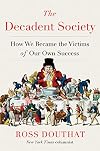
I purchased this book at my local Barnes & Noble a week before the near total shutdown of the workplace for two weeks in order to "bend the curve" of the rate of infections from Covid-19. I finally read the book as the partial shutdown enters its sixth month. In the interval we have experienced not only the impact of the global pandemic but the ongoing pandemic of "mostly peaceful" insurrections in many of our major cities featuring not only attacks upon the police departments but a show more concerted effort to remove from the public square all statues and monuments that celebrate America's history at least prior to the last fifty years.
With this backdrop I took up Ross Douthat's "The Decadent Society, which was published this year but before the crises that have made 2020 such a dispiriting time.
By decadence Douthat does not mean the frequently employed sense of the word to imply a self-indulgent hedonism. Rather he takes his cue from Jacques Barzun, who in his "From Dawn to Decadence" published in the year 2000, offers the following description.
"All that is meant by Decadence is 'falling off'. It implies in those who live in such a time no loss of energy or talent or moral sense. On the contrary, it is a very active time, full of deep concerns, but peculiarly restless, for it sees no clear lines of advance. The forms of art as of life seem exhausted; the stages of development have bee run through. Institutions function painfully. Repetition and frustration are the intolerable result. Boredom and fatigue are great historical forces."
Douthat, building on Barzun, expands the definition of decadence to feature "...economic stagnation, institutional decay, and cultural and intellectual exhaustion at a high level of material prosperity and technological development". The first four chapters of the book are assertions of evidence of Stagnation, Sterility, Sclerosis, and Repetition, Douthat's Four Horsemen of what may or not turn out to be our apocalypse. It is Douthat's thesis that barring some cataclysmic event such as the meteor that does unto us what was done unto the dinosaurs millions of year ago, or an accidental triggering of a nuclear war that entails our complete self-destruction, or a pandemic (Oops!) that we ought to be able to muddle along fairly comfortably for maybe hundreds of years before the barbarians finally finish us off.
If for Hegel the end of History arrived with Napoleon's victory at Jena (or maybe the publication of Hegel's Phenomenology), and for Fukuyama History comes to an end with the fall of the Soviet Union and its Eastern European empire, for Douthat the climax of our civilization is symbolized by the explosion of the Challenger space shuttle in 1986 and the subsequent end of the Space Age" although that end is certainly a matter more of speculation than fact.
Douthat's argument for stagnation is based on an analysis of economic data in the years between the Clinton and Trump presidencies that show that in terms of household incomes the average family had earned less income in sixteen of the eighteen years prior to 2017. Moreover, the average household wealth figure of $97,000 in 2017 was slightly below the late 1990 levels. It is arguable about how meaningful a 20 year snapshot is, but when you consider that this period encompasses the end of the dotcom/telecom driven bubble created by the launch of the World Wide Web in the early 90's, the 9/11 disaster followed by the still ongoing wars in Afghanistan and Iraq, Hurricane Katrina, the collapse of the sub-prime mortgage market and the ensuing great recession, maybe these numbers don't look quite as mediocre as they might at first glance.
A more interesting argument is the suggestion that since the middle of the 20th century the significance of the scientific and technological progress does not bear comparison with the impact on daily life of the inventions of the first half of the 20th century, the space age and the Internet era notwithstanding. What is inarguable is that every "advanced for its time society" has at some point ceased to advance. What happened to the civilizations of imperial China and the Ottomans will eventually happen to the West. The question is have we reached that point in the curve.
The case for Sterility is a little harder to dispute. It is a matter of fact and concern that the developed nations are in a reproductive cycle that is resulting in a population decline that may not be reversible unless offset by immigration, whether welcome or not, from Africa, the Middle East, or Latin America. As Mark Steyn is fond of pointing out the future belongs to those who show up. The fertility rate in America in 2018 was an average of 1.7 children per woman, an all time low. The average fertility rate needed for a society to replace itself is 2.1.
In 2016 the fertility rate for Australia was 1.77, for Canada and China 1.6, for Japan 1.41, South Korea 1.25 and Singapore 0.82. These are going out business indicators.
The case for Sclerosis is largely based on politics in the 21st century which feature increased polarization between political parties and the constituents they represent, the frustration of getting anything significant accomplished legislatively and the consequent outsourcing of the legislative function in the United States to the judiciary and the executive branch via the unelected bureaucracy or the expanded use of executive orders.
Across the pond the travails of the European Union, most obviously the case of Brexit, but also the troubles facing the southern and eastern European membership caused by a common currency dependent on Germany's interests and world view has opened up opportunities for a revived nationalism is many member countries. Douthat compares the EU at one point to a "Hotel California" - where, as Brexit showed, you can vote yourself out at any time as long as you don't actually try to leave.
Finally, Douthat takes up the theme of Repetition and makes the case that we are experiencing the Eternal Return to 1975 in our culture. He compares the culture shock experienced by Marty McFly who returns to 1955 from 1985 and argues that had "Back to the Future" been made in 2015, the differences between 2015 and 1985 would seem relatively trivial. The past as represented by 1985 America would not seem like another country when compared with the past represented by 1955.
Popular culture in our time seems to be a never-ending repetition and recycling of the recent past, see for example, Star Wars and Star Trek, the DC Comics and Marvel Comics themed movies. In politics and in popular culture we've been experiencing deja vu all over again and again.
So, what are our prospects? Odds are that we will continue to muddle along for some time, maybe hundreds of years before it all comes to an end courtesy of a a meteor, global warming, or History returns when the barbarians finally get here. I couldn't help but think at various points of the book that Douthat's point of view was some melange of "What, me worry?", "It just doesn't matter", "Don't worry, be happy", or as Stanley Baldwin's 1930's campaign slogan put it, "You've never had it so good."
That said, if this was Douthat's understanding then there would have been no point to the book. It could be we are headed for a dystopian solution in the spirit of Brave New World's "A gram is better than a damn.". It is unlikely that Catholic integralism, Communism, neo-liberalism, socialism, etc. are destined to bring us out of this malaise. Perhaps a collective response to the challenge of the climate change crisis, perhaps a revived quest to explore our solar system and beyond or a Christian revival sprung from non-Western influences will generate a new era of growth, creativity and technological advances such that our winter of discontent becomes an ancient memory.
Douthat's meditation on these matters is interesting, well-argued and moderate in criticism and prescription. It merits your attention. show less
With this backdrop I took up Ross Douthat's "The Decadent Society, which was published this year but before the crises that have made 2020 such a dispiriting time.
By decadence Douthat does not mean the frequently employed sense of the word to imply a self-indulgent hedonism. Rather he takes his cue from Jacques Barzun, who in his "From Dawn to Decadence" published in the year 2000, offers the following description.
"All that is meant by Decadence is 'falling off'. It implies in those who live in such a time no loss of energy or talent or moral sense. On the contrary, it is a very active time, full of deep concerns, but peculiarly restless, for it sees no clear lines of advance. The forms of art as of life seem exhausted; the stages of development have bee run through. Institutions function painfully. Repetition and frustration are the intolerable result. Boredom and fatigue are great historical forces."
Douthat, building on Barzun, expands the definition of decadence to feature "...economic stagnation, institutional decay, and cultural and intellectual exhaustion at a high level of material prosperity and technological development". The first four chapters of the book are assertions of evidence of Stagnation, Sterility, Sclerosis, and Repetition, Douthat's Four Horsemen of what may or not turn out to be our apocalypse. It is Douthat's thesis that barring some cataclysmic event such as the meteor that does unto us what was done unto the dinosaurs millions of year ago, or an accidental triggering of a nuclear war that entails our complete self-destruction, or a pandemic (Oops!) that we ought to be able to muddle along fairly comfortably for maybe hundreds of years before the barbarians finally finish us off.
If for Hegel the end of History arrived with Napoleon's victory at Jena (or maybe the publication of Hegel's Phenomenology), and for Fukuyama History comes to an end with the fall of the Soviet Union and its Eastern European empire, for Douthat the climax of our civilization is symbolized by the explosion of the Challenger space shuttle in 1986 and the subsequent end of the Space Age" although that end is certainly a matter more of speculation than fact.
Douthat's argument for stagnation is based on an analysis of economic data in the years between the Clinton and Trump presidencies that show that in terms of household incomes the average family had earned less income in sixteen of the eighteen years prior to 2017. Moreover, the average household wealth figure of $97,000 in 2017 was slightly below the late 1990 levels. It is arguable about how meaningful a 20 year snapshot is, but when you consider that this period encompasses the end of the dotcom/telecom driven bubble created by the launch of the World Wide Web in the early 90's, the 9/11 disaster followed by the still ongoing wars in Afghanistan and Iraq, Hurricane Katrina, the collapse of the sub-prime mortgage market and the ensuing great recession, maybe these numbers don't look quite as mediocre as they might at first glance.
A more interesting argument is the suggestion that since the middle of the 20th century the significance of the scientific and technological progress does not bear comparison with the impact on daily life of the inventions of the first half of the 20th century, the space age and the Internet era notwithstanding. What is inarguable is that every "advanced for its time society" has at some point ceased to advance. What happened to the civilizations of imperial China and the Ottomans will eventually happen to the West. The question is have we reached that point in the curve.
The case for Sterility is a little harder to dispute. It is a matter of fact and concern that the developed nations are in a reproductive cycle that is resulting in a population decline that may not be reversible unless offset by immigration, whether welcome or not, from Africa, the Middle East, or Latin America. As Mark Steyn is fond of pointing out the future belongs to those who show up. The fertility rate in America in 2018 was an average of 1.7 children per woman, an all time low. The average fertility rate needed for a society to replace itself is 2.1.
In 2016 the fertility rate for Australia was 1.77, for Canada and China 1.6, for Japan 1.41, South Korea 1.25 and Singapore 0.82. These are going out business indicators.
The case for Sclerosis is largely based on politics in the 21st century which feature increased polarization between political parties and the constituents they represent, the frustration of getting anything significant accomplished legislatively and the consequent outsourcing of the legislative function in the United States to the judiciary and the executive branch via the unelected bureaucracy or the expanded use of executive orders.
Across the pond the travails of the European Union, most obviously the case of Brexit, but also the troubles facing the southern and eastern European membership caused by a common currency dependent on Germany's interests and world view has opened up opportunities for a revived nationalism is many member countries. Douthat compares the EU at one point to a "Hotel California" - where, as Brexit showed, you can vote yourself out at any time as long as you don't actually try to leave.
Finally, Douthat takes up the theme of Repetition and makes the case that we are experiencing the Eternal Return to 1975 in our culture. He compares the culture shock experienced by Marty McFly who returns to 1955 from 1985 and argues that had "Back to the Future" been made in 2015, the differences between 2015 and 1985 would seem relatively trivial. The past as represented by 1985 America would not seem like another country when compared with the past represented by 1955.
Popular culture in our time seems to be a never-ending repetition and recycling of the recent past, see for example, Star Wars and Star Trek, the DC Comics and Marvel Comics themed movies. In politics and in popular culture we've been experiencing deja vu all over again and again.
So, what are our prospects? Odds are that we will continue to muddle along for some time, maybe hundreds of years before it all comes to an end courtesy of a a meteor, global warming, or History returns when the barbarians finally get here. I couldn't help but think at various points of the book that Douthat's point of view was some melange of "What, me worry?", "It just doesn't matter", "Don't worry, be happy", or as Stanley Baldwin's 1930's campaign slogan put it, "You've never had it so good."
That said, if this was Douthat's understanding then there would have been no point to the book. It could be we are headed for a dystopian solution in the spirit of Brave New World's "A gram is better than a damn.". It is unlikely that Catholic integralism, Communism, neo-liberalism, socialism, etc. are destined to bring us out of this malaise. Perhaps a collective response to the challenge of the climate change crisis, perhaps a revived quest to explore our solar system and beyond or a Christian revival sprung from non-Western influences will generate a new era of growth, creativity and technological advances such that our winter of discontent becomes an ancient memory.
Douthat's meditation on these matters is interesting, well-argued and moderate in criticism and prescription. It merits your attention. show less
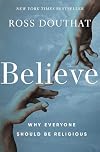
Summary: A case for committing to a religious faith, illustrated by the author’s belief in Christianity.
One of the most refreshing things about Ross Douthat is his unapologetic public testimony to his Catholic Christian faith in his op-ed columns in The New York Times. He not only put forward a cogent defense of his faith at the height of the New Atheism, but he continues to bring Christian thought to bear on the most challenging issues of the day. In this book, he has a more modest, but show more utterly forthright goal. Observing the presumption for atheist materialism among much of the cultural and educated elite, he makes an argument for why everyone should be religious.
Lest this be thought a cloaked attempt at an apologetic for Christianity, Douthat is simply arguing throughout for what might be called “mere religion” as represented by the major world religions, with ones understanding of the Ultimate Reality to be determined by the particular religious beliefs to which one commits. His argument throughout is not for the psychological advantages of being religious. Rather, he argues that religious belief makes the best intellectual sense of the world in which we actually live.
He offers a threefold argument in his first three chapters. Firstly, he observes the ordered, fine-tuned nature of the universe, one in which the emergence of life is possible. Secondly, he observes the inexplicability of consciousness by material causes and how our consciousness is uniquely fitted to perceive the orderly universe. And thirdly, against the disenchanted world of the secularist, he observes the widespread nature of mystical experiences, even of secularists. He notes Craig Keener’s extensive effort to document the miraculous. On the basis of these three bodies of observations, he argues that supernaturalism is the more plausible explanation and religious belief in some form is the most warranted response.
What then is one to do? Douthat proposes that we should think about commitment to one of the major religious traditions. Most of us are insufficiently enlightened to be our own prophets, nor are we our own islands. Belief flourishes within community. Then Douthat takes up the question of how we choose. He argues for an “Emeth” principle, after a C.S. Lewis character. While none of the world’s religions are identical, all point us to some intimations of truth when pursued sincerely and virtuously. He then offers a “decision tree” of questions based personal perspective on whether ethical life or experience are more important, whether we believe in God, gods, or simply an ultimate being, and what we believe happens when we die.
He pauses to address three stumbling blocks to religious belief. Douthat addresses question concerning the problem of evil and why God allows it. Secondly, he explores wickedness within religious institutions. Finally, he considerss why religions are so hung up on sex and why sexual ethics might matter for the religious.
The penultimate chapter discusses “the end of exploring.” Sometimes, it amounts to embracing what we’ve inherited. For others, like Ayaan Hirsi Ali and Paul Kingsnorth, the end is a genuine conversion to a different faith. Or it may be a conversion from secularism to faith. Then, in the concluding chapter, Douthat relates his own journey from baptized Episcopalian through Charismatic Christianity to Catholicism. He explains the appeal of Catholicism for him and his conviction, despite the perennialist perspective, of the truth of the Nicene Creed. He describes the gospel as “the strangest story in the world.” You wouldn’t make up this story, yet he cites scholars like N.T. Wright and Richard Bauckham who attest to the eyewitness accounts of the gospels.
What is most compelling is that Douthat’s case is simply for commitment to a religion. He’s not proselytizing as a Christian. Rather, he uses his own story as an illustration. He tells us what persuaded him, not what should persuade us. Many on the journey to belief will appreciate his respect for different beliefs and his candor about his own. It will frustrate other committed believers that he leaves things so open. But the idea of the unique and ultimate truthfulness of a particular religious tradition is inherent in some but not all religions. For his audience, I am more impressed that he controverts the assumption of the reasonableness of atheism. And I am grateful that he challenges people to choose, and in his closing makes that choice an urgent matter. show less
One of the most refreshing things about Ross Douthat is his unapologetic public testimony to his Catholic Christian faith in his op-ed columns in The New York Times. He not only put forward a cogent defense of his faith at the height of the New Atheism, but he continues to bring Christian thought to bear on the most challenging issues of the day. In this book, he has a more modest, but show more utterly forthright goal. Observing the presumption for atheist materialism among much of the cultural and educated elite, he makes an argument for why everyone should be religious.
Lest this be thought a cloaked attempt at an apologetic for Christianity, Douthat is simply arguing throughout for what might be called “mere religion” as represented by the major world religions, with ones understanding of the Ultimate Reality to be determined by the particular religious beliefs to which one commits. His argument throughout is not for the psychological advantages of being religious. Rather, he argues that religious belief makes the best intellectual sense of the world in which we actually live.
He offers a threefold argument in his first three chapters. Firstly, he observes the ordered, fine-tuned nature of the universe, one in which the emergence of life is possible. Secondly, he observes the inexplicability of consciousness by material causes and how our consciousness is uniquely fitted to perceive the orderly universe. And thirdly, against the disenchanted world of the secularist, he observes the widespread nature of mystical experiences, even of secularists. He notes Craig Keener’s extensive effort to document the miraculous. On the basis of these three bodies of observations, he argues that supernaturalism is the more plausible explanation and religious belief in some form is the most warranted response.
What then is one to do? Douthat proposes that we should think about commitment to one of the major religious traditions. Most of us are insufficiently enlightened to be our own prophets, nor are we our own islands. Belief flourishes within community. Then Douthat takes up the question of how we choose. He argues for an “Emeth” principle, after a C.S. Lewis character. While none of the world’s religions are identical, all point us to some intimations of truth when pursued sincerely and virtuously. He then offers a “decision tree” of questions based personal perspective on whether ethical life or experience are more important, whether we believe in God, gods, or simply an ultimate being, and what we believe happens when we die.
He pauses to address three stumbling blocks to religious belief. Douthat addresses question concerning the problem of evil and why God allows it. Secondly, he explores wickedness within religious institutions. Finally, he considerss why religions are so hung up on sex and why sexual ethics might matter for the religious.
The penultimate chapter discusses “the end of exploring.” Sometimes, it amounts to embracing what we’ve inherited. For others, like Ayaan Hirsi Ali and Paul Kingsnorth, the end is a genuine conversion to a different faith. Or it may be a conversion from secularism to faith. Then, in the concluding chapter, Douthat relates his own journey from baptized Episcopalian through Charismatic Christianity to Catholicism. He explains the appeal of Catholicism for him and his conviction, despite the perennialist perspective, of the truth of the Nicene Creed. He describes the gospel as “the strangest story in the world.” You wouldn’t make up this story, yet he cites scholars like N.T. Wright and Richard Bauckham who attest to the eyewitness accounts of the gospels.
What is most compelling is that Douthat’s case is simply for commitment to a religion. He’s not proselytizing as a Christian. Rather, he uses his own story as an illustration. He tells us what persuaded him, not what should persuade us. Many on the journey to belief will appreciate his respect for different beliefs and his candor about his own. It will frustrate other committed believers that he leaves things so open. But the idea of the unique and ultimate truthfulness of a particular religious tradition is inherent in some but not all religions. For his audience, I am more impressed that he controverts the assumption of the reasonableness of atheism. And I am grateful that he challenges people to choose, and in his closing makes that choice an urgent matter. show less
Nostalgic for the rural New England they’d grown up in, New York Times columnist Ross Douthat and his wife, science writer Abigail Tucker, sold their row house in a recently gentrified Washington, DC neighbourhood for a great price and bought an old home on a large property in Connecticut. Their fantasy about the richness and wonder of country living didn’t last long. You could argue that their “folly” was exposed before Douthat, his pregnant wife, and their two young daughters had show more even moved into the quaint 1790s-era house. In the spring of 2015, the two-hour home inspection revealed the need for major repairs that would require significant expenditures. The outdoor portion of the inspection would also leave the author with a bite from a tick carrying both Lyme disease (Borrelia Burgdorferi, a shape-shifting spirochete bacterial disease that can evade the immune system) and the Bartonella bacterium.
Shortly after the inspection, Douthat woke one morning with a stiff neck and a painful, enlarged lymph node, a few inches below one ear. A DC walk-in-clinic doctor diagnosed a boil and prescribed mild antibiotics. However, the symptoms persisted, and a new one was added: a peculiar vibration in the patient's head. Several weeks later, Douthat had to cancel a journalists’ trip to Italy, as he now had widespread chest pain, a gagging feeling in his throat, and liquefied bowels. The vibratory sensation initially felt only in the head was now ranging throughout the body. He consulted multiple doctors—an internist, neurologist, rheumatologist, and infectious diseases specialist—and had innumerable medical tests, including an upper endoscopy when his GI symptoms had became overwhelming and he’d lost a lot of weight. The Lyme tests, notoriously unreliable, were inconclusive. Ultimately, as recommended by the physicians who could find nothing wrong with him, he saw a Connecticut psychiatrist who told him his illness wasn’t stress-related; it certainly wasn’t psychiatric; indeed, she was certain his symptoms pointed to tick-borne disease, which the DC doctors evidently didn’t see much of.
Douthat’s memoir covers his six-year ordeal with chronic Lyme Disease, his desperate search for doctors who might help, and the significant controversies around diagnosis and treatment (which bear some remarkable similarities to the heated public disagreements and polarization over Covid-19). Increasingly, the narrow official line of the medical community is being abandoned as scientific evidence grows that Lyme Disease, like cancer, can trick and evade immune defenses. Douthat tried multiple antibiotics, combinations of antibiotics, and non-antibiotic antimicrobials, including herbs. He was supervised by various doctors, some of whom had caught the attention of state medical regulatory boards for their eyebrow-raising treatment regimes. He also did a fair bit of very unorthodox (even wacky) experimentation on himself, collecting “anecdata” about his own symptoms and reactions to drugs, supplements, and devices. His memoir is not essentially a religious one, but Douthat, a Catholic, acknowledges that desperate, pleading prayer figured in his self-treatment, and his faith offered a way to frame his suffering when he felt he was at the end of his rope, which was apparently often.
In spite of its relative brevity, The Deep Places is a wide-ranging book. Douthat includes a short history of Lyme disease —including a discussion of a conspiracy theory about its origins in a bioweapons lab on an island in Long Island Sound. The controversies around the condition, its impact on the family, and the ways in which chronic illness transforms the sufferer (physically, psychologically, spiritually, and financially) are also considered. While I wish Douthat had provided a bibliography, he does leave enough hints about sources in the body of his text for the interested reader to follow up on. I particularly recommend the article that alerted him to what he was really dealing with: Alexis Tsoulis-Reay’s June 2015 interview with Dr. Neil Spector, an oncologist and professor at Duke University’s School of Medicine. Spector had chronic Lyme that went undiagnosed for years, and he ultimately required a heart transplant as a result.
https://www.thecut.com/2015/06/what-its-like-to-have-severe-lyme-disease.html
This is an engaging and illuminating read about one person’s ordeal and his attempt to make meaning of it. Douthat explains that he wrote it for other sufferers, who “are more numerous than the healthy ever realize,” to encourage them to experiment and possibly save their own lives, “but also for the skeptical doctors and doubtful experts who are so often the targets of long-suffering Lyme patients’ fury and suspicion, in hopes of convincing them to see more clearly the enfleshed reality of a chronic, life-stealing disease.”
Thank you to the publisher and to Net Galley for providing me with a copy. show less
Shortly after the inspection, Douthat woke one morning with a stiff neck and a painful, enlarged lymph node, a few inches below one ear. A DC walk-in-clinic doctor diagnosed a boil and prescribed mild antibiotics. However, the symptoms persisted, and a new one was added: a peculiar vibration in the patient's head. Several weeks later, Douthat had to cancel a journalists’ trip to Italy, as he now had widespread chest pain, a gagging feeling in his throat, and liquefied bowels. The vibratory sensation initially felt only in the head was now ranging throughout the body. He consulted multiple doctors—an internist, neurologist, rheumatologist, and infectious diseases specialist—and had innumerable medical tests, including an upper endoscopy when his GI symptoms had became overwhelming and he’d lost a lot of weight. The Lyme tests, notoriously unreliable, were inconclusive. Ultimately, as recommended by the physicians who could find nothing wrong with him, he saw a Connecticut psychiatrist who told him his illness wasn’t stress-related; it certainly wasn’t psychiatric; indeed, she was certain his symptoms pointed to tick-borne disease, which the DC doctors evidently didn’t see much of.
Douthat’s memoir covers his six-year ordeal with chronic Lyme Disease, his desperate search for doctors who might help, and the significant controversies around diagnosis and treatment (which bear some remarkable similarities to the heated public disagreements and polarization over Covid-19). Increasingly, the narrow official line of the medical community is being abandoned as scientific evidence grows that Lyme Disease, like cancer, can trick and evade immune defenses. Douthat tried multiple antibiotics, combinations of antibiotics, and non-antibiotic antimicrobials, including herbs. He was supervised by various doctors, some of whom had caught the attention of state medical regulatory boards for their eyebrow-raising treatment regimes. He also did a fair bit of very unorthodox (even wacky) experimentation on himself, collecting “anecdata” about his own symptoms and reactions to drugs, supplements, and devices. His memoir is not essentially a religious one, but Douthat, a Catholic, acknowledges that desperate, pleading prayer figured in his self-treatment, and his faith offered a way to frame his suffering when he felt he was at the end of his rope, which was apparently often.
In spite of its relative brevity, The Deep Places is a wide-ranging book. Douthat includes a short history of Lyme disease —including a discussion of a conspiracy theory about its origins in a bioweapons lab on an island in Long Island Sound. The controversies around the condition, its impact on the family, and the ways in which chronic illness transforms the sufferer (physically, psychologically, spiritually, and financially) are also considered. While I wish Douthat had provided a bibliography, he does leave enough hints about sources in the body of his text for the interested reader to follow up on. I particularly recommend the article that alerted him to what he was really dealing with: Alexis Tsoulis-Reay’s June 2015 interview with Dr. Neil Spector, an oncologist and professor at Duke University’s School of Medicine. Spector had chronic Lyme that went undiagnosed for years, and he ultimately required a heart transplant as a result.
https://www.thecut.com/2015/06/what-its-like-to-have-severe-lyme-disease.html
This is an engaging and illuminating read about one person’s ordeal and his attempt to make meaning of it. Douthat explains that he wrote it for other sufferers, who “are more numerous than the healthy ever realize,” to encourage them to experiment and possibly save their own lives, “but also for the skeptical doctors and doubtful experts who are so often the targets of long-suffering Lyme patients’ fury and suspicion, in hopes of convincing them to see more clearly the enfleshed reality of a chronic, life-stealing disease.”
Thank you to the publisher and to Net Galley for providing me with a copy. show less
Lists
Awards


You May Also Like


Associated Authors
Statistics
- Works
- 32
- Also by
- 3
- Members
- 2,256
- Popularity
- #11,366
- Rating
- 3.7
- Reviews
- 53
- ISBNs
- 95
- Languages
- 3
- Favorited
- 1
