
Stephen Quirke
Author of The British Museum Book of Ancient Egypt
About the Author
Stephen Quirke is Professor of Egyptology in the Institute for Archaeology at University College London, UK, and Curator at the Petrie Museum of Egyptian Archaeology, UK. His books include Lahun: A Town in Egypt 1800 BC, and the History of its Landscape (2005), Egyptian Literature 1800 BC: show more Questions and Readings (2004), and The Cult of Ra: San-Worship in Ancient Egypt (2001). show less
Image credit: Stephen Quirke [University College London]
Works by Stephen Quirke
Hidden Hands: Egyptian Workforces in Petrie Excavation Archives, 1880-1924 (BCP Egyptology) (2010) 12 copies
Going out in Daylight - prt m hrw: The Ancient Egyptian Book of the Dead - translation, sources, meanings (Ghp Egyptology) (2013) 9 copies
Who Were the Pharaohs 1 copy
The Temple in Ancient Egypt 1 copy
Associated Works
Tagged
Common Knowledge
- Legal name
- Quirke, Stephen Gerald J.
- Other names
- Quirke, S. G. J.
- Gender
- male
- Education
- University of Cambridge ( BA Egyptology 1983)
University of Cambridge ( PhD Egyptology 1987) - Occupations
- Egyptologist
archaeologist
museum curator
Professor of Egyptian Archaeology and Philology - Organizations
- British Museum
Liverpool Museum
University College London
Petrie Museum of Egyptian Archaeology - Nationality
- UK
- Associated Place (for map)
- UK
Members
Reviews

This is a comprehensive full-colour guide to ancient Egyptian civilisation. It is addressed at a grownup readership and covers particularly the issues visible from the British Museum's own collections. There is a huge amount of detail here, covering three and a half millennia (including the Pharaohs of the First Dynasty - Narmer, Aha, Djer, Djen, Den, Anedjib, Semerkhet and Qaa). It will take me a while to absorb, but two issues jumped out at me for further exploration.
First, I was show more fascinated to discover the survival of ancient Egyptian literature - stories such as The Tale of Sinuhe, dating from the early to mid Twelfth Dynasty, so around the 19th century BC, 4000 years ago. I must look out for them; apparently there are a couple of volumes edited by R.B. Parkinson in the 1990s.
Second, I was interested to read repeated descriptions of Egypt suffering under and oppressed by its foreign rulers (mainly the Hellenistic pharaohs from Alexander on, though they were not the first). I had always thought of this as rather a nineteenth-century concept, linked with the growth of romantic nationalism in various European countries; my impression was that a lot of people in earlier times ended up with ruling elites who spoke a different language and generally took it in their stride (usually by getting the elites to go native - the Goths in Spain and Italy, the Kievan Rus, the Normans in first Normandy then England and Sicily, the Old English in Ireland). I wonder to what extent the objection to Greek speaking rulers rested on what we would today identify as Egyptian nationalist grounds? Or is the writer (or the reader, ie me) projecting modern concepts onto a very different ancient world? show less
First, I was show more fascinated to discover the survival of ancient Egyptian literature - stories such as The Tale of Sinuhe, dating from the early to mid Twelfth Dynasty, so around the 19th century BC, 4000 years ago. I must look out for them; apparently there are a couple of volumes edited by R.B. Parkinson in the 1990s.
Second, I was interested to read repeated descriptions of Egypt suffering under and oppressed by its foreign rulers (mainly the Hellenistic pharaohs from Alexander on, though they were not the first). I had always thought of this as rather a nineteenth-century concept, linked with the growth of romantic nationalism in various European countries; my impression was that a lot of people in earlier times ended up with ruling elites who spoke a different language and generally took it in their stride (usually by getting the elites to go native - the Goths in Spain and Italy, the Kievan Rus, the Normans in first Normandy then England and Sicily, the Old English in Ireland). I wonder to what extent the objection to Greek speaking rulers rested on what we would today identify as Egyptian nationalist grounds? Or is the writer (or the reader, ie me) projecting modern concepts onto a very different ancient world? show less

This is mostly an actual size facsimile drawing of the Rosetta Stone, but there’s an informative booklet included, with transliterations and translations of all three scripts (it’s often incorrectly said that the stone is inscribed in three languages; it’s only two, Greek and Egyptian, but the Egyptian is written in two different d scripts, Demotic and Hieroglyphic).
The booklet notes that while English polymath is often given credit for part of the translation of the Stone, he show more actually made a crucial error. He correctly identified the hieroglyphs in cartouches as royal names, and identified the names “Ptolemaios” (Ptolemy) and “Kleopatra” (Cleopatra; not that one, though) but stuck with the assumption that Egyptian was a logographic language (like Chinese). He realized that Ptolemy and Cleopatra had been spelled phonetically in hieroglyphs but thought that the phonetic spelling only applied to foreign words and assumed that the rest of the language was logographic. Jean-François Champollion was not handicapped by the logograph assumption and was quickly able to prepare a table of phonetic equivalents for hieroglyphic characters; however it’s noted that Champollion was helped more by his extensive knowledge of Coptic rather than the Rosetta Stone. See The Rosetta Stone for more details about the stone and its context.
Interesting; the translations show quite a bit of difference between the languages and give an idea of how difficult working out Egyptian must have been. Endnotes, a bibliography, and, of course, the facsimile drawing. show less
The booklet notes that while English polymath is often given credit for part of the translation of the Stone, he show more actually made a crucial error. He correctly identified the hieroglyphs in cartouches as royal names, and identified the names “Ptolemaios” (Ptolemy) and “Kleopatra” (Cleopatra; not that one, though) but stuck with the assumption that Egyptian was a logographic language (like Chinese). He realized that Ptolemy and Cleopatra had been spelled phonetically in hieroglyphs but thought that the phonetic spelling only applied to foreign words and assumed that the rest of the language was logographic. Jean-François Champollion was not handicapped by the logograph assumption and was quickly able to prepare a table of phonetic equivalents for hieroglyphic characters; however it’s noted that Champollion was helped more by his extensive knowledge of Coptic rather than the Rosetta Stone. See The Rosetta Stone for more details about the stone and its context.
Interesting; the translations show quite a bit of difference between the languages and give an idea of how difficult working out Egyptian must have been. Endnotes, a bibliography, and, of course, the facsimile drawing. show less
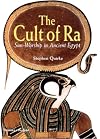
This text is at a level for serious students of religion and of Ancient Egyptian civilization. Well documented and illustrated with photos and line drawings of tomb illustrations, the text covers the development of the cult of Ra, the sun god, through the Amarna period under the rebel pharoah Akhenaton where his version of the sun god, the Aton, was the only god worshipped, and back to the old regime under Tutankhamon. This one deity is at the core of religious thought development for show more Ancient Egypt and acts as a measure for change through Egypt's history. show less

"Cultura y arte egipcios" de Stephen Quirke es un libro publicado en 1999 por la Fundación Museos Nacionales - Museo de Bellas Artes en Caracas, Venezuela. La obra explora la riqueza del arte egipcio, desde su simbolismo hasta su evolución histórica.
Lists
You May Also Like


Associated Authors
Statistics
- Works
- 23
- Also by
- 2
- Members
- 536
- Popularity
- #46,471
- Rating
- 3.5
- Reviews
- 6
- ISBNs
- 44
- Languages
- 3