
Danny Wallace
Author of Yes Man
About the Author
Danny Wallace is an award-winning author, filmmaker, comedian, actor, and television and radio host. His previous books include Yes Man (made into the Jim Carrey movie of the same name), Friends Like These, and Awkward Situations for Men.
Image credit: Danny Wallace in 2008 By Rich Hardcastle - Published by Katie Johnson (Ebury publishing), asserting exclusive copyright over the image, CC BY 3.0, https://commons.wikimedia.org/w/index.php?curid=18727129
Series
Works by Danny Wallace
F You Very Much: Understanding the Culture of Rudeness--and What We Can Do About It (2018) 58 copies, 4 reviews
Somebody Told Me...: One Man's Unexpected Journey Down the Rabbit Hole of Lies, Trolls, and Conspiracies (2024) 25 copies
How to Be a Modern Man 1 copy
Assassin's Creed: Gold 1 copy
Associated Works
Tagged
Common Knowledge
- Birthdate
- 1976-11-16
- Gender
- male
- Nationality
- UK
- Places of residence
- London, England, UK
- Associated Place (for map)
- England, UK
Members
Reviews
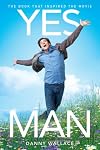
I'm not a fan of the nonfiction genre because the truth can be stranger than fiction - it's not just a cliche, you know - and I'm always left wondering whether or not the author has taken some poetic liberties with his own life. But after reading some YA horror, a translation and a collection of short stories left me feeling I'd been cheated of great literature (thank you for that, Tumblr, by the way), I decided it might be time that I read a memoir of a Yes Man. And I'm glad I did.
This show more book is full of your feel good moments - falling in love, growing up, having adventures, larger than life characters (hypnodog!), letting go - to spiritual aspects and a few moments of depression. It's real. It's a real book - and no, I'm not accusing anyone of saying it doesn't exist - but it's a book that you can read to feel better about the world, feel better about yourself, allow yourself to make mistakes and take risks even when you normally wouldn't.
That being said, it's probably the only memoir I've ever read. Don't get me wrong, I've read several biographies and autobiographies, but never a book about a certain time the author's life. I've tried in the past - Cherry by Mary Karr comes to mind, Smashed is another one and then there's Prozac Nation- but I never got pasted the first few pages, or chapters. But Yes Man was different. How could I possibly say no to a book about saying yes?
I couldn't, and there was never a time I wanted to put it down - even when I should have been working, I was reading Danny Wallace's words, laughing with him and feeling sad when things were going differently than expected. In many ways, the book inspired me to say yes a little bit more. Even to things that I would normally find tedious or annoying - let me give it a try again. While reading, I even took down a couple of notes about references he'd make - I went as far as buying an Ian Rankin book just because he mentioned the author's name.
Maybe this book can change my life around. Or maybe my cynicism is just too strong to be pushed under the mat. Either way, I've never thought about it until I read the book. And that says something, doesn't it? show less
This show more book is full of your feel good moments - falling in love, growing up, having adventures, larger than life characters (hypnodog!), letting go - to spiritual aspects and a few moments of depression. It's real. It's a real book - and no, I'm not accusing anyone of saying it doesn't exist - but it's a book that you can read to feel better about the world, feel better about yourself, allow yourself to make mistakes and take risks even when you normally wouldn't.
That being said, it's probably the only memoir I've ever read. Don't get me wrong, I've read several biographies and autobiographies, but never a book about a certain time the author's life. I've tried in the past - Cherry by Mary Karr comes to mind, Smashed is another one and then there's Prozac Nation- but I never got pasted the first few pages, or chapters. But Yes Man was different. How could I possibly say no to a book about saying yes?
I couldn't, and there was never a time I wanted to put it down - even when I should have been working, I was reading Danny Wallace's words, laughing with him and feeling sad when things were going differently than expected. In many ways, the book inspired me to say yes a little bit more. Even to things that I would normally find tedious or annoying - let me give it a try again. While reading, I even took down a couple of notes about references he'd make - I went as far as buying an Ian Rankin book just because he mentioned the author's name.
Maybe this book can change my life around. Or maybe my cynicism is just too strong to be pushed under the mat. Either way, I've never thought about it until I read the book. And that says something, doesn't it? show less
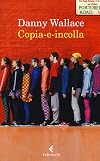
Mi è piaciuto? Se si considera che l'ho letto tutto d'un fiato perché non vedevo l'ora di finirlo, sì.
Che la trama però sia valida... Un libro surreale, quasi allucinato in certe parti. Qualche ribaltamento di fronte (la protagonista o meglio non protagonista, perché non si vede per la maggior parte del libro: prima pare malvagia, poi sembra tornare accettabile, poi di nuovo malvagia, poi...), tanta suspence, però in fondo non è che l'idea di base sia poi una grande idea.
Ma in fondo, show more merita? Sì. E' ben scritto, scorrevole, appassionante dal punto di vista del mistero.
A mio parere, dietro questo tourbillon di inseguimenti il "messaggio", se di "messaggio" si vuol parlare, è una specie di inno al "coinvolgimento". In fondo, cosa vuol dire seguire le persone ed osservare la loro vita, se non un uscire da se stessi, provare interesse per l'altro? Cos'è se non un antidoto alla solitudine? E se forse non fosse l'inseguimento ad essere terapeutico quanto il farlo insieme ad altre persone, sentirsi quindi sostenuti e capiti da qualcuno?
In sostanza, quindi, il giudizio è positivo. Anche se sono tuttora allucinata pure io. show less
Che la trama però sia valida... Un libro surreale, quasi allucinato in certe parti. Qualche ribaltamento di fronte (la protagonista o meglio non protagonista, perché non si vede per la maggior parte del libro: prima pare malvagia, poi sembra tornare accettabile, poi di nuovo malvagia, poi...), tanta suspence, però in fondo non è che l'idea di base sia poi una grande idea.
Ma in fondo, show more merita? Sì. E' ben scritto, scorrevole, appassionante dal punto di vista del mistero.
A mio parere, dietro questo tourbillon di inseguimenti il "messaggio", se di "messaggio" si vuol parlare, è una specie di inno al "coinvolgimento". In fondo, cosa vuol dire seguire le persone ed osservare la loro vita, se non un uscire da se stessi, provare interesse per l'altro? Cos'è se non un antidoto alla solitudine? E se forse non fosse l'inseguimento ad essere terapeutico quanto il farlo insieme ad altre persone, sentirsi quindi sostenuti e capiti da qualcuno?
In sostanza, quindi, il giudizio è positivo. Anche se sono tuttora allucinata pure io. show less
F You Very Much: Understanding the Culture of Rudeness--and What We Can Do About It by Danny Wallace
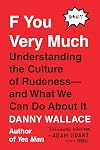
Danny Wallace takes on a controversial topic—the pervasiveness of obnoxious, selfish, dismissive, and condescending behavior—in a book subtitled: "Understanding the Culture of Rudeness—and What We Can Do About It." Wallace was raised to be polite, so he was shocked when a confrontation—admittedly minor in the scheme of things—shook him to his core. He calls it the "Hotdog Incident," and it involved an unpleasant encounter with a server who was supposed give him and his son food, show more but instead kept them waiting for over an hour. When Wallace complained, rather than trying to mollify him, the woman enraged him by making cutting and sarcastic remarks. Wallace decided to write a work of non-fiction in which he would explore the following: Why have bullying and other forms of verbal abuse become so pervasive that campaigns must be launched to counteract them? Why do so many people in the media, politics, and show business feel free to say or tweet whatever pops into their heads ("just being honest")—no matter how hurtful it may be?
The author tackles his subject with humor and also offers the opinions of scholars in such disciplines as psychology and ethics. Wallace provides some history (unsurprisingly, rudeness goes back to ancient times), discusses possible causes (among them are overcrowded urban areas, insecurity, narcissism, and prejudice), and offers ideas on how we might bring about a cultural shift that could lead to greater civility. Although he uses off-color words occasionally, most of the time Wallace's writing is intelligent, organized, and enlivened by entertaining anecdotes. For example, in the introduction, he speaks of Omar Hussain, who left England to join ISIS in Syria. When Hussain reached his destination, he was shocked—not by the cold-bloodedness of his new comrades—but by their atrocious manners. They did not even have the decency to line up and wait their turn, stole one another's shoes, and spoke in loud voices while he tried to get some sleep.
We all know what the problem is. What few of us realize is how toxic rudeness can be. It can have a negative impact on your health and your ability to think rationally. When a doctor encounters an extremely rude patient, the physician may become so irate that his performance suffers for the rest of the day. The uncouth maneuvers of motorists often lead to accidents or road rage. When employees deal with discourteous customers or colleagues, they are likely to take it out on their families that evening. Kids who are mocked by their peers frequently become withdrawn, depressed, and/or furious. Rudeness, alas, is a global problem, partly because we are "more stressed, more time-pressed, tired, fed up, angry, and put upon." The bottom line is that "we need politeness because it is right, it lifts our spirits, it makes things better, it lubricates the day, and helps everything run smoother." Danny Wallace challenges each of us to be less tolerant of boors, and to try to make a difference by setting a good example of how one ought to act towards his or her fellow human beings. It is everyone's responsibility to foster "a culture of kindness and mutual respect." show less
The author tackles his subject with humor and also offers the opinions of scholars in such disciplines as psychology and ethics. Wallace provides some history (unsurprisingly, rudeness goes back to ancient times), discusses possible causes (among them are overcrowded urban areas, insecurity, narcissism, and prejudice), and offers ideas on how we might bring about a cultural shift that could lead to greater civility. Although he uses off-color words occasionally, most of the time Wallace's writing is intelligent, organized, and enlivened by entertaining anecdotes. For example, in the introduction, he speaks of Omar Hussain, who left England to join ISIS in Syria. When Hussain reached his destination, he was shocked—not by the cold-bloodedness of his new comrades—but by their atrocious manners. They did not even have the decency to line up and wait their turn, stole one another's shoes, and spoke in loud voices while he tried to get some sleep.
We all know what the problem is. What few of us realize is how toxic rudeness can be. It can have a negative impact on your health and your ability to think rationally. When a doctor encounters an extremely rude patient, the physician may become so irate that his performance suffers for the rest of the day. The uncouth maneuvers of motorists often lead to accidents or road rage. When employees deal with discourteous customers or colleagues, they are likely to take it out on their families that evening. Kids who are mocked by their peers frequently become withdrawn, depressed, and/or furious. Rudeness, alas, is a global problem, partly because we are "more stressed, more time-pressed, tired, fed up, angry, and put upon." The bottom line is that "we need politeness because it is right, it lifts our spirits, it makes things better, it lubricates the day, and helps everything run smoother." Danny Wallace challenges each of us to be less tolerant of boors, and to try to make a difference by setting a good example of how one ought to act towards his or her fellow human beings. It is everyone's responsibility to foster "a culture of kindness and mutual respect." show less
F You Very Much: Understanding the Culture of Rudeness--and What We Can Do About It by Danny Wallace
I hadn't known what to expect when I picked this book up by chance, but I'm glad I did. I laughed a lot while reading this, and nodded a ton. I learned a lot. Turns out experiences I've had and feelings that resulted are part of the human experience, in a way. I liked how Wallace took effort to provide insight into Eastern and Middle Eastern views of rudeness, although this was firmly framed through a Westernized perspective. The way he threaded his research and findings into his stories and show more others' was seamlessly done. He's not afraid to poke fun at himself and admit that he's not perfect, which I greatly appreciated. Books like this sometimes have authors who think they're flawless, which is a great way to get me to stop reading. Not the case here--I couldn't put it down. I felt much better about myself as a person, actually, afterward. show less
Lists
Awards


You May Also Like


Associated Authors
Statistics
- Works
- 28
- Also by
- 3
- Members
- 3,479
- Popularity
- #7,310
- Rating
- 3.8
- Reviews
- 131
- ISBNs
- 152
- Languages
- 10
- Favorited
- 12
