
David Zindell
Author of Neverness
About the Author
Series
Works by David Zindell
Associated Works
The War of the Worlds: Fresh Perspectives on the H. G. Wells Classic (2005) — Contributor — 19 copies
Johann Sebastian Bach Memorial Barbecue. Internationale Science Fiction Erzählungen. (1992) — Contributor — 4 copies
Tagged
Common Knowledge
- Birthdate
- 1952-11-28
- Gender
- male
- Education
- University of Colorado, Boulder (B.A.|Mathematics|1984)
- Occupations
- science fiction writer
fantasy writer - Nationality
- USA
- Birthplace
- Toledo, Ohio, USA
- Places of residence
- Toledo, Ohio, USA
Boulder, Colorado, USA - Associated Place (for map)
- USA
Members
Reviews
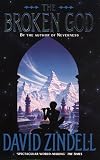
Don't let the distant planet setting fool ya... This book isn't your typical sci-fi. If anything, it would probably be more at home in the philosophy section.
Of course, it is quite usual for sci-fi novels to tackle a big question or theme. The added scope of the setting allows for some interesting extrapolation of themes and ideas. (I knoweth of what I speak, honest, lol. My dissertation in uni was on character development in sci-fi and cult tv...)
But Zindell isn't content with playing with show more one or two big questions. He reaches out and grabs them all, and blends them seamlessly into a narrative that should be one huge mess in its ambition, but is far, far from it. It is, in fact, halla.
This should be incredibly difficult to read, but isn't. It's one you want to take relatively slowly, certainly, in order to take it all in fully, but it's such a smooth, easy read that this isn't a chore at all.
Very highly recommended, and a well-deserved 5 stars. show less
Of course, it is quite usual for sci-fi novels to tackle a big question or theme. The added scope of the setting allows for some interesting extrapolation of themes and ideas. (I knoweth of what I speak, honest, lol. My dissertation in uni was on character development in sci-fi and cult tv...)
But Zindell isn't content with playing with show more one or two big questions. He reaches out and grabs them all, and blends them seamlessly into a narrative that should be one huge mess in its ambition, but is far, far from it. It is, in fact, halla.
This should be incredibly difficult to read, but isn't. It's one you want to take relatively slowly, certainly, in order to take it all in fully, but it's such a smooth, easy read that this isn't a chore at all.
Very highly recommended, and a well-deserved 5 stars. show less

I know this book. I've read it twenty-something years ago and I would say it was a turning point in my life. The questions this book offered me, the answers this book provided defined who I became later. It still defines me. Finally re-reading it now is like coming home. It is the place where I was born. What is "born" even mean? What is that moment of initial creation?.. creation of initial?.. something that was before it became something? It's like looking at the code - I know what is show more written, I know what it means, I understand how it works (sort of) but... not one single person will see it same way. Some of them won't even see a code, only it's presentation in form of working "product".
The more I read the more I find myself, my self, my "I", my "Identity" in there.
Among the humanitarian and vital philosophy of life there is a violence and death in this book too. Not "too". Just "there is". I see and remember now how I twenty years back looked at it as it is. As is. As a certainty. Life and Death. Good and Evil. Love and Hate. Peace and War. Truth and Lie. Many other words and concepts. In years that happen after I've read this book our culture moved into a weird way... It's like we began to subjectify all of this, made it uncertain, made it unreal. We made all this ideas into *context dependent perception of information*. Irregardless of reality, facts, sources. Nothing real matter anymore for us. Only what we feel we think we feel. And I fed on this culture for years. I feasted on it. "It's just a game" as the saying goes. For anything from porn and life to war and death. I grown to look at many thing as they all meaningless and I clearly see it now reflecting back on those first experiences in this book while reading it again.
I look at this book now and see how the truth of it was always with me. It's just maybe some days I would prefer to admit and ignore it, maybe some days I was just too lazy to think. Every rope has two ends.
War changes many things. War shows us what is always here. show less
The more I read the more I find myself, my self, my "I", my "Identity" in there.
Among the humanitarian and vital philosophy of life there is a violence and death in this book too. Not "too". Just "there is". I see and remember now how I twenty years back looked at it as it is. As is. As a certainty. Life and Death. Good and Evil. Love and Hate. Peace and War. Truth and Lie. Many other words and concepts. In years that happen after I've read this book our culture moved into a weird way... It's like we began to subjectify all of this, made it uncertain, made it unreal. We made all this ideas into *context dependent perception of information*. Irregardless of reality, facts, sources. Nothing real matter anymore for us. Only what we feel we think we feel. And I fed on this culture for years. I feasted on it. "It's just a game" as the saying goes. For anything from porn and life to war and death. I grown to look at many thing as they all meaningless and I clearly see it now reflecting back on those first experiences in this book while reading it again.
I look at this book now and see how the truth of it was always with me. It's just maybe some days I would prefer to admit and ignore it, maybe some days I was just too lazy to think. Every rope has two ends.
War changes many things. War shows us what is always here. show less
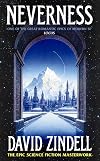
For a book published in 1989, this space epic felt curiously old-fashioned in parts. The world-building (or galaxy-building), with a significant helping of ancient lost or "ascended" alien species and a cosmic angle on human origins and purposes, put me in mind of classic authors of the mid-20th century such as Olaf Stapledon, A. E. van Vogt, or even E. E. 'Doc' Smith. The long-winded philosophizing, on the other hand, recalled the almost indigestible ruminations of John Cowper Powys. The show more juxtaposition of a hyperspace-crossing civilization (a large element of which is designed to appeal to pure mathematicians) with a primitive Neanderthal-like society living in high Arctic conditions required some gear-changing on the part of the reader. There were more modern-feeling elements, such as the advanced entities that play some role in the tale, which made me feel that we were not entirely divorced from the world of later writers such as William Gibson and Iain M. Banks, but overall I found the book quite hard going, and I confess to skim-reading quite a lot of it in order to get through the sheer number of pages. MB 12-viii-2024 show less

Zindell uses the storytelling style of epic fantasy to spin a far-future hard SF tale. Three millennia into the future, Mallory Ringess is a newly trained Pilot of the Order of Mystic Mathematicians and Other Seekers of the Ineffable Flame that has the monopoly on faster-than-light travel, based in the city of Neverness on the world Icefall. He winds up in an odyssey that takes him into realms of posthuman gods and genetically revived cavemen in pursuit of a solution to the long-term show more survival of humankind and the mysterious series of supernovae devastating settled worlds.
The depiction of three thousand years of cultural development works manages to convey a sense of strangeness without making me reach for a dictionary like Gene Wolfe’s Book of the New Sun. The hero gets put through the wringer (sometimes due to his own impetuosity), so I recommend this story for when you’re up for an odyssey, not just thrilling your sense of wonder.
Some parts of the future history are already dated— the book was written at the tail end of the Cold War, back when we all lived with the spectre of Mutual Assured Destruction, and the tale of Old Earth being devastated in a nuclear holocaust already seems quaint. show less
The depiction of three thousand years of cultural development works manages to convey a sense of strangeness without making me reach for a dictionary like Gene Wolfe’s Book of the New Sun. The hero gets put through the wringer (sometimes due to his own impetuosity), so I recommend this story for when you’re up for an odyssey, not just thrilling your sense of wonder.
Some parts of the future history are already dated— the book was written at the tail end of the Cold War, back when we all lived with the spectre of Mutual Assured Destruction, and the tale of Old Earth being devastated in a nuclear holocaust already seems quaint. show less
Lists
Awards


You May Also Like


Associated Authors
Statistics
- Works
- 29
- Also by
- 8
- Members
- 2,413
- Popularity
- #10,626
- Rating
- 3.8
- Reviews
- 30
- ISBNs
- 98
- Languages
- 5
- Favorited
- 10