
Kathrine Kressmann Taylor (1903–1996)
Author of Address Unknown
About the Author
Image credit: Katherine Kressmann Taylor
Works by Kathrine Kressmann Taylor
Associated Works
Tagged
Common Knowledge
- Other names
- Taylor, Kressman (pseudonym)
Kressmann, Kathrine (birth)
Rood, Kathrine (second marriage) - Birthdate
- 1903-08-19
- Date of death
- 1996-07-14
- Gender
- female
- Education
- University of Oregon (1924)
- Occupations
- copywriter
Professor of Creative Writing
novelist
short story writer - Organizations
- Gettysburg College
- Relationships
- Rood, John (husband)
- Short biography
- Kathrine Kressmann was born in Portland, Oregon. She studied English literature and journalism at the University of Oregon, where she graduated in 1924. She moved to San Francisco, and in 1928, she married Elliott Taylor, an editor and owner of an advertising agency. During the Great Depression, the couple lived on a farm in Southern Oregon before moving to New York City. She and her family moved to a farm in Pennsylvania, where she taught at Gettysburg College. After retiring in 1966, she moved to Florence, Italy. In 1967, Taylor remarried to John Rood, a sculptor, and divided her time between Minneapolis, Minnesota, and a villa near Florence.
- Nationality
- USA
- Birthplace
- Portland, Oregon, USA
- Places of residence
- San Francisco, California, USA
Florence, Italy
Minneapolis, Minnesota, USA - Place of death
- Hennepin, Minnesota, USA
- Associated Place (for map)
- USA
Members
Reviews

A short, sharp work that—for something written before the outbreak of the Second World War and by someone an ocean away from Germany—is highly insightful and prescient. Kathrine Kressmann Taylor's novella is written in the form of letters between two business partners: one a German Jew living in America, the other a Gentile who has moved back to Germany just as the Nazis come to power and who becomes an ardent follower of Hitler. Their relationship swiftly deteriorates. Kressmann show more Taylor's writing isn't subtle, but her point is clear and irrefutable: in a fascist society, words kill. show less
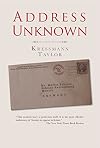
A Short (Sweet?) Story of Nazism
Address Unknown, an easy hour or two read, is told through letters, each just a page or so long, between two men, friends. Both are German; one is also Jewish. They are business partners who have worked side by side to build a successful art Gallery in California after fleeing the devastated German economy following the end of the First World War.
The letters begin when one man, Martin, has returned to Munich to re-establish himself in the fatherland with his show more wife and small sons, and the other man, Max, a bachelor stays in San Francisco to run their business. Max and Martin's first letters are all about the noble and undying quality of friendship. The exchange is from late 1932 to early 1934, a time in history when the world was watching with great uncertainty the early but distinct rise of the Nationalist Socialist Party, the Nazis.
Their letters, once joyful and full of the fondest memories between the friends, begin to reflect the grave concerns and the quick impact the Nazis are having on both men. The letters, like Nazi history itself, progress in a terrible way. The final letters made me uneasy. It's darn hard to feel sorry for a Nazi, especially when Nazism is used cleverly against itself by a Jew.
Sweet revenge. Or was is the coldest kind of retribution? I know it made me uneasy by the pleasure I took in it.
How Does Such Horror Begin Anyway?
The remarkably prescient Address Unknown (written in 1938 before the full horrors were known) shows that it takes a charismatic, power-hungry leader just two building blocks to begin a quick mass transformation.
The first building block is to rally the desire for one's country to be great again. This works easiest if that is an undefined nebulous thing so long as it is replete with desired status symbols (tanks, planes, rockets, snazzy uniforms, or even gold covered penthouses maybe.)
The second building block is to identify who is to blame and who is to be hated for holding back that greatness. This works easiest if the offensive ones are instantly identifiable, not matching the physical ideal. Then they must be purged for the good of the whole country (well, the whole country minus the offensive ones, of course).
Once the tipping point of psychosis has been reached, once the power-hungry have become the power-full and have a convinced base of blinded believers doing their bidding, any remaining thinking hold outs against this goose step to greatness will begin to wisely self-silence lest they also be blamed and be purged, like their missing neighbors and friends.
America March 1, 2024
Nazi Germany wasn't mysterious. It was formulaic. And once again the required building blocks of horror are in place: a charismatic leader with an odd grooming technique, worshipping chanters wearing their distinct red logo, and masses of non-white enemies identified, lurking everywhere to take a patriot's God-ordained superiority away.
And that scares the shit of out me.
Beginning long before reading Address Unknown, I have been fearfully calculating how likely another totalitarian takeover is in America. These are a few differences that I tell myself, differences that I hope make all the difference.
-> We are not suffering a recent crushing military humiliation and domestic hyperinflation that Germany was experiencing. Inflation rate of 3.1% may make you grumble but not cancel your Netflix subscription.
-> We have unwieldy news and information sources, especially the decentralized Internet that gives citizens instant communication that is sure to put a nimble kink in anyone's Master Plan.
-> Our citizenry has weapons. Lots and lots of weapons. On both sides of the divide. Meantime, the U.S. military has technology that can be operated by a single soldier from miles away, and turn assault rifles and hundreds of sweating militia into a sickening black pile of what was once beloved kinfolk.
-> Like Germany, we have a democratically elected leader who is old, really stinking old. But unlike Germany, the vying "first day only dictator" is also really stinking old.
-> We won our system of government through winning a bitter a war for the right to have that government, two wars in actual fact. Germany's republic fell into their laps by losing a war, and the abdication of a losing emperor.
-> We have been a democratic republic for 250 years. Germany had the Weimar Republic only for a tumultuous 15 years.
->With the exception of Indigenous Americans, America is a land of immigrants.. Germany, on the other hand, has an associated ethnicity. "Blood and soil" might be chanted here, but refers instead to an idea (not to ethnic blood and soil) that America is a Christian Nation, vastly peopled by Christians. That's in spite of the clear statistical steady decline in Christian church memberships and statistics of the even larger decline of confidence in organized religion.
But all these might just be differences without distinction, still heading toward a hellish outcome.
Be the real difference. VOTE BLUE, my friend, vote blue. show less
Address Unknown, an easy hour or two read, is told through letters, each just a page or so long, between two men, friends. Both are German; one is also Jewish. They are business partners who have worked side by side to build a successful art Gallery in California after fleeing the devastated German economy following the end of the First World War.
The letters begin when one man, Martin, has returned to Munich to re-establish himself in the fatherland with his show more wife and small sons, and the other man, Max, a bachelor stays in San Francisco to run their business. Max and Martin's first letters are all about the noble and undying quality of friendship. The exchange is from late 1932 to early 1934, a time in history when the world was watching with great uncertainty the early but distinct rise of the Nationalist Socialist Party, the Nazis.
Their letters, once joyful and full of the fondest memories between the friends, begin to reflect the grave concerns and the quick impact the Nazis are having on both men. The letters, like Nazi history itself, progress in a terrible way. The final letters made me uneasy. It's darn hard to feel sorry for a Nazi, especially when Nazism is used cleverly against itself by a Jew.
Sweet revenge. Or was is the coldest kind of retribution? I know it made me uneasy by the pleasure I took in it.
How Does Such Horror Begin Anyway?
The remarkably prescient Address Unknown (written in 1938 before the full horrors were known) shows that it takes a charismatic, power-hungry leader just two building blocks to begin a quick mass transformation.
The first building block is to rally the desire for one's country to be great again. This works easiest if that is an undefined nebulous thing so long as it is replete with desired status symbols (tanks, planes, rockets, snazzy uniforms, or even gold covered penthouses maybe.)
The second building block is to identify who is to blame and who is to be hated for holding back that greatness. This works easiest if the offensive ones are instantly identifiable, not matching the physical ideal. Then they must be purged for the good of the whole country (well, the whole country minus the offensive ones, of course).
Once the tipping point of psychosis has been reached, once the power-hungry have become the power-full and have a convinced base of blinded believers doing their bidding, any remaining thinking hold outs against this goose step to greatness will begin to wisely self-silence lest they also be blamed and be purged, like their missing neighbors and friends.
America March 1, 2024
Nazi Germany wasn't mysterious. It was formulaic. And once again the required building blocks of horror are in place: a charismatic leader with an odd grooming technique, worshipping chanters wearing their distinct red logo, and masses of non-white enemies identified, lurking everywhere to take a patriot's God-ordained superiority away.
And that scares the shit of out me.
Beginning long before reading Address Unknown, I have been fearfully calculating how likely another totalitarian takeover is in America. These are a few differences that I tell myself, differences that I hope make all the difference.
-> We are not suffering a recent crushing military humiliation and domestic hyperinflation that Germany was experiencing. Inflation rate of 3.1% may make you grumble but not cancel your Netflix subscription.
-> We have unwieldy news and information sources, especially the decentralized Internet that gives citizens instant communication that is sure to put a nimble kink in anyone's Master Plan.
-> Our citizenry has weapons. Lots and lots of weapons. On both sides of the divide. Meantime, the U.S. military has technology that can be operated by a single soldier from miles away, and turn assault rifles and hundreds of sweating militia into a sickening black pile of what was once beloved kinfolk.
-> Like Germany, we have a democratically elected leader who is old, really stinking old. But unlike Germany, the vying "first day only dictator" is also really stinking old.
-> We won our system of government through winning a bitter a war for the right to have that government, two wars in actual fact. Germany's republic fell into their laps by losing a war, and the abdication of a losing emperor.
-> We have been a democratic republic for 250 years. Germany had the Weimar Republic only for a tumultuous 15 years.
->With the exception of Indigenous Americans, America is a land of immigrants.. Germany, on the other hand, has an associated ethnicity. "Blood and soil" might be chanted here, but refers instead to an idea (not to ethnic blood and soil) that America is a Christian Nation, vastly peopled by Christians. That's in spite of the clear statistical steady decline in Christian church memberships and statistics of the even larger decline of confidence in organized religion.
But all these might just be differences without distinction, still heading toward a hellish outcome.
Be the real difference. VOTE BLUE, my friend, vote blue. show less

After much hunting, I found this at the Newberry Library book sale for 75 cents!
Definitely worth the wait and the search!
Friday, November 4. . . . A tumultuous mass ofwater stretches from bank to bank, perhaps four feet below the tops of the twenty-five-foot walls, a snarling brown torrent of terrific velocity, spiraling in whirlpools and countercurrents that send waves running backward; and its color is a rich brown, a boiling caffè-latte brown streaked with crests the color of dirty show more cream.
And so it begins. The shops flooded, goods ruined. Mud everywhere, 500,000 tons of it. Buildings gutted, filled with rotted garbage and sewage, walls falling. And the art, the books, the frescoes. No one has flood insurance.
They come. The angeli del fango. The young, "immediately recognizable on the streets, not only by their youth and their long strides, but because tey are muddier than anybody else and their faces are so confident. They wear their mud as a badge of honor, and nobody had better suggest their cleaning it off." They move the books and the artwork to safety, where the restorers will go to work.
People flee the city, and come back. Relief funds come (along with bureaucracy!). Though nearly two hundred have died, there have been no cases of cholera or typhoid. A month later, there is an opera at the Tetro Comunale, costumes lent by La Scala, no scenery. Bisogna molta molta pazienza, is the refrain throughout the city.
Kressman's journal ends on Saturday, March 4, four months after the flood. "The lilies have recently been drowned, but like all hardy flowers with their roots in the muck, they are coming into undiscouraged bloom again." So with the city.
One month after I bought this book, Hurricane Katrina hit, levees broke, and New Orleans drowned, un'altra città devastata. Si ricomincia, come Firenze? Spero. show less
Definitely worth the wait and the search!
Friday, November 4. . . . A tumultuous mass ofwater stretches from bank to bank, perhaps four feet below the tops of the twenty-five-foot walls, a snarling brown torrent of terrific velocity, spiraling in whirlpools and countercurrents that send waves running backward; and its color is a rich brown, a boiling caffè-latte brown streaked with crests the color of dirty show more cream.
And so it begins. The shops flooded, goods ruined. Mud everywhere, 500,000 tons of it. Buildings gutted, filled with rotted garbage and sewage, walls falling. And the art, the books, the frescoes. No one has flood insurance.
They come. The angeli del fango. The young, "immediately recognizable on the streets, not only by their youth and their long strides, but because tey are muddier than anybody else and their faces are so confident. They wear their mud as a badge of honor, and nobody had better suggest their cleaning it off." They move the books and the artwork to safety, where the restorers will go to work.
People flee the city, and come back. Relief funds come (along with bureaucracy!). Though nearly two hundred have died, there have been no cases of cholera or typhoid. A month later, there is an opera at the Tetro Comunale, costumes lent by La Scala, no scenery. Bisogna molta molta pazienza, is the refrain throughout the city.
Kressman's journal ends on Saturday, March 4, four months after the flood. "The lilies have recently been drowned, but like all hardy flowers with their roots in the muck, they are coming into undiscouraged bloom again." So with the city.
One month after I bought this book, Hurricane Katrina hit, levees broke, and New Orleans drowned, un'altra città devastata. Si ricomincia, come Firenze? Spero. show less
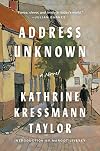
I know this short but impactful epistolary novel will stay with me for a long time. In the early 1930s, two friends of German heritage, one in San Francisco and one in Munich, exchange a series of letters about their shared art business and life in general. The San Francisco friend is Jewish and develops concerns about the rise of antisemitism in Germany. He is troubled as his once dearest friend falls under Hitler's influence, as is shown in his letters. I had to read this twice in one show more afternoon, just to appreciate its message more deeply. How easily poison ideologies can spread. Originally published in 1938, ADDRESS UNKNOWN is clearly still very relevant today. show less
Lists
Awards

You May Also Like


Associated Authors
Statistics
- Works
- 10
- Also by
- 1
- Members
- 1,690
- Popularity
- #15,204
- Rating
- 4.2
- Reviews
- 90
- ISBNs
- 111
- Languages
- 13
- Favorited
- 2