
Rosetta Loy (1931–2022)
Author of The Dust Roads of Monferrato
About the Author
Born in Rome in 1931, Rosetta Loy is one of Italy's leading novelists & journalists. She has written seven novels & been honored with every major Italian literary award. In 1996 she received the prestigious European Prize for literature. Her work has been translated into eleven languages. (Bowker show more Author Biography) show less
Works by Rosetta Loy
Gli anni fra cane e lupo. 1969-1994. Il racconto dell'Italia ferita a morte (2013) 9 copies, 1 review
Walter Palmaran 2 copies
Una moglie fuori posto 1 copy
En Yakın ve En Uzak 1 copy
Loy Rosetta 1 copy
Olga - Walter Palmaran 1 copy
As estradas de pó 1 copy
Associated Works
Flirten met het leven : droomreizen van Karen Blixen, Jung Chang, Rosetta Loy, Carolijn Visser en vele anderen (1996) — Contributor — 8 copies
Tagged
Common Knowledge
- Canonical name
- Loy, Rosetta
- Birthdate
- 1931
- Date of death
- 2022-10-01
- Gender
- female
- Occupations
- writer
- Nationality
- Italy
- Birthplace
- Rome, Italy
- Place of death
- Rome, Italië
- Associated Place (for map)
- Rome, Italy
Members
Reviews

I have had this book for ages and have avoided it for ages. It turns out that I did so for no good reason. I enjoyed it and while it is not a great work of art, it was a pleasure to read. I should note immediately that it is almost entirely description; dialogue is minimal at best. I cannot recall reading a book quite like it and yet it works well. The story follows a farming family in the Italian Piedmont, near France, through much of the 19th century. Its strong suit is the author’s show more romantic, often lyrical description of the lives of the family, the countryside, friends, relations, and servants. Wars, disease, weather, poverty…everything comes and goes, bringing good outcomes and bad. And everything takes places against the backdrop of Monferrato and its seasons. I suspect it will be slow and tedious for some, but I found its understatedness its strength and enjoyed it more than I anticipated. show less
3.5 stars (may round up later)
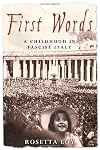
If you avoid holocaust books, you will want to avoid this. In this short memoir, Italian author Rosetta Loy looks at her childhood in 1935-1945 Rome. She was about 5 in 1936, and she did not really see, then, what she can recognize in retrospect. As part of the solid middle class, her family could still travel--and had no issues with hunger--up until about 1940.
There were several Jewish families in her building and neighborhood, and she also looked for what show more became of them. She remembers one neighbor disappearing overnight, and another family was taken away early one morning. She managed to track down what happened to some--and even found testimony. One man, though, she was unable to find anything about. He fled/went into hiding and she can find no records.
This book is also a condemnation of Pope Pius XII. Pius XI was standing for the Jews, but died in 1939 at age 82. Pius XII was German and, as she portrays him, a bit of a coward who cared only for the church itself and Vatican City.
So while I found this book very interesting--an adult re-examining her childhood memories in light of what she knows as an adult, and adding primary source research (much of which only became available decades after the end of WWII). But what I feel is missing is what her parents were thinking--she mentions other families, shops (including a whorehouse!), churches, and convents, that hid Jewish people for one or many nights. Did her parents do nothing? Did she ever discuss the events with her parents and older siblings? She only mentions her teemaged brother running away twice, the second tine to join the partisans--and coming back both times, hungry. Then they teased him. As an older adults she recognized that he was the only one in the family who tried. He did not succeed, but he tried and they teased him. show less
If you avoid holocaust books, you will want to avoid this. In this short memoir, Italian author Rosetta Loy looks at her childhood in 1935-1945 Rome. She was about 5 in 1936, and she did not really see, then, what she can recognize in retrospect. As part of the solid middle class, her family could still travel--and had no issues with hunger--up until about 1940.
There were several Jewish families in her building and neighborhood, and she also looked for what show more became of them. She remembers one neighbor disappearing overnight, and another family was taken away early one morning. She managed to track down what happened to some--and even found testimony. One man, though, she was unable to find anything about. He fled/went into hiding and she can find no records.
This book is also a condemnation of Pope Pius XII. Pius XI was standing for the Jews, but died in 1939 at age 82. Pius XII was German and, as she portrays him, a bit of a coward who cared only for the church itself and Vatican City.
So while I found this book very interesting--an adult re-examining her childhood memories in light of what she knows as an adult, and adding primary source research (much of which only became available decades after the end of WWII). But what I feel is missing is what her parents were thinking--she mentions other families, shops (including a whorehouse!), churches, and convents, that hid Jewish people for one or many nights. Did her parents do nothing? Did she ever discuss the events with her parents and older siblings? She only mentions her teemaged brother running away twice, the second tine to join the partisans--and coming back both times, hungry. Then they teased him. As an older adults she recognized that he was the only one in the family who tried. He did not succeed, but he tried and they teased him. show less
This lovely, poetic, understated little book follows the multigenerational story, spanning the late 1790s until perhaps 1900, of a farming family in Monferrato, Italy, in the Piedmont region, near France. The strength of the book lies in Loy’s lush, almost dreamlike description of the lives and loves of the family and their friends, relations, and servants. Wars come and go, bringing cholera and high taxes; babies are conceived, birthed, and live only a few days or years, or grow into show more healthy young people with lives and loves of their own. Each person has a story, some subtle, some more direct – and against it all is the backdrop of Montferrato itself, and how it changes with the seasons: by turns dusty and dry, or sodden with spring rains and mud, or icy and snowy, or lush and green with wheat and the grapevines for the wines for which the region is known. This is a quiet, satisfying book that provides a glimpse into the lives of ordinary people two hundred years ago. show less
This family saga follows the family of The Great Masten (name lost with the town records) through the 19th century, outside of Alessandria, Piemonte. Translated from Italian with dialect left untranslated. Won the Rapallo Carige Prize in 1988.
This story fits in with the history of Piemonte, and explores its effects on one land-owning (but not noble) family. When the story begins, this area has been annexed by France. Then it is The Kingdom of Sardinia. When it ends, it is Italy. There are show more two wars against the Austrians. There are droughts and floods, cold, illness, hunger and bounty. Talent, dreams, and boredom. Family fortunes--not just of this family, but also of noble and mercantile families--go up and down.
I enjoyed this book, particularly getting to read translated historical fiction. This is not a place and time period that English fiction (US or England) set. There is very little dialogue, which felt strange at first, but it somehow works, as Loy describes the scenes--the colors, the weather, the dirt, the travels of soldiers and women visiting their families.Seeing the dialect left in place--it is generally followed by a translation--it is an odd mix of Italian and French, and similiarities to Genoese are there. The constant talk in the book of dialects is so real, as it is very real in Italy today. show less
This story fits in with the history of Piemonte, and explores its effects on one land-owning (but not noble) family. When the story begins, this area has been annexed by France. Then it is The Kingdom of Sardinia. When it ends, it is Italy. There are show more two wars against the Austrians. There are droughts and floods, cold, illness, hunger and bounty. Talent, dreams, and boredom. Family fortunes--not just of this family, but also of noble and mercantile families--go up and down.
I enjoyed this book, particularly getting to read translated historical fiction. This is not a place and time period that English fiction (US or England) set. There is very little dialogue, which felt strange at first, but it somehow works, as Loy describes the scenes--the colors, the weather, the dirt, the travels of soldiers and women visiting their families.Seeing the dialect left in place--it is generally followed by a translation--it is an odd mix of Italian and French, and similiarities to Genoese are there. The constant talk in the book of dialects is so real, as it is very real in Italy today. show less
Lists
Awards


You May Also Like


Associated Authors
Statistics
- Works
- 30
- Also by
- 6
- Members
- 685
- Popularity
- #36,933
- Rating
- 3.5
- Reviews
- 16
- ISBNs
- 97
- Languages
- 8
- Favorited
- 1