
Debby Dahl Edwardson
Author of My Name Is Not Easy
Works by Debby Dahl Edwardson
Tagged
Common Knowledge
Members
Reviews

A young Iñupiaq boy anxiously awaits his father's return from a whaling trip, gazing out at the fat flakes his Aaka (grandmother) calls "whale snow" - the snow that "comes when a whale has given itself to the People." Joining in the communal celebration that follows - the hugging and crying, gathering and feasting - Amiqqaq discovers aġvaktuni quiviasuun, the "whale happiness" that comes from the spirit-of-the-whale's sacrifice. But where, Amiqqaq asks his Aapa (grandfather), does the show more spirit-of-the-whale go after the feast...?
A lovely picture-book, which combines a warm family tale with luminous watercolor illustrations, Whale Snow offers a sensitive, and culturally accurate, portrait of the Iñupiat people's physical and spiritual relationship with the bowhead whale. A glossary of Iñupiaq terms, and a brief afterword, provide additional information for the young reader.
As someone who supports the subsistence hunting and fishing rights of the indigenous peoples of North America, but who also has some serious problems with whaling, I am grateful to Debby Dahl Edwardson for this book, which really clarifies the central role of the bowhead whale in Iñupiat culture. Although not Iñupiaq herself, Edwardson raised seven half-Iñupiaq children in Barrow, Alaska, and really seems to understand her subject. Annie Patterson, also a resident of Barrow, captures the serene coldness of the Arctic landscape, as well as the warmth of its people, in her gorgeous art. All in all, a beautiful and enlightening book - one I would imagine would be particularly useful for teachers and librarians doing units on the indigenous peoples of the far north. show less
A lovely picture-book, which combines a warm family tale with luminous watercolor illustrations, Whale Snow offers a sensitive, and culturally accurate, portrait of the Iñupiat people's physical and spiritual relationship with the bowhead whale. A glossary of Iñupiaq terms, and a brief afterword, provide additional information for the young reader.
As someone who supports the subsistence hunting and fishing rights of the indigenous peoples of North America, but who also has some serious problems with whaling, I am grateful to Debby Dahl Edwardson for this book, which really clarifies the central role of the bowhead whale in Iñupiat culture. Although not Iñupiaq herself, Edwardson raised seven half-Iñupiaq children in Barrow, Alaska, and really seems to understand her subject. Annie Patterson, also a resident of Barrow, captures the serene coldness of the Arctic landscape, as well as the warmth of its people, in her gorgeous art. All in all, a beautiful and enlightening book - one I would imagine would be particularly useful for teachers and librarians doing units on the indigenous peoples of the far north. show less
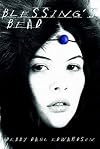
Blessing and her brother Isaac leave Anchorage to live with their grandmother on an Alaskan island after a domestic violence incident between her mother and boyfriend Stephan. Blessing feels out of place in this distant, spartan village where everyone seems to be a relative even though she's never met them. It is the place however, where Blessing discovers her culture and feels a part of her tribe in a way she never did before. The author married into the Iñupiaq culture and there seems to show more be a sincere authenticity in presenting Blessing's story. show less
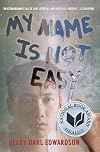
narration by, Amy Rubinate & Nick Podehl
I picked this book for my #JIAM challenge to listen to new to me narrators and the narrator I wanted to listen to was Amy Rubinate and this book sounded good plus had a second new to me narrator Nick Podehl, I am so glad I picked this book it is very powerful and I learned about a part of history I knew nothing about before now.
This was a part of history I had never really heard about, how the native Alaskan children were sent away to catholic schools show more and were given easier names, a new language and taken away from everything they knew. This is a true story written as fiction, the forward explains why it is written as such. The story is told by different people the main 2 being Eskimo boy Luke & young white motherless Chickie a young girl from a Scandinavian background, they tell a very different yet similar story both coming from different backgrounds yet still taken away from all they know to be educated in the Catholic Boarding School.
However there is much more than just education going on at this school there are also some military experiments to test how Eskimo’s live in such cold but these tests are done with radiation and iodine- 131 and I’m sure their parents were never informed. There is also Luke’s little brother Isaac who is whisked away and adopted without consent and this is the 60’s not the 30’s. There are many tragedies along the way. There are other characters Junior, Amiq, Donna & Sonny they are white, Eskimo and Native American (it’s never really said what tribe) and how each of them is trying to find their way in the world without losing who they are.
I think this is a very important book that should be read in high school to get a feel of what Americans have done to each other as they try to Americanize the natives. It is important so that this kind of thing never happens again.
I could feel the anger of these kids, they were all treated as orphans when they weren’t they all had families even if they weren’t the greatest parents they were still alive. This story really touched me and I am very glad I read it.
The narration by, Amy Rubinate & Nick Podehl goes back and forth as we hear Luke & Chickie’s stories (they were the main two there were other stories too) both narrators are fantastic and make you feel the various emotions of these characters. Both narrators were new to me and I very much enjoyed their narration and will look for other books they have narrated!
I see why this book has won awards I think it is a book everyone should read especially if you are like me and this was a part of history you knew nothing about.
4 ½ Stars show less
I picked this book for my #JIAM challenge to listen to new to me narrators and the narrator I wanted to listen to was Amy Rubinate and this book sounded good plus had a second new to me narrator Nick Podehl, I am so glad I picked this book it is very powerful and I learned about a part of history I knew nothing about before now.
This was a part of history I had never really heard about, how the native Alaskan children were sent away to catholic schools show more and were given easier names, a new language and taken away from everything they knew. This is a true story written as fiction, the forward explains why it is written as such. The story is told by different people the main 2 being Eskimo boy Luke & young white motherless Chickie a young girl from a Scandinavian background, they tell a very different yet similar story both coming from different backgrounds yet still taken away from all they know to be educated in the Catholic Boarding School.
However there is much more than just education going on at this school there are also some military experiments to test how Eskimo’s live in such cold but these tests are done with radiation and iodine- 131 and I’m sure their parents were never informed. There is also Luke’s little brother Isaac who is whisked away and adopted without consent and this is the 60’s not the 30’s. There are many tragedies along the way. There are other characters Junior, Amiq, Donna & Sonny they are white, Eskimo and Native American (it’s never really said what tribe) and how each of them is trying to find their way in the world without losing who they are.
I think this is a very important book that should be read in high school to get a feel of what Americans have done to each other as they try to Americanize the natives. It is important so that this kind of thing never happens again.
I could feel the anger of these kids, they were all treated as orphans when they weren’t they all had families even if they weren’t the greatest parents they were still alive. This story really touched me and I am very glad I read it.
The narration by, Amy Rubinate & Nick Podehl goes back and forth as we hear Luke & Chickie’s stories (they were the main two there were other stories too) both narrators are fantastic and make you feel the various emotions of these characters. Both narrators were new to me and I very much enjoyed their narration and will look for other books they have narrated!
I see why this book has won awards I think it is a book everyone should read especially if you are like me and this was a part of history you knew nothing about.
4 ½ Stars show less
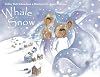
Amiqqaq is an Inupiaq boy whose father and crew goes out hunting for whales. They manage to get a whale and prepare to bring it back to the community for a feast and celebration. Amiqqaq is concerned though because he wonders what will become of the whale’s spirit. The author shares the traditions and their link to survival and spirituality.
Lists
Awards


You May Also Like


Associated Authors
Statistics
- Works
- 3
- Members
- 579
- Popularity
- #43,292
- Rating
- 3.7
- Reviews
- 35
- ISBNs
- 30