
Edward Steichen (1879–1973)
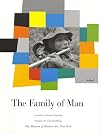
Author of The Family of Man
About the Author
Image credit: Edward Steichen (1879-1973) Photographed by F. Holland Day, 1901 (Library of Congress Prints and Photographs Division, Reproduction Number: LC-USZ62-52912)
Works by Edward Steichen
U.S. Navy war photographs, Pearl Harbor to Tokyo Harbor;: A collection of official U.S. Navy, Marine Corps and Coast Guard photographs (1980) 118 copies, 1 review
The Blue Ghost;: A photographic log and personal narrative of the aircraft carrier U.S.S. Lexington in combat operation (1947) 8 copies
Power in the Pacific; official U.S. Navy, Marine Corps, and Coast Guard photographs exhibited at the museum of modern ar (1945) 4 copies
Edward Steichen Exhibition 1 copy
The Museum of Modern Art Bulletin, Vol. XIX, No. 4, 1952: Photography at The Museum of Modern Art (1952) 1 copy
a room with a zoo 1 copy
US camera 1941, Vol. 2 1 copy
Associated Works
Evil Sisters: The Threat of Female Sexuality in Twentieth-Century Culture (1996) — Cover artist, some editions — 135 copies, 1 review
MHQ: The Quarterly Journal of Military History — Autumn 2019 (2019) — Photographer "Steichen's War" — 1 copy
Tagged
Common Knowledge
- Canonical name
- Steichen, Edward
- Legal name
- Steichen, Edward Jean
- Other names
- Steichen, Éduard Jean
סטייכן, אדוארד - Birthdate
- 1879-03-29
- Date of death
- 1973-03-25
- Gender
- male
- Occupations
- photographer
painter
curator - Organizations
- Museum of Modern Art
US Naval Aviation Photographic Unit (WWII)
US Army American Expeditionary Forces (WWI)
American Society of Magazine Photographers - Awards and honors
- Presidential Medal of Freedom (1963)
Légion d'Honneur (Chevalier, WWI)
Royal Photographic Society (Honorary Fellow)
Distinguished Service Medal (WWI, WWII)
U.S. Camera Achievement Award (1949)
Academy Award (Best Documentary Feature, 1944) - Relationships
- Sandburg, Carl (brother in law)
- Nationality
- Luxembourg
USA (naturalized 1900) - Birthplace
- Bivange, Luxembourg
- Places of residence
- West Redding, Connecticut, USA
- Place of death
- West Redding, Connecticut, USA
- Associated Place (for map)
- West Redding, Connecticut, USA
Members
Reviews
Luxembourg.
Yes, Luxembourg. If you don't like that, I'll have to read something by Hugo Gernsback, another Luxembourgian-turned-American and the person for whom the Hugo Award in science fiction is named. Did you know that Luxembourg is where the Family of Man collection is now housed? Or that Carl Sandburg, who wrote the Prologue to the book, was Steichen's brother-in-law? Or that Leo Lionni, whom you think of as "The guy who did children's books about mice with construction paper show more illustrations," was the Art Director for this book? I thought not. Your knowledge of Luxembourg is woefully inadequate. You do remember that The Family of Man was one of the books on your hip great aunt's coffee table in the 1960's, though, right?
The 1955 edition features over 500 photos, most of people, from 68 countries, making it an excellent fit for my Books of the World challenge. The black and white photos of a variety of human activities are interspersed with quotations from many cultures. A number of the cultures and countries depicted no longer exist in the form represented here. The photos are grouped thematically and associatively, the choice of photos highlighting the commonality of human emotion and experience. For example, the two-page spread of pages 58-59 shows a 12-person, multi-generational family group (I presume) from Bechuanaland, minimally garbed and looking into the camera. On the facing page, an agricultural family of 11 from "U.S.A." is similarly grouped and looking straight into the camera. Pages 94-95 present a circle of 18 photos of groups dancing in circles. There is also social commentary. A page of scientists faces a boy surrounded by the wreckage of buildings in Germany.
If you're not familiar with this collection, culled from more than two million submitted photos, go find it and take a look. You'll recognize Arbus, Eisenstadt, Cartier-Bresson, Adams, Page, Doisneau, Lange and many Life photographers. You'll recognize some subjects (like Einstein and Alice Liddell) and photos (such as Lang's on the bottom of page 151). Others are simply emblematic of human experience, but far from generic.
Yes, I'd like to see gay people and fewer people from the U.S. Nonetheless, it's a startlingly broad collection for 1955, and even more moving than when I first looked it about 40 years ago. show less
Yes, Luxembourg. If you don't like that, I'll have to read something by Hugo Gernsback, another Luxembourgian-turned-American and the person for whom the Hugo Award in science fiction is named. Did you know that Luxembourg is where the Family of Man collection is now housed? Or that Carl Sandburg, who wrote the Prologue to the book, was Steichen's brother-in-law? Or that Leo Lionni, whom you think of as "The guy who did children's books about mice with construction paper show more illustrations," was the Art Director for this book? I thought not. Your knowledge of Luxembourg is woefully inadequate. You do remember that The Family of Man was one of the books on your hip great aunt's coffee table in the 1960's, though, right?
The 1955 edition features over 500 photos, most of people, from 68 countries, making it an excellent fit for my Books of the World challenge. The black and white photos of a variety of human activities are interspersed with quotations from many cultures. A number of the cultures and countries depicted no longer exist in the form represented here. The photos are grouped thematically and associatively, the choice of photos highlighting the commonality of human emotion and experience. For example, the two-page spread of pages 58-59 shows a 12-person, multi-generational family group (I presume) from Bechuanaland, minimally garbed and looking into the camera. On the facing page, an agricultural family of 11 from "U.S.A." is similarly grouped and looking straight into the camera. Pages 94-95 present a circle of 18 photos of groups dancing in circles. There is also social commentary. A page of scientists faces a boy surrounded by the wreckage of buildings in Germany.
If you're not familiar with this collection, culled from more than two million submitted photos, go find it and take a look. You'll recognize Arbus, Eisenstadt, Cartier-Bresson, Adams, Page, Doisneau, Lange and many Life photographers. You'll recognize some subjects (like Einstein and Alice Liddell) and photos (such as Lang's on the bottom of page 151). Others are simply emblematic of human experience, but far from generic.
Yes, I'd like to see gay people and fewer people from the U.S. Nonetheless, it's a startlingly broad collection for 1955, and even more moving than when I first looked it about 40 years ago. show less

I have to admit I cannot remember where I saw the exhibition. It may have been in New York City early on, or Washington, D. C., or Chicago. I think it may have been the first art exhibition I had ever viewed first-hand. Certainly it was the first that caught my attention and implanted itself in my mind. It was the first time I realized, naive youngster that I was, how black and white photography could be considered art—art as pure as oil paintings or watercolors, as solid as statuary or show more architecture, as dynamic as opera or ballet.
The exhibition, put together by Edward Steichen, was called (in those days before such language was considered sexist) simply The Family of Man. Put together with 503 photographs by 273 photographers in 68 countries, right away it persuaded me visually that family and humanity are synonyms. Humankind is a global family, and every family is a microcosm of humankind.
I would always remember the piping child whose picture invited viewers into the several sections of the exhibition. There were the lovers, the weddings, the pregnancies, the nursing mothers, the playful children. Especially the playful children, many, many of them. There were the farmers (“The land is a mother that never dies”) and the reapers, the builders and the homemakers, the mines and the markets. There were celebrations, music and dancing, feasts and games, prayer and days of rest, cemeteries and funerals (“As the generation of leaves, so is that of men”). There were courts and schools, voters and assemblies, and men in the USA gathered around a cast-iron heater in a country store as I had seen so many times in my childhood.
Of the many memorable images, perhaps the ones which, for me, epitomized the exhibition best were the family portraits. Posed for the camera, putting their best face forward, in Sicily, Japan, Bechaunaland, and the USA, they looked square into my eyes, and I knew them and understood that they knew me. At least four generations of the US family were gathered around an old Franklin heater with a long, rickety stove pipe, some in rocking chairs, some seated on the woolen carpet, some leaning against one another or the wallpapered wall. Hanging above them, in old-fashioned frames, were four portraits of preceding generations, bearded and solemn. Family goes on and on.
I found the hardback book The Family of Man (Museum of Modern Art, 1955) in the library. With time to peruse it over and over again, I saw more and more. My understanding of the synonymity of family and man, which had been visual and intuitive, became conscious. I began to see community. I began to see hunger and conflict and suffering and grief in the family. I saw poverty. I saw the Warsaw Ghetto as photographed by an anonymous German.
Now the photographs that haunted me most were those taken during the Depression by photographers from the Farm Security Administration, like Dorothea Lange. Two women (on pp. 150 and 151) stared into a vacuum. Their soft flesh had been stripped away by hunger; their bodies hardened by labor; their faces lined by distress; their eyes shadowed by hopelessness.
As a young college instructor of English, not much older than most of my students, I checked the book out of the library often and used it as a stimulus for writing. A wealthy lady, older than any of us, enrolled in a creative writing class with me. Our class became a family. The lady was amused that in our church-related school we referred to each other as “brother” and “sister.” But we all realized how little we knew of brothers and sisters in the “family of man,” how little we reached out to those in need, like those Depression-era women. At the last class session, we partied a bit and shared our writings. Leaving, the lady gave me a package. It was my own copy of The Family of Man, inscribed “To: Brother _____ — the best damn teacher I have ever had! [signed] Sister Grimm, May 29, 1963.”
I have few books that I have owned longer or treasured more. Carl Sandburg, Steichen’s brother-in-law, wrote the prologue. “If the human face is the ‘masterpiece of God’ it is here then in a thousand fateful registrations. Often the faces speak what words can never say. . . . Some of them are worth a long look now and deep contemplation later.” So be it. show less
The exhibition, put together by Edward Steichen, was called (in those days before such language was considered sexist) simply The Family of Man. Put together with 503 photographs by 273 photographers in 68 countries, right away it persuaded me visually that family and humanity are synonyms. Humankind is a global family, and every family is a microcosm of humankind.
I would always remember the piping child whose picture invited viewers into the several sections of the exhibition. There were the lovers, the weddings, the pregnancies, the nursing mothers, the playful children. Especially the playful children, many, many of them. There were the farmers (“The land is a mother that never dies”) and the reapers, the builders and the homemakers, the mines and the markets. There were celebrations, music and dancing, feasts and games, prayer and days of rest, cemeteries and funerals (“As the generation of leaves, so is that of men”). There were courts and schools, voters and assemblies, and men in the USA gathered around a cast-iron heater in a country store as I had seen so many times in my childhood.
Of the many memorable images, perhaps the ones which, for me, epitomized the exhibition best were the family portraits. Posed for the camera, putting their best face forward, in Sicily, Japan, Bechaunaland, and the USA, they looked square into my eyes, and I knew them and understood that they knew me. At least four generations of the US family were gathered around an old Franklin heater with a long, rickety stove pipe, some in rocking chairs, some seated on the woolen carpet, some leaning against one another or the wallpapered wall. Hanging above them, in old-fashioned frames, were four portraits of preceding generations, bearded and solemn. Family goes on and on.
I found the hardback book The Family of Man (Museum of Modern Art, 1955) in the library. With time to peruse it over and over again, I saw more and more. My understanding of the synonymity of family and man, which had been visual and intuitive, became conscious. I began to see community. I began to see hunger and conflict and suffering and grief in the family. I saw poverty. I saw the Warsaw Ghetto as photographed by an anonymous German.
Now the photographs that haunted me most were those taken during the Depression by photographers from the Farm Security Administration, like Dorothea Lange. Two women (on pp. 150 and 151) stared into a vacuum. Their soft flesh had been stripped away by hunger; their bodies hardened by labor; their faces lined by distress; their eyes shadowed by hopelessness.
As a young college instructor of English, not much older than most of my students, I checked the book out of the library often and used it as a stimulus for writing. A wealthy lady, older than any of us, enrolled in a creative writing class with me. Our class became a family. The lady was amused that in our church-related school we referred to each other as “brother” and “sister.” But we all realized how little we knew of brothers and sisters in the “family of man,” how little we reached out to those in need, like those Depression-era women. At the last class session, we partied a bit and shared our writings. Leaving, the lady gave me a package. It was my own copy of The Family of Man, inscribed “To: Brother _____ — the best damn teacher I have ever had! [signed] Sister Grimm, May 29, 1963.”
I have few books that I have owned longer or treasured more. Carl Sandburg, Steichen’s brother-in-law, wrote the prologue. “If the human face is the ‘masterpiece of God’ it is here then in a thousand fateful registrations. Often the faces speak what words can never say. . . . Some of them are worth a long look now and deep contemplation later.” So be it. show less

I believe I was a teenager when I first obtained this book, the record of a 1950s photographic collection showing how people around the world are part of a Family of Man (Human), that they have so much in common in their diversity. The text and the quotes, as well as the poignant pictures, spoke to me. The goal, in the face of possible world annihilation, to argue our commonality, touched me. In retrospect, perhaps it seems naive. There is more than a hint of colonialism in the selection. In show more retrospect, these outstanding photographs may suffer from the reproduction of so much black and white photography in a mass market edition as well. To some extent, these photographs are time capsule of a vanished time, the early 20th century.
But to me, these photographs still have the power to stir powerful emotions. show less
But to me, these photographs still have the power to stir powerful emotions. show less

Edward Steichen has written a surprisingly readable and interesting autobiography, well-laden with good reproductions of much of his photographic ouvre. I had some familiarity with his more famous photographs, and one of my favorite books of photography is his "Family of Man" collection. But I was surprised to learn what a warmly unassuming and likeable personality he was. We also shared some of the same respect and admiration for other well-known artists and creators. For example, his show more sister married Carl Sandburg, and the two rapidly became best friends. Steichen was immensely influenced by Alfred Stieglitz and Auguste Rodin early in his career, and much of his fame came from his astonishing photographic portraits of contemporary celebrities. This book also helped change my assumptions about the role of the photographer in controlling the final appearance of the photograph, making intelligent and well-considered choices in lighting, lenses, exposure time and types of developing media. I was also impressed with his humanitarian ideals, particularly well-expressed in his writing about his wartime photography and his work on the "Family of Man". A fine, sumptuous autobiography and body of photography by a man I have developed a further respect for. show less
Lists
Awards


You May Also Like


Associated Authors
Statistics
- Works
- 38
- Also by
- 4
- Members
- 2,549
- Popularity
- #10,075
- Rating
- 4.0
- Reviews
- 29
- ISBNs
- 47
- Languages
- 6
- Favorited
- 2
