
Hope Ryden (1929–2017)
Author of Wild Horse Summer
About the Author
Hope Elaine Ryden was born in St. Paul, Minnesota on August 1, 1929. In 1951, she received a bachelor's degree in English from the University of Iowa. Afterward, she was a fashion model and a flight attendant. In 1958, she was a crew member aboard Pan Am's inaugural trans-Atlantic jet passenger show more flight. She developed a passion for photography during breaks abroad. In 1961, she joined Robert Drew & Associates, a noted documentary production company. She later worked for ABC News. She was a writer, director, and producer of documentary films. Her books on wildlife included America's Last Wild Horses, God's Dog: A Celebration of the North American Coyote, Bobcat Year, Wild Animals of America ABC, and Lily Pond: Four Years with a Family of Beavers. She also wrote for National Geographic, Audubon, Smithsonian, and The New York Times Magazine. Her documentaries featured the actress Jane Fonda at 25 as she prepared for her starring role in The Fun Couple on Broadway, two Peace Corps nurses in Malaya, and a Boston man who saved some 9,000 animals in Suriname from starvation or drowning. She died from complications of hip surgery on June 18, 2017 at the age of 87. (Bowker Author Biography) show less
Image credit: Hope Ryden
Works by Hope Ryden
Associated Works
Sisters of the Earth: Women's Prose and Poetry About Nature (1991) — Contributor — 443 copies, 5 reviews
Among Wild Horses: A Portrait of the Pryor Mountain Mustangs (2006) — Foreword — 14 copies, 1 review
Tagged
Common Knowledge
- Canonical name
- Ryden, Hope
- Legal name
- Ryden, Hope Elaine
- Birthdate
- 1929-08-01
- Date of death
- 2017-06-18
- Gender
- female
- Education
- University of Iowa (BA|1951)
- Occupations
- photographer
protector of wildlife
producer of documentaries - Organizations
- Drew Associates
ABC News - Nationality
- USA
- Birthplace
- St. Paul, Minnesota, USA
- Place of death
- Hyannis, Massachusetts, USA
- Associated Place (for map)
- USA
Members
Reviews

A bit disappointed in the book as this is not how science is done. The author got too close to her subjects and by her interactions altered the behavior of animals.If her goal was to connect to the emotional side of the reader she succeeded. Though scientist are not cold and heartless they must be observers only.
On the positive side she does delve into the challenges that the beavers face and what can be done to protect them. The feeling that beavers are a pest has changed in 30 years to one show more that they a integral part of the environment and their dams and waterworks are important part of keeping what littler wild spaces that we have in good order. show less
On the positive side she does delve into the challenges that the beavers face and what can be done to protect them. The feeling that beavers are a pest has changed in 30 years to one show more that they a integral part of the environment and their dams and waterworks are important part of keeping what littler wild spaces that we have in good order. show less
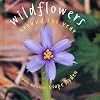
Amazing photographs of wildflowers and interesting facts about each plant are provided in this beautiful picture book. The author is also the photographer. While the flowers are arranged by bloom time in chronological order, I expected to have the flowers arranged month by month or by seasons with a divider page in between to make it easier to say look at all flowers found in March or those found in fall. Instead the table of contents simply lists the flowers in order that they are placed in show more the book with no list of bloom time. Since the flower names are not alphabetically or with scientific names in the table of contents it makes it difficult for the reader to navigate the book. Only in the author's description of each wildflower does the reader find out where the wildflowers are located. This book is more about the arrangement of the photos and text than about good information about wildflowers. The author did include the scientific names for each wildflower. Several wildflowers that the author included I would not classify as such. I would consider them crops that are all planted domestically and have escaped cultivation to be found occasionally on the road side so some people consider them wildflowers. Red clover for example is planted along roadsides and in medians as a means of beautification. I consider that a crop rather than a wildflower. Chicory and purple coneflower (echinachea) are two other wildflowers that I would also consider as crops and not wildflowers. Overall a beautiful picture book of wildflowers but not a good book for studying plants. show less

Ms. Ryden uses stunning still shots of wildlife to teach elementary kids the alphabet.

Forever alters the notion that coyotes are rotten pests. God's dogs, indeed.
Lists
Awards


You May Also Like


Associated Authors
Statistics
- Works
- 25
- Also by
- 6
- Members
- 700
- Popularity
- #36,172
- Rating
- 4.0
- Reviews
- 6
- ISBNs
- 62
- Languages
- 4