
Ann Howard Creel
Author of Nicki (American Girl Today)
About the Author
Ann Howard Creel was born on July 24, 1953. By the age of ten she was writing daily in a diary, and by the age of twelve she had written a novel. She attended the University of Texas, received a degree in nursing, and became a Registered Nurse. After moving to California in 1985 she went back to show more school and earned a Master's degree. She loved her nursing career, but the urge to write never left her, so she began to write again at night after work when she moved to Colorado. She took two creative writing courses in Durango, Colorado and then wrote her first novel, Water at the Blue Earth. She still works as a school nurse in the Denver area and writes part-time. Her titles include A Ceiling of Stars, Call Me the Canyon, and The Magic of the Ordinary Days. (Bowker Author Biography) show less
Series
Works by Ann Howard Creel
Tagged
Common Knowledge
- Birthdate
- 1953-07-24
- Gender
- female
- Education
- University of Texas
- Places of residence
- Colorado, USA
- Associated Place (for map)
- Colorado, USA
Members
Reviews

While You Were Mine was a sweet historical romance with a bit of a dark edge.
The characters were all so strong in some ways and yet so naïve and weak in others. They made mistakes and bad decisions -- some of them monumentally bad. Two characters suffered from severe mental illness. Overall, however, it was an uplifting story about a young nurse doing her best to handle a tough situation: her roommate, Alice, disappears and leaves her six-week-old baby behind in the apartment.
Over the show more course of the story, we see Gwen ride an emotional roller coaster, but she always returns to a level-headed center. She is supposed to be the woman in the famous “V-J Day in Times Square” photo, and at one point she explains that while she was happy to have been in Life magazine, she was also glad to have appeared anonymously. She had no desire to take credit for her appearance in the photo or to capitalize on it. Alice, on the other hand, was grasping for fame and always had to be the center of attention. Gwen’s rational acceptance of random happenings in her life, whether it was a sailor grabbing her on the street and inadvertently making her famous, or a baby being abandoned in her lap, underscored her pragmatism and, I thought, explained why she handled certain events in the story as calmly she did.
I liked that John’s POV was inserted in a few places, just enough to give us a little insight into his thoughts. It might seem strange and unexpected in a book that is otherwise written in first person, but I like strange and unexpected. Keeps things interesting :). I’ll read more by Creel in the future. show less
The characters were all so strong in some ways and yet so naïve and weak in others. They made mistakes and bad decisions -- some of them monumentally bad. Two characters suffered from severe mental illness. Overall, however, it was an uplifting story about a young nurse doing her best to handle a tough situation: her roommate, Alice, disappears and leaves her six-week-old baby behind in the apartment.
Over the show more course of the story, we see Gwen ride an emotional roller coaster, but she always returns to a level-headed center. She is supposed to be the woman in the famous “V-J Day in Times Square” photo, and at one point she explains that while she was happy to have been in Life magazine, she was also glad to have appeared anonymously. She had no desire to take credit for her appearance in the photo or to capitalize on it. Alice, on the other hand, was grasping for fame and always had to be the center of attention. Gwen’s rational acceptance of random happenings in her life, whether it was a sailor grabbing her on the street and inadvertently making her famous, or a baby being abandoned in her lap, underscored her pragmatism and, I thought, explained why she handled certain events in the story as calmly she did.
I liked that John’s POV was inserted in a few places, just enough to give us a little insight into his thoughts. It might seem strange and unexpected in a book that is otherwise written in first person, but I like strange and unexpected. Keeps things interesting :). I’ll read more by Creel in the future. show less
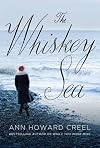
Coming of age historical fiction about rum-running during the Prohibition era in the northeastern United States. When we first meet protagonist Frieda, her mother has died, and she and her sister are taken in by a kindly fisherman. She grows into a young woman determined to build an independent life for herself and take care of her family. She learns to fix engines and challenges the conventional role of women of the day. She is wary of men due to her mother’s past and finds herself in show more unfamiliar territory when she falls in “first love” with a man from a different social background.
The author’s writing style is refined and descriptive. I was able to vividly picture life in this small New Jersey coastal town. It is a character-driven novel about a strong-willed young woman, filled with risk-taking, romantic attraction, and, personal growth. I particularly liked the author’s ability to depict struggles with such topics as whether the end justifies the means, the perils of first love, and whom to trust. It occasionally ventures into somewhat maudlin territory, but overall it came across as poignant story of the heaviness of loss, learning from experience, and the ramifications of decisions. I didn’t quite feel transported to the era due to several contemporary figures of speech, but it was close.
Recommended to readers that enjoy character-driven stories of personal development. I look forward to reading more from this author.
Memorable passages that convey the writing style:
“When the bay was furious and churning, those frothing waters pulled the resentment right out of her and fed it to the waves. And when the tides stopped surging and the bay became silver and flat, it was as if some almighty power had smoothed her rough edges while leveling the surface of the sea with big, broad hands. She felt as if she could sail out past the land and lighthouses and float on forever.”
“It was the tiny chill in the predawn air, an indication that summer was nearing a close, a sign of change to come. She felt it on her arms—not a breeze but a shift in the air. The long sultry nights were over. Every sunrise and sunset was another little slip toward September, a month that loomed as desolate and unwelcome as sleet.” show less
The author’s writing style is refined and descriptive. I was able to vividly picture life in this small New Jersey coastal town. It is a character-driven novel about a strong-willed young woman, filled with risk-taking, romantic attraction, and, personal growth. I particularly liked the author’s ability to depict struggles with such topics as whether the end justifies the means, the perils of first love, and whom to trust. It occasionally ventures into somewhat maudlin territory, but overall it came across as poignant story of the heaviness of loss, learning from experience, and the ramifications of decisions. I didn’t quite feel transported to the era due to several contemporary figures of speech, but it was close.
Recommended to readers that enjoy character-driven stories of personal development. I look forward to reading more from this author.
Memorable passages that convey the writing style:
“When the bay was furious and churning, those frothing waters pulled the resentment right out of her and fed it to the waves. And when the tides stopped surging and the bay became silver and flat, it was as if some almighty power had smoothed her rough edges while leveling the surface of the sea with big, broad hands. She felt as if she could sail out past the land and lighthouses and float on forever.”
“It was the tiny chill in the predawn air, an indication that summer was nearing a close, a sign of change to come. She felt it on her arms—not a breeze but a shift in the air. The long sultry nights were over. Every sunrise and sunset was another little slip toward September, a month that loomed as desolate and unwelcome as sleet.” show less
from Deborah:
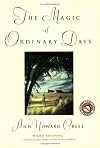
I've gotten a bit cynical over "happy ending" stories for a good reason. It's trite and unbelievable to have all emotions abruptly flipped by sudden, blinding epiphanies and to have all losses neatly bundled away to be replaced by gobs of abundance that drop from suddenly clear blue skies. The Magic of Ordinary Days by Ann Howard Creel is - spoiler alert - a "happy ending" story, just not that kind.
Livvy's story is told well because of the choices the author made in setting and show more timing. Ironically, Livvy, is plunked down in a semi-isolated setting during the latter half of World War II, a time when huge events play out on a world stage. There is a very realistic feeling of disorientation and the ache and grating of being squeezed into what seems a shrunken life.The war is experienced in flurries and stalls, not only because of the limited connection through newspapers and radio contact, but because of the human quality of screening all happenings through the sieve of your current, very personal dilemma.
Also true to life is the slow - slow - slow unwinding of the story. Events are unspectacular and widely spaced. The feelings experienced are at times intense but are still played out in the day to day normalcy of life.Things proceed no faster than the occasional dusty drives taken in the old truck.
I didn't realize how good this book was until I caught myself trying to cheat by reading a random sentence from a chunk ahead, and yet another chunk ahead to relieve the quietly building tension. It didn't help.There is a magic in ordinary days, closely wrapped and hidden, and it won't be rushed. show less
I've gotten a bit cynical over "happy ending" stories for a good reason. It's trite and unbelievable to have all emotions abruptly flipped by sudden, blinding epiphanies and to have all losses neatly bundled away to be replaced by gobs of abundance that drop from suddenly clear blue skies. The Magic of Ordinary Days by Ann Howard Creel is - spoiler alert - a "happy ending" story, just not that kind.
Livvy's story is told well because of the choices the author made in setting and show more timing. Ironically, Livvy, is plunked down in a semi-isolated setting during the latter half of World War II, a time when huge events play out on a world stage. There is a very realistic feeling of disorientation and the ache and grating of being squeezed into what seems a shrunken life.The war is experienced in flurries and stalls, not only because of the limited connection through newspapers and radio contact, but because of the human quality of screening all happenings through the sieve of your current, very personal dilemma.
Also true to life is the slow - slow - slow unwinding of the story. Events are unspectacular and widely spaced. The feelings experienced are at times intense but are still played out in the day to day normalcy of life.Things proceed no faster than the occasional dusty drives taken in the old truck.
I didn't realize how good this book was until I caught myself trying to cheat by reading a random sentence from a chunk ahead, and yet another chunk ahead to relieve the quietly building tension. It didn't help.There is a magic in ordinary days, closely wrapped and hidden, and it won't be rushed. show less
Many, many years ago now, my mom read a book by Ann Howard Creel called The Magic of Ordinary Days and needed to talk about it. In fact, it was this book that inspired the creation of our now long standing summer book club, so when I was offered the chance to read Howard's newest book, I was intrigued. The Whiskey Sea, Howard's latest, is quite different in topic from that earlier novel although it does share some similarities in theme. Like the earlier novel, it would make a wonderful book show more club choice, begging, as it does, for discussion.
In a small, seaside fishing town not far from New York City, Frieda Hope is the oldest daughter of the town prostitute. No one knows who her father is. When her mother dies, Frieda and her younger sister are left alone in the world until a solitary fisherman named Silver takes them in. Growing up in Silver's care, the girls are cherished and cared for. Frieda is drawn to the sea and wants nothing more than to go out fishing once she's finished with school. She's prickly and defensive, wanting to survive and thrive in a man's world, so when Silver sells the boat she'd hoped to one day own to provide her with the money to go to secretarial school or the like, she is crushed. Even for the love of this crusty old fisherman, she cannot bring herself to give up her dream. Apprenticing with the boat's gentle new owner, she learns to work on engines, earning a reputation as a skilled mechanic. And when she's offered the lucrative job of being the engineer on a bootlegger's boat, it's a position she can't and won't turn down despite the disapproval of those closest to her. It is the only way she can continue to support her sister's academic ambitions and pay for the care that Silver, incapacitated by a stroke, needs. But descending into the illegal world of rum-running changes her life in more than just financial ways, testing her courage, introducing her to an intoxicating love, and revealing things about the past and her own character she might not have wanted to know.
Frieda is a tough character. She knows what she wants and she will bulldoze her way to it if anyone stands in her way. She is unconventional and stubborn and she holds a grudge against the town for their treatment of her mother in life and in death. She tries very hard to minimize her femininity not only because of her desire to do "man's work" but also in an effort to be something other than her mother was. Her damn the torpedoes personality can be a handicap to her when she doesn't consider all of the potential outcomes of her choices, not the people she could hurt, nor how she might hurt herself. But Frieda's character shows a tremendous amount of growth throughout the novel, going from a determinedly unthinking woman to more thoughtful one able to consider others beyond herself. The backdrop of Prohibition and the evolution both of flouting the law and of enforcing the law add a unique and interesting angle to the story. Creel does a good job conveying not only the thrill of the danger but also the sick feeling, the monotony, and the fear that accompanied each and every trip out to pick up contraband. The secondary characters in the novel were foils that highlighted the growing that Frieda was doing but they were charming or interesting in their own right, written briefly but as real people. The novel is a quick read, only bogging down a bit during the love story. Creel weaves in issues of surviving in difficult times, coming of age on one's own terms, and love of many types into the story. This is a compelling read for fans of historical fiction with an interest in the Prohibition and for those who appreciate strong women. show less
In a small, seaside fishing town not far from New York City, Frieda Hope is the oldest daughter of the town prostitute. No one knows who her father is. When her mother dies, Frieda and her younger sister are left alone in the world until a solitary fisherman named Silver takes them in. Growing up in Silver's care, the girls are cherished and cared for. Frieda is drawn to the sea and wants nothing more than to go out fishing once she's finished with school. She's prickly and defensive, wanting to survive and thrive in a man's world, so when Silver sells the boat she'd hoped to one day own to provide her with the money to go to secretarial school or the like, she is crushed. Even for the love of this crusty old fisherman, she cannot bring herself to give up her dream. Apprenticing with the boat's gentle new owner, she learns to work on engines, earning a reputation as a skilled mechanic. And when she's offered the lucrative job of being the engineer on a bootlegger's boat, it's a position she can't and won't turn down despite the disapproval of those closest to her. It is the only way she can continue to support her sister's academic ambitions and pay for the care that Silver, incapacitated by a stroke, needs. But descending into the illegal world of rum-running changes her life in more than just financial ways, testing her courage, introducing her to an intoxicating love, and revealing things about the past and her own character she might not have wanted to know.
Frieda is a tough character. She knows what she wants and she will bulldoze her way to it if anyone stands in her way. She is unconventional and stubborn and she holds a grudge against the town for their treatment of her mother in life and in death. She tries very hard to minimize her femininity not only because of her desire to do "man's work" but also in an effort to be something other than her mother was. Her damn the torpedoes personality can be a handicap to her when she doesn't consider all of the potential outcomes of her choices, not the people she could hurt, nor how she might hurt herself. But Frieda's character shows a tremendous amount of growth throughout the novel, going from a determinedly unthinking woman to more thoughtful one able to consider others beyond herself. The backdrop of Prohibition and the evolution both of flouting the law and of enforcing the law add a unique and interesting angle to the story. Creel does a good job conveying not only the thrill of the danger but also the sick feeling, the monotony, and the fear that accompanied each and every trip out to pick up contraband. The secondary characters in the novel were foils that highlighted the growing that Frieda was doing but they were charming or interesting in their own right, written briefly but as real people. The novel is a quick read, only bogging down a bit during the love story. Creel weaves in issues of surviving in difficult times, coming of age on one's own terms, and love of many types into the story. This is a compelling read for fans of historical fiction with an interest in the Prohibition and for those who appreciate strong women. show less
Lists
Awards


You May Also Like


Associated Authors
Statistics
- Works
- 15
- Members
- 1,845
- Popularity
- #13,950
- Rating
- 3.8
- Reviews
- 57
- ISBNs
- 71
- Languages
- 4
- Favorited
- 2