
Emmanuel Levinas (1906–1995)
Author of Totality and Infinity: An Essay on Exteriority
About the Author
Emmanuel Levinas was born in Kovno, Lithuania, to an Orthodox Jewish family. Hebrew was the first language that he learned to read; he also acquired a love of the Russian classics, particularly works by Pushkin and Tolstoy which first stirred his philosophical interests. Levinas studied in show more Strasbourg, Freiburg, and Paris, developing a particular interest in the philosophers Henri Bergson, Edmund Husserl, and Martin Heidegger. He became a French citizen and eventually a prisoner during World War II, at which time his entire family was exterminated. After the war, Levinas taught at Poitiers, Nanterre, and eventually became professor of philosophy at the Sorbonne in 1973. He has also been deeply involved in the problems of Western Jews, including active membership in the Alliance Israelite Universelle, an organization established in 1860 to promote Jewish emancipation. The experience of the ravages of totalitarianism during World War II convinced Levinas that only a rediscovery of the specificity of Judaism could deliver the modern world from itself. Levinas's central concern is with "the other"---not the self or the cosmos, but the faces of other persons who make a claim on us and provide traces of the working of an infinite other. Totality and Infinity (1961) is a central but very difficult text. In it Levinas argues that Western philosophy has been captured by a notion of totality from which nothing is distant, exterior, or other and that, thus, when persons who are different confront such totalistic ways of living and thinking, they go to war. Moving beyond totality and war requires a notion of transcendence or infinity, which can bring peace. In fact, religion is, according to Levinas, "the bond that is established between the same and the other without constituting a totality." Levinas maintains that "the existence of God is not a question of an individual soul's uttering logical syllogisms. It cannot be proved. The existence of God . . . is sacred history itself, the sacredness of man's relation to man through which God may pass. God's existence is the story of his revelation in biblical history." Levinas has said that the most common objection to his thought is that it is utopian, for people are always asking, "Where did you ever see the ethical relation [with the other] practiced?" But Levinas is convinced that, although concern for the other is "always other than the "ways of the world,"' there are "many examples of it in the world." This is the reason that his writings on Judaism, such as Difficult Freedom (1963) and Nine Talmudic Essays (1968), are at least as important as his philosophical texts. (Bowker Author Biography) show less
Image credit: Bracha L. Ettinger
Works by Emmanuel Levinas
Discovering Existence with Husserl (Studies in Phenomenology and Existential Philosophy) (1988) 58 copies
Die Spur des Anderen. Studienausgabe. Untersuchungen zur Phänomenologie und Sozialphilosophie. (1998) 6 copies
TotalitŽ et infini 2 copies
ETIKA DHE PAFUNDËSIA 2 copies
Die Spur des Anderen. Studienausgabe: Untersuchungen zur Phänomenologie und Sozialphilosophie (2012) 1 copy, 1 review
Dios, la muerte y el tiempo 1 copy
Etika a nekonečno 1 copy
De l'unicité 1 copy
Noms propres: Agnon, Buber, Cela, Delhomme, Derrida, Jabès, Kierkegaard, Lacroix, Laporte, Picard, Proust, Van Breda, Wahl (1987) 1 copy
Entre nous (Figures) 1 copy
Emmanuel Levinas 1 copy
貨幣の哲学 (叢書・ウニベルシタス) 1 copy
אל עבר האחר 1 copy
Violencia do Rosto 1 copy
Signature 1 copy
Associated Works
Tagged
Common Knowledge
- Canonical name
- Levinas, Emmanuel
- Other names
- Levinas, Emanuelis
- Birthdate
- 1906-01-12
- Date of death
- 1995-12-25
- Gender
- male
- Education
- Lycée de Kharkov, Ukraine, Empire russe
Université de Strasbourg (Philosophie, 1923-1927)
Université de Fribourg-en-Brisgau, Bade-Wurtemberg, Allemagne (Doctorat, Thèse " Théorie de l'intuition dans la phénoménologie de Husserl", 1930)
Université de Davos (1929) - Occupations
- Professeur (Philosophie)
Philosophe - Organizations
- Université de Poitiers (Professeur, 1961-1967)
Université de Paris-Nanterre (Professeur, 1967-1973)
Université de la Sorbonne (Professeur, 1973-1976)
Alliance israélite universelle (AIU), Paris, France (Membre, 1933-1939, 1945)
Ecole normale israélite orientale (ENIO) (Direction)
Université de Fribourg (Chargé de cours, 1970-1980) - Awards and honors
- Prix Balzan(Philosophie, 1989)
- Nationality
- France
Lithuania (birth) - Birthplace
- Kaunas, Lituanie
- Places of residence
- Kaunas, Lituanie (Empire russe)
Kharkov, Ukraine (Empire russe)
Strasbourg, Haut-Rhin, Alsace, France
Fribourg-en-Brisgau, Bade-Wurtemberg, Allemagne
Paris, France - Place of death
- Paris, France
- Burial location
- Cimetière de Pantin, Paris, France
- Map Location
- France
Members
Reviews
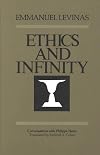
Emmanuel Levinas' books and articles are famously difficult reading, both because of their depth and because their themes, proposals and obessions manage to be breathtakingly against the grain of modernity and, simultaneously, postmodernity. This little book shows Levinas to be not only a great philosopher but also a good one--that is, an author genuinely concerned for his audience. In these transcribed interviews first broadcast on Radio-France, we meet Levinas the generous conversation show more partner who engages each question in a way that makes fresh understanding possible. Overhearing this conversation is the shortest route to a basic orientation to this wonderfully disorienting thinker. show less

I like Levinas's incantatory style, and I like the way he covers whole swathes of Schopenhauer in a fraction of the space--"we extend to animals the right not to suffer (or try to, perhaps convulsively) because we as human beings know what it is to suffer." If animal suffering can be invalidated, it is the same process as human suffering. If the dog Bobby, the "last Kantian in Nazi Germany", gets a name, it's a phenomenological event: we feel our own hurt, and we extend the categorical show more imperative. If we do not, it's--not to mince words--the Holocaust. Because, you know? Bobby recognized them,Levinas and his fellow prisoners, and comforted them.
He said, belly full, glutted with meat. It's time to put the brakes on that again.
(In Difficult Freedom: Essays on Judaism.) show less
He said, belly full, glutted with meat. It's time to put the brakes on that again.
(In Difficult Freedom: Essays on Judaism.) show less

Esta obra de Lévinas constituye una proclamación insólita, por atrevida, de lo que constituye el núcleo de ‘ lo humano’ no es el sostenido esfuerzo de identificarse o ser uno mismo, sino más bien el descubrimiento de que un sujeto es y se dice por algo que lees anterior, qué le precede —por los otros— Ante los que no puede presentarse más que siendo ya responsable de Y ante ellos. únicamente así puede tener ‘ explicación’ El ocaso del humanismo en tanto que movimiento show more que tiene que estar identificándose como tal otorgándose un sentido, y se invierte la dinámica cultural en la que el “ todo vale” había puesto a la filosofía contra la pared del relativismo o del escepticismo.
En esta línea, la recuperación ética de un sentido para la obra humana pone en entredicho el viejo tópico filosófico de qué, puesto que “ todo está permitido…, todo es igual”, al confrontarlo con la experiencia ética de significación que supone el encuentro con el otro.
que esto es difícil de articular nadie lo duda, en un contexto en el que predomina el ser, el poder, la violencia o la razón de estado. y, sin embargo, estamos convencidos de que esta es la tarea paciente —hecha a través de la razón— que la filosofía de comenzar a rehacer si de humanizar o devolver habitable el mundo se trata. show less
En esta línea, la recuperación ética de un sentido para la obra humana pone en entredicho el viejo tópico filosófico de qué, puesto que “ todo está permitido…, todo es igual”, al confrontarlo con la experiencia ética de significación que supone el encuentro con el otro.
que esto es difícil de articular nadie lo duda, en un contexto en el que predomina el ser, el poder, la violencia o la razón de estado. y, sin embargo, estamos convencidos de que esta es la tarea paciente —hecha a través de la razón— que la filosofía de comenzar a rehacer si de humanizar o devolver habitable el mundo se trata. show less
A quick and dirty intro to various Levinasian concepts extolled by the man himself. I very much enjoy Levinas' penchant for non-thematizable sections of our existence. I'm still not sure how to feel about him as a literary figure. When libraries open again, I'll make sure to check out one of his more substantial works. Existence and Existants seems the most interesting to me right now. If I ever end up reading more of the Bible, I'll definitely try and get my hands on one of his show more commentaries. He's definitely someone I'd trust with a task like that. show less
Lists
Awards

You May Also Like


Associated Authors
Statistics
- Works
- 96
- Also by
- 4
- Members
- 3,955
- Popularity
- #6,391
- Rating
- 3.8
- Reviews
- 22
- ISBNs
- 355
- Languages
- 21
- Favorited
- 19