

Peter J. Leithart
Author of A House for My Name: A Survey of the Old Testament
About the Author
Peter J. Leithart (PhD, University of Cambridge) is president of Theopolis Institute in Brimingham, Alabama, and an adjunct senior fellow of theology at New Saint Andrews College. He is the author of many books, including Defending Constantine.
Series
Works by Peter J. Leithart
Brightest Heaven of Invention: A Christian Guide To Six Shakespeare Plays (1996) 428 copies, 4 reviews
Defending Constantine: The Twilight of an Empire and the Dawn of Christendom (2010) 295 copies, 2 reviews
The Ten Commandments: A Guide to the Perfect Law of Liberty (Christian Essentials) (2020) 102 copies, 1 review
Delivered from the Elements of the World: Atonement, Justification, Mission (2016) 87 copies, 3 reviews
Between Babel and Beast: America and Empires in Biblical Perspective (Theopolitical Visions) (2012) 65 copies
Daddy, why was I excommunicated?: An examination of Leonard J. Coppes, Daddy, may I take communion? (1998) 31 copies
The Collected Christian Essentials: Catechism: A Guide to the Ten Commandments, the Apostles' Creed, and the Lord's Prayer (2023) 15 copies, 1 review
The Guarantee of Liberty 4 copies
The Walls Came Tumbling Down 3 copies
TH215 Trinitarian Theology 1 copy
Baptismal Meditations 1 copy
The Way Things Really Ought to Be : Eucharist, Eschatology, and Culture — Author — 1 copy
Do Baptists Talk to their Babies? — Author — 1 copy
The Intercollegiate 1 copy
Anti-Natural Law 1 copy
Associated Works
Revolutions in Worldview: Understanding the Flow of Western Thought (2007) — Contributor — 223 copies, 5 reviews
Four Views on the Church's Mission (Counterpoints: Bible and Theology) (2017) — Contributor — 125 copies
Christology, Ancient and Modern: Explorations in Constructive Dogmatics (2013) — Contributor — 107 copies, 1 review
The Words of the Wise Are Like Goads: Engaging Qoheleth in the 21st Century (2013) — Contributor — 16 copies
Constantine Revisited: Leithart, Yoder, and the Constantinian Debate (2013) — Contributor — 13 copies
Tagged
Common Knowledge
- Canonical name
- Leithart, Peter J.
- Legal name
- Leithart, Peter James
- Other names
- 利法特
Leithart, Peter - Birthdate
- 1959-07-20
- Gender
- male
- Education
- University of Cambridge (PhD| Theology)
Hillsdale College (AB| English and History)
Westminster Theological Seminary (MA|Religion)
Westminster Theological Seminary (ThM) - Occupations
- Theological professor
author
clergy - Organizations
- New Saint Andrews College
- Nationality
- USA
- Associated Place (for map)
- USA
Members
Reviews
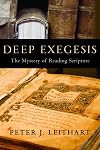
One of the best and most fun books on reading the Bible that I have read in a long time. Leithart argues against reading scriptureto extract the one narrow meaning from the 'husk' of the text. Instead he suggests careful attention be payed to the actual words of scripture (and thus eschews paraphrases like the Message). It is through this attention to 'the letter' of scripture that we get a full sense of the meaning of scripture. And he does this in an interesting and engaging manner. He show more defends typology as a valid hermeneutic (for any reading, not just scripture) by asserting that texts are events and thus change meaning over time. Rather than arguing for limits on the meaning of particular words, he allows the Biblical writers poetic genius in their word choice. This allows for nuances and shades of meaning, which are not directly evident from the context.
His chapter on Intertextuality is entitled 'The Text is a Joke.' By explaining the anatomy of a joke he shows how proper understanding of a 'joke' comes from understanding from outside sources and the ability to discover which information is relevant to 'get it.' His chapter on structure argues that like music, texts can be constructed with multiple structures and themes. In his final chapter, Leithart asserts that Scripture is about Christ, both as head (Jesus) and body (ecclesia). This means that passages point typologically to both Christ and his church and by extension, everything else.
This text grew out of Leithart's defense of the quadriga- the medieval belief in the literal, anagogical, allegorical and tropological senses of scripture. But Leithart isn't so much engaging patristics and medieval texts; rather he is trying to show that the quadriga itself is a good hermeneutic. Thus he attends to making sure we are reading the Bible with a literary sensitivity, thoughtfulness and an expansive imagination about all that the text is saying.
In criticism, I think sometimes Leithart is a little unfair in his critique of his opponents. Also, throughout this book, he uses John 9 and the story of Jesus' healing of the man born blind to show how this works out. In one sense this is smart, but it is also the easy route. John's gospel is ripe with poetic overtones, allusions, theologizing, symbolism. Any student of John's gospel is going to pay attention to what John is hinting at, not merely what the action is. I found myself wondering at different points, what Leithart would do with a non-narrative text which wasn't so expansive in its allusions. Still I substantially agreed and really liked some of the ways he opened up John 9 to me. show less
His chapter on Intertextuality is entitled 'The Text is a Joke.' By explaining the anatomy of a joke he shows how proper understanding of a 'joke' comes from understanding from outside sources and the ability to discover which information is relevant to 'get it.' His chapter on structure argues that like music, texts can be constructed with multiple structures and themes. In his final chapter, Leithart asserts that Scripture is about Christ, both as head (Jesus) and body (ecclesia). This means that passages point typologically to both Christ and his church and by extension, everything else.
This text grew out of Leithart's defense of the quadriga- the medieval belief in the literal, anagogical, allegorical and tropological senses of scripture. But Leithart isn't so much engaging patristics and medieval texts; rather he is trying to show that the quadriga itself is a good hermeneutic. Thus he attends to making sure we are reading the Bible with a literary sensitivity, thoughtfulness and an expansive imagination about all that the text is saying.
In criticism, I think sometimes Leithart is a little unfair in his critique of his opponents. Also, throughout this book, he uses John 9 and the story of Jesus' healing of the man born blind to show how this works out. In one sense this is smart, but it is also the easy route. John's gospel is ripe with poetic overtones, allusions, theologizing, symbolism. Any student of John's gospel is going to pay attention to what John is hinting at, not merely what the action is. I found myself wondering at different points, what Leithart would do with a non-narrative text which wasn't so expansive in its allusions. Still I substantially agreed and really liked some of the ways he opened up John 9 to me. show less
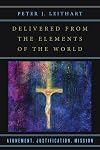
Summary: An exploration of why Christians claim the death and resurrection of Jesus is the decisive event in human history, because it is the "delivering verdict" of God against human systems to control sinful human flesh, hence an act with socio-political significance for all peoples.
Anselm posed the question, "Cur Deus Homo?" or "why the God Man?" Peter J. Leithart thinks the more significant question that must be asked is, "How can the death and resurrection of a Jewish rabbi of the first show more century...be the decisive event in the history of humanity, the hinge and crux and crossroads for everything?"
Leithart's big question leads to a sweeping exploration of pagan and secular culture, Levitical foundations, and Pauline teaching. This is not a book for the faint of heart or one narrowly focused on atonement theories, but rather one that attempts to explain how our understanding of the atonement makes sense of everything and addresses not only the individual but our social and political structures.
Leithart begins with exploring what he calls the "physics of the old creation." We are creatures of flesh, originally good but bent in the fall. Every society subsequently creates "elemental" or stoicheic systems (cf. Galatians 4:1-10) recognizing the pollution of human flesh and creating systems of "do not taste, do not touch" rules that lead to striving for purity. Leithart does an imaginative tour by a Jew of various ancient civilizations describing how these work, whether focused around the fear of death, around phallic displays and fertility, or around violence, honor, and vengeance. These resulted in classes, political structures, and injustices.
God chose Israel for something different. Beginning with Abraham, the cutting of circumcision was an anti-flesh campaign that expanded with Torah and served as a teacher or pedagogue of how to approach God. Yet Torah was co-opted in using purity rules to reinforce ideas of racial superiority over Gentiles and divisions between elite and "sinner" Jews. It became yet another stoicheic system.
Leithart understands that it is the full life of Jesus enacting all that Torah intended, the unjust death in the flesh in which judgment is passed upon human flesh in Christ (Leithart here argues for a carefully defined version of penal substitution), and the bodily resurrection of Jesus by the Father in the Spirit, that together constitute atonement and justification. Leithart elaborates justification as God's "delivering verdict" or "deliverdict" liberating not only from sin and the flesh, but the elemental, stoicheic principles of the world, whether those of other religious systems, Torah, or what Leithart sees as the post-stoicheic systems of secularism which are a kind of relapse from the Christian era's understanding of a Spirit indwelt life. Those united with Christ by faith enter a new epoch, a new humanity breaking down the sociopolitical divisions of the old order, and live according to a new animating principle.
I've offered here only a bare bones summary of a breathtakingly rich argument. I believe he makes several important contributions to our understanding of the work of Christ. One is his discussion of stoicheic elements as a social theory elaborating the ways various societies attempt to deal with the flesh, and the sociopolitical consequences of these systems. While carefully arguing for penal substitution, a doctrine that has fallen out of favor, he contends for a broader understanding of atonement and justification that encompasses the life, death and resurrection of Jesus and centers justification in the objective "delivering verdict" of these events rather than our subjective experience. Along with N.T. Wright, he argues that we are justified by the faith of Jesus, in whom we trust, but he also draws out further what this new status means in terms of a new Spirit-empowered life in the flesh and a new social order contrary to stoicheic systems that has radical implications for Christian mission that crosses social barriers and breaks them down. His analysis of modernity in "Galatian Church, Galatian Age" serves as a rich complement to Charles Taylor's A Secular Age.
Leithart's book covers familiar territory but forces you out of familiar patterns of thinking. I'm still weighing how well "stoicheic systems" can serve as a kind of "social theory of everything." I'm challenged by how often we separate the life, death, and resurrection of Jesus and how Leithart brings these together as a seamless whole. The idea of a "delivering verdict," that performs what it declares and powerfully transfers us into a Spirit empowered community speaks of the power of the gospel to effect what it promises. This book stays on my shelves, worthy of further reflection and re-reading. show less
Anselm posed the question, "Cur Deus Homo?" or "why the God Man?" Peter J. Leithart thinks the more significant question that must be asked is, "How can the death and resurrection of a Jewish rabbi of the first show more century...be the decisive event in the history of humanity, the hinge and crux and crossroads for everything?"
Leithart's big question leads to a sweeping exploration of pagan and secular culture, Levitical foundations, and Pauline teaching. This is not a book for the faint of heart or one narrowly focused on atonement theories, but rather one that attempts to explain how our understanding of the atonement makes sense of everything and addresses not only the individual but our social and political structures.
Leithart begins with exploring what he calls the "physics of the old creation." We are creatures of flesh, originally good but bent in the fall. Every society subsequently creates "elemental" or stoicheic systems (cf. Galatians 4:1-10) recognizing the pollution of human flesh and creating systems of "do not taste, do not touch" rules that lead to striving for purity. Leithart does an imaginative tour by a Jew of various ancient civilizations describing how these work, whether focused around the fear of death, around phallic displays and fertility, or around violence, honor, and vengeance. These resulted in classes, political structures, and injustices.
God chose Israel for something different. Beginning with Abraham, the cutting of circumcision was an anti-flesh campaign that expanded with Torah and served as a teacher or pedagogue of how to approach God. Yet Torah was co-opted in using purity rules to reinforce ideas of racial superiority over Gentiles and divisions between elite and "sinner" Jews. It became yet another stoicheic system.
Leithart understands that it is the full life of Jesus enacting all that Torah intended, the unjust death in the flesh in which judgment is passed upon human flesh in Christ (Leithart here argues for a carefully defined version of penal substitution), and the bodily resurrection of Jesus by the Father in the Spirit, that together constitute atonement and justification. Leithart elaborates justification as God's "delivering verdict" or "deliverdict" liberating not only from sin and the flesh, but the elemental, stoicheic principles of the world, whether those of other religious systems, Torah, or what Leithart sees as the post-stoicheic systems of secularism which are a kind of relapse from the Christian era's understanding of a Spirit indwelt life. Those united with Christ by faith enter a new epoch, a new humanity breaking down the sociopolitical divisions of the old order, and live according to a new animating principle.
I've offered here only a bare bones summary of a breathtakingly rich argument. I believe he makes several important contributions to our understanding of the work of Christ. One is his discussion of stoicheic elements as a social theory elaborating the ways various societies attempt to deal with the flesh, and the sociopolitical consequences of these systems. While carefully arguing for penal substitution, a doctrine that has fallen out of favor, he contends for a broader understanding of atonement and justification that encompasses the life, death and resurrection of Jesus and centers justification in the objective "delivering verdict" of these events rather than our subjective experience. Along with N.T. Wright, he argues that we are justified by the faith of Jesus, in whom we trust, but he also draws out further what this new status means in terms of a new Spirit-empowered life in the flesh and a new social order contrary to stoicheic systems that has radical implications for Christian mission that crosses social barriers and breaks them down. His analysis of modernity in "Galatian Church, Galatian Age" serves as a rich complement to Charles Taylor's A Secular Age.
Leithart's book covers familiar territory but forces you out of familiar patterns of thinking. I'm still weighing how well "stoicheic systems" can serve as a kind of "social theory of everything." I'm challenged by how often we separate the life, death, and resurrection of Jesus and how Leithart brings these together as a seamless whole. The idea of a "delivering verdict," that performs what it declares and powerfully transfers us into a Spirit empowered community speaks of the power of the gospel to effect what it promises. This book stays on my shelves, worthy of further reflection and re-reading. show less
I generally love Peter Leithart's writing. This book screams "calling all scholars!" Much of it was over my head (obviously, not a scholar). But the portions that weren't, were stellar. If you read nothing else, read the last chapter. This paragraph was worth the book:
"Care of the hopeless is a work of the whole congregation. When we deny or minimize our neediness and dependency, we cruelly reinforce the despair of the mentally ill. They think their neediness is sub-human and feel they can't show more be members of the human race until they learn to help themselves. Maybe then, God will help them. That gets everything backwards. We the hopeful need to learn our need for help. We become sane when we freely admit our dependence. And we help to heal the hopeless when we welcome them into the community of the needy that is the human and Christian family."
As one who struggles to righteously hope out of a long history of failing to hope from fear of a sick heart full of dashed hopes - Leithart did an excellent job of training the reader to hope rightly - to place our hope where it can never be dashed. He understands the perspective of age. I'm 62, but "My future isn't just 20-30 years. I've got ages and ages ahead of me." We forget this. Thanks for the reminder, Peter. show less
"Care of the hopeless is a work of the whole congregation. When we deny or minimize our neediness and dependency, we cruelly reinforce the despair of the mentally ill. They think their neediness is sub-human and feel they can't show more be members of the human race until they learn to help themselves. Maybe then, God will help them. That gets everything backwards. We the hopeful need to learn our need for help. We become sane when we freely admit our dependence. And we help to heal the hopeless when we welcome them into the community of the needy that is the human and Christian family."
As one who struggles to righteously hope out of a long history of failing to hope from fear of a sick heart full of dashed hopes - Leithart did an excellent job of training the reader to hope rightly - to place our hope where it can never be dashed. He understands the perspective of age. I'm 62, but "My future isn't just 20-30 years. I've got ages and ages ahead of me." We forget this. Thanks for the reminder, Peter. show less
This is one of those books that I will refer to many times in the future. This is Leithart’s take on atonement and a viewpoint I have now adopted as my own. What is so great about Leithart, James B. Jordan, and others associated with the Theopolis Institute, is their attention to typology throughout scripture and specifically the coherence between the old and new covenants.
There will be the temptation to skip some chapters that seem pedantic and maybe you can - though you will have show more missed the argument being made and his redefinition, and renaming, of some previously misunderstood words (I.e. “deliverdict”). The chapters, “Flesh,” “Torah,” and “Cur Deus Homo” must be read. But do yourself a favor and read the whole thing. show less
There will be the temptation to skip some chapters that seem pedantic and maybe you can - though you will have show more missed the argument being made and his redefinition, and renaming, of some previously misunderstood words (I.e. “deliverdict”). The chapters, “Flesh,” “Torah,” and “Cur Deus Homo” must be read. But do yourself a favor and read the whole thing. show less
Lists
You May Also Like


Associated Authors
Statistics
- Works
- 84
- Also by
- 8
- Members
- 6,720
- Popularity
- #3,639
- Rating
- 4.1
- Reviews
- 47
- ISBNs
- 111
- Languages
- 4
- Favorited
- 11