
Nicholas Nicastro
Author of Circumference: Eratosthenes and the Ancient Quest to Measure the Globe
Series
Works by Nicholas Nicastro
Circumference: Eratosthenes and the Ancient Quest to Measure the Globe (2008) 129 copies, 22 reviews
Tagged
Common Knowledge
- Birthdate
- 1963
- Gender
- male
- Education
- Cornell University (BA, English)
New York University (MA, Filmmaking)
Cornell University (MA, Archaeology)
Cornell University (PhD, Psychology) - Short biography
- [from author's website]
Novelist Nicholas Nicastro was born in Astoria, NY in 1963. His education includes a B.A. in English from Cornell University (1985), an M.F.A. in filmmaking from New York University (1991), an M.A. in archaeology and a Ph.D in psychology from Cornell (1996 and 2003). He has also worked as a film critic, a hospital orderly, a newspaper reporter, a library archivist, a college lecturer in anthropology and psychology, an animal behaviorist, and an advertising salesman. His writings include short fiction, travel and science articles in such publications as The New York Times, The New York Observer, Film Comment, Archaeology, and The International Herald Tribune. - Nationality
- USA
- Birthplace
- Astoria, Queens, New York, New York, USA
- Associated Place (for map)
- New York, USA
Members
Reviews
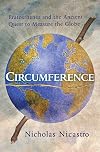
More like 3.5. Fascinating and educational for a layperson like me, but I felt it was bloated. Yes, Eratosthenes was covered--even with the sketchy information on his life from the Suda [the Byzantine encyclopedia] and what his conclusions on geodesy--shape of the earth and its circumference--were and how he reached them. The earth as a globe was only one out of several theories current at that time. It was amazing that he reached pretty accurate conclusions using only primitive surveying show more techniques of that time and his knowledge of geometry--no trigonometry tables back then. But the book was swollen was tangential information such as: the Hellenistic society in Alexandria of his time and its exhaustive description; the Ptolemaic dynasty; The Museum and Great Library in Alexandria; how knowledge of the ancients was lost [much through the vandalism of Christian zealots who I'd compare to the present-day Taliban or to ISIS rampaging through the ruins of Palmyra] and finally recovered, some through the Arab scholars, some on palimpsests, and some through references in other writings that have come down to us.
I feel this readable book could have been condensed into a volume half its size. Interesting to me was the fact that Columbus knew the world was round, BUT he underestimated the size of its circumference. Also interesting was the fact that his successor at the Great Library, Aristophanes of Byzantium, was the man who first developed a system of diacritics used in the Greek language; they are still used today in Modern Greek in a simpler form. The author closes with a metaphor: as the Eratosthenes Mountain Range 6000 feet undersea, Eratosthenes the man has remained obscure to us.
Recommended for popular science fans. show less
I feel this readable book could have been condensed into a volume half its size. Interesting to me was the fact that Columbus knew the world was round, BUT he underestimated the size of its circumference. Also interesting was the fact that his successor at the Great Library, Aristophanes of Byzantium, was the man who first developed a system of diacritics used in the Greek language; they are still used today in Modern Greek in a simpler form. The author closes with a metaphor: as the Eratosthenes Mountain Range 6000 feet undersea, Eratosthenes the man has remained obscure to us.
Recommended for popular science fans. show less

A good chunk of this book is not about Eratosthenes, the librarian at Alexandria who made a remarkably accuracte measure of the Earth's circumference in the 200s B.C., but rather is about the nature of science at that time. I thought that Nicastro's description of the various approaches to science by different groups and the way scientific method changed over time was interesting and informative, and probably much better reading than a book devoted entirely to Eratosthenes's theories. It show more also helped me to understand why Eratosthenes's method was notable. I liked this book overall, and I felt that Nicastro's other career as a novelist served him well. I got a little bogged down in some of the descriptions of geometrical methods and calculations, and I think the book would have benefited from some more diagrams and such for those of us who remember very little of high school trigonometry. show less
 This review was written for LibraryThing Early Reviewers.
The Battle at Sphacteria was a devastating one for Sparta. Not because they sustained big losses in soldiers or territory, but because it sullied the Spartan reputation for being an indomitable military force that never surrendered, regardless of the cost. It makes for a great story, of course, so I was quite enthusiastic going into The Isle of Stone.
The story follows two brothers; the oldest conceived during the rape of his mother by an escaped helot, and though no one knows it isn't her show more husbands she neglects the boy out of shame and humiliation. The other, her first true son sired by her husband, is coddled to the point of being spoiled by Spartan standards. It is an interesting duo and the most intriguing part about this book is seeing the comparison between these two characters.
Unfortunately, just about every other aspect of this book is dismal. The text is nauseatingly "male," with all the rapt fascination with sex, genitals, and feces you might expect from something that might be described that way. Though there are a couple strong female characters, it doesn't keep the book from feeling despicably phallic. I suppose the author is trying to put the reader into the mind of a male Spartan soldier, but man, it's all third-person, the narrator could really have been a bit more neutral. Much of the book just made my skin crawl, and I really could have done without the group masturbation among 7-year-old boys, thank you very much.
The battle scene, which makes up half the book, is quite a bit better, but I still didn't find overall book to be terribly enjoyable. It probably does a decent job of bringing the Spartan mentality to life though, so perhaps that is something... show less
The story follows two brothers; the oldest conceived during the rape of his mother by an escaped helot, and though no one knows it isn't her show more husbands she neglects the boy out of shame and humiliation. The other, her first true son sired by her husband, is coddled to the point of being spoiled by Spartan standards. It is an interesting duo and the most intriguing part about this book is seeing the comparison between these two characters.
Unfortunately, just about every other aspect of this book is dismal. The text is nauseatingly "male," with all the rapt fascination with sex, genitals, and feces you might expect from something that might be described that way. Though there are a couple strong female characters, it doesn't keep the book from feeling despicably phallic. I suppose the author is trying to put the reader into the mind of a male Spartan soldier, but man, it's all third-person, the narrator could really have been a bit more neutral. Much of the book just made my skin crawl, and I really could have done without the group masturbation among 7-year-old boys, thank you very much.
The battle scene, which makes up half the book, is quite a bit better, but I still didn't find overall book to be terribly enjoyable. It probably does a decent job of bringing the Spartan mentality to life though, so perhaps that is something... show less
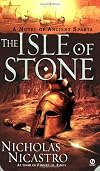
On the whole, I enjoyed this novel, despite what I consider flaws. The last sentence is a zinger!
The story concerns two brothers, Antalcidas and Epitadas, their births and education in the Rearing [agoge] where the former earns the nickname "Stone", as he shows himself to be a past master at throwing them accurately. In the Peloponnesian War, the brothers serve together on the Island of Sphacteria, survive its blockade and siege, finally surrendering to the Athenians with their men. This is show more unheard of for Spartans! After Spartans return home, they are shunned as "tremblers", or cowards. One brother distinguishes himself at a later battle in the war and is lauded by his city.
I felt the author was not completely sure whether he was writing a straight historical novel, a comedy [because of humorous remarks and incidents ranging from the silly to the sardonic], a melodrama, or, since most of these Spartans are pictured as caricatures: a satire. I caught all four genres at one time or another. Spartans were presented as mostly negative stereotypes, giving an insight into the stereotypical ultra-macho view of the Spartan mindset. Antalcidas, the protagonist, and his cultured helot servant Doulos [the word is Greek for servant] are developed more than any of the others, who are exaggerated "types". Most unusually, helot and master develop a real friendship. The action skipped back and forth in time and location; the references to modern times could have been left out with no loss to the novel. Much of the action was presented from the Athenian side: in their Assembly, on Pylos, and aboard an Athenian ship blockading the island. The final face-off between Athenians and Spartans was well done. The interchange on Athenian politics among some of the oarsmen on the Athenian trireme "Terror" was hilarious. The thoughts of the premature cyanotic baby, Molobrus, rejected by the Ephorate and thrown unceremoniously into a chasm, right before his death, was moving. The author could have left out the reference to masturbation in little boys, Antalcidas's relationship with his mentor as eromenos, and other crudeness.
Recommended with reservations. show less
The story concerns two brothers, Antalcidas and Epitadas, their births and education in the Rearing [agoge] where the former earns the nickname "Stone", as he shows himself to be a past master at throwing them accurately. In the Peloponnesian War, the brothers serve together on the Island of Sphacteria, survive its blockade and siege, finally surrendering to the Athenians with their men. This is show more unheard of for Spartans! After Spartans return home, they are shunned as "tremblers", or cowards. One brother distinguishes himself at a later battle in the war and is lauded by his city.
I felt the author was not completely sure whether he was writing a straight historical novel, a comedy [because of humorous remarks and incidents ranging from the silly to the sardonic], a melodrama, or, since most of these Spartans are pictured as caricatures: a satire. I caught all four genres at one time or another. Spartans were presented as mostly negative stereotypes, giving an insight into the stereotypical ultra-macho view of the Spartan mindset. Antalcidas, the protagonist, and his cultured helot servant Doulos [the word is Greek for servant] are developed more than any of the others, who are exaggerated "types". Most unusually, helot and master develop a real friendship. The action skipped back and forth in time and location; the references to modern times could have been left out with no loss to the novel. Much of the action was presented from the Athenian side: in their Assembly, on Pylos, and aboard an Athenian ship blockading the island. The final face-off between Athenians and Spartans was well done. The interchange on Athenian politics among some of the oarsmen on the Athenian trireme "Terror" was hilarious. The thoughts of the premature cyanotic baby, Molobrus, rejected by the Ephorate and thrown unceremoniously into a chasm, right before his death, was moving. The author could have left out the reference to masturbation in little boys, Antalcidas's relationship with his mentor as eromenos, and other crudeness.
Recommended with reservations. show less
Lists
You May Also Like


Statistics
- Works
- 13
- Members
- 404
- Popularity
- #60,139
- Rating
- 3.5
- Reviews
- 34
- ISBNs
- 26
- Languages
- 2

