
Héctor Abad Faciolince
Author of Oblivion: A Memoir
About the Author
Works by Héctor Abad Faciolince
Aside from My Heart, All is Well 16 copies
El olvido que seremos (novela gráfica) / Memories of My Father. Graphic Novel (Spanish Edition) (2011) 13 copies, 1 review
Un maestro inolvidable 1 copy
27 relatos colombianos 1 copy
Associated Works
Tagged
Common Knowledge
- Canonical name
- Abad Faciolince, Héctor
- Other names
- Abad, Héctor
- Birthdate
- 1958
- Gender
- male
- Nationality
- Colombia
- Places of residence
- Medellín, Colombia (birth)
Mexico City, Mexico
Turin, Italy
Members
Reviews
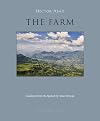
Blessed are the used bookstores. I had never heard of this author but a nearly pristine copy of this work was offered for $5 and the fact that it is published by Archipelago was enough for me to take my chances. I could not be more pleased and regret only that the author does not have many works translated into English. The Farm is the story of a family told through La Oculta, its property in the remote mountains of southwest Colombia. (I would note that “farm” is a curious translation; show more La Oculta is not a farm in the American sense but a finca, more like a country estate.) That story is very much the story of how meaning attaches to—and falls from—the family’s “heirloom” and its wealth (in all the meanings of the word). The story is narrated by three siblings in alternating chapters: Antonio, a gay man who has married a black American and settled in New York City; Pilar, a very traditional woman who long ago married “for life” and whose avowed purpose in life in taking care: of places, of people, and of things; and Eva, a thrice-married, now single, “modern” woman, still unsure what she wants from life. The siblings have inherited La Oculta, a place whose value and meaning(s) are revealed as the book progresses. We learn from each sibling about him- or herself, about the other siblings, the history of the family, and the history of La Oculta itself: how the family came to Colombia, the creation of La Oculta, how it passed from generation to generation, and the challenges of the future. Building on the stories of the siblings’ personal lives is a nuanced appreciation for opportunity in Colombian history, both its successes and its failures. Each sibling has a distinct voice and perspective and they combine to illuminate the story of the farm itself, its past, present, and future. I have seen the book dismissed as a work of sentimental bourgeois nostalgia; I don’t buy the criticism. Perhaps because I, too, have long been interested in the history of my own family, of how we came to be who and where we are, and how to understand and value what we have, I enjoyed this a great deal. The writing (and the translation) read easily and the offering of frequently opposing perspectives makes for a thoughtful and moving story. I will look for more of his work. show less
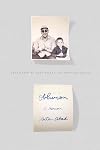
To say I enjoyed this memoir would be inappropriate. One doesn’t “enjoy” a book about brutal murder by assassination, and that is what Hector Abad’s story is. It’s also an incredible love story, primarily a love story between a father and his son. The senseless corruption in Colombia caused Hector’s father to be killed for believing that everyone has a right to the fruits of society. He was a left wing activist whose only goal was to help those less fortunate than he was. show more Empowering the powerless population in an authoritarian country is a dangerous business, and Hector’s father knew this. Throughout his adult life, he and those close to him knew assassination was likely. After all, many of his liberal colleagues had met the same fate. While I would recommend this beautifully written book to anyone who cherishes freedom and equality, I would warn that Hector’s story is bleak. He pulls no punches, and the reader must be ready for what truth he has to tell. We Americans would do well to heed the warning Hector’s book presents. show less
I had listened to Hector during a panel at Singapore Writers' Festival last week and was so moved (& so impressed by the chapter he read) that I immediately bought the book after the reading (& was lucky enough to have it signed!).
I read it steadily throughout the week during my commutes and today I completed it sitting below my block. When the sadder chapters arrived I found myself tearing up in trains and finally when I got to the final 20 pages I found myself with a pained throat and show more watery eyes from holding back tears. I cannot imagine what it must have been like for him to have written such a book, to recount such a memory. That it took 20 years for him to finally pen it down is something that is understandable. I cannot imagine what it must have taken to write it down, but I am thankful that he shared the story of his father & his family to the world.
During the panel someone asked about challenges & aside from the obvious he said that the literary tradition was replete with stories about bad fathers. Daddy issues. And how would people take his book that is about a good father, a perfect father, a father that he loved so much and in his eyes could barely do any wrong. And in fact I find that his book was such a wonderful read precisely because it provides a model for fatherhood that isn't made toxic by a certain brand of masculinity. He did mention that his father had a certain kind of machismo, but it was wonderful to read how his father was unashamed of his exuberant physical affections with his son, kissing & hugging him even if it was seen as 'queer' by relatives. Saying a string of verbal affections that one might find embarrassing. In a society where the expression of direct affection by men is not encouraged, it's wonderful to read an example where the opposite is done.
His father truly sounds like an incredible human being, a person whose moral & humanist values are worth emulating. I truly enjoyed the bits where Hector talked about the way his father dealt with the challenges and the confusions of his son; his open-mindedness, his unconditional love. I have learned so much for my own personal & political convictions. The book deals mostly with celebrating the love, social justice work, ideas, & charity that his father was involved in, and only the last few chapters actually dealt with his murder. Hector wrote it as a way of stretching out the memory of his father a little bit more, before it is inevitably casted into the oblivion of forgetting, the way we forget about so many people. I'm sure that will happen, but I am so glad that I have known of his father in my own little way too. show less
I read it steadily throughout the week during my commutes and today I completed it sitting below my block. When the sadder chapters arrived I found myself tearing up in trains and finally when I got to the final 20 pages I found myself with a pained throat and show more watery eyes from holding back tears. I cannot imagine what it must have been like for him to have written such a book, to recount such a memory. That it took 20 years for him to finally pen it down is something that is understandable. I cannot imagine what it must have taken to write it down, but I am thankful that he shared the story of his father & his family to the world.
During the panel someone asked about challenges & aside from the obvious he said that the literary tradition was replete with stories about bad fathers. Daddy issues. And how would people take his book that is about a good father, a perfect father, a father that he loved so much and in his eyes could barely do any wrong. And in fact I find that his book was such a wonderful read precisely because it provides a model for fatherhood that isn't made toxic by a certain brand of masculinity. He did mention that his father had a certain kind of machismo, but it was wonderful to read how his father was unashamed of his exuberant physical affections with his son, kissing & hugging him even if it was seen as 'queer' by relatives. Saying a string of verbal affections that one might find embarrassing. In a society where the expression of direct affection by men is not encouraged, it's wonderful to read an example where the opposite is done.
His father truly sounds like an incredible human being, a person whose moral & humanist values are worth emulating. I truly enjoyed the bits where Hector talked about the way his father dealt with the challenges and the confusions of his son; his open-mindedness, his unconditional love. I have learned so much for my own personal & political convictions. The book deals mostly with celebrating the love, social justice work, ideas, & charity that his father was involved in, and only the last few chapters actually dealt with his murder. Hector wrote it as a way of stretching out the memory of his father a little bit more, before it is inevitably casted into the oblivion of forgetting, the way we forget about so many people. I'm sure that will happen, but I am so glad that I have known of his father in my own little way too. show less
I love a good family saga. In “The Farm,” a trio of siblings reminisce on the history of the family farm located in the remote mountains of Colombia. Pilar, ever-loyal and selfless, wants to keep the farm in the family, no matter what it takes. Eva, traumatized by nearly being murdered at the farm by a local gang, wants nothing to do with it. And, Antonio, the baby of the family, is obsessed with researching the genealogy of the family and their familial roots in the country.
Beautifully show more written with such vivid perspectives from each character, I was wholly invested in the fate of these siblings and the farm. Except for Antonio – insufferably boring Antonio – who droned on and on in painful detail about the family tree. And, there’s a few things about Antonio that felt a little problematic to me, specifically his troubled relationship with his black husband. And, how he’s so utterly aloof and selfish.
This turned out to be one of my favorite reads of the month despite how much I dreaded Antonio’s chapters. I highly recommend it for fans of Latin American literature. show less
Beautifully show more written with such vivid perspectives from each character, I was wholly invested in the fate of these siblings and the farm. Except for Antonio – insufferably boring Antonio – who droned on and on in painful detail about the family tree. And, there’s a few things about Antonio that felt a little problematic to me, specifically his troubled relationship with his black husband. And, how he’s so utterly aloof and selfish.
This turned out to be one of my favorite reads of the month despite how much I dreaded Antonio’s chapters. I highly recommend it for fans of Latin American literature. show less
Lists
Awards


You May Also Like


Associated Authors
Statistics
- Works
- 33
- Also by
- 2
- Members
- 1,154
- Popularity
- #22,275
- Rating
- 4.0
- Reviews
- 79
- ISBNs
- 144
- Languages
- 6
- Favorited
- 2