
J. G. Merquior (1941–1991)
Author of Foucault
About the Author
Image credit: Werner Hertzog a.k.a. Wernerbh Date: 1982
Works by J. G. Merquior
From Prague to Paris: A Critique of Structuralist and Post-Structuralist Thought (1986) 41 copies, 1 review
Arte e Sociedade em Marcuse, Adorno e Benjamin. Ensaio Crítico Sobre a Escola Neo-Hegeliana de Frankfurt (2017) 7 copies
As idéias e as formas 6 copies
A Natureza do Processo 5 copies
foucault ou o niilismo de catedra 2 copies
O Elixir do Apocalipse 2 copies
Saudades do Carnaval 1 copy
Verso universo em Drummond 1 copy
EDCBA De Anchieta a Euclides 1 copy
Associated Works
Tagged
Common Knowledge
- Canonical name
- Merquior, J. G.
- Legal name
- Merquior, José Guilherme
- Birthdate
- 1941-04-22
- Date of death
- 1991-01-07
- Gender
- male
- Education
- London School of Economics (Ph.D|Sociology)
- Occupations
- diplomat
philosopher
literary critic - Organizations
- Academia Brasileira de Letras
- Nationality
- Brazil
- Birthplace
- Rio de Janeiro, Brazil
- Place of death
- Rio de Janeiro, Brazil
- Associated Place (for map)
- Rio de Janeiro, Brazil
Members
Reviews

Marxist Kulturkritik
Our author (JG Merquior), throughout this book, argues that Western Marxism (WM) is little more than a marxisant Kulturkritik. I should note that he does except Habermas, stating that,
"if one grants that, as a whole, WM prior to him [i.e., Habermas], in so far as it pronounced on substantive history, partook in the bleak anathema cast by the Kulturkritik upon modern civilization, it would be no exaggeration to say that in WM a surplus-meaning was extracted from Marxism by show more the luminaries of a humanist clerisy at war with modernity."
For all our (and, yes, mine too) love for WM, it really is hard to argue the point... Jettisoning (for the most part) the possibility of revolution, all that was left was the criticism. And we ended up here in late modernity with left and right-wing pessimism playing piggy-in-the-middle with the oh-so-satisfied bourgeoisie.
Oh youth! Those were my formative years, reading old right / libertarian screeds alongside WM critiques of the modern world.
Unfortunately, none of them ever guessed how bad things would actually turn out... Even the few who really thought a new barbarism was on the horizon never anticipated anything like the (so-called) Islamic State, - where torture and rape are considered talking points!
Now, this attack on WM as hand-wringing culture critique certainly isn't unique to our author. For instance, Lukács, himself an erstwhile founder of WM, writes,
"A considerable part of the leading German intelligentsia, including Adorno, have taken up residence in the Grand Hotel Abyss which I described in connection with my critique of Schopenhauer as 'a beautiful hotel, equipped with every comfort, on the edge of an abyss, of nothingness, of absurdity. And the daily contemplation of the abyss between excellent meals or artistic entertainments, can only heighten the enjoyment of the subtle comforts offered.' (Lukács, "The Theory of the Novel" - I think.)"
Merquoir died too young. He has given us very smart critiques of WM, Structuralism / Post-Structuralism and Foucault. I often wonder what his mature position would have been. He writes very well and also has a wonderful sense of humor. You will often find yourself laughing. He is almost always a very enjoyable read.
Although I do think, regarding this book, that the long quote in the second paragraph above is more applicable to the mandarins of the Frankfurt School (Adorno, Benjamin, Horkheimer and [in some moods] Marcuse) than it is to Lukács, Gramsci and even Sartre. The latter three always thought that meaningful progressive historical change was still possible; I really don't see that in the great Frankfurters at all...
On the despair of the Frankfurters regarding modern culture and thought I recommend,
Dialectic of Enlightenment: Philosophical Fragments, Adorno and Horkheimer
One Dimensional Man, Marcuse
Eclipse of Reason, Horkheimer
A book recently published, "Towards a New Manifesto", which are the notes of conversations between Horkheimer and Adorno can be mentioned too. They date from the cold war, 1956. The notes are very terse. If you are not familiar with these thinkers and their school, I recommend starting your studies somewhere else.
Since this book by Merquior is out of print I include the table of contents:
Contents
Foreword
I. A Concept and its background
1. What is Western Marxism?
2. The Heritage: Hegel
3. The Heritage: Marx's Marxism
II. The Foundations of Western Marxism
1. Lukács and 'Culture Communists'
2. Gramsci and Marxist Humanism
III. The Post War Scene
1. The Classical Frankfurt School
-The Lonely Work of Walter Benjamin
-The Spirit of Negative Dialectics
2. From Sartre to Althusser
3. From Marcuse to Habermas
-Habermas and the Holy Grail of Dialogue
IV. A Few General Conclusions
Notes
Bibliography
Landmarks of Western Marxism
Index show less
Our author (JG Merquior), throughout this book, argues that Western Marxism (WM) is little more than a marxisant Kulturkritik. I should note that he does except Habermas, stating that,
"if one grants that, as a whole, WM prior to him [i.e., Habermas], in so far as it pronounced on substantive history, partook in the bleak anathema cast by the Kulturkritik upon modern civilization, it would be no exaggeration to say that in WM a surplus-meaning was extracted from Marxism by show more the luminaries of a humanist clerisy at war with modernity."
For all our (and, yes, mine too) love for WM, it really is hard to argue the point... Jettisoning (for the most part) the possibility of revolution, all that was left was the criticism. And we ended up here in late modernity with left and right-wing pessimism playing piggy-in-the-middle with the oh-so-satisfied bourgeoisie.
Oh youth! Those were my formative years, reading old right / libertarian screeds alongside WM critiques of the modern world.
Unfortunately, none of them ever guessed how bad things would actually turn out... Even the few who really thought a new barbarism was on the horizon never anticipated anything like the (so-called) Islamic State, - where torture and rape are considered talking points!
Now, this attack on WM as hand-wringing culture critique certainly isn't unique to our author. For instance, Lukács, himself an erstwhile founder of WM, writes,
"A considerable part of the leading German intelligentsia, including Adorno, have taken up residence in the Grand Hotel Abyss which I described in connection with my critique of Schopenhauer as 'a beautiful hotel, equipped with every comfort, on the edge of an abyss, of nothingness, of absurdity. And the daily contemplation of the abyss between excellent meals or artistic entertainments, can only heighten the enjoyment of the subtle comforts offered.' (Lukács, "The Theory of the Novel" - I think.)"
Merquoir died too young. He has given us very smart critiques of WM, Structuralism / Post-Structuralism and Foucault. I often wonder what his mature position would have been. He writes very well and also has a wonderful sense of humor. You will often find yourself laughing. He is almost always a very enjoyable read.
Although I do think, regarding this book, that the long quote in the second paragraph above is more applicable to the mandarins of the Frankfurt School (Adorno, Benjamin, Horkheimer and [in some moods] Marcuse) than it is to Lukács, Gramsci and even Sartre. The latter three always thought that meaningful progressive historical change was still possible; I really don't see that in the great Frankfurters at all...
On the despair of the Frankfurters regarding modern culture and thought I recommend,
Dialectic of Enlightenment: Philosophical Fragments, Adorno and Horkheimer
One Dimensional Man, Marcuse
Eclipse of Reason, Horkheimer
A book recently published, "Towards a New Manifesto", which are the notes of conversations between Horkheimer and Adorno can be mentioned too. They date from the cold war, 1956. The notes are very terse. If you are not familiar with these thinkers and their school, I recommend starting your studies somewhere else.
Since this book by Merquior is out of print I include the table of contents:
Contents
Foreword
I. A Concept and its background
1. What is Western Marxism?
2. The Heritage: Hegel
3. The Heritage: Marx's Marxism
II. The Foundations of Western Marxism
1. Lukács and 'Culture Communists'
2. Gramsci and Marxist Humanism
III. The Post War Scene
1. The Classical Frankfurt School
-The Lonely Work of Walter Benjamin
-The Spirit of Negative Dialectics
2. From Sartre to Althusser
3. From Marcuse to Habermas
-Habermas and the Holy Grail of Dialogue
IV. A Few General Conclusions
Notes
Bibliography
Landmarks of Western Marxism
Index show less

An irreverent intellectual romp! One of the most readable accounts of the rise of post-structuralism by a master expositor.
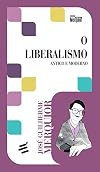
História. Política. Escritos políticos. Thomas Morus. Literatura e Arte. Filosofia. Ensaios filosóficos.
Jun 24, 2020Portuguese (Brazil)
Awards

You May Also Like


Associated Authors
Statistics
- Works
- 37
- Also by
- 1
- Members
- 383
- Popularity
- #63,100
- Rating
- 3.8
- Reviews
- 3
- ISBNs
- 46
- Languages
- 5
- Favorited
- 1