
John King Fairbank (1907–1991)
Author of China: A New History
About the Author
Born in South Dakota, John King Fairbank attended local public schools for his early education. From there he went on first to Exeter, then the University of Wisconsin, and ultimately to Harvard, from which he received his B.A. degree summa cum laude in 1929. That year he traveled to Britain as a show more Rhodes Scholar. In 1932 he went to China as a teacher and after extensive travel there received his Ph.D. from Oxford University in 1936. Between 1941 and 1946, he was in government service---as a member of the Office of Strategic Services, as special assistant to the U.S. ambassador to China, and finally as director of the U.S. Information Service in China. Excepting those years, beginning in 1936, Fairbank spent his entire career at Harvard University, where he served in many positions, including Francis Lee Higginson Professor of History and director of Harvard's East Asian Research Center. Fairbank, who came to be considered one of the world's foremost authorities on modern Chinese history and Asian-West relations, was committed to reestablishing diplomatic and cultural relations with China. He was also committed to the idea that Americans had to become more conversant with Asian cultures and languages. In his leadership positions at Harvard and as president of the Association for Asian Studies and the American Historical Association, he sought to broaden the bases of expertise about Asia. At the same time, he wrote fluidly and accessibly, concentrating his work on the nineteenth century and emphasizing the relationship between China and the West. At the same time, his writings placed twentieth-century China within the context of a changed and changing global order. It was precisely this understanding that led him to emphasize the reestablishment of American links with China. More than anyone else, Fairbank helped create the modern fields of Chinese and Asian studies in America. His influence on American understanding of China and Asia has been profound. (Bowker Author Biography) show less
Works by John King Fairbank
East Asia, The Great Tradition: A History of East Asian Civilization (1960) — Author — 93 copies, 2 reviews
The Cambridge History of China, Vol. 12: Republican China 1912-1949 Part One (1983) 56 copies, 2 reviews
The Cambridge History of China, Vol. 13: Republican China 1912-1949 Part Two (1986) 55 copies, 1 review
Trade and Diplomacy on the China Coast: The Opening of the Treaty Ports, 1842-1854 (1953) 32 copies, 1 review
Japanese Studies of Modern China: A Bibliographical Guide to Historical and Social-Science Research on the 19th and 20th Centuries (1971) 2 copies
1967 CHINA AND THE USA MIDDLE KINGDOM BY JOHN K. FAIRBANKS HARVARD U. PRESS DJ [Hardcover] JOHN K. FAIRBANK (1967) 1 copy
The Duffer's Guide to Skiing 1 copy
Associated Works
Stilwell and the American Experience in China, 1911-45 (1971) — Introduction — 1,477 copies, 20 reviews
Red Star Over China: The Classic Account of the Birth of Chinese Communism (1937) — Introduction; Introduction — 769 copies, 8 reviews
The New Illustrated Encyclopedia of World History (1940) — Contributor, some editions — 710 copies, 5 reviews
Communist China: Revolutionary Reconstruction and International Confrontation 1949 to the Present (1967) — Contributor — 100 copies, 1 review
Tagged
Common Knowledge
- Other names
- 費正清
Fèi Zhèngqīng - Birthdate
- 1907-05-24
- Date of death
- 1991-09-14
- Gender
- male
- Education
- University of Wisconsin, Madison
Harvard College (AB, summa cum laude|History|1929)
University of Oxford (Balliol College ∙ DPhil)
Tsinghua University
Philips Exeter Academy - Occupations
- historian
university professor - Organizations
- U.S. Office of Strategic Services
U.S. Office of War Information
Harvard University
American Historical Association - Awards and honors
- Rhodes Scholar
- Relationships
- Webster, Charles Kingsley (teacher)
Schell, Orville (student)
Fairbank, Wilma (wife) - Nationality
- USA
- Birthplace
- Huron, South Dakota, USA
- Places of residence
- South Dakota, USA
Cambridge, Massachusetts, USA
China
Madison, Wisconsin, USA
Oxford, England, UK
Exeter, New Hampshire, USA - Place of death
- Cambridge, Massachusetts, USA
- Associated Place (for map)
- USA
Members
Reviews

This book is what I call a chewy read. John King Fairbank has his own style of writing and it took some getting used to but, boy was it worth it.
When I was in my formative years, Mao was leader of the PRC and was not only something of a mystery, but also as much of a bete noire as his Russian counterpart. We were regularly fed the latest crazy escapade of Mao and it was enough to steer me away from communism for many years. JKF does a sterling job with a gargantuan task; explaining China's show more history between 1800 and 1985 in a manner that a totally ignorant westerner might comprehend. Fairbank walks the reader through the story with sufficient confidence to take us along with him but, he has an equal supply of modesty making this an ideal starting place for one such as I (the aforementioned ignoramus). This is not a take it or leave it final word on Chinese history, it is a broad brush explanation which gives the reader a background.
Fairbank does not assume any previous knowledge and starts with a helpful chapter explaining where China stood prior to 1800. He then takes us through the failed attempts at replacing the Emperor right through Mao's audacious, and ultimately successful, revolt and the aftermath thereof. Although this book stops at 1985, and there is plenty to learn of china post that date (or at least, so I am told (remember, I'm the ignoramus)), I would suggest that it is vital reading for anyone wanting to develop an understanding of China and its culture. show less
When I was in my formative years, Mao was leader of the PRC and was not only something of a mystery, but also as much of a bete noire as his Russian counterpart. We were regularly fed the latest crazy escapade of Mao and it was enough to steer me away from communism for many years. JKF does a sterling job with a gargantuan task; explaining China's show more history between 1800 and 1985 in a manner that a totally ignorant westerner might comprehend. Fairbank walks the reader through the story with sufficient confidence to take us along with him but, he has an equal supply of modesty making this an ideal starting place for one such as I (the aforementioned ignoramus). This is not a take it or leave it final word on Chinese history, it is a broad brush explanation which gives the reader a background.
Fairbank does not assume any previous knowledge and starts with a helpful chapter explaining where China stood prior to 1800. He then takes us through the failed attempts at replacing the Emperor right through Mao's audacious, and ultimately successful, revolt and the aftermath thereof. Although this book stops at 1985, and there is plenty to learn of china post that date (or at least, so I am told (remember, I'm the ignoramus)), I would suggest that it is vital reading for anyone wanting to develop an understanding of China and its culture. show less
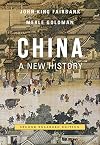
This splendid general history of China is an authoritative guide through millennia, yet it also includes a great amount of material on recent Chinese history, especially in the chapters added by Merle Goldman. The late professor Fairbank is our guide most of the way, and his easy style makes for delightful reading.
The book addresses a number of continuing themes, such as the contrast between state and family, between urban and rural, between ruling elite and the masses. It devotes show more considerable time to the development and evolution of Confucian thought and the way that philosophical system influenced the government and culture of China. Fairbank also spends some time tracing the development of Mao thought. In addition, the author eases the way for the Westerner by comparing developments in China with similar developments in European history.
Two very useful features in this book: 1.) every so often Fairbank will pause to survey areas that should receive further scholarly research; 2.) an extensive guide to further reading for any subject that the reader might find of interest. All in all, this book is a wonderful narrative history and a worthy introduction to an important topic. show less
The book addresses a number of continuing themes, such as the contrast between state and family, between urban and rural, between ruling elite and the masses. It devotes show more considerable time to the development and evolution of Confucian thought and the way that philosophical system influenced the government and culture of China. Fairbank also spends some time tracing the development of Mao thought. In addition, the author eases the way for the Westerner by comparing developments in China with similar developments in European history.
Two very useful features in this book: 1.) every so often Fairbank will pause to survey areas that should receive further scholarly research; 2.) an extensive guide to further reading for any subject that the reader might find of interest. All in all, this book is a wonderful narrative history and a worthy introduction to an important topic. show less

Only Ancient Egypt and India rival the length and development of the four millennia long development of Chinese civilization, one that for centuries was more advanced than other locations on the Eurasian landmass until suddenly it wasn’t and challenged. China: A New History is the last work by noted historian John King Fairbanks with addition from Merle Goldman covering the post-Mao years to the beginning of the 21st century.
Covering a 4000-year-old civilization in a total of 455 pages of show more text, of which only 405 were written by Fairbanks, is a daunting history however Fairbanks quickly develops the threads and themes he will follow throughout the history of a nation and a culture. Barely over half the book is dedicated to the ‘Imperial’ period from the first appearances of the elements that would become then shape Chinese culture to the fall of the Qing dynasty and the rest of the book covering the 20th Century that saw the Republican, Nationalist, and Communist eras. Goldman’s last chapter and epilogue attempts to follow Fairbanks threads and themes though in her own words and style which meshed well. This is not a history the delves into important people until the arrival of Mao, yet those Fairbanks points out and gives significant page space to are connected to the threads and themes. The number of sources and closer we get to our own time means the speed of history slows down, which given the number of pages is understandable but there were some sections of Chinese history I which Fairbanks would have given more time to.
China: A New History is the masterpiece of noted historian John King Fairbanks with a well written addition by Merle Goldman bringing the nation’s history up to the 21st Century. Given the amount of time needed to be covered and the number of pages its down in, it’s a fantastic history. show less
Covering a 4000-year-old civilization in a total of 455 pages of show more text, of which only 405 were written by Fairbanks, is a daunting history however Fairbanks quickly develops the threads and themes he will follow throughout the history of a nation and a culture. Barely over half the book is dedicated to the ‘Imperial’ period from the first appearances of the elements that would become then shape Chinese culture to the fall of the Qing dynasty and the rest of the book covering the 20th Century that saw the Republican, Nationalist, and Communist eras. Goldman’s last chapter and epilogue attempts to follow Fairbanks threads and themes though in her own words and style which meshed well. This is not a history the delves into important people until the arrival of Mao, yet those Fairbanks points out and gives significant page space to are connected to the threads and themes. The number of sources and closer we get to our own time means the speed of history slows down, which given the number of pages is understandable but there were some sections of Chinese history I which Fairbanks would have given more time to.
China: A New History is the masterpiece of noted historian John King Fairbanks with a well written addition by Merle Goldman bringing the nation’s history up to the 21st Century. Given the amount of time needed to be covered and the number of pages its down in, it’s a fantastic history. show less
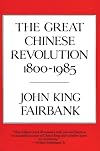
An excellent survey of modern Chinese history.
Values a strong sense of structure and analysis over wordy narrative diversions, but also maintains a high level of 'readability' - a notoriously difficult balance to strike in history books.
Highly recommended to newcomers of modern Chinese history who want an introduction to what makes China 'tick' without having to slug through wordy paragraphs regarding what Mao's favourite colour was.
Values a strong sense of structure and analysis over wordy narrative diversions, but also maintains a high level of 'readability' - a notoriously difficult balance to strike in history books.
Highly recommended to newcomers of modern Chinese history who want an introduction to what makes China 'tick' without having to slug through wordy paragraphs regarding what Mao's favourite colour was.
Lists
Awards


You May Also Like


Associated Authors
Statistics
- Works
- 46
- Also by
- 7
- Members
- 2,284
- Popularity
- #11,239
- Rating
- 4.1
- Reviews
- 33
- ISBNs
- 124
- Languages
- 8
- Favorited
- 1
