
Stephen J. Patterson
Author of The Fifth Gospel: The Gospel of Thomas Comes of Age
About the Author
Stephen J. Patterson is Professor of New Testament at Eden Theological Seminary (St. Louis).
Works by Stephen J. Patterson
The Forgotten Creed: Christianity's Original Struggle against Bigotry, Slavery, and Sexism (2018) 43 copies, 1 review
The Lost Way: How Two Forgotten Gospels Are Rewriting the Story of Christian Origins (2014) 37 copies, 2 reviews
The Gospel of Thomas and Christian Origins: Essays on the Fifth Gospel (Nag Hammadi and Manichaean Studies) (2013) 8 copies
The Lost 'Q' Gospel 1 copy
Associated Works
The Complete Gospels : Annotated Scholars Version (Revised & expanded) (1992) — Contributor — 758 copies, 5 reviews
The Didache in Context: Essays on Its Text, History, and Transmission (Supplements to Novum Testamentum) (1994) — Contributor — 9 copies
Stones, bones, and the sacred : essays on material culture and ancient religion in honor of Dennis E. Smith (2016) — Contributor — 7 copies
Dialogue: A Journal of Mormon Thought - Volume 28, Number 2 (Summer 1995) (1995) — Contributor — 2 copies
Tagged
Common Knowledge
- Birthdate
- 1957
- Gender
- male
- Education
- Yankton College (BA|Religion and Philosophy)
Harvard University (MTS|Scripture and Interpretation)
The Claremont Graduate School (MA|New Testament)
The Claremont Graduate School (Ph.D.|New Testament) - Occupations
- professor (Religious and Ethical Studies|New Testament)
- Organizations
- Eden Theological Seminary
Willamette University
Jesus Seminar - Awards and honors
- Fulbright Fellowship
- Nationality
- USA
- Places of residence
- Salem, Oregon, USA
- Associated Place (for map)
- Oregon, USA
Members
Reviews
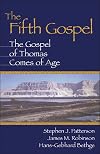
This is an excellent commentary on the Gospel of Thomas. It’s concise and in places speculative, but immensely informative, representing the latest scholarship on this fascinating find.
Part 1 presents a translation of the gospel; Part 2 provides commentary; Part 3 tells of its discovery at Nag Hammadi. It’s a skinny little book, but very full.
The most controversial question about this gospel seems to be its dating. Is it a collection of late second- or even third-century Gnostic sayings, show more or does it date back to the first century and contain the words of Jesus? The answer seems to be both. As a saying gospel, it’s much more malleable than a storyline gospel, and probably the collection grew over time. Some of the sayings seem very early; others seem quite late, surely not added until the Coptic version in Egypt began to form. (The most complete version we have is in Coptic, discovered in upper Egypt, and dating back to the fourth century.)
There are several reasons for dating parts of Thomas back to the first century. First, many sayings are quite similar to other first-century documents. Second, the rivalry it displays tends to suggest a time in early Christianity when local communities claimed loyalty to a particular well-known figurehead. Finally, its Christology is quite low. Jesus is not the Son of God or even the Son of Man. He’s just Jesus.
The association with “Thomas” should not be confused with the “doubting Thomas” of John chapter 20. Rather, it is more likely the “Judas Thomas” of John 14, Luke 6, and Acts 1. The same Judas Thomas of the Acts of Thomas, and the person to whom the epistle of Jude is attributed. If the Acts of Thomas carries any historic authenticity, then this is possibly the brother of Jesus; the Jude of Mark 6:3. Thus, we have uncovered a gospel possibly attributed not merely to one of the Twelve, but to a blood brother of Jesus.
Another confusion about this gospel is its so-called “Gnostic” bent. There just seems to no longer be a simple description of what “Gnostic” means; you won’t find any hints in Thomas of the evil creator who surfaces in other Gnostic writings. Instead, Thomas reads very much like John’s Gospel and Paul’s epistles, both in theme and theology. If Thomas is Gnostic, it’s not much more so than canonical New Testament writings, which can be just as exotic.
Yet it also appears that the Gospel of Thomas provides an independent source. Might Thomas have something to teach us about the original Jesus movement? As the book’s introduction claims, it “has reshaped the discussion of Christian origins by introducing students of early Christianity to a new set of ideas and practices that, a generation ago, one could hardly imagine as deriving from the words of Jesus.” show less
Part 1 presents a translation of the gospel; Part 2 provides commentary; Part 3 tells of its discovery at Nag Hammadi. It’s a skinny little book, but very full.
The most controversial question about this gospel seems to be its dating. Is it a collection of late second- or even third-century Gnostic sayings, show more or does it date back to the first century and contain the words of Jesus? The answer seems to be both. As a saying gospel, it’s much more malleable than a storyline gospel, and probably the collection grew over time. Some of the sayings seem very early; others seem quite late, surely not added until the Coptic version in Egypt began to form. (The most complete version we have is in Coptic, discovered in upper Egypt, and dating back to the fourth century.)
There are several reasons for dating parts of Thomas back to the first century. First, many sayings are quite similar to other first-century documents. Second, the rivalry it displays tends to suggest a time in early Christianity when local communities claimed loyalty to a particular well-known figurehead. Finally, its Christology is quite low. Jesus is not the Son of God or even the Son of Man. He’s just Jesus.
The association with “Thomas” should not be confused with the “doubting Thomas” of John chapter 20. Rather, it is more likely the “Judas Thomas” of John 14, Luke 6, and Acts 1. The same Judas Thomas of the Acts of Thomas, and the person to whom the epistle of Jude is attributed. If the Acts of Thomas carries any historic authenticity, then this is possibly the brother of Jesus; the Jude of Mark 6:3. Thus, we have uncovered a gospel possibly attributed not merely to one of the Twelve, but to a blood brother of Jesus.
Another confusion about this gospel is its so-called “Gnostic” bent. There just seems to no longer be a simple description of what “Gnostic” means; you won’t find any hints in Thomas of the evil creator who surfaces in other Gnostic writings. Instead, Thomas reads very much like John’s Gospel and Paul’s epistles, both in theme and theology. If Thomas is Gnostic, it’s not much more so than canonical New Testament writings, which can be just as exotic.
Yet it also appears that the Gospel of Thomas provides an independent source. Might Thomas have something to teach us about the original Jesus movement? As the book’s introduction claims, it “has reshaped the discussion of Christian origins by introducing students of early Christianity to a new set of ideas and practices that, a generation ago, one could hardly imagine as deriving from the words of Jesus.” show less
The Forgotten Creed: Christianity's Original Struggle against Bigotry, Slavery, and Sexism by Stephen J. Patterson
An interesting exploration of what can be argued to be the first Christian creed, cited by Paul in his letter to the Galatians. This exploration dives into the three areas covered - race, class, and gender - and also explores why this creed may have fall out of favor in the Church as it progressed through the ages.
Recommended for those interested in the early Church, church doctrine, and Christianity.
Recommended for those interested in the early Church, church doctrine, and Christianity.
The Lost Way: How Two Forgotten Gospels Are Rewriting the Story of Christian Origins by Stephen J. Patterson
The main emphasis by the author is that early Christianity was based on the wisdom of Jesus' sayings rather than later emphasis by Paul and the subsequent church interpretations of the cross and its implications. He makes a very good case for this by looking at the "extraction" of the "Q" source of the New Testament gospels and also looking at the emphasis in the more recently discovered Gospel of Thomas, both of which pre-date Paul's letters and his emerging theological emphasis on the show more martyrdom of Jesus.
There is some redundancy in the text but overall it is an easy read for students of religious history and Christian theology. It takes us out of the confines of the canon and explores the origins of popular scripture. As with most non-canonical studies, this book may be a bit uncomfortable for evangelical fundamentalists, but it is an important view of what we think we know.
This book was received from the publisher in exchange for an honest review. show less
There is some redundancy in the text but overall it is an easy read for students of religious history and Christian theology. It takes us out of the confines of the canon and explores the origins of popular scripture. As with most non-canonical studies, this book may be a bit uncomfortable for evangelical fundamentalists, but it is an important view of what we think we know.
This book was received from the publisher in exchange for an honest review. show less
A good, easy to read, non-technical introduction to the Gospel of Thomas with essays by Thomas scholar Stephen Patterson and Nag Hammadi scholar James M. Robinson. Of interest to readers interested in Gnosticism, in general, as well as readers interested in the Gospel of Thomas in particular.
Goes well with _The Q/Thomas Reader_ as an introduction to the Gospel of Thomas.
-Kushana
Goes well with _The Q/Thomas Reader_ as an introduction to the Gospel of Thomas.
-Kushana
You May Also Like


Associated Authors
Statistics
- Works
- 10
- Also by
- 4
- Members
- 375
- Popularity
- #64,332
- Rating
- 4.2
- Reviews
- 5
- ISBNs
- 21
- Languages
- 1
- Favorited
- 1