
Bernard B. Fall (1926–1967)
Author of Hell In A Very Small Place: The Siege Of Dien Bien Phu
About the Author
Bernard Fall was born in Vienna in 1926, migrating to France in 1938. After his father was killed by the Gestapo and his mother killed at Auschwitz, he joined the French Resistance at sixteen, then the French Army. Following World War II, he was an analyst with the Nuremberg War Crimes Tribunal. show more Coming to the United States in the early 1950s, he earned a master's and a doctorate at Syracuse University. He first traveled to Indochina in 1953, returning in 1957, 1962, 1965, 1966, and 1967, when he was killed by a mine on the "street without joy," the highway he had described in his book. He also wrote Hell in a Very Small Place. show less
Works by Bernard B. Fall
Associated Works
Reporting Vietnam: American Journalism 1959-1969, Volume 1 (1998) — Contributor — 345 copies, 3 reviews
Tagged
Common Knowledge
- Birthdate
- 1926-11-19
- Date of death
- 1967-02-21
- Gender
- male
- Education
- University of Paris
University of Munich
University of Maryland
Syracuse University - Occupations
- war correspondent
historian
political scientist
journalist - Organizations
- American University
Howard University
French Army
French Resistance - Awards and honors
- George Polk Journalism Award (1966)
Guggenheim Fellowship (1966)
Ordre de la Libération (1945)
Fulbright Scholar (1950)
United States Department of Defense Certificate of Appreciation (1961) - Relationships
- Winer, Dorothy (spouse)
- Cause of death
- land mine
- Nationality
- France (naturalized)
- Birthplace
- Vienna, Austria
- Places of residence
- Washington, D.C., USA
Hong Kong, Hong Kong, UK - Place of death
- Thừa Thiên-Huế Province, Vietnam
Members
Reviews
Street Without Joy: The French Debacle In Indochina (Stackpole Military History Series) by Bernard B. Fall
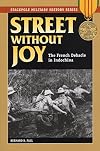
It's heartbreaking to think how differently the twentieth century might have ended had the powers that be in the U.S. read and, more importantly, paid attention to this book. Bernard Fall describes brilliantly the strategy and tactics used by Vo Nguyen Giap and the Viet Minh against the French. These tactics changed very little from one war to the next yet we, forewarned (assuming we had read this book), walked right into it.
This is a classic example of the old axiom that he who fails to show more learn from history is doomed to repeat it.
What I found particularly disturbing about 'Street Without Joy' is Giap's description of the evolution of his enemies' tactics; an initial offensive, slowing and turning into a defensive war with a growing amount of public sentiment against involvement. Does this sound familiar? show less
This is a classic example of the old axiom that he who fails to show more learn from history is doomed to repeat it.
What I found particularly disturbing about 'Street Without Joy' is Giap's description of the evolution of his enemies' tactics; an initial offensive, slowing and turning into a defensive war with a growing amount of public sentiment against involvement. Does this sound familiar? show less
It's easy to see why this became a classic. Fall's prose flows easily as he maintains an excellent middle ground examination of the failure of the French High Command coupled with both heroic and cowardly deeds of the French, Moroccan, Algerian, T'ai, and Vietnamese on the ground. As it is all to often in war, the men far behind the lines dither and dictate policy while the boots suffer and die for it.
This book I would also argue is paramount to understanding the French army's role and show more treatment of the populace in the struggle for Algeria. Most of the combatants and leaders were Indo-China and Dien Bien Phu veterans.
One can almost detect a pleading towards the end, Fall writing while his own country (The USA) began to commit more and more to a "conventional war" with the build up of forces in Vietnam passing from the role of adviser to active combatant. Fall hoped we would learn from both our and French mistakes in the 50's, sadly, he died while attached to a unit as a reporter in the jungle. With perfect hindsight, it is plain to see we did not take to heart Fall's excellent work and the lessons available to us. show less
This book I would also argue is paramount to understanding the French army's role and show more treatment of the populace in the struggle for Algeria. Most of the combatants and leaders were Indo-China and Dien Bien Phu veterans.
One can almost detect a pleading towards the end, Fall writing while his own country (The USA) began to commit more and more to a "conventional war" with the build up of forces in Vietnam passing from the role of adviser to active combatant. Fall hoped we would learn from both our and French mistakes in the 50's, sadly, he died while attached to a unit as a reporter in the jungle. With perfect hindsight, it is plain to see we did not take to heart Fall's excellent work and the lessons available to us. show less
Street Without Joy: The French Debacle in Indochina (Stackpole Military History Series) by Bernard B. Fall
Street Without Joy is the definitively account of the first Indo-China War, as France attempted to hold on to it's East Asian colony. Bernard draws on first hand experience and documentary research in Paris to describe the slow defeat of France in the "vast empty spaces" of Vietnam's jungle and highlands to the light infantry of the Viet Minh.
Fall describes the complete failure of heavy mechanized units in guerrilla warfare. Tied to the scanty road network, the Groupes Mobile were show more juggernauts, but ones that could be avoided and lured into ambush by the Viet Minh. The epic destruction of G.M 100 at the same time as Dien Bien Phu is the climax of the book, an account of outnumbered professionals calmly laying down their lives after the war is lost. Heavy units imply substantial logistics needs, and the second battle was the battle of the forts, as France distributed its forces in penny packets along the de Lattre line and strategic roads. These forts were ineffective at preventing mass Viet Minh infiltration, served as supply depots for the enemy when overrun individually and looted, and cost on average 3 to 4 men per 100 km of road per day. Multiply it out, and it comes to thousands of casualties just to hold static positions without any pacification effort. The part of the war that Fall thinks worked were the command groups, alliances of French specialists and Montagnard guerrillas to attack Viet Minh supply lines, but this force was inherently limited and difficult to scale.
Fall's book has the flaws of its strengths. The wonderful portraits of the men and women who fought are a romanticized version of the French empire. (about 30% of the soldiers were French, with the rest split between Foreign Legion, Colonial units from Africa, and local levies) Communist tactics come down to 'screaming human wave attacks' a few too many times, without much insight into the actual weakness of light infantry forces. Bernard gets the problem of what he calls Revolutionary Warfare right, and the ways in which a motivated local force fighting for its own values will beat foreign occupiers, but doesn't extend the critique to the anti-communist project broadly speaking, or how Western democracies could defeat communism without becoming a mirror image of the enemy.
Ultimately, Fall was right, but there's little satisfaction in being a Cassandra, as the American military fought the same war as the French, but faster and louder. show less
Fall describes the complete failure of heavy mechanized units in guerrilla warfare. Tied to the scanty road network, the Groupes Mobile were show more juggernauts, but ones that could be avoided and lured into ambush by the Viet Minh. The epic destruction of G.M 100 at the same time as Dien Bien Phu is the climax of the book, an account of outnumbered professionals calmly laying down their lives after the war is lost. Heavy units imply substantial logistics needs, and the second battle was the battle of the forts, as France distributed its forces in penny packets along the de Lattre line and strategic roads. These forts were ineffective at preventing mass Viet Minh infiltration, served as supply depots for the enemy when overrun individually and looted, and cost on average 3 to 4 men per 100 km of road per day. Multiply it out, and it comes to thousands of casualties just to hold static positions without any pacification effort. The part of the war that Fall thinks worked were the command groups, alliances of French specialists and Montagnard guerrillas to attack Viet Minh supply lines, but this force was inherently limited and difficult to scale.
Fall's book has the flaws of its strengths. The wonderful portraits of the men and women who fought are a romanticized version of the French empire. (about 30% of the soldiers were French, with the rest split between Foreign Legion, Colonial units from Africa, and local levies) Communist tactics come down to 'screaming human wave attacks' a few too many times, without much insight into the actual weakness of light infantry forces. Bernard gets the problem of what he calls Revolutionary Warfare right, and the ways in which a motivated local force fighting for its own values will beat foreign occupiers, but doesn't extend the critique to the anti-communist project broadly speaking, or how Western democracies could defeat communism without becoming a mirror image of the enemy.
Ultimately, Fall was right, but there's little satisfaction in being a Cassandra, as the American military fought the same war as the French, but faster and louder. show less
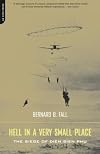
The next time someone accuses the French of being cheese eating surrender monkeys, I will be forced to slap them. Dien Bien Phu is one of those battles that has shaped the course of history. In 55 days of brutal siege warfare, the Viet Minh under General Giap defeated a French garrison, ending French involvement in Vietnam, and setting the stage for America's bloody war. Published in 1966, this book was required reading in Wasington policy circles, and drove Lyndon Johnson’s obsession that show more the battle of Khe Sahn not be another 'din bin foo'.
Bernard Fall was an old Indochina hand, and this book mixes a day by day account of the battle with portraits of colorful French Foreign Legion officers and analysis of the mood and thought in Hanoi, Paris, and Washington. At times, the endless descriptions of desperate counter-attacks and airdrops under fire wears on, but a few scenes rise above prosaic reporting to describe the suffering endured by the French, trapped in hastily built trenches, starving, soaked to the bone, and under continual Viet Minh bombardment. The strategic analysis of Eisenhower's decision not to intervene is fairly accurate, especially considering how closely this book was published to the events. Notably, even in 1966 Vietnam experts were obsessed with counter-factuals and might-have-beens.
Ultimately, the French were defeated, but only after days without rations, reinforcement, or resupply. Dien Bien Phu fell only after every bullet was fired, and the last defensive positions overrun. Both sides were ferocious and skilled fighters, but what decided the battle was logistics. The French arrogantly assumed that the base could be supplied by airlift, and that it was impossible to move large numbers of men and supplies through the jungle. Communist flak, and the endurance of coolie porters carrying 200 kg loads on modified bicycles hundreds of miles through the jungle proved them wrong.
Dien Bien Phu was an atypical set-piece of battle, not characteristic of the war as a whole. Long and detailed, Hell in a Very Small Place is too much for a general audience, but vital reading for anybody interested in the origins of the war, or the French colonial forces. show less
Bernard Fall was an old Indochina hand, and this book mixes a day by day account of the battle with portraits of colorful French Foreign Legion officers and analysis of the mood and thought in Hanoi, Paris, and Washington. At times, the endless descriptions of desperate counter-attacks and airdrops under fire wears on, but a few scenes rise above prosaic reporting to describe the suffering endured by the French, trapped in hastily built trenches, starving, soaked to the bone, and under continual Viet Minh bombardment. The strategic analysis of Eisenhower's decision not to intervene is fairly accurate, especially considering how closely this book was published to the events. Notably, even in 1966 Vietnam experts were obsessed with counter-factuals and might-have-beens.
Ultimately, the French were defeated, but only after days without rations, reinforcement, or resupply. Dien Bien Phu fell only after every bullet was fired, and the last defensive positions overrun. Both sides were ferocious and skilled fighters, but what decided the battle was logistics. The French arrogantly assumed that the base could be supplied by airlift, and that it was impossible to move large numbers of men and supplies through the jungle. Communist flak, and the endurance of coolie porters carrying 200 kg loads on modified bicycles hundreds of miles through the jungle proved them wrong.
Dien Bien Phu was an atypical set-piece of battle, not characteristic of the war as a whole. Long and detailed, Hell in a Very Small Place is too much for a general audience, but vital reading for anybody interested in the origins of the war, or the French colonial forces. show less
Lists
Read These Too (1)
You May Also Like


Associated Authors
Statistics
- Works
- 16
- Also by
- 1
- Members
- 1,458
- Popularity
- #17,623
- Rating
- 4.2
- Reviews
- 24
- ISBNs
- 38
- Languages
- 3

