
Mary Cronk Farrell
Author of Pure Grit: How American World War II Nurses Survived Battle and Prison Camp in the Pacific
About the Author
Mary Cronk Farrell is a celebrated and award-winning writer as well as the recipient of many major awards for her work in television journalism-including Emmy nominations for her television news coverage in Seattle. She is the 2002 Missionary Servant in the World award recipient for being an show more outstanding example of a person who fully lives and shares the Catholic faith in everyday life show less
Image credit: Photo by Mary Cronk Farrell
Works by Mary Cronk Farrell
Pure Grit: How American World War II Nurses Survived Battle and Prison Camp in the Pacific (2014) 150 copies, 6 reviews
Fannie Never Flinched: One Woman’s Courage in the Struggle for American Labor Union Rights (2016) 56 copies, 5 reviews
Close-Up on War: The Story of Pioneering Photojournalist Catherine Leroy in Vietnam (2022) 44 copies, 1 review
Standing Up Against Hate: How Black Women in the Army Helped Change the Course of WWII (2019) 32 copies, 1 review
Associated Works
Daughters of the Desert: Stories of Remarkable Women from Christian, Jewish and Muslim Traditions (2003) — Contributor — 94 copies, 1 review
Tagged
Common Knowledge
- Legal name
- Farrell, Mary Cronk
- Gender
- female
Members
Reviews
Standing Up Against Hate: How Black Women in the Army Helped Change the Course of WWII by Mary Cronk Farrell
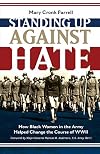
World War II history is a popular topic in my library for fourth grade and up, but I feel really strongly that if kids are old enough to read about war they're old enough to read about everything. Not necessarily graphic details of atrocities, but definitely the full context of the war; that not everything is black and white, there are not "good guys" versus "bad guys". One of the major points that often gets overlooked in WWII history for kids is the treatment of women and minorities by the show more army and as more nuanced and honest depictions of the war are being published I've been slowly diversifying my collection in this area.
Farrell has written several titles that tell those overlooked stories from American history, Pure Grit and Fannie never flinched. Her latest title would be a great choice to read alongside Steve Sheinkin's Port Chicago 50, about the treatment of black men in the military, since Standing up against hate depicts the prejudice and sometimes outright violence that black women faced in the military.
This is the story of Charity Adams, the commander of the 6888th Central Postal Directory Battalion, the only black WAAC battalion to be sent overseas. Farrell talks honestly about the experiences of black women in the military; their struggles to not be assigned as cooks and cleaners and to do the work they had been trained for and which they hoped would improve their lives after the war. They walked a narrow line between standing up for themselves and the possibility that going against the military structure would see them jailed or even executed. In addition, they had to deal with the prejudice, segregation, and open violence of the towns they were stationed in as well as their fellow soldiers.
Despite many obstacles, Adams and her troops succeeded in fulfilling their vital assignments to keep the mail moving and morale up; they experienced a whole new world in England, seeing a place where they were welcomed freely into homes and businesses without encountering the brutal prejudice and segregation of America, and met many obstacles with dignity and determination.
Farrell carefully documents the stories of these brave women with original documents and quotes and her powerful prose. She follows up the story with an author's note talking about how the world opened up for many white women after World War II - but not for black women. She discusses the long-range effect of the black women in the army and their struggle for dignity and equality and the role of black women in the military today. A glossary, notes, bibliography, credits, and index are also included.
Verdict: A powerful and important work, I strongly urge librarians to buy this and include it in their middle grade and/or teen nonfiction sections, recommending it to readers who are interested in World War II so they get a full and complete picture. As young readers are starting to read more critically, it's vital that they see a more nuanced picture of the world events and history and this book is an excellent addition to WWII history sections. Strongly recommended.
ISBN: 9781419731600; Published January 2019 by Harry N. Abrams; ARC provided by publisher; Purchased for the library show less
Farrell has written several titles that tell those overlooked stories from American history, Pure Grit and Fannie never flinched. Her latest title would be a great choice to read alongside Steve Sheinkin's Port Chicago 50, about the treatment of black men in the military, since Standing up against hate depicts the prejudice and sometimes outright violence that black women faced in the military.
This is the story of Charity Adams, the commander of the 6888th Central Postal Directory Battalion, the only black WAAC battalion to be sent overseas. Farrell talks honestly about the experiences of black women in the military; their struggles to not be assigned as cooks and cleaners and to do the work they had been trained for and which they hoped would improve their lives after the war. They walked a narrow line between standing up for themselves and the possibility that going against the military structure would see them jailed or even executed. In addition, they had to deal with the prejudice, segregation, and open violence of the towns they were stationed in as well as their fellow soldiers.
Despite many obstacles, Adams and her troops succeeded in fulfilling their vital assignments to keep the mail moving and morale up; they experienced a whole new world in England, seeing a place where they were welcomed freely into homes and businesses without encountering the brutal prejudice and segregation of America, and met many obstacles with dignity and determination.
Farrell carefully documents the stories of these brave women with original documents and quotes and her powerful prose. She follows up the story with an author's note talking about how the world opened up for many white women after World War II - but not for black women. She discusses the long-range effect of the black women in the army and their struggle for dignity and equality and the role of black women in the military today. A glossary, notes, bibliography, credits, and index are also included.
Verdict: A powerful and important work, I strongly urge librarians to buy this and include it in their middle grade and/or teen nonfiction sections, recommending it to readers who are interested in World War II so they get a full and complete picture. As young readers are starting to read more critically, it's vital that they see a more nuanced picture of the world events and history and this book is an excellent addition to WWII history sections. Strongly recommended.
ISBN: 9781419731600; Published January 2019 by Harry N. Abrams; ARC provided by publisher; Purchased for the library show less
Fannie Never Flinched: One Woman’s Courage in the Struggle for American Labor Union Rights by Mary Cronk Farrell
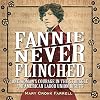
This book, subtitled “One Woman’s Courage in the Struggle for American Labor Union Rights” tells the story of labor activist Fannie Sellins.
Fannie Sellins was born Fanny Mooney in 1872. She married Charles Sellins, and after his relatively early death (when her youngest was just a baby) she had to support her four children. She went to work in a garment factory, one of the two sweatshops owned by the Marx & Haas Clothing Company. Girls as young as ten as well as grandmothers toiled show more there together, working ten- to fourteen-hour days, six days a week. Their pay averaged less than five dollars a week ($145 a week in today’s dollars). The building was stifling in summer, freezing in winter, and locked all day from the outside; this was a common practice in factories to prevent workers from taking unauthorized breaks and to reduce theft. [This same observance led to the tragic Triangle Shirtwaist Factory fire in New York, in 1911, in which 146 garment workers died.]
Fannie heard about the garment workers unions in Chicago and New York, and together with some other seamstresses organized Ladies’ Local 67 of the United Garment Workers of America in St. Louis. Fearing a strike, Marx & Haas nearly doubled workers’ wages and shortened the workday, but they did not improve conditions otherwise.
The air was filthy, and many of the employees contracted tuberculosis. When one tailor couldn’t make it up the six flights of stairs because of his illness, he was docked a week’s pay. To protest, Fannie and other union workers went on strike.
One month into the dispute, the local union leader died of tuberculosis, and Fannie became the new president. She traveled from city to city, speaking up to six times a day to all kinds of labor unions about the poor conditions at her factory and at other labor sites. She asked for support for the strikers. She also asked her audiences to buy only clothes with the “union-made” label inside them.
The book details the poor working conditions not only in the garment industry, but in the other places of work to which Fannie visited. Fannie was particularly affected by the West Virginia coal miners, who lived in abject poverty. Boys started in the mine as early as age six. The families lived in hovels with minimal food to eat and even without running water.
Fannie helped the miners of Colliers, West Virginia raise funds for a strike. Mine managers promptly evicted families from their houses - they now had to live in tents - and hauled in trainloads of strikebreakers. Fannie was arrested, although the first time, the judge released her with just a warning. Later she spent three months behind bars, during which time her health suffered greatly.
She moved on to help the coal miners in Western Pennsylvania organize, convincing thousands of miners to join the United Mine Workers of America (UMWA) and eventually to go on strike. The millionaire Lewis Hicks who ran fourteen notoriously bad mines went to the South to find strikebreakers, bringing up black sharecroppers by train. Hicks never told them they would be strikebreakers, or that they would be in danger because of it, just that they would be getting better wages. Hicks had the train doors locked from the outside [a favorite practice, it seems] so that union workers couldn’t get to the men.
When the train came to the mines, Fannie ran alongside it, yelling to the men inside through the windows not to break the strike and to support the union. She encouraged the men to climb out the train windows and join them. But the impasse was not broken until America entered World War I on April 6, 1917. The U.S. made a wage deal with coal mine operators to keep the mines working, and Hicks agreed to give workers a 50 percent pay raise, at least until the war ended.
Once again after the war, the UMWA initiated strikes. In August, 1919, Fannie was assigned to the Allegheny River Valley district to direct picketing by striking miners at Allegheny Coal and Coke Company. She was killed by sheriff’s deputies on August 26 who claimed that she led a “charging mob of men and women armed with clubs and bricks,” which was not true; in fact, Fannie rejected the idea that miners arm themselves for protection. Although there were a number of witnesses who gave sworn statements that the attack by the deputies was unprovoked, the local sheriff’s department refused to arrest them. When the case was reopened in 1923, again the deputies were acquitted. The author speculates that fears of communism - growing since the Bolshevik Revolution in Russia, colored the attitudes of the juries.
As the author writes:
“Today, both Fannie Sellins’s death and her passion for the welfare and rights of working people have been largely forgotten. But her name remains hallowed among union people in Western Pennsylvania, and her spirit lives on whenever someone stands up for the American ideals of equality and justice for all.”
At the end of the book, there is a glossary (words such as arbitration, lockout, and sweatshop), a detailed timeline of select events in the American labor struggle from 1877-1935, notes, sources, and a list of websites and books for further information.
This book for young readers is not a picture book, although the format is similar. Rather, it tells the story of Fannie Sellins with a great many photographs and reproductions of relevant documents.
Evaluation: This thoroughly researched book for ages nine and over includes an excellent selection of historical photos that brings the story to life in a way words could not, especially the depictions of poverty among mine workers. The story of Fannie Sellins’ belief in justice and personal sacrifices against the tenacious greed of factory owners is a lesson we still can learn today. show less
Fannie Sellins was born Fanny Mooney in 1872. She married Charles Sellins, and after his relatively early death (when her youngest was just a baby) she had to support her four children. She went to work in a garment factory, one of the two sweatshops owned by the Marx & Haas Clothing Company. Girls as young as ten as well as grandmothers toiled show more there together, working ten- to fourteen-hour days, six days a week. Their pay averaged less than five dollars a week ($145 a week in today’s dollars). The building was stifling in summer, freezing in winter, and locked all day from the outside; this was a common practice in factories to prevent workers from taking unauthorized breaks and to reduce theft. [This same observance led to the tragic Triangle Shirtwaist Factory fire in New York, in 1911, in which 146 garment workers died.]
Fannie heard about the garment workers unions in Chicago and New York, and together with some other seamstresses organized Ladies’ Local 67 of the United Garment Workers of America in St. Louis. Fearing a strike, Marx & Haas nearly doubled workers’ wages and shortened the workday, but they did not improve conditions otherwise.
The air was filthy, and many of the employees contracted tuberculosis. When one tailor couldn’t make it up the six flights of stairs because of his illness, he was docked a week’s pay. To protest, Fannie and other union workers went on strike.
One month into the dispute, the local union leader died of tuberculosis, and Fannie became the new president. She traveled from city to city, speaking up to six times a day to all kinds of labor unions about the poor conditions at her factory and at other labor sites. She asked for support for the strikers. She also asked her audiences to buy only clothes with the “union-made” label inside them.
The book details the poor working conditions not only in the garment industry, but in the other places of work to which Fannie visited. Fannie was particularly affected by the West Virginia coal miners, who lived in abject poverty. Boys started in the mine as early as age six. The families lived in hovels with minimal food to eat and even without running water.
Fannie helped the miners of Colliers, West Virginia raise funds for a strike. Mine managers promptly evicted families from their houses - they now had to live in tents - and hauled in trainloads of strikebreakers. Fannie was arrested, although the first time, the judge released her with just a warning. Later she spent three months behind bars, during which time her health suffered greatly.
She moved on to help the coal miners in Western Pennsylvania organize, convincing thousands of miners to join the United Mine Workers of America (UMWA) and eventually to go on strike. The millionaire Lewis Hicks who ran fourteen notoriously bad mines went to the South to find strikebreakers, bringing up black sharecroppers by train. Hicks never told them they would be strikebreakers, or that they would be in danger because of it, just that they would be getting better wages. Hicks had the train doors locked from the outside [a favorite practice, it seems] so that union workers couldn’t get to the men.
When the train came to the mines, Fannie ran alongside it, yelling to the men inside through the windows not to break the strike and to support the union. She encouraged the men to climb out the train windows and join them. But the impasse was not broken until America entered World War I on April 6, 1917. The U.S. made a wage deal with coal mine operators to keep the mines working, and Hicks agreed to give workers a 50 percent pay raise, at least until the war ended.
Once again after the war, the UMWA initiated strikes. In August, 1919, Fannie was assigned to the Allegheny River Valley district to direct picketing by striking miners at Allegheny Coal and Coke Company. She was killed by sheriff’s deputies on August 26 who claimed that she led a “charging mob of men and women armed with clubs and bricks,” which was not true; in fact, Fannie rejected the idea that miners arm themselves for protection. Although there were a number of witnesses who gave sworn statements that the attack by the deputies was unprovoked, the local sheriff’s department refused to arrest them. When the case was reopened in 1923, again the deputies were acquitted. The author speculates that fears of communism - growing since the Bolshevik Revolution in Russia, colored the attitudes of the juries.
As the author writes:
“Today, both Fannie Sellins’s death and her passion for the welfare and rights of working people have been largely forgotten. But her name remains hallowed among union people in Western Pennsylvania, and her spirit lives on whenever someone stands up for the American ideals of equality and justice for all.”
At the end of the book, there is a glossary (words such as arbitration, lockout, and sweatshop), a detailed timeline of select events in the American labor struggle from 1877-1935, notes, sources, and a list of websites and books for further information.
This book for young readers is not a picture book, although the format is similar. Rather, it tells the story of Fannie Sellins with a great many photographs and reproductions of relevant documents.
Evaluation: This thoroughly researched book for ages nine and over includes an excellent selection of historical photos that brings the story to life in a way words could not, especially the depictions of poverty among mine workers. The story of Fannie Sellins’ belief in justice and personal sacrifices against the tenacious greed of factory owners is a lesson we still can learn today. show less
Pure Grit: How American World War II Nurses Survived Battle and Prison Camp in the Pacific by Mary Cronk Farrell
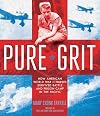
Every time I see yet another book about standard historical fare - usually all featuring white males - I wonder, "Aren't there ANY other stories to tell?" Turns out, of course, there are. This is the true story of the nurses who were stationed in the Philippines. From a peaceful life in the tropics, treating a few tropical diseases and family illnesses, they were thrown into combat nursing with little to no experience. They retreated with the military and were then taken prisoners of war show more where they suffered disease and starvation for three years as they struggled to care for the civilians and military. After their rescue, they suffered from physical and emotional effects - compounded by a military that didn't recognize their service and a country that didn't understand, or want to know, what they had done.
The book includes a forward by an Army Nurse Corps veteran of Vietnam and copious documentation including a glossary, list of the nurses who served, timeline, detailed endnotes, bibliography (both print and online), acknowledgements, photo credits, and index. The main text includes many photographs and original documents.
Sometimes books about overlooked people and events in history can be difficult to promote. There's more speculation than information or there isn't the cultural context of heroism/adventure/excitement especially to war stories. While I'd like kids to read a more balanced selection of war history books, realistically that's rarely what they're looking for. This book, however, not only educates on a little-known group - nurses in World War II and how they were overlooked in history - but also includes enough adventure, excitement, and heroism for any war story aficionado.
My only reluctance in purchasing this is that it really is aimed at a middle school and up audience. While there aren't really any truly atrocious or horrible stories, it is honest in describing the privation, illnesses, and peripheral horrors of war. There are also references to how newspapers and civilians treated the nurses when they returned, assuming they had been raped, as well as their own fears and expectations when they were captured. The thing is, teen nonfiction at my library really doesn't circulate well at all. I don't know if it's because we have such strong school libraries and the kids are looking more for popular fiction or if they're just not as into nonfiction at this age. Happily, we have recently moved the teen area downstairs next to the children's area which means that I can buy things for teen and then recommend them to kids. So it's not like I'm recommending inappropriate books because they're clearly labeled TEEN but they're right there so...yeah.
Verdict: I'm going to get this because it is so well-written and an important topic and also, I think, has enough popular appeal to make it worth adding to the collection, even in the dusty shelf of teen nonfiction. Highly recommended. show less
The book includes a forward by an Army Nurse Corps veteran of Vietnam and copious documentation including a glossary, list of the nurses who served, timeline, detailed endnotes, bibliography (both print and online), acknowledgements, photo credits, and index. The main text includes many photographs and original documents.
Sometimes books about overlooked people and events in history can be difficult to promote. There's more speculation than information or there isn't the cultural context of heroism/adventure/excitement especially to war stories. While I'd like kids to read a more balanced selection of war history books, realistically that's rarely what they're looking for. This book, however, not only educates on a little-known group - nurses in World War II and how they were overlooked in history - but also includes enough adventure, excitement, and heroism for any war story aficionado.
My only reluctance in purchasing this is that it really is aimed at a middle school and up audience. While there aren't really any truly atrocious or horrible stories, it is honest in describing the privation, illnesses, and peripheral horrors of war. There are also references to how newspapers and civilians treated the nurses when they returned, assuming they had been raped, as well as their own fears and expectations when they were captured. The thing is, teen nonfiction at my library really doesn't circulate well at all. I don't know if it's because we have such strong school libraries and the kids are looking more for popular fiction or if they're just not as into nonfiction at this age. Happily, we have recently moved the teen area downstairs next to the children's area which means that I can buy things for teen and then recommend them to kids. So it's not like I'm recommending inappropriate books because they're clearly labeled TEEN but they're right there so...yeah.
Verdict: I'm going to get this because it is so well-written and an important topic and also, I think, has enough popular appeal to make it worth adding to the collection, even in the dusty shelf of teen nonfiction. Highly recommended. show less
Fannie Never Flinched: One Woman’s Courage in the Struggle for American Labor Union Rights by Mary Cronk Farrell
This was a powerful look at a tumultuous time in history and the women and others who fought for rights for American labor.
Readers used to toned down biographies and nonfiction will get a startling wake-up call as the story begins with the murder of the main character, Fannie Sellins. After the stunning opening, Farrell explains the history, context, and as much as is known about the life of Fannie Sellins.
Little is known about her early life, marriage and widowhood, but eventually she went show more to work in a sweatshop, manufacturing clothing. With the other seamstresses they formed a Ladies' Local of the United Garment Workers of America and negotiated with the management to win better pay and shorter hours (although the dismal conditions of the sweatshops changed little). Sellins eventually came to work for the union full-time and began to travel, uniting workers, standing up for the rights of women and children, and garnering support for factory workers. Eventually, she came to the dangerous work of the coal mines of West Virginia. With workers in virtual slavery and government-backed mine owners, Fannie could have given up and gone back to her successes in the garment industry. However, she stayed and fought, supporting coal miners and their families. She was arrested, jailed, beaten, and eventually murdered. The sheriff's deputies who shot Fannie Sellins, despite numerous eyewitnesses, were never convicted.
The book is filled with original documents and photos that show the grim conditions and the powerful organizations that Fannie Sellins faced. The author's note discusses more about the struggle for labor unions and whether or not Sellins made a difference. It also discusses her research and the gaps in the information about Fannie's life. Back matter includes an extensive glossary, time line of labor strikes and their results, notes and sources. There are also further resources for learning more about unions, acknowledgements, and an index.
Verdict: Some reviewers recommend this for as young as fourth grade but for my audience it's going to land squarely in middle school up to teen, along with Farrell's other powerful work about women in history, Pure Grit. The story is dramatic but never exaggerates or is needlessly graphic. Readers may be shocked and horrified but will also be inspired to think about the changes they can make in their own families, communities and the world. Strongly recommended for teen nonfiction collections.
ISBN: 9781419718847; Published 2016 by Abrams; Review copy provided by the publisher and donated to the library show less
Readers used to toned down biographies and nonfiction will get a startling wake-up call as the story begins with the murder of the main character, Fannie Sellins. After the stunning opening, Farrell explains the history, context, and as much as is known about the life of Fannie Sellins.
Little is known about her early life, marriage and widowhood, but eventually she went show more to work in a sweatshop, manufacturing clothing. With the other seamstresses they formed a Ladies' Local of the United Garment Workers of America and negotiated with the management to win better pay and shorter hours (although the dismal conditions of the sweatshops changed little). Sellins eventually came to work for the union full-time and began to travel, uniting workers, standing up for the rights of women and children, and garnering support for factory workers. Eventually, she came to the dangerous work of the coal mines of West Virginia. With workers in virtual slavery and government-backed mine owners, Fannie could have given up and gone back to her successes in the garment industry. However, she stayed and fought, supporting coal miners and their families. She was arrested, jailed, beaten, and eventually murdered. The sheriff's deputies who shot Fannie Sellins, despite numerous eyewitnesses, were never convicted.
The book is filled with original documents and photos that show the grim conditions and the powerful organizations that Fannie Sellins faced. The author's note discusses more about the struggle for labor unions and whether or not Sellins made a difference. It also discusses her research and the gaps in the information about Fannie's life. Back matter includes an extensive glossary, time line of labor strikes and their results, notes and sources. There are also further resources for learning more about unions, acknowledgements, and an index.
Verdict: Some reviewers recommend this for as young as fourth grade but for my audience it's going to land squarely in middle school up to teen, along with Farrell's other powerful work about women in history, Pure Grit. The story is dramatic but never exaggerates or is needlessly graphic. Readers may be shocked and horrified but will also be inspired to think about the changes they can make in their own families, communities and the world. Strongly recommended for teen nonfiction collections.
ISBN: 9781419718847; Published 2016 by Abrams; Review copy provided by the publisher and donated to the library show less
Lists
Awards


You May Also Like


Associated Authors
Statistics
- Works
- 6
- Also by
- 1
- Members
- 310
- Popularity
- #76,068
- Rating
- 4.2
- Reviews
- 13
- ISBNs
- 16
