

Ruth Behar
Author of Lucky Broken Girl
About the Author
Ruth Behar -- ethnographer, essayist, poet, and filmmaker -- is professor of anthropology at the University of Michigan. The recipient of a MacArthur Fellows Award and a John Simon Guggenheim Fellowship, Behar is the author of several books
Image credit: By Monroem - Own work, CC BY-SA 3.0, https://commons.wikimedia.org/w/index.php?curid=26468550
Works by Ruth Behar
Associated Works
How I Learned English: 55 Accomplished Latinos Recall Lessons in Language and Life (2007) — Contributor — 54 copies, 4 reviews
Daughters of Latin America: An International Anthology of Writing by Latine Women (2023) — Contributor — 40 copies, 1 review
The House of Memory: Stories by Jewish Women Writers of Latin America (1999) — Contributor — 34 copies
Family Trouble: Memoirists on the Hazards and Rewards of Revealing Family (2013) — Contributor — 21 copies
On All Other Nights: A Passover Celebration in 14 Stories (2024) — Contributor — 18 copies, 1 review
Tagged
Common Knowledge
- Birthdate
- 1956-11-12
- Gender
- female
- Awards and honors
- MacArthur Fellowship (1988)
- Birthplace
- Havana, Cuba
- Associated Place (for map)
- Havana, Cuba
Members
Reviews
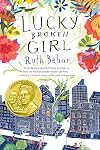
I have to admit, I didn't love this book -- it's just so painfully earnest that it dragged, and it's really quite depressing -- from the casual family verbal abuse, to the sudden tragedies, to the sexist messages and mother's powerlessness and anger, and that's before you start to try and comprehend a child being confined to her bed for a year to try and recover from a broken leg.
On the other hand, if you are looking for a first person, based on a true story, immigrant account of growing up show more Cuban and Jewish in New York City in the 1950s, this is excellent. And honestly, I think if I'd been reading it as a YA book, or even as an adult memoir, I would have loved it. I have a really hard time with it as a children's book -- there's just too much going on, and Ruthie's voice is sometimes confusing -- she has such compassion for where her parents are at (isolated, frustrated, confined) even when their behavior is difficult or abusive. I love her friends (Chicho, Ramu, even Danielle) and I love that she develops as an artist and a writer during her confinement. A lot of beauty here, and a lot of sorrow. show less
On the other hand, if you are looking for a first person, based on a true story, immigrant account of growing up show more Cuban and Jewish in New York City in the 1950s, this is excellent. And honestly, I think if I'd been reading it as a YA book, or even as an adult memoir, I would have loved it. I have a really hard time with it as a children's book -- there's just too much going on, and Ruthie's voice is sometimes confusing -- she has such compassion for where her parents are at (isolated, frustrated, confined) even when their behavior is difficult or abusive. I love her friends (Chicho, Ramu, even Danielle) and I love that she develops as an artist and a writer during her confinement. A lot of beauty here, and a lot of sorrow. show less
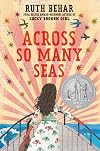
First sentence: The sound of trumpets coming from the direction of our town gates tears me from sleep, my dreams forgotten as I jolt out of bed.
Premise/plot: Across So Many Seas contains four interconnected (three super-connected) historical stories or novellas. The time periods are 1492 (Spain), 1923 (Turkey), 1961 (Cuba), and 2003 (Miami, Florida).
The novel opens with Benvenida, our twelve-year-old narrator, learning of a new decree. ALL Jews must either a) convert to Christianity b) show more leave the country [Spain] or c) disobey by staying and risk being hanged. Some of the community--including some of her extended family--do choose to convert. They do not want to leave their homes, businesses, etc. The story chronicles their exodus as they flee their country and seek a new homeland. It's a tough, demanding journey.
The three following stories follow three generations of the same family. Reina, Alegra, and Paloma star in compelling stories of their own. The stories examine coming of age from a Jewish perspective. Though that isn't really doing any of the stories justice. There is great turmoil in the first three stories. In the first, the Jewish population is being persecuted. In the second, the family is living in a newly independent Turkey. In the third, she is coming of age in the midst of Cuba's revolution. The fourth story "closes the circle" or "bridges the gap" the narrator is traveling with her family to Spain to learn more about their cultural history.
My thoughts: I found this a great read. I really was invested with ALL of the stories. I sped through it. I used to speed through books all the time. As I get older, as my vision worsens, as reading becomes more physically demanding, I don't always give in to "page-turners." But I absolutely loved this one. show less
Premise/plot: Across So Many Seas contains four interconnected (three super-connected) historical stories or novellas. The time periods are 1492 (Spain), 1923 (Turkey), 1961 (Cuba), and 2003 (Miami, Florida).
The novel opens with Benvenida, our twelve-year-old narrator, learning of a new decree. ALL Jews must either a) convert to Christianity b) show more leave the country [Spain] or c) disobey by staying and risk being hanged. Some of the community--including some of her extended family--do choose to convert. They do not want to leave their homes, businesses, etc. The story chronicles their exodus as they flee their country and seek a new homeland. It's a tough, demanding journey.
The three following stories follow three generations of the same family. Reina, Alegra, and Paloma star in compelling stories of their own. The stories examine coming of age from a Jewish perspective. Though that isn't really doing any of the stories justice. There is great turmoil in the first three stories. In the first, the Jewish population is being persecuted. In the second, the family is living in a newly independent Turkey. In the third, she is coming of age in the midst of Cuba's revolution. The fourth story "closes the circle" or "bridges the gap" the narrator is traveling with her family to Spain to learn more about their cultural history.
My thoughts: I found this a great read. I really was invested with ALL of the stories. I sped through it. I used to speed through books all the time. As I get older, as my vision worsens, as reading becomes more physically demanding, I don't always give in to "page-turners." But I absolutely loved this one. show less
Four 12-year-old Sephardic Jewish girls in different time periods leave their homelands but carry their religion, culture, language, music, and heritage with them.
King Ferdinand and Queen Isabella’s expulsion of the Jews from Spain in 1492 sends Benvenida fleeing from Toledo with her family, though she promises to remember where she came from. In 1923, Reina celebrates Turkish independence with her longtime friend and neighbor, a Muslim boy, causing her strict father to disown her and send show more her to live with an aunt in Cuba as punishment. Reina brings her mother’s oud with her and passes it on to Alegra, her daughter, who serves as a brigadista in Castro’s literacy campaign before fleeing to the U.S. in 1961. In Miami in 2003, Paloma, Alegra’s daughter, who has an Afro-Cuban dad, is excited to travel to Spain with her family to explore their roots. They find a miraculous connection in Toledo. Woven through all four girls’ stories is the same Ladino song (included with an English translation); as Paloma says, “I’m connected to those who came before me through the power of the words we speak, the words we write, the words we sing, the words in which we tell our dreams.” Behar’s diligent research and her personal connection to this history, as described in a moving author’s note, shine through this story of generations of girls who use music and language to survive, tell their stories, and connect with past and future.
Powerful and resonant. (sources) (Historical fiction. 10-15)
-Kirkus Review show less
King Ferdinand and Queen Isabella’s expulsion of the Jews from Spain in 1492 sends Benvenida fleeing from Toledo with her family, though she promises to remember where she came from. In 1923, Reina celebrates Turkish independence with her longtime friend and neighbor, a Muslim boy, causing her strict father to disown her and send show more her to live with an aunt in Cuba as punishment. Reina brings her mother’s oud with her and passes it on to Alegra, her daughter, who serves as a brigadista in Castro’s literacy campaign before fleeing to the U.S. in 1961. In Miami in 2003, Paloma, Alegra’s daughter, who has an Afro-Cuban dad, is excited to travel to Spain with her family to explore their roots. They find a miraculous connection in Toledo. Woven through all four girls’ stories is the same Ladino song (included with an English translation); as Paloma says, “I’m connected to those who came before me through the power of the words we speak, the words we write, the words we sing, the words in which we tell our dreams.” Behar’s diligent research and her personal connection to this history, as described in a moving author’s note, shine through this story of generations of girls who use music and language to survive, tell their stories, and connect with past and future.
Powerful and resonant. (sources) (Historical fiction. 10-15)
-Kirkus Review show less

Letters from Cuba, a 2022 Lone Star novel, reveals that kindness and generosity eclipse evil, showing that civilization and humanity have hope.
Esther lives in Poland with his mother, grandmother, and four siblings. Her father lives in Cuba, trying to make money to pay for his family's passage to Cuba in order to escape the Nazi. It's 1937 when Esther writes to her father, saying that as the oldest, she should come to Cuba first to help make money to bring everyone over more quickly. He show more agrees and in January of 1938, Esther sets sail for Cuba. She immediately loves the island country. Cuba is much different from Poland--it's warm and the people express friendliness toward her. She quickly learns that she needs cooler clothing--her wool clothes are way too hot, which leads to a much better life.
Esther's life in Cuba brings her friends because of her positive and welcoming attitude. She helps her dad peddle goods in order to make money. She quickly discovers that he isn't very good at peddling. She actually talks to people and can get people to smile and buy. People like her and give her things. She gets material and makes a dress; she also makes dresses for people who have helped her. At twelve years old, she's very good. She even makes her own designs that people love. She ends up selling her dresses thanks to a Jewish friend in Havana. Because she shares and invites people to share her life as well, she makes friends. She doesn't judge people by their religion or color; so, when she invites people over, there is a diversity of people. They learn that people of all faiths, cultures, and color can enjoy each others' company and help one another. Her father also opens his eyes and minds to others instead of judging them or dismissing them because they are different from him. Because of her sewing talent, her beliefs, and her dad's help, Esther strives to make enough money to bring the family over sooner.
I enjoyed the novel. It's told through a series of letters from Esther to her sister in Poland. Sometimes the letters can stretch the imagination because it tells information that wouldn't be in an actual letter. Esther's optimistic attitude helps keep her from despair. Situations are getting worse in Europe as Hitler gains more power and abuses the Jews. Esther and her dad need to get the family to Cuba before they can't travel anymore due to the danger. You'll enjoy the novel, learning about all the people who have been abused because of faith, culture, and/or color. By supporting one another, hate cannot grow. It's a good lesson and a good book. show less
Esther lives in Poland with his mother, grandmother, and four siblings. Her father lives in Cuba, trying to make money to pay for his family's passage to Cuba in order to escape the Nazi. It's 1937 when Esther writes to her father, saying that as the oldest, she should come to Cuba first to help make money to bring everyone over more quickly. He show more agrees and in January of 1938, Esther sets sail for Cuba. She immediately loves the island country. Cuba is much different from Poland--it's warm and the people express friendliness toward her. She quickly learns that she needs cooler clothing--her wool clothes are way too hot, which leads to a much better life.
Esther's life in Cuba brings her friends because of her positive and welcoming attitude. She helps her dad peddle goods in order to make money. She quickly discovers that he isn't very good at peddling. She actually talks to people and can get people to smile and buy. People like her and give her things. She gets material and makes a dress; she also makes dresses for people who have helped her. At twelve years old, she's very good. She even makes her own designs that people love. She ends up selling her dresses thanks to a Jewish friend in Havana. Because she shares and invites people to share her life as well, she makes friends. She doesn't judge people by their religion or color; so, when she invites people over, there is a diversity of people. They learn that people of all faiths, cultures, and color can enjoy each others' company and help one another. Her father also opens his eyes and minds to others instead of judging them or dismissing them because they are different from him. Because of her sewing talent, her beliefs, and her dad's help, Esther strives to make enough money to bring the family over sooner.
I enjoyed the novel. It's told through a series of letters from Esther to her sister in Poland. Sometimes the letters can stretch the imagination because it tells information that wouldn't be in an actual letter. Esther's optimistic attitude helps keep her from despair. Situations are getting worse in Europe as Hitler gains more power and abuses the Jews. Esther and her dad need to get the family to Cuba before they can't travel anymore due to the danger. You'll enjoy the novel, learning about all the people who have been abused because of faith, culture, and/or color. By supporting one another, hate cannot grow. It's a good lesson and a good book. show less
Lists
Jewish Books (2)
Reading list (1)
Awards


You May Also Like


Associated Authors
Statistics
- Works
- 18
- Also by
- 7
- Members
- 1,538
- Popularity
- #16,740
- Rating
- 4.1
- Reviews
- 56
- ISBNs
- 89
- Languages
- 1
- Favorited
- 1