

Charles Rowan Beye
Author of Odysseus: A Life
About the Author
Image credit: New York Society Library
Works by Charles Rowan Beye
Alcestis and her critics 1 copy
Associated Works
Reading Vergils Aeneid: An Interpretive Guide (Oklahoma Series in Classical Culture) (1999) — Contributor — 38 copies
Compromising Traditions: The Personal Voice in Classical Scholarship (1996) — Contributor — 9 copies
Arethusa (vol 27 no 1): Rethinking the Classical Canon — Contributor — 1 copy
Tagged
Common Knowledge
- Legal name
- Beye, Charles Rowan
- Birthdate
- 1930-03-19
- Gender
- male
- Education
- Iowa State University (B.A., 1952)
Harvard University (M.A., Ph.D., 1960) - Occupations
- Wheaton College, Norton, MA, instructor in classics, 1955-57
Yale University, New Haven, CT, instructor in Classics, 1957-60
Stanford University, Stanford, CA, assistant professor of classics, 1960-66
Boston University, Boston, MA, associate professor, 1966-68
Boston University, Boston, MA, professor of classics, 1968--
Boston University, Boston, MA, head of department, 1968-72 - Organizations
- American Philological Association
Managing Committee of American School of Classical Studies in Athens - Awards and honors
- Olivia James fellowship from Archaeological Institute of America (1963-64)
National Endowment for the Humanities senior fellowship (1971-72)
senior research fellowship from American School of Classical Studies in Athens (1978-79) - Short biography
- Charles Rowan Beye is a retired professor of Ancient Greek. Competing sexual and emotional attractions have shaped the drama of his life. Openly gay in his teens, twice married to women, the father of four, he is now married to his male partner of the last twenty years. [from My Husband and My Wives (2012)]
- Nationality
- USA
- Birthplace
- Iowa City, Iowa, USA
- Places of residence
- Cambridge, Massachusetts, USA
- Associated Place (for map)
- USA
Members
Reviews
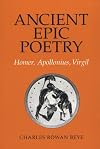
Good intro to the poems - Iliad, Odyssey, Argonautica and Aeneid. There's a bit too much plot summary but it's clearly written and makes sense most of the time. He's also very even-handed and discusses critics with whom he disagrees quite fairly. This is the second edition, brought out in the nineties; there's a third edition with an added chapter on Gilgamesh. I expect that the first edition, from 1966, had less drivel of the following sort than this edition: men seek for immortality show more because, while women are hooked into eternity by virtue of giving birth, men have only a pitifully evanescent ejaculation to look forward to. I wonder if the dodgy first year Freud and Lacan have been removed in the third edition? I'd like to think so. show less
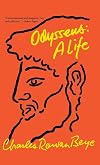
clever book. written in style that mixes scholarly speech with apt and prosy storytelling, Beye revives Odysseus's tale in unexpected and interesting ways.
his insights are interesting and funny and sometimes even lewd. he pulls no punches: Odysseus is portrayed as an egotistical, womanizing, unhandsome, wanderer and man of his age who succeeds because he is Heroic not because he is heroic in our modern sense but because he has the favor of Athena and the wits to know it and use it.
his insights are interesting and funny and sometimes even lewd. he pulls no punches: Odysseus is portrayed as an egotistical, womanizing, unhandsome, wanderer and man of his age who succeeds because he is Heroic not because he is heroic in our modern sense but because he has the favor of Athena and the wits to know it and use it.

9. The Iliad, the Odyssey, and the Epic Tradition by Charles Rowan Beye
published: 1966
format: Hardcover
acquired: borrowed from my library
read: Feb 13-18
Rating: 4 stars
A prologue: I read this almost at random. It was one of several books that I requested from the library about Homer, and I no longer remember why I selected any specific ones. I brought four home Saturday* and, surprisingly, found them all of interest. So, I was in quite a mood. Was? still am. This appealed to me simply show more because if you search for Beye's name on google, you find a lot of acknowledgements of his personal influence. So, he sounded like maybe a nice guy. Who knows. But I chose to read this one simply because it was the oldest of those four, published in 1966. (This kind of cool cover didn't affect me because the copy I read doesn't have a dust jacket.)
actual review: These are literary essays on the Iliad, the Odyssey and the Aeneid, but really focusing on Homer. Virgil is only discussed as he is was influenced by Homer. Beye talks a lot about oral poetry and how it is of a different nature from written poetry. Homer, of course, came out of the oral tradition. There are within it elements to help the memory of the singer. About 1/3 of the Iliad and the Odyssey is repetition of some kind. And there is heavy use of epithets for characters and things ("wine dark sea" etc). These both simplify the poem for memory, and give the author flexibility in construction as different epithets can be chosen based on the metrical needs of the line. The composer can then learn to have a bag of tools and perhaps make things up on the fly. There are also many elements that play on the fleeting memory, or at least fleeting immediate awareness of the listener. A reader can look things up again, and listener can't. Virgil was writing, composing in prose and then later in verse and reworking and reworking. Homer's works, probably composed by a cultural tradition of singers, repeats profusely, contradicts itself, follows illogical or unlikely timelines - but likely worked fine for a listener (having read the Iliad, I missed all the contradictions until they were pointed out in notes...)
There is a lot more here. What I mainly liked was that Beye just seemed to like talking about these works. He is interesting and he had me thinking about the works in different ways, and that is where I wanted to be.
There are plenty of books on Homer. I can give you no reason why you should read this one over another, other than I have happened to have read and enjoyed it.
*The other three books were:
[Homer] (Past Masters) by [[Jasper Griffin]] (1980)
[Homer's readers : a historical introduction to the Iliad and the Odyssey] by [[Howard W. Clarke]] (1981)
[The Iliad : structure, myth, and meaning] by [[Bruce Louden]] (2006)
2016
https://www.librarything.com/topic/209547#5480224 show less
published: 1966
format: Hardcover
acquired: borrowed from my library
read: Feb 13-18
Rating: 4 stars
A prologue: I read this almost at random. It was one of several books that I requested from the library about Homer, and I no longer remember why I selected any specific ones. I brought four home Saturday* and, surprisingly, found them all of interest. So, I was in quite a mood. Was? still am. This appealed to me simply show more because if you search for Beye's name on google, you find a lot of acknowledgements of his personal influence. So, he sounded like maybe a nice guy. Who knows. But I chose to read this one simply because it was the oldest of those four, published in 1966. (This kind of cool cover didn't affect me because the copy I read doesn't have a dust jacket.)
actual review: These are literary essays on the Iliad, the Odyssey and the Aeneid, but really focusing on Homer. Virgil is only discussed as he is was influenced by Homer. Beye talks a lot about oral poetry and how it is of a different nature from written poetry. Homer, of course, came out of the oral tradition. There are within it elements to help the memory of the singer. About 1/3 of the Iliad and the Odyssey is repetition of some kind. And there is heavy use of epithets for characters and things ("wine dark sea" etc). These both simplify the poem for memory, and give the author flexibility in construction as different epithets can be chosen based on the metrical needs of the line. The composer can then learn to have a bag of tools and perhaps make things up on the fly. There are also many elements that play on the fleeting memory, or at least fleeting immediate awareness of the listener. A reader can look things up again, and listener can't. Virgil was writing, composing in prose and then later in verse and reworking and reworking. Homer's works, probably composed by a cultural tradition of singers, repeats profusely, contradicts itself, follows illogical or unlikely timelines - but likely worked fine for a listener (having read the Iliad, I missed all the contradictions until they were pointed out in notes...)
There is a lot more here. What I mainly liked was that Beye just seemed to like talking about these works. He is interesting and he had me thinking about the works in different ways, and that is where I wanted to be.
There are plenty of books on Homer. I can give you no reason why you should read this one over another, other than I have happened to have read and enjoyed it.
*The other three books were:
[Homer] (Past Masters) by [[Jasper Griffin]] (1980)
[Homer's readers : a historical introduction to the Iliad and the Odyssey] by [[Howard W. Clarke]] (1981)
[The Iliad : structure, myth, and meaning] by [[Bruce Louden]] (2006)
2016
https://www.librarything.com/topic/209547#5480224 show less

Edition: // Descr: ix, 263 p. 18 cm. // Series: Call No. { 883 H75.09 6 } Contains Further Reading and Index. // //
Lists
Awards


You May Also Like


Associated Authors
Statistics
- Works
- 10
- Also by
- 6
- Members
- 321
- Popularity
- #73,714
- Rating
- 3.6
- Reviews
- 4
- ISBNs
- 24
- Languages
- 2
- Favorited
- 1